
Are the Rio Olympics Facing a Critical Mass of Issues as the Games Approach?
As is often the case before the Olympics begin, the 2016 Rio de Janeiro Games have been besieged with harrowing doubts about the host city's readiness and ability to stage the colossal sports event.
But never has the Olympic apprehension been so grave, nor has the distress been spread across so many fronts as what Rio faces.
The irony is that the most discussed concern—fears about the Zika virus, which will keep many of the world's marquee golfers and other athletes from participating—may well turn out to be the least of Rio's Olympic problems.
TOP NEWS

New NFL Power Rankings 📊
The Robinsons POUND the Rock 🪨

Takeaways from Falcons' dominant MNF win
Yet even if predictions prove true that the spread of mosquito-borne Zika will abate as South America shifts into winter, many sky-high hurdles remain. Some appear insurmountable and potentially dangerous to athletes and fans alike at this late stage, raising the possibility this Olympics could suffer the most debilitating problems ever seen at a global sports event.
The International Olympic Committee is standing by Rio's organizers, issuing a statement July 11 saying all 44 competition venues have passed tests and that all will be ready when athletes arrive.
But the IOC statement didn't address the swirling mess of raw sewage that still pours into Guanabara Bay, where a drug-resistant super bacteria has been found in the waters where sailors, triathletes and distance swimmers will compete.
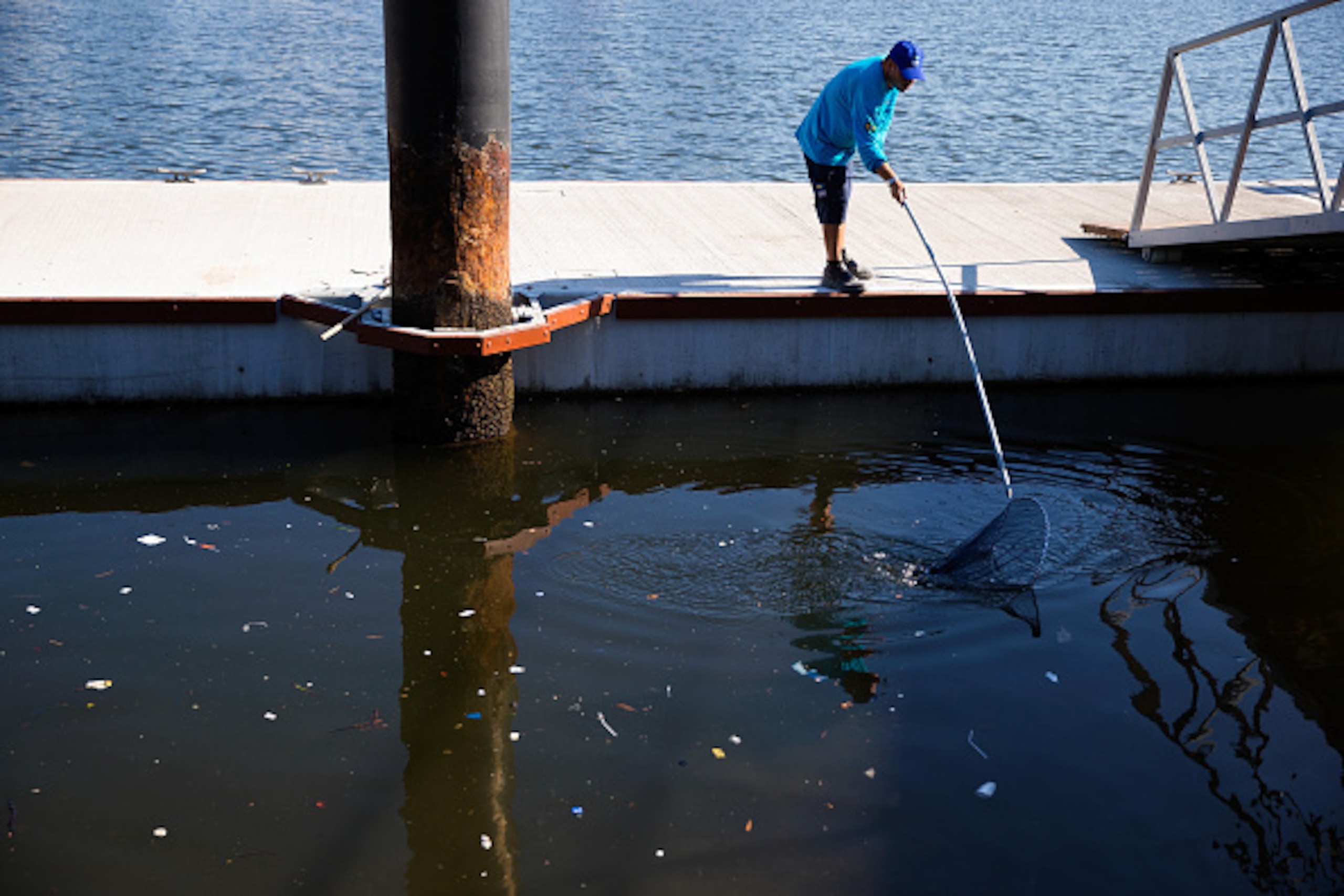
And the most dreadful reminder of Rio's polluted waters washed ashore June 29 when human body parts were found near the beach volleyball venue.
There certainly is equal angst on land, most of it regarding street crime in a nation that has 21 cities that rank among the world's most dangerous. Contrary to the IOC's rosy outlook, Rio's acting governor, Francisco Dornelles, recently issued a warning that the Olympics could be a "big failure" because of budget problems that could leave security underfunded, an opinion that Rio Mayor Eduardo Paes echoed.
Vicious and lethal street crime is so prevalent in Rio that even former Brazilian soccer star Rivaldo posted this warning on Instagram in May, which translates to the following, per the Associated Press: "Things are getting uglier here every day. I advise everyone with plans to visit Brazil for the Olympics in Rio to stay in their country of origin. Your life will be in danger here."
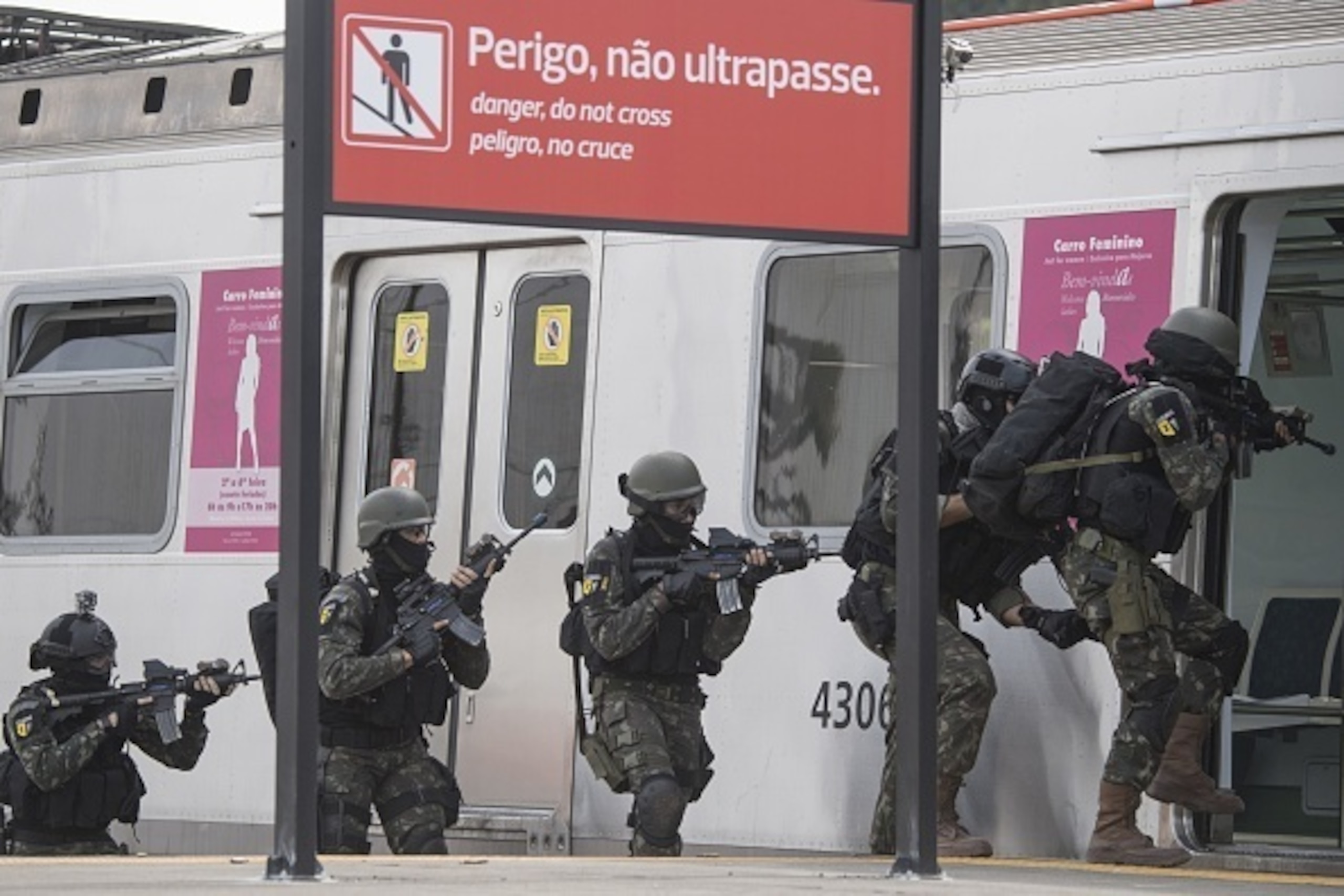
The budget cuts led to a protest by police at Rio's airport, where arriving tourists were greeted by a sign that said "Welcome to hell." Rio's police also aren't above suspicion in the wake of an Amnesty International warning that attributes more than 2,500 deaths to Rio security forces over the last seven years.
And if existing criminal activity can't be contained, what happens if international terrorists decide to make Rio a target? Brazil historically is a non-aligned nation without enemies, but its director of counterterrorism has acknowledged receiving a credible threat from ISIS regarding the Games.
The list of doubts goes on and on. Concerns about Brazil's safety standards for construction heightened after two people were killed in April when a new seaside bike path collapsed after being hit by a wave, and the World Anti-Doping Agency judged Rio’s drug-testing laboratory for the Games as unsuitable and shut it down in June.

The distress about Rio runs so deep and in so many directions that Hope Solo, who has competed all over the globe as goalie of the U.S. women's soccer team, says she'll likely sequester herself in her hotel room for the duration of the Games from Aug. 5-21. And swimmer Michael Phelps, whose career haul of 18 gold medals is the most in Olympic history, says he will pay to have a private security firm protect his family.
In fairness to Rio, some of these same concerns also were trumpeted just two years ago when Brazil hosted what was roundly judged as a successful World Cup.
That 2014 event played out with no major setbacks despite months of foreboding about stadium construction, labor strikes and the possibility of widespread and violent protests over spending.
David Wallechinsky, president of the International Society of Olympic Historians and author of The Complete Book of the Summer Olympics, was in Brazil for the World Cup and will gladly return in August to attend a Winter or Summer Olympics for the 18th time.
"I took my wife and two sons, and we had a great time," Wallechinsky said of the 2014 World Cup in a telephone interview. "With the crime rate, we were warned and warned and warned, and then the people were really kind to us. Nothing happened."

But while Wallechinsky says some of the warnings this year are the same as in 2014, he readily acknowledges they've grown more ominous for 2016.
"The criticisms now are far greater than they were for the World Cup," says Wallechinsky, who attributes that primarily to a deepening economic crisis that is Brazil's worst since the 1930s. "Things have gotten tremendously worse since then."
Wallechinsky says one undeniable mistake Rio organizers made was standing by Guanabara Bay as an Olympic venue. When Rio's organizers made their bid, they promised to undertake a massive cleanup, but by all accounts, the water is as perilous as ever, if not more so.
"To me, the scandal is the events at Guanabara Bay," Wallechinsky says. "When I was there two years ago, people brought it up. They said it's ridiculous, that you can go up the road 50 kilometers and there's a whole bay that's perfect. They just felt it was outrageous to go ahead at Guanabara."
Wallechinsky also will be in Rio despite receiving a stern admonition about the Zika virus, which has been found to cause pregnant women to give birth to infants with microcephaly, a condition where the baby's head is much smaller than normal. Zika is blamed for severe fetal brain defects, plus problems with vision, hearing and growth. The virus can be transmitted sexually, so men also can endanger a fetus.
"My own doctor told me not to go," Wallechinsky says, adding that the physician's daughter had contracted Guillain-Barre Syndrome, which left her paralyzed for two months. Zika wasn't involved in the woman's case, but the Centers for Disease Control and Prevention says Zika leads to Guillain-Barre in "a small proportion" of infections, and the linkage is still being investigated.
Wallechinsky says he'll be following the common preventative measures of wearing long-sleeved shirts and coating himself with insect repellant to protect against the mosquito-borne Zika virus.

But in one of the few positives for Rio as opening ceremonies approach, one expert in tropical diseases supports the assertion by Olympic organizers that new Zika infections will be held to double digits during the Games.
Dr. Peter Hotez, dean for the National School of Tropical Medicine at the Baylor College of Medicine, said in a telephone interview that Rio's expected 500,000 Olympic visitors will face far less risk from Zika than Americans who live in Gulf Coast states and Georgia as the virus spreads north from Latin America.
The irony is that people watching the Olympics on television in those states likely will be at greater risk than those Americans who go to Rio, says Hotez, who referenced Zika as "the virus from hell" in an article for JAMA Pediatrics (h/t CNBC).
Hotez, who has made several trips to Brazil for research, explains the virus hits new areas "like a hurricane" and then moves on.
"Brazil has had its hurricane," he told B/R. "It had its wave last year. The real risks for Rio, far and away, are road accidents and crime and theft. I'd put Zika way down on the list."
Hotez says his advice to anyone who's on the fence about going to Rio is to go ahead and attend the Games "provided they're not pregnant and they're not planning to have children soon."
Dr. Bill Mallon, an orthopedic surgeon who has written several books about the Olympics, shares that opinion and will be attending his 11th Olympics at Rio.
Mallon's passion for the Games includes doing statistical work for the IOC, and as someone who was mugged at the 2008 Olympics in Beijing, he's well aware an event of this scale is never perfect. He believes Rio was a good choice for the Games, or at least it was when the bid was awarded in 2009.
"People forget that in 2009, Brazil was a booming economy," Mallon said in a telephone interview. "The IOC couldn't predict what has happened."
Mallon also reminds that almost every lead-up to the Games includes fears about unfinished stadiums and infrastructure but that calm usually settles in once competition begins and fans become fascinated with new faces in gymnastics, swimming, track and other sports.
As for all the negativity surrounding Rio, Mallon says, "My prediction is that it will certainly turn out better than the predictions have been, just like it always does."
But until competition begins and Rio proves it's worthy of being an Olympic host, the nervousness will remain, and many fans and athletes will worry whether these will be the worst Games ever.
Tom Weir covered 15 Olympics (eight winter, seven summer) as a columnist for USA Today. All quotes were obtained firsthand unless otherwise noted.

.jpg?w=2560)

.jpg?w=2560 "Viral Rams Coach Vid 🖕")


