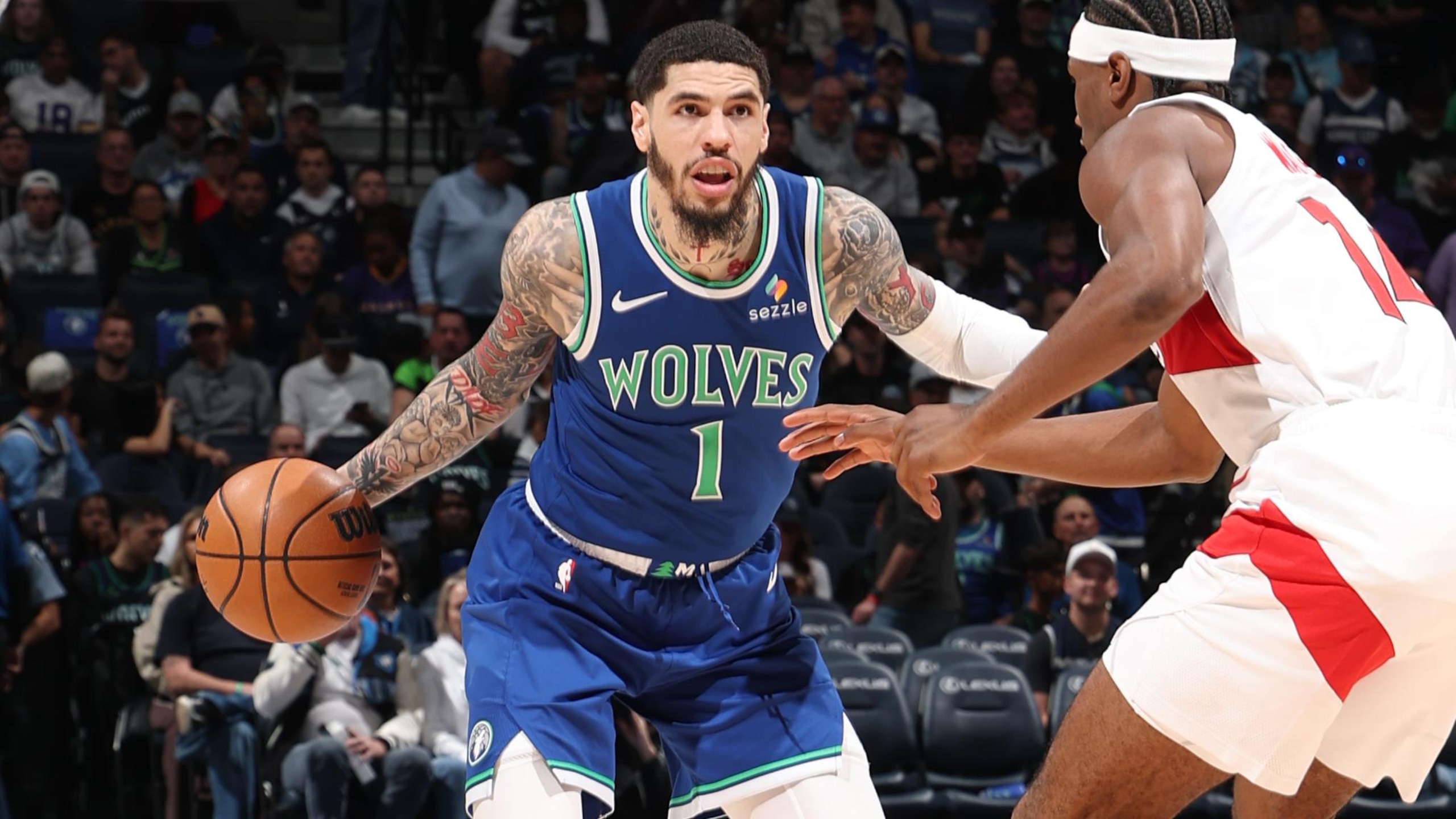
Blizzard Championship Tour Helped Pro Hearthstone in 2016; 2017 Needs More Work
As an eminently watchable game, Hearthstone has for years now cemented itself as one of the most popular eSports in the world. After the smaller-scale Innkeeper’s Invitational in 2013 and the Hearthstone World Championships in 2014 and 2015, Blizzard debuted the enormously improved Hearthstone Championship Tour (HCT) format for 2016.
With the HCT summer season having wound to a close and the last chances for competitors to qualify for a spot at BlizzCon coming up quickly, I wanted to take an opportunity to revisit the HCT format and reflect on its successes and failures. In addition to my own thoughts, I also reached out to Associate Esports Manager Drew Higbee at Blizzard for comments from the company.


.jpg?w=2560 "Seahawks Chiefs Football")
THE GOOD
Increased prize pool
While money isn’t everything, eSports places a unique emphasis on the size of the monetary prizes—treating them, oftentimes, as indicative of the health or success of that game’s competitive scene. The 2014 HWC awarded $250,000; in 2015, another $100,000 was added to that, spread across the four regional championships on the Road to BlizzCon. For 2016, Blizzard went to three seasons of regional championships with prize pools of $100,000 each, in addition to a World Championship prize pool of $1 million.
These substantial increases represent an investment by Blizzard into sustaining their competitive ecosystem and have a definite impact on the retention rate of players in the pro scene.
Seasons
One of the most open criticisms of competitive Hearthstone in years prior has been the inability to observe the storyline of players competing for the title of world champion. While most eSports had a series of major tournaments or an actual league to follow throughout the year, Hearthstone felt decidedly backloaded—all of its noteworthy happenings occurred in a narrow window from roughly August to November each year.
HCT introduced seasons and a number of supporting elements to help spread the highlights out over the course of the year.
"One of our goals was to afford players more frequent opportunities to get involved in competitive Hearthstone throughout the year, which we accomplished by adding seasonal championship events," Higbee said. "We also wanted to help build player stories, so we added on-site preliminaries to offer more in-person interactions with players and fans in every eligible country, while simultaneously improving broadcast exposure for players in the early rounds. We also adjusted the point structure to account for more carryover from one season to the next to help viewers follow the top players."
No byes
To keep the playing field fair for all competitors, Blizzard instituted a rule for 2016 that no players could receive automatic byes into a later round of competition. Previously, certain tournaments would invite well-known pro players (which is still allowed, as long as that tournament also has an open bracket), and those invited players would start out in a later phase of the tournament—bypassing a swiss bracket and being automatically seeded into the elimination playoffs, for example.
THE BAD
Communication
Blizzard is notorious for the range of levels of communication they have with their players and fans—a range that spans the distance between nothing and phenomenal insight from decision-makers. It’s hard to pin down any one cause for the issues that have cropped up over the years, but inconsistencies and problem areas have certainly been identified by the community.
Transparency with stakeholders and more effort to get out in front of the issues—whether it’s the lack of a posted ruleset for the Summer Season Championship Tournament, insufficient efforts to promote or highlight tournaments, or engaging with critical reception of everything from card sets to competitions—would go a long way toward helping to solve many of the problems (perceived or actual) with Hearthstone eSports.
Ranked play points
This is more of a criticism of the ranked play structure than the eSports scene itself. Blizzard, to their credit, rebalanced the distribution of points from ranked play finishes from 2015 to 2016 in a way that makes the importance of your absolute top of the ladder at the end of the month placement slightly less significant, but ranked play remains crucial to how many players qualify for their spots in the various seasonal and “Last Call” tournaments.
Numerous Hearthstone pros voiced concerns with the system and needing to play at odd hours at month’s end to defend their rank—most notably, since the month of December 2015 counted toward HCT 2016, with several of them tweeting themselves sitting at home watching their Hearthstone rank on New Year’s Eve.
Higbee notes that the system is important for accessibility: “It’s important to give players an opportunity to earn points through third-party tournaments as well as through Ranked Play. Third-party Majors and Cups allow players to get tournament experience, whether it be online or in person, while Ranked Play rewards consistent play in a convenient way for players.”
FOR 2017
More regional competition
One of Blizzard’s stated goals for next year’s HCT circuit is to improve the regional experience. As Higbee said in our interview, “The Distributed Online Tournament System that we developed for the Hearthstone Regional Preliminary Events this year has been a success; it allows players to travel relatively short distances to participate in large online tournaments, while still ensuring the competitive integrity of a traditional on-site event. One thing we’d like to see in 2017 is more regional competition leading up to the Hearthstone World Championship.”
Improving the experience so that players and fans alike have more local Hearthstone to look forward to is an excellent way to increase the buy-in from regional scenes and grow programs like the Fireside Gathering system.
More specific rules
A number of circumstances have arisen over the past few years as Hearthstone has grown as an eSport, and the public-facing ruleset hasn’t always had sufficient clarity on how those situations would be resolved.
As an example, when a handful of players were banned from competing in the Hearthstone World Championship in 2015, what that meant for anything from other tournaments letting those players compete to how points would be awarded was simply unclear. Blizzard has taken firm but fair stances when the rules haven’t explicitly spelled out what should happen, but as the eSport matures, hopefully those rules will become more concrete.
A fixed format
Blizzard admits that they elected to allow for varying formats from season to season in 2016 to try to learn from the iteration process what would be ideal for the Hearthstone Championship Tour going forward.
“We designed this year’s system to be flexible in order to iterate as the year went on with the goal of creating the most competitive Hearthstone Tournaments we could,” Higbee said. “To that end, we did change the match and tournament formats from Winter to Spring Seasons in an effort to improve. While we aren’t ready to share our 2017 plans quite yet, we’ll continue researching and gathering feedback in an effort to create the most exciting formats possible.”
It’s clear from the incredible year-on-year improvements that Blizzard has made with the competitive Hearthstone scene that they care deeply about seeing it grow and succeed, so it’s hard to be openly critical of what’s clearly an iterative process. Overall, even from speaking with Blizzard, the impression you walk away with is that they want to make it better, and it just happens that we’re all learning exactly what better entails in tandem.
If history is any indication, we can look forward to news about what the Hearthstone Championship Tour will look like in 2017 as early as later this fall—so stay tuned.



.jpg?w=2560 "Latest Peyton-Colts Rumors")