Venezuela's 113-69 loss Monday highlighted something everyone watching the Rio Olympics already knew: It takes more than a good quarter to beat Team USA.
Much more.
Working strictly in theory because no one has come close to knocking off the Americans during these Olympics, the hypothetical list of required upset ingredients probably includes an anti-gravity ray, Stickum, last-second rule changes making three-pointers illegal and, likely, divine intervention.


.jpg?w=2560 "Seahawks Chiefs Football")
Even then, a team as short on talent and scoring as Venezuela still wouldn't have enough to finish the drill. But maybe the particulars of its 18-18 first-quarter draw on Monday could be instructive for a more skillful and ambitious opponent.
Make It Ugly
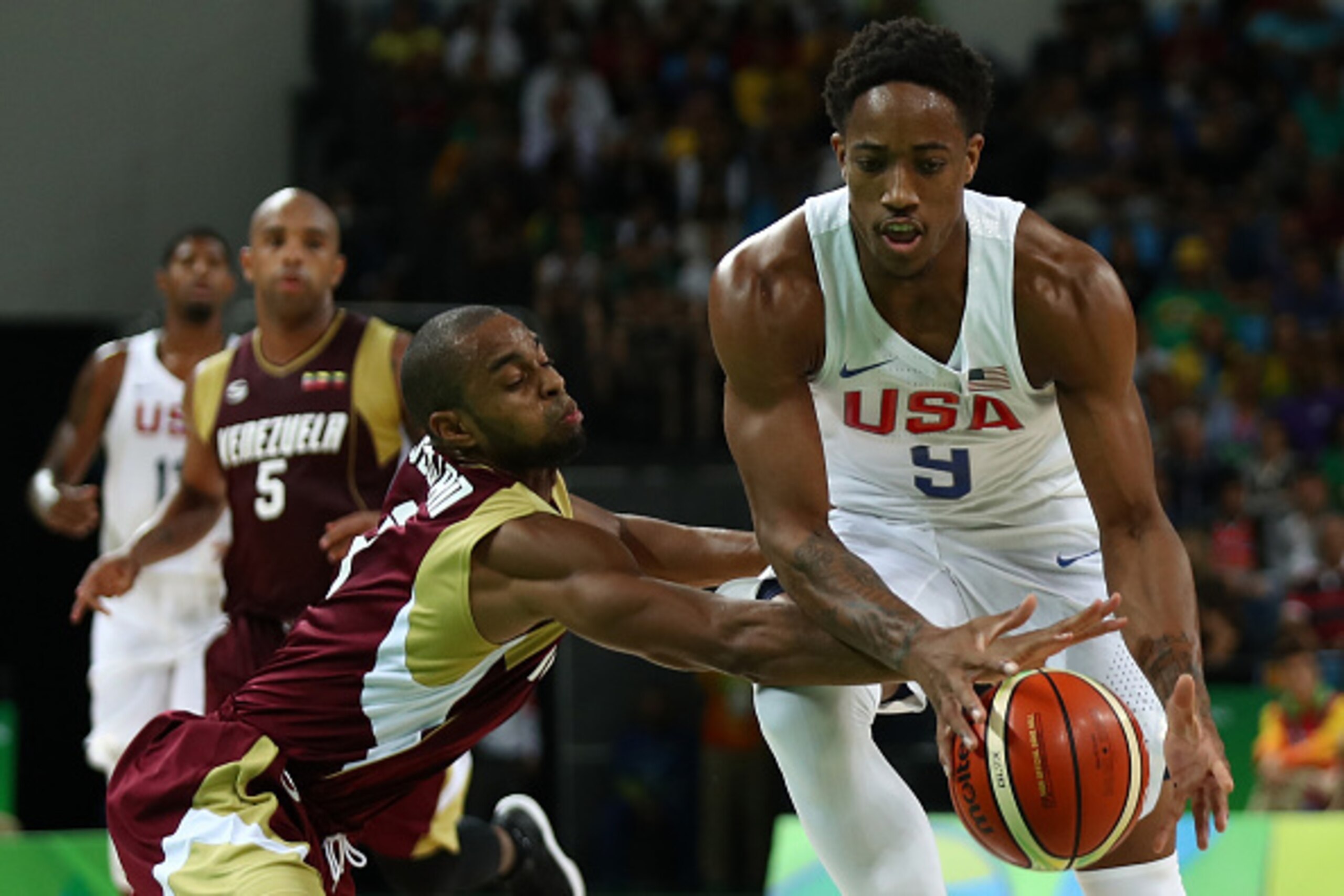
Venezuela mucked up the game during that first quarter, deliberately using as much shot clock as possible on offense and forcing both teams into half-court play. Team USA's athleticism gives it major advantages at any pace, but forcing gridlock at least prevents the tidal wave of U.S. transition points that come in an uptempo contest.
Venezuelan head coach Nestor Garcia was blunt in explaining this principle to ESPN.com's Marc Stein:
Dictating the pace is all but impossible if Team USA ratchets up its own full-court pressure, so some of Venezuela's temporarily successful strategy had to do with an American team that didn't feel threatened enough to dig in defensively.
"I thought they came out and they played great," leading scorer Paul George said on the NBC broadcast. "Everything was about them. We really had to pick it up."
Intriguingly, Venezuela mixed its deliberate offensive pace with some defensive pressure of its own. Team USA didn't react well to the early intensity, turning the ball over six times in the first quarter. Disrupted rhythm led to some forced shots, one of which caught the attention of Queen City Hoops' Spencer Percy:
Already frustrated and lacking the requisite early fight, Team USA also ran afoul of some awfully tight early whistles. Future opponents may not want to rely on officiating to tilt the Americans off kilter, but if we're putting together a blueprint for a virtually impossible undertaking, it bears mentioning the referees' impact.
As Venezuela took 10 trips to the foul line in that opening period, the U.S. couldn't hide its consternation, per Candace Buckner of the Washington Post:
DeMarcus Cousins was chief among the complainers, and his two early fouls limited his impact throughout the game.
Which highlighted a second possible suggestion for opponents looking to knock off Team USA.
Manipulate the Personnel
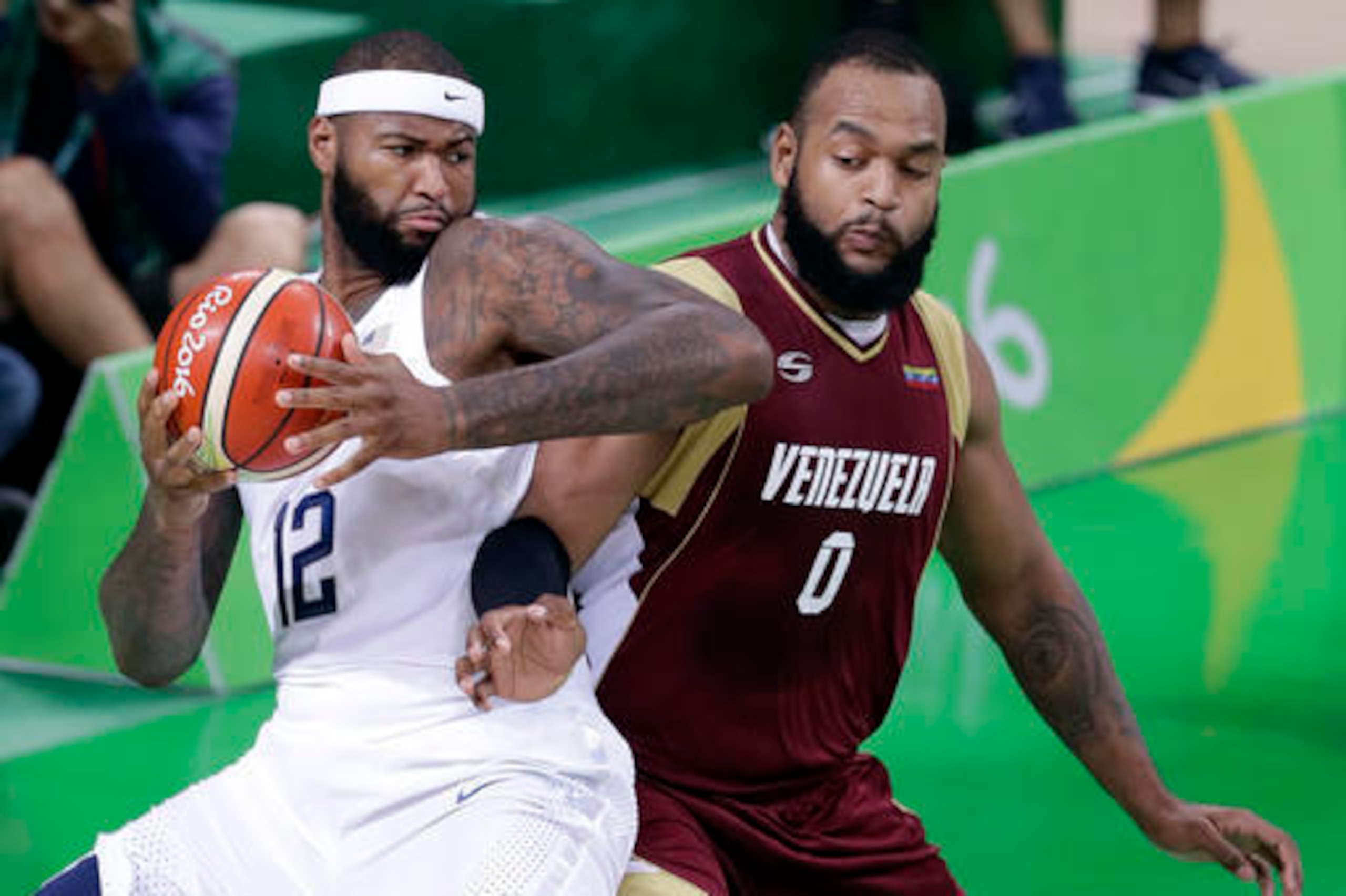
Cousins' physicality and skill should make him unstoppable, but DeAndre Jordan again proved to be the better option at center.
DJ finished with 14 points and nine rebounds, joining Carmelo Anthony (14), Kevin Durant (16 on 5-of-5 shooting) and George (20) in double-figure scoring.
Jordan's more limited role fits better on a team like this, where the other four players on the court can get their own shots and create for teammates. Instead of dumping the ball into Cousins, Team USA employs DJ as a devastating dive threat in the pick-and-roll.
That creates an impossible decision for opponents playing man-to-man defense, in which they can either sell out with help to stop the lob or stay glued to shooters on the perimeter. That's a no-win scenario against talent like the U.S. boasts: Even when Team USA misses, Jordan's superior bounce helps generate plenty of second chances.
Let's just say the international rule allowing offensive basket interference agrees with him.
Conversely, Cousins tends to slow sets down with his post-ups, which can play into the hands of teams hoping to take the flow out of the U.S. offense. He's also a worse defender in space, less of a shot-blocking threat and a more ground-bound athlete.
So, to the extent it's possible, teams hoping to beat the Americans should do what they can to keep Jordan off the floor and Cousins on it. Venezuela was crafty in employing an intentional foul against Jordan when it was over the limit in the second quarter, shoving him subtly as he went to set a screen.
That's a dangerous play in international competition, as intentional fouls like the ones NBA teams used against Jordan would result in free throws and possession. But if done cleverly enough, some enterprising foe could force head coach Mike Krzyzewski to bench DJ for fear of bricked free throws.
Keeping Cousins on the floor may be even trickier, as he's taken his NBA scowls overseas where the officials are similarly unimpressed, per John Schuhmann of NBA.com:
Who Can Pull It Off?
The ultimate recipe for beating Team USA isn't novel.
Hustle like crazy, make the game a mess, do what you can to slow things down and hope you force the U.S. to use suboptimal personnel. Venezuela did all that during the first quarter and was just as outwardly intense in the second, but it simply lacked the scoring punch to make it matter. Team USA blew the game open with a 30-8 second period as Venezuela stumbled to 27.6 percent shooting and 13 turnovers in the half.
Everything that happened after the break was purely academic.
Before the tournament, it would have made sense to list Spain and France as teams with the best chance to execute the Beat-USA game plan. But they both lost their openers.
That might leave Australia, the U.S.' opponent on Wednesday, as the new upset hope.
The Aussies topped France and Serbia during their first two games, have exactly the kind of pestering guards necessary in Matthew Dellavedova and Patty Mills and will have no problem playing a slow, chippy style that could frustrate Team USA. Andrew Bogut and Aron Baynes roll out of bed in the morning with elbows ready.
If the U.S. is fully engaged, a perfect strategy executed by talented personnel still won't make any opponent a favorite. But all the rest of the world is looking for is the one lucky swing that could cut down a giant.
Venezuela, though ultimately overrun, might have shown the field where to aim.



.jpg?w=2560 "Latest Peyton-Colts Rumors")