The Complete Guide to UFC 202: McGregor vs. Diaz 2
After five months of drama, Conor McGregor and Nate Diaz meet again at UFC 202 on Saturday. Their first matchup was an epic upset, as Diaz stepped up on just 11 days' notice to face the featherweight champion. In one of the best fights of the year, Diaz capitalized on McGregor's fatigue in the second round by burying him under a stream of punches and then choking the Irishman out on the mat.
It was a shocking outcome in one of the biggest fights of 2016, and the rematch promises every bit as much drama.
The two men were scheduled to meet again at UFC 200, but McGregor's unwillingness to travel for press obligations led to a back-and-forth tug-of-war between the Irish superstar and the UFC that led to the fight's being pulled and moved to UFC 202.
All of that is behind us now, and McGregor and Diaz will duke it out Saturday night.
The rest of the card is studded with interesting fights. In the co-main event, Anthony Johnson and Glover Teixeira meet in a nearly certain top-contender matchup at 205 pounds, and the winner will face Daniel Cormier for the light heavyweight strap. Donald Cerrone takes on Rick Story in a fantastic welterweight matchup that promises serious action on the main card.
The Fox Sports 1 and Fight Pass headliners are likewise excellent. On FS1, blue-chip up-and-comer Cody Garbrandt takes on the experienced Takeya Mizugaki in a classic prospect vs. veteran matchup. Lorenz Larkin and Neil Magny will meet on Fight Pass in an outstanding welterweight fight.
The rest of the card is forgettable but should produce a great deal of action.
Let's take a look at each matchup.
Fight Pass Prelims
1 of 7
Welterweights
Alberto Uda (9-1; 0-1 UFC) vs. Marvin Vettori (10-2; 0-0 UFC)
Brazil's Uda takes on Italy's Vettori in an excellent welterweight scrap to open the card. Uda has fought once in the UFC, falling in the first round to Jake Collier in May, while Vettori makes his debut after submitting UFC veteran Igor Araujo that same month.
Uda is a monster of a clinch fighter who uses his 6'3" frame to deliver vicious knees and slashing elbows, but he's wild and far too hittable at range. Top control is another strength, and he actively looks for submissions.
The 22-year-old Vettori is a big, strong southpaw with power in his hands and a lovely selection of flying and stepping knees. He's strong in the clinch and a surprisingly good wrestler.
Prediction: Uda will have a size advantage and is more dangerous in the clinch, while Vettori is a cleaner striker at range. Vettori lands the knockout shot in the first round.
Welterweights
Colby Covington (9-1; 4-1 UFC) vs. Max Griffin (12-2; 0-0 UFC)
All-American wrestler Covington faces UFC newcomer Griffin in a solid welterweight scrap. Covington suffered the first setback of his career against Warlley Alves last December but rebounded by defeating Jonathan Meunier in June. Griffin has beaten good competition on the regional scene and came up short in the preliminary round of The Ultimate Fighter 16 back in 2012.
Covington remains a wrestler first and foremost. The southpaw is athletic, quick and powerful, but his punches and kicks at distance function only to bring him close enough to work his authoritative takedown game and grinding top control. Griffin is a big, powerful striker with nice circular movement and a crisp counterpunching game, but he's more athleticism than technique as a wrestler and grappler.
Prediction: Unless Griffin can land the big shot, which he's more than capable of doing, Covington is going to drag him into deep waters with takedowns and control on the mat. Covington wins a decision.
Welterweights
Neil Magny (18-4; 11-3 UFC) vs. Lorenz Larkin (17-5, 1 NC; 4-5 UFC)
Talented up-and-coming welterweights Magny and Larkin meet in the Fight Pass headliner. Magny has racked up a staggering 14 UFC outings in only 43 months in the promotion and has won three in a row since a one-sided loss to Demian Maia last August. Larkin took a decision from Jorge Masvidal after dropping one to Albert Tumenov, which snapped a two-fight winning streak.
Magny boasts an incredible frame for the division, standing 6'3" with an 80-inch reach. He has a good idea of how to use it at range, too, tossing out a regular selection of crisp jabs and straight right hands. That frame also gives him ridiculous leverage in the clinch, where he has a slick array of trips and throws along with vicious knees. He's hittable in the pocket, though, and tends to panic a bit when pressured.
Top-control grappling is Magny's world. He has a heavy base and packs surprising power in his ground strikes, which he melds nicely with his passing game. Topside triangles are his go-to technique, and he's not bad at getting to the back.
Larkin has exceptional quickness, even two weight classes below the light heavyweight division where he began his career. The Californian is a pure striker who has become much steadier and cleaner in recent years, tightening up his jab and punching combinations as a complement to his lightning-fast and lethal arsenal of round and spinning kicks.
He's excellent in the clinch as well and has strong takedown defense, though he doesn't offer much on the mat and isn't much of a takedown threat.
Prediction: Magny is the slight favorite, and if he can get a hold of Larkin in the clinch or on the mat, it's his fight to lose. If it stays at striking distance, though, Magny will be in big trouble with a much quicker and more dangerous kickboxer. While Magny will have a few bad moments on the feet, his clinch and ground control should get it done. The pick is Magny by decision in a competitive and fun fight.
Fox Sports 1 Prelims
2 of 7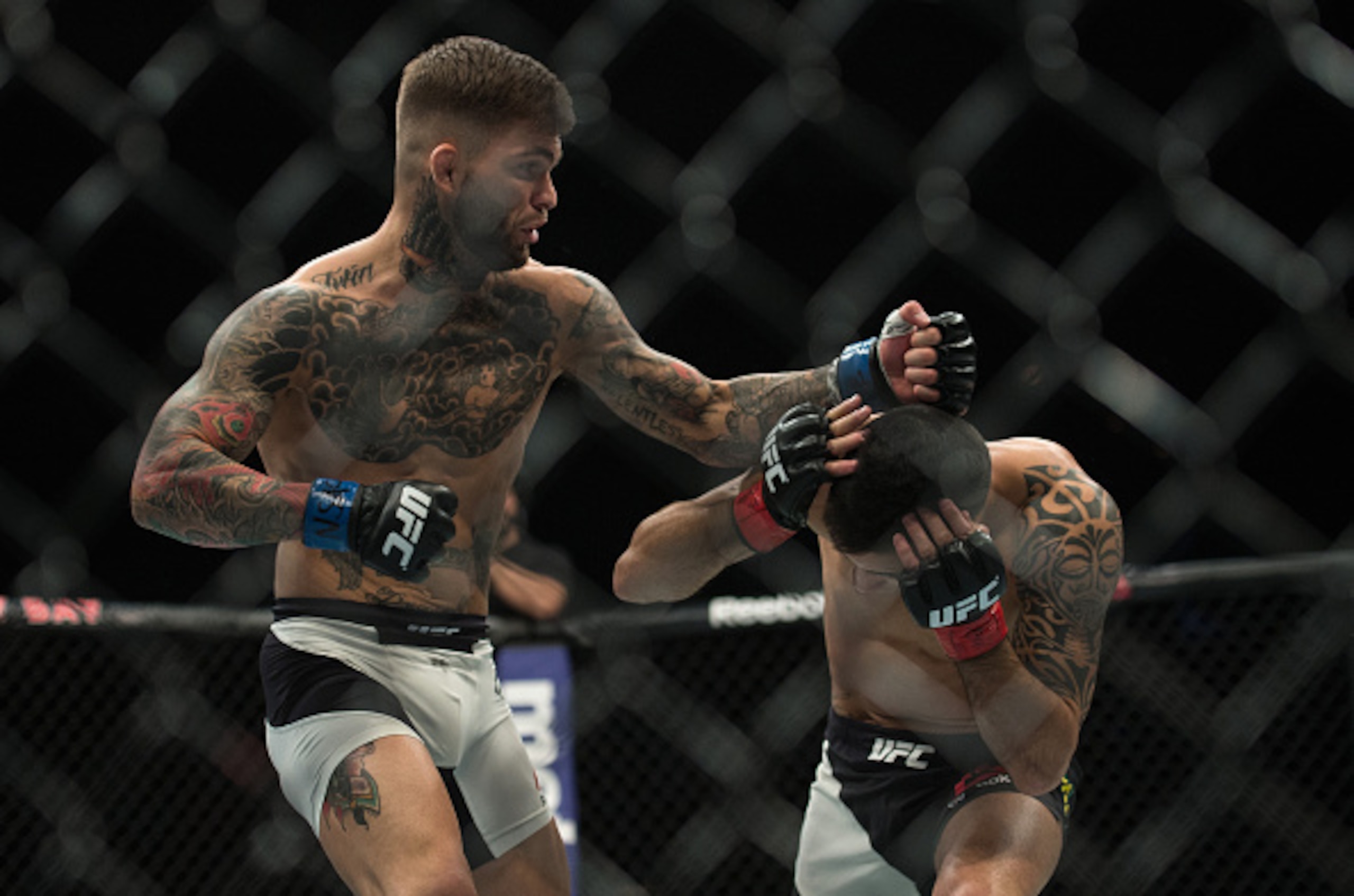
Strawweights
Randa Markos (6-3; 2-2 UFC) vs. Cortney Casey (5-3; 1-2 UFC)
The Ultimate Fighter 20 veteran Markos takes on Casey in an excellent strawweight matchup. Markos has alternated wins and losses in four UFC outings, dropping a fight to Karolina Kowalkiewicz last December before rebounding with a win over Jocelyn Jones-Lybarger. Casey snapped a two-fight losing streak by finishing Cristina Stanciu in the first round just over a month ago.
Markos is quick and athletic, with a powerful right hand and a heavy kicking arsenal. She's a better offensive than defensive wrestler and likes to scramble on the mat. Casey is all offense, with a crisp, high-output striking game on the feet and an aggressive submission repertoire on the mat. Defense is an afterthought for her, though.
Prediction: This is a great matchup of aggressive, active fighters, and in a back-and-forth brawl, Casey has just a bit more to offer. She takes a decision.
Featherweights
Artem Lobov (11-12-1, 1 NC; 0-2 UFC) vs. Chris Avila (5-2; 0-0 UFC)
McGregor training partner and TUF 22 competitor Lobov gets another inexplicable shot in the UFC against the debuting Chris Avila. Lobov has lost both of his UFC outings, neither of them competitive, against Ryan Hall and Alex White. Avila, a product of Nate Diaz's team, has won three straight on the California scene.
Lobov is a pure counterpuncher who prefers a hands-down style. He packs a punch and throws from weird, unpredictable angles, but he's a bad defensive wrestler and doesn't throw much. Avila is a slapping boxer on the feet and has an aggressive submission game on the mat, but he's raw and has yet to put his game together into anything coherent.
Prediction: Who knows? Lobov makes lots of mistakes, but whether Avila can capitalize is another story. Without any real confidence, the pick is Avila by decision.
Bantamweights
Raquel Pennington (7-5; 4-2 UFC) vs. Elizabeth Phillips (5-3; 1-2 UFC)
The veteran Pennington takes on Washington state's Phillips in a solid matchup of mid-tier bantamweights. Pennington has won two in a row, beating Jessica Andrade and Bethe Correia, since dropping a close decision to Holly Holm. Phillips defeated Jessamyn Duke in July 2015 after losing her first two UFC outings.
Pennington can do a bit of everything. She's an active and crafty striker, if not particularly powerful, tossing out a steady stream of kicks and punches at range. Her best work comes in the clinch and in transitions on the ground. Phillips is big, strong and athletic and has built her game around powerful but wild punching combinations. She's decent at everything else, but that's basically it.
Prediction: Phillips is the superior athlete and could give Pennington fits early, but eventually Pennington's greater craft and skill in multiple phases should tell. She takes a decision.
Bantamweights
Cody Garbrandt (9-0; 4-0 UFC) vs. Takeya Mizugaki (21-9-2; 8-4 UFC)
Rising star Garbrandt gets a soft sideways step in competition against the veteran Japanese fighter Mizugaki.
Garbrandt has finished three of his four UFC opponents in devastating fashion and capped his first headlining bout in May with a first-round knockout of the undefeated blue-chip prospect Thomas Almeida. Mizugaki has been around forever and snapped a two-fight losing streak with a win over George Roop last September.
The American is a 5-1 favorite in this matchup, and it's essentially a chance for him to develop a bit more as a fighter against a durable, skilled veteran before facing the division's elite.
Garbrandt is a puncher with off-the-charts physical gifts. He's a veteran of more than 30 amateur boxing matches and showcases surprising craft, especially as a counterpuncher, for a fighter so young. He's still missing some fundamentals, though, notably his jab and footwork. His speed and power have allowed him to get away with that thus far, but it'll eventually catch up to him.
Wrestling is a strong secondary area for Garbrandt, who shoots a gorgeous and explosive double and likes trips. He's a strong defender of takedowns as well.
Mizugaki is a durable and well-rounded veteran. He's a crafty striker with sneaky power and a lot of skill in exchanges, which allows him to catch more powerful and dangerous fighters with blind shots. The real core of his game is takedowns and top control, though, where he's grinding and stifling.
Prediction: Mizugaki can give Garbrandt trouble, especially in exchanges on the feet or in the clinch, but the American is just too fast, too powerful and too dynamic. Garbrandt finishes Mizugaki in the second round.
Tim Means vs. Sabah Homasi
3 of 7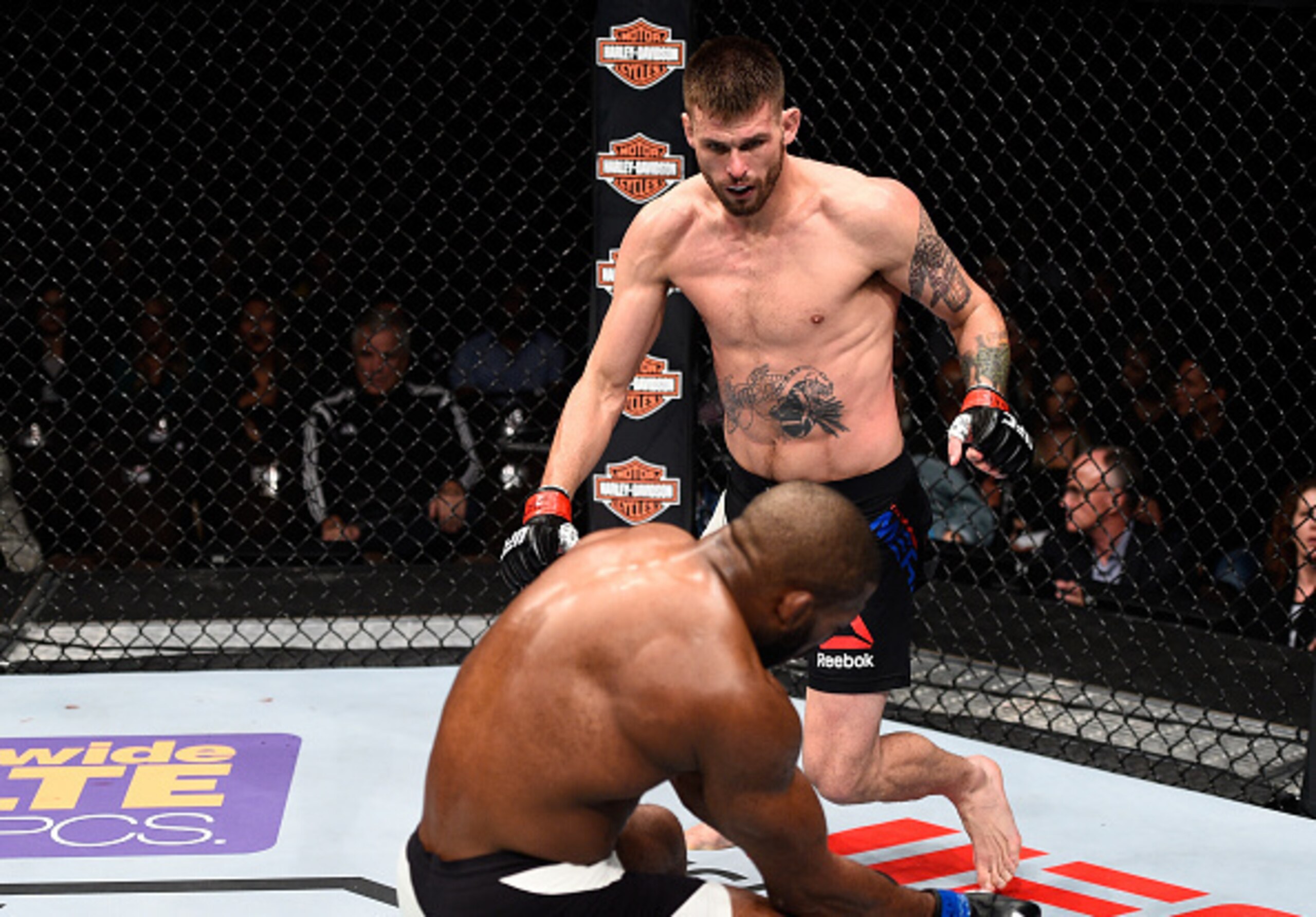
Welterweights
Tim Means (25-7-1; 7-4 UFC) vs. Sabah Homasi (11-5; 0-0 UFC)
Hailing from Albuquerque, New Mexico, Means returns from a brief suspension due to a tainted supplement and takes on short-notice debutant Homasi, who replaces the injured Sean Strickland. Homasi is a veteran of The Ultimate Fighter 21 and has won six of his last seven matches. Means knocked out John Howard in December after falling to Matt Brown—a loss that snapped a four-fight winning streak.
Means is huge for the division at 6'2", and the southpaw puts his height and length to good use with a rangy striking arsenal built around straight punches and kicks. He's a sharp and fundamentally sound striker who packs surprising snap in his shots and has a great command of rhythm, throwing a series of half-speed shots before ripping a lightning-fast straight left or hook to the body.
Pace is the best part of Means' game. He routinely throws 15 or 20 strikes per minute, which helps to keep his opponent on the end of his reach and bury him in volume.
Means is no less dangerous on the inside. He's a master of elbows at close range and is nasty in the clinch, with sharp knees and short punches. Wrestling isn't his strongest suit, but he's a competent defensive wrestler and can hit trips and shots when the mood strikes. His top game is nasty, with heavy punches, nice passes and a preference for the arm-triangle choke.
Homasi is a striker by trade. He's not small for the division in his own right at 6'0", and he uses that height with a crisp jab. Flurries of power punches are his wheelhouse, though, and when he lets them go, he's devastating. Stepping knees add another dimension of danger.
Finding a balance between aggression and a more measured approach is the basic issue with Homasi's game. He can fight in a controlled fashion, but then he doesn't throw enough volume to make much happen. He can work faster, but then he throws himself off balance with wild combinations and leaves himself open for the counter.
Homasi can defend takedowns, but striking is what he wants to do.
Betting Odds
Means -420 (bet $420 to win $100), Homasi +335 (bet $100 to win $335)
Prediction
This is Means' fight to lose. He's the more durable, more active and more accurate striker who can be even more dangerous without exposing himself to unnecessary risk. Means knocks out Homasi late in the first round.


Hyun Gyu Lim vs. Mike Perry
4 of 7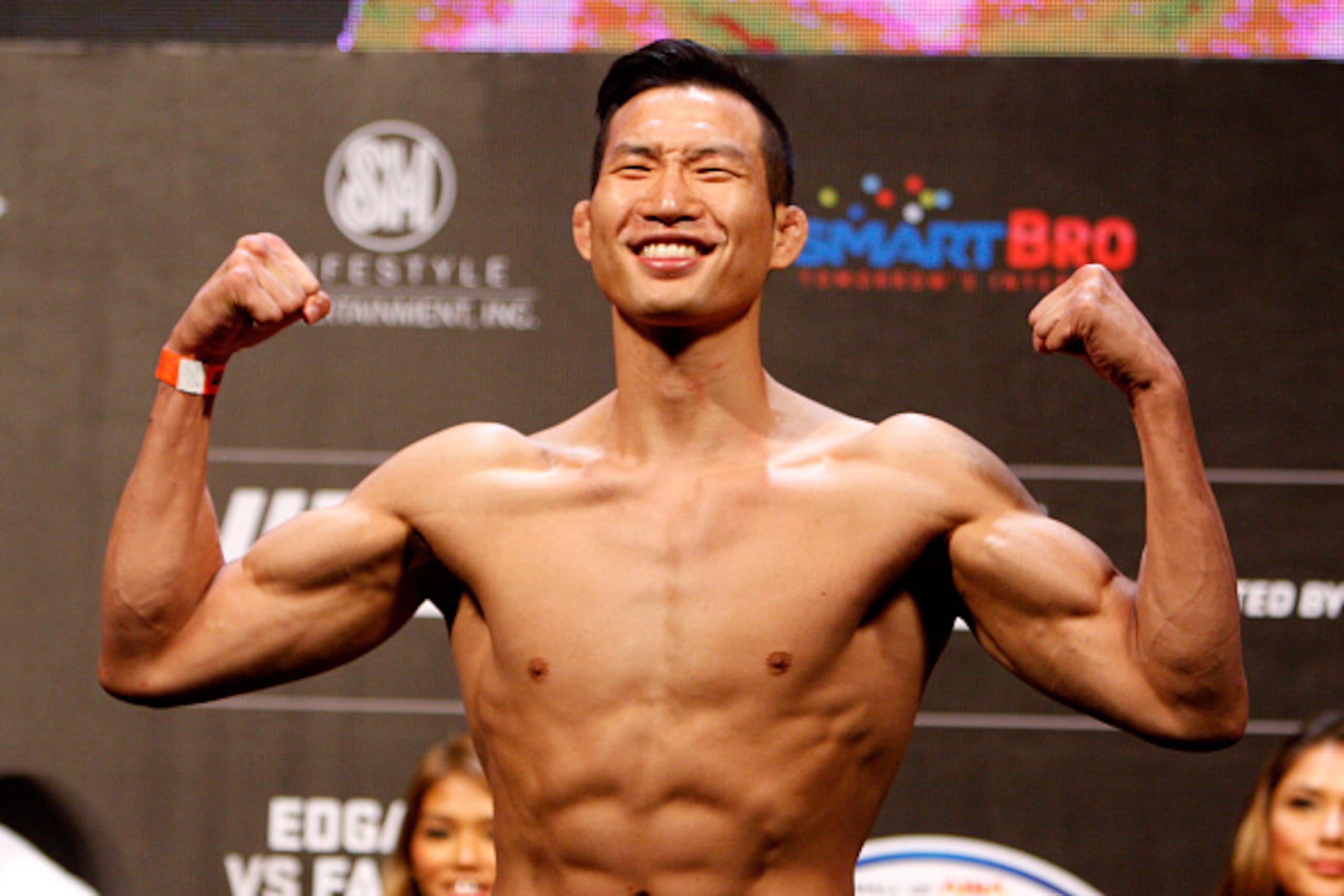
Welterweights
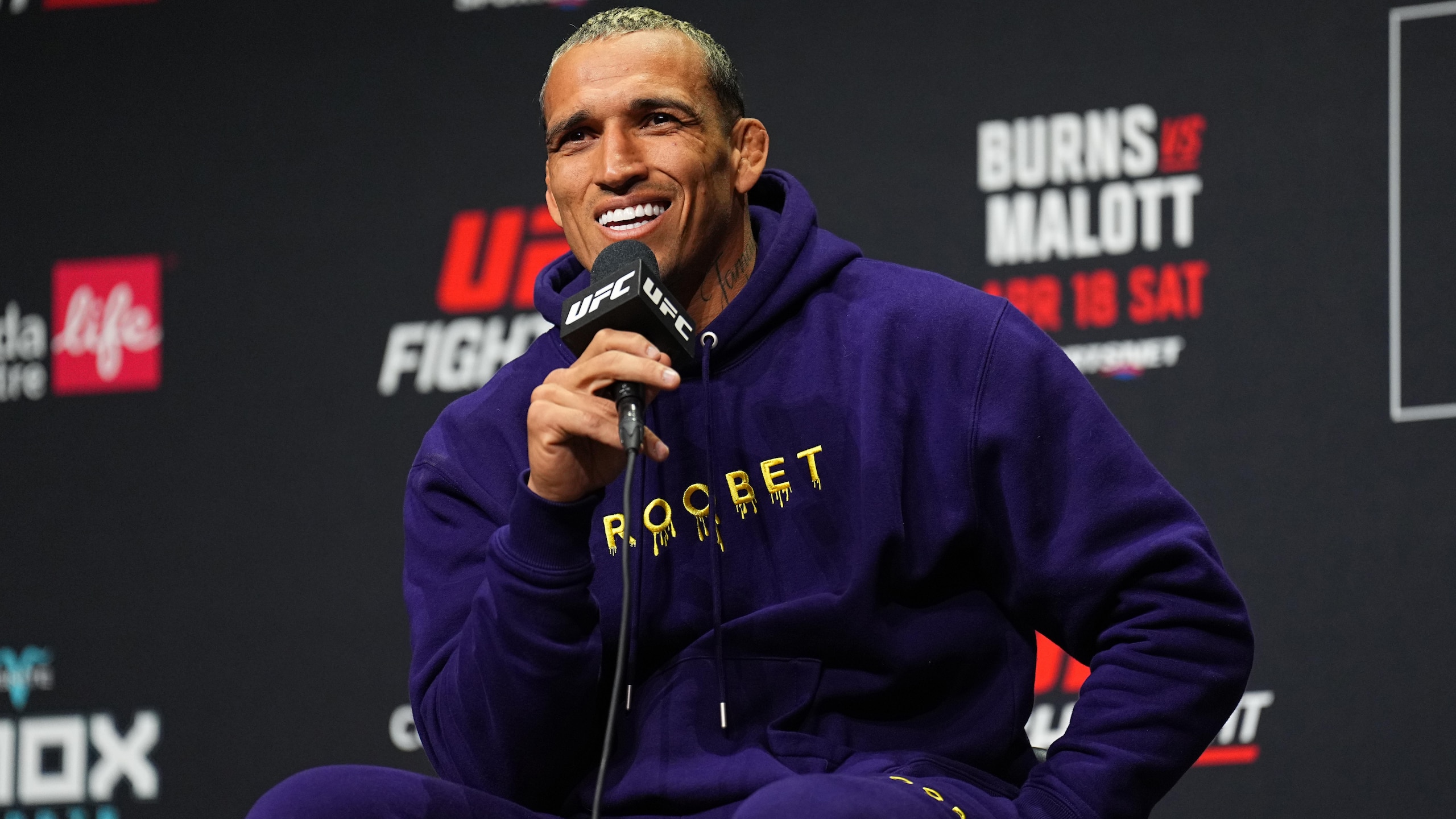
Hyun Gyu Lim (13-5-1; 3-2 UFC) vs. Mike Perry (6-0; 0-0 UFC)
Korea's Lim returns from a layoff of more than a year to take on UFC debutant Perry, who steps up to replace the injured Sultan Aliev. Lim has had mixed results in his UFC career, dropping fights to Tarec Saffiedine and Neil Magny while scoring wins over Takenori Sato, Pascal Krauss and Marcelo Guimaraes. Perry has yet to see the judges in six fights, knocking out each of his opponents during his two-year career.
Lim is an enormous welterweight, standing 6'3" with a ridiculous 77-inch reach. He's a brawler by nature who loves to throw winging hooks as he barrels forward into close quarters. There isn't much in the way of variety or craft in his game, though he does excel at altering the angle of his punches to loop around the opponent's guard and land from awkward directions.
The Korean carries enormous, destructive power in every shot he throws. He works fast too, tossing out a steady stream of strikes and then flurrying if he senses his opponent is in trouble.
Stepping and flying knees are Lim's most dangerous weapons, and he excels at timing them as he pressures his opponent toward the fence. With the opponent's back to the cage, there's nowhere for him to retreat to, which gives the knee a better chance of landing.
Lim is a monster in the clinch, where his height and frame give him ridiculous leverage. His knees are lethal in tight, and he excels at transitioning from flurries of punches to the clinch and back to flurries.
Solid takedown defense mostly keeps Lim standing, though he has conceded takedowns to the better wrestlers he has faced and isn't a wizard on the ground.
Perry is a physical specimen with good speed and huge power in his shots. He's a developing striker who's still learning his craft, but he has the basics down: a crisp, consistent jab and heavy kicks to maintain the distance and a preference for leaping into range with a big overhand or hook.
His footwork isn't great, and he doesn't throw many combinations, which means he'll struggle to maintain a quick pace against better opposition, but he has a good puncher's chance as a young and still improving fighter.
It's hard to say given the limited opposition he has faced, but Perry seems to be a decent wrestler and solid defender of takedowns, if one who relies heavily on his physical gifts.
Betting Odds
Lim -325, Perry +265
Prediction
Lim's wildness will give Perry some opportunities, but the Korean is bigger, stronger, more diverse and much, much more experienced. The American could land big, but the pick is Lim by knockout in the first round.
Donald Cerrone vs. Rick Story
5 of 7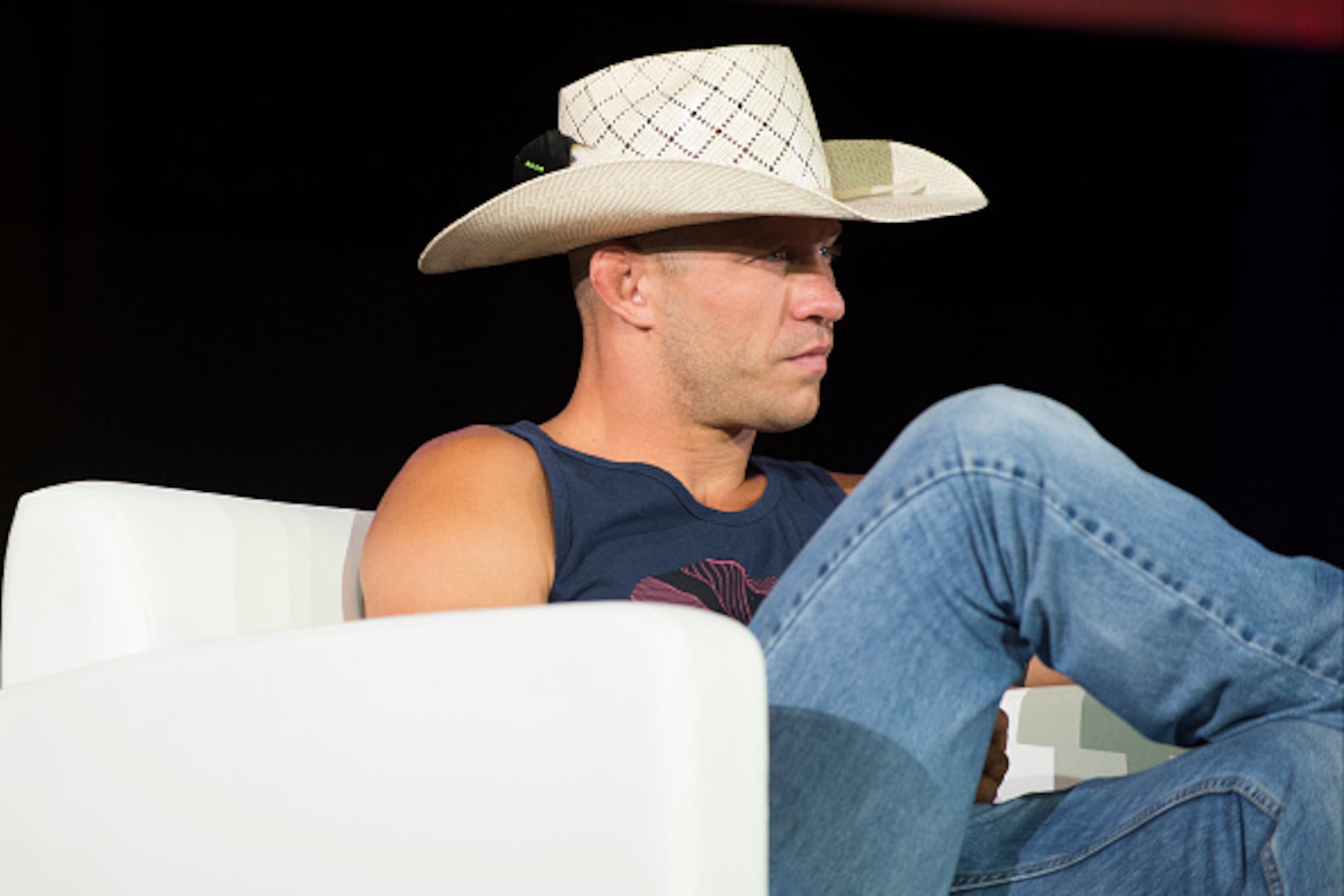
Welterweights
Donald Cerrone (30-7, 1 NC; 17-4 UFC) vs. Rick Story (19-8; 12-6 UFC)
Longtime lightweight fixture Cerrone gets his first crack at an elite welterweight in his third fight at 170 pounds. Since moving up, Cerrone has defeated Alex Oliveira and then former middleweight title contender Patrick Cote—both inside the distance in exciting fashion. He faces the veteran Story, who is riding a three-fight winning streak that includes victories over Tarec Saffiedine and Gunnar Nelson.
This is a big fight in a suddenly wide-open welterweight division, and the winner will have a good claim on a top-contender matchup.
Cerrone settled in as a reliably elite lightweight for several years, but he didn't show a ton of growth during that period; you more or less knew what to expect—both for good and bad. Since moving up to 170 pounds and switching full-time to the tutelage of Jackson-Winkeljohn's Brandon Gibson, he has shown remarkable growth for a fighter in his 10th year of professional competition.
The core of Cerrone's game remains rangy kickboxing focused on a high volume of punch-kick combinations and especially crushing low kicks, but he's shown some effective new tools.
First, Cerrone had always had a bad habit of staying too flat-footed and immobile at range, but now he's cutting more angles and employing more circular movement, which both opens up his offense and makes him harder to hit. His pivots and fundamental footwork are much improved.
Second, Cerrone's hands—for most of his career an afterthought when in his kick-centric game—have looked quicker, sharper and much more powerful. His left hook in particular has turned into a dangerous weapon, particularly when he uses it to finish his combinations.
Third, Cerrone is more willing to hang in the pocket and exchange. This doesn't mean brawling, but responsibly and rationally picking his spots to respond to his opponent's punches with head movement and combinations. This makes Cerrone more difficult to pressure, which has always been his Achilles' heel.
Finally, Cerrone has always had a lovely but underused takedown game. He's doing more with it now, especially using it to counter his opponent's forward movement and pressure. Plant your feet to explode forward with a combination, and Cerrone will duck under for a technically sound knee tap or double leg.
On the mat, Cerrone remains as dangerous as ever, with a criminally underrated passing and control game on top and a knack for getting to the back in transitions.
Story is an aggressive tank of a fighter. The southpaw moves forward from the opening bell, though not recklessly, firing off hard punching combinations and potent low kicks as he works his way into the pocket and the clinch. While not blessed with devastating one-shot knockout power, Story does pack some pop, especially when he digs to the body.
Fighting Story is an exhausting proposition, and he embraces attrition in everything he does. He targets the body and legs with regularity, investing early in damage that will pay off later in the fight. Whenever possible, he dives forward into the clinch and grinds his opponent against the fence with head pressure and underhooks. Sharp knees and short punches amplify the already draining proposition of tying up with him.
That's the essence of Story's game: Bull his way forward, land shots and get into the clinch.
The former wrestler also has a nice array of single- and double-leg takedowns he chains nicely, and he's a solid, if not outstanding, defender.
When he gets on top, Story mostly prefers to control. He has good posture and packs legitimate power in his ground strikes, and especially from half guard, he's nearly impossible to shake off. The arm-triangle choke is his go-to technique, and his squeeze is ridiculous when he locks it in.
Betting Odds
Cerrone -155, Story +135
Prediction
This is a great matchup. Stylistically, Story's aggression and pressure present a real challenge for Cerrone, who has struggled with opponents' relentless forward movement in the past. That was a different Cerrone, though, one whose footwork wasn't as sharp and who wasn't as committed to countering with punches and takedowns.
If Cerrone has continued to build on the improvements he made in his first two fights at welterweight, he should be able to stick and move at range, use his height and reach advantage to land straight punches and kicks, and work a takedown or two and some top control.
Cerrone takes a fun, back-and-forth decision.
Anthony Johnson vs. Glover Teixeira
6 of 7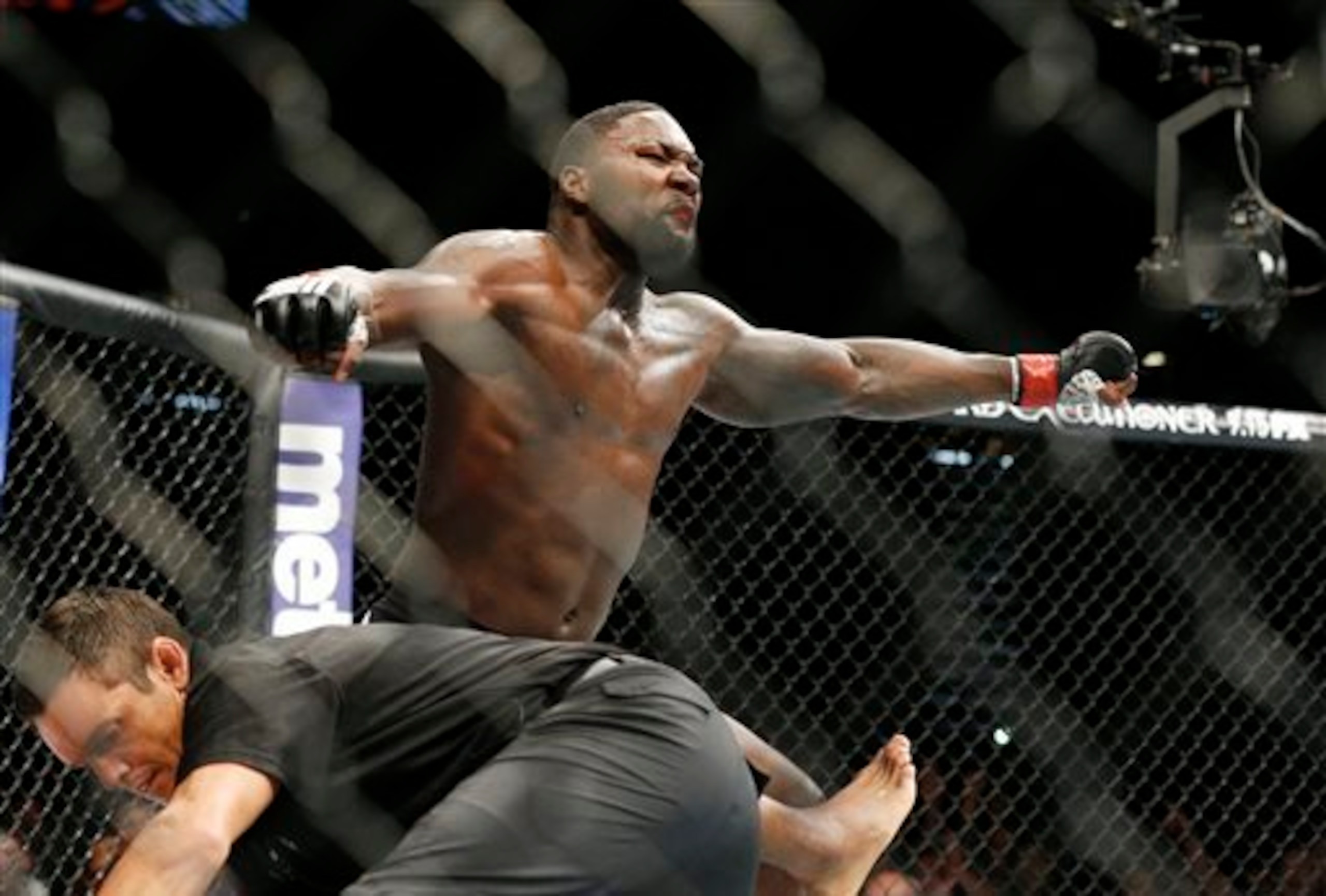
Co-Main Event: Light Heavyweights
Anthony Johnson (21-5; 12-5 UFC) vs. Glover Teixeira (25-4; 8-2 UFC)
With Jon Jones sidelined due to a failed drug test for the foreseeable future, the race to be the next fighter to challenge light heavyweight champion Daniel Cormier is wide-open, and the winner of this Johnson-Teixeira matchup will almost certainly have first dibs.
Since losing a matchup with Cormier for the vacant title in May 2015, Johnson has knocked out both of his opponents in devastating fashion. Jimi Manuwa made it to the second round, but only barely, while Ryan Bader fell in 86 seconds. Teixeira has won three in a row, all of them inside the distance, and finished off former light heavyweight champion Rashad Evans in one minute, forty-eight seconds in April.
Johnson has ridiculous power and great athleticism, but there's also a great deal of craft in his game. He is one of esteemed kickboxing coach Henri Hooft's prize students, and that Dutch-style influence shows in his approach on every level.
Rumble has always been aggressive, but he showcases a much more tempered and controlled approach these days.
He works his way forward in either stance, probing with his jab and cracking away with low kicks to draw out a response. When his opponent throws, Johnson responds with devastating punch-kick-punch combinations. He's smooth, technical and has great balance, which allows him to string together slick sequences without throwing himself out of his stance.
Johnson's timing and sense of the distance on these counters is elite. He's the sharpest and quickest counterpuncher in the division by a long stretch and is one of the best in the sport in general. Any shot can end the fight, but he works at a quick enough pace that he can win rounds as well.
The clinch is another strong suit for Johnson. When he gets his hands on his opponent, he lands vicious series of uppercuts and knees, any of which can end the fight.
Explosive takedowns add another dimension to Johnson's game. He times them beautifully, preferring the double, and drives through to finish with authority. Defensively, Johnson is impossible for all but the best wrestlers to get to the mat, and he excels at beating opponents up as he sprawls and defends.
On top, Johnson is a monster. His ground strikes carry even more power than he does on the feet, he passes nicely and he makes excellent use of the ride for control and to land vicious shots. He's effectively helpless from his back, though, and isn't great in transitions.
From a technical and physical perspective, Johnson is nearly unstoppable. The problems are cardio and mentality. Like many aggressive fighters, Johnson is something of a bully, and when things aren't going his way he gets inside his head and panics. Even if he's in great shape, this gasses him out and leaves openings for calmer opponents to capitalize.
Teixeira is an aggressive fighter in his own right. The Brazilian inches his way forward with small, technical steps and occasionally fires off a sharp jab. The second he's within punching distance, Teixeira unleashes a vicious straight right-left hook combination and sticks on his opponent like glue.
This kind of sequence is Teixeira's bread and butter. He doesn't have a ton of diversity to his striking approach; the Brazilian is almost exclusively a boxer, and he almost always targets the head. it's a limited game, but it's stripped down and highly effective. Teixeira's hands are fast and powerful, and his footwork is mostly good enough to do what he needs it to do.
If Teixeira were solely a striker, he'd be dangerous. What makes him an elite fighter is his ability to threaten in every phase.
The Brazilian has a gorgeous takedown game that focuses on short-range single-leg shots. He freezes his opponent with the threat of his hands and then ducks under, grabs the leg and finishes. Chaining that single together with double-leg takedowns is another strength, and his defensive wrestling is good enough to stuff all but the best wrestlers in the division.
From top position, Teixeira is lethal. The longtime jiu-jitsu black belt passes with practiced skill, rains down potent ground shots and melds his strikes with the threat of submissions, particularly his arm-triangle choke. He's dangerous in transitions too and boasts a dangerous guillotine choke.
Betting Odds
Johnson -185, Teixeira +160
Prediction
While both are aggressive and like to pressure, Johnson is faster, hits a bit harder and has a more diverse arsenal on the feet. Teixeira struggles if forced to do anything other than pressure, while Johnson can also stick and move at range between bouts of aggression.
That diversity should be the difference here. Johnson can stuff Teixeira's takedowns, make him pay with knees and uppercuts and maintain a much longer range on the feet with kicks and jabs. Eventually, one of Johnson's monstrous punches will land cleanly. Johnson finishes Teixeira with strikes in the second round.
Conor McGregor vs. Nate Diaz 2
7 of 7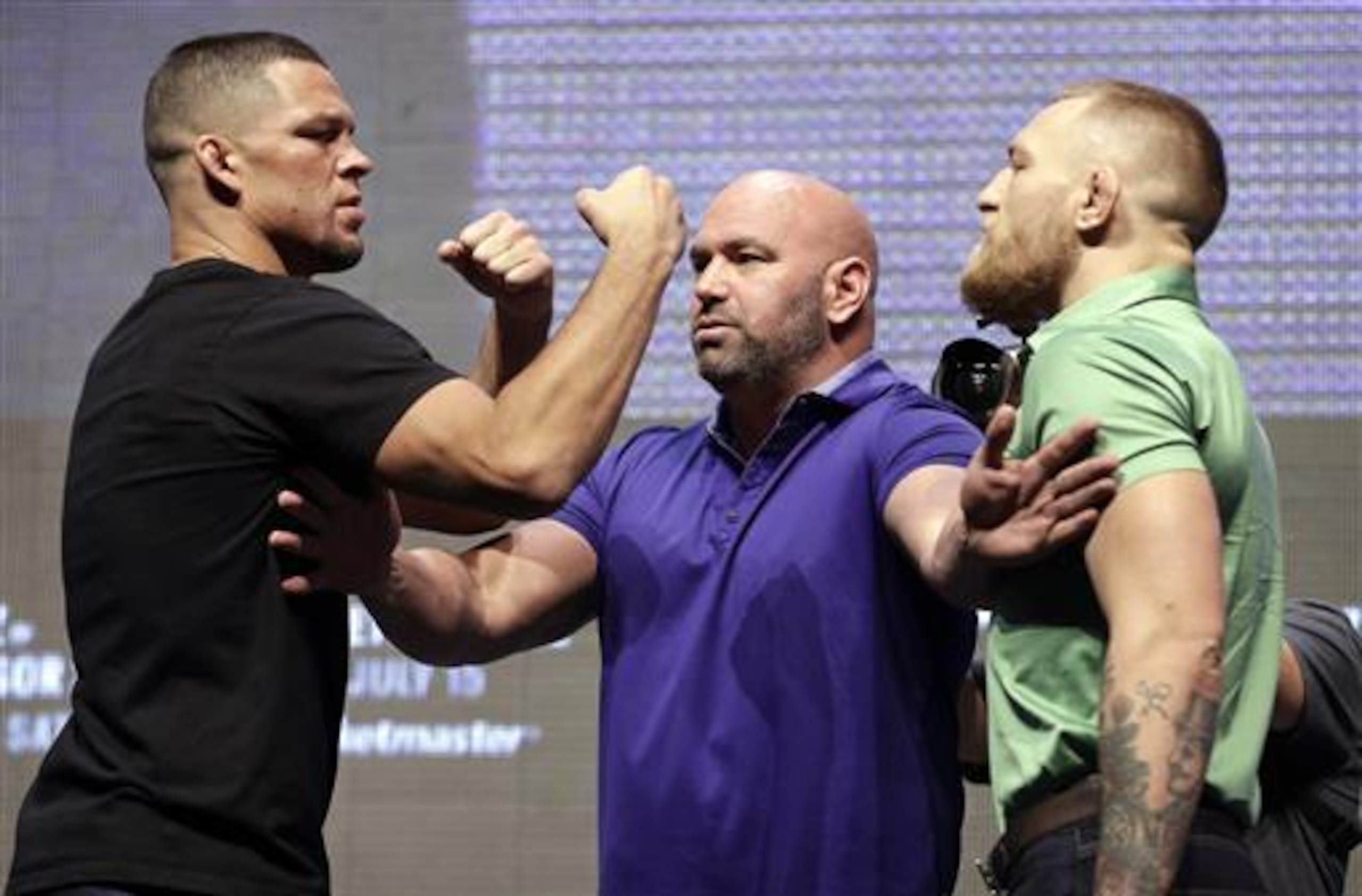
Main Event: Welterweights
Conor McGregor (19-3; 7-1 UFC) vs. Nate Diaz (19-10; 14-8 UFC)
Irish superstar McGregor tore through his first seven UFC opponents on his way to becoming the promotion's biggest draw and looked to add to his featherweight title with a lightweight bout against then-champion Rafael Dos Anjos last March.
When Dos Anjos pulled out with less than two weeks to go before the fight, the inimitable Diaz stepped into the void and pulled off one of the most shocking upsets in recent memory.
Now the two fighters meet again in a highly anticipated rematch. Their first fight was one of the best of the year by any measure; now McGregor gets the chance for redemption, while Diaz can firmly establish himself as an elite fighter worthy of the biggest-money bouts.
McGregor is a southpaw puncher with a deep array of tricks at his disposal. His crushing left hand is the centerpiece of his game, but how he applies it is open and depends on the opponent.
The Irishman likes to pressure, working his way forward behind an array of front, oblique, side, round and spinning kicks. He uses them to drive his opponent backward and cut off escape angles to one side, either forcing him to move into McGregor's devastating left hand or to step back toward the fence.
Once the opponent's back hits the cage, McGregor unloads with slick head-body punching flurries and left hand after left hand, keeping him stuck on the end of the Irishman's long reach. If the opponent tries to work forward, McGregor cuts a sharp angle and plants a counter left—his best and most technical punch by a wide margin—on the chin.
McGregor is better than he used to be with his lead hand, but it's still a weakness. He mostly probes the distance and occasionally throws a jab, while he's only really comfortable throwing a right hook after the left hand or in a flurry. The occasional leaping right uppercut adds some variety, but the left hand is still his bread and butter.
Defense isn't McGregor's strongest suit. His head movement has improved, but he relies on his length and control of the space of the cage to avoid his opponent's shots. He has always been hittable on his way in and out and especially after he throws the left.
Essentially, the Irishman's striking game is built around bullying smaller orthodox fighters with his size and power. He likes to push them back and keep them on the end of his reach, where he has the freedom to move through the cage while they're stuck on the fence eating his left hand. Fighting a taller southpaw requires substantial adjustments.
The rest of McGregor's game is better than it has gotten credit for. He's a solid defender of takedowns, if not an elite defensive wrestler. Offensively he shoots a beautiful reactive double-leg takedown as his opponent comes forward and has a strong technical command of finishes. The double-overhooks throw in the clinch is another specialty.
As a grappler, McGregor does excellent work from top position. He has a smooth pressure-passing game and lands ground strikes with tremendous force as he maintains control.
His real issues come in scrambles and on his back. He has a bad habit of panicking in transitions, something that has cost him in all three of his losses, and he offers little when forced to work from the guard for extended periods.
Diaz is one of the best pure boxers in MMA, if not the best. The 6'0" southpaw puts his long frame to good use with a punishing, consistent jab and a razor-sharp, snapping cross behind it.
More than his frame or his repertoire of punches, though, Diaz has a deep command of the fundamentals and subtleties of boxing for MMA. It's not just that he throws jabs, but that he throws a number of variations on the jab and mixes up his timing and rhythm. Every time he throws, Diaz moves his feet, and he constantly cuts small angles through the space of the cage.
This makes it difficult both to get inside Diaz's reach in open space and to back him up to the fence, where his reach advantage might be overcome. A constant counter right hook covers his pivots and surprises pressuring opponents as they come in.
Aside from his sheer technical skill, which is substantial and underrated, what makes Diaz special is his pace. He routinely throws 20 to 30 punches in a minute; in the 30 seconds after he buzzed McGregor in the second round of their fight, for example, he threw a staggering 30 strikes. Once he gets into a rhythm, Diaz buries his opponent under the weight of his offensive output.
Diaz isn't unhittable, but it's surprisingly difficult to hit him cleanly. Because of the way he bends his legs and his tendency to pull his head backward, he rolls with many shots and takes away much of the sting even if he doesn't avoid them entirely.
Wrestling has never been Diaz's strong suit, but he's better than advertised, and in the clinch he's a handful. His long frame gives him great leverage, which he uses to hit slick trips and throws and to land a steady stream of short punches and sharp knees.
On the mat, Diaz is a wizard. His guard is one of the most active and dangerous in the sport, combining sweeps with triangle-armbar chains of exceptional technical skill and speed. If he can find his way to top position, he's even more dangerous, with surprisingly dangerous ground strikes combined with silky-smooth passes and a nose for a wide array of submissions.
He's not easy to deal with in transitions either, and scrambling with Diaz is a recipe for either giving up a front headlock choke or allowing him to get to the back.
Betting Odds
McGregor -115, Diaz -105
Prediction
All of the justified hype around McGregor leading into the first fight disguised the fact that on a basic level, this is a tough matchup for him. McGregor relies on his length, his power and his ability to push a quick pace while staying efficient; Diaz is longer, durable enough to eat his shots and works infinitely faster.
Compounding those difficulties is Diaz's far more versatile and educated lead hand. McGregor is a southpaw who relies on his left hand, while Diaz's southpaw jab—not to mention his enormous experience against other elite southpaws—allows him to enforce his longer range.
With that said, this is a winnable matchup for McGregor.
The biggest thing for the Irishman is staying disciplined. He abandoned his kicks, the tool he needed to compete at long range with Diaz, early on in their first meeting in favor of landing the big, fight-ending shot. If he sticks and moves, using his kicks to punish Diaz's lead leg while avoiding the kind of quick-paced brawl Diaz prefers, he can outpoint the American.
The only problem with that scenario is that it requires McGregor to overcome his instincts and fight against his personality. He fights the way he does because he believes in his power, because he likes knocking people out and because, deep down, he's an entertainer who wants to put on a show.
Putting that aside in favor of a smart, disciplined and less entertaining game plan is no easy task, as simple as it might sound on paper. For that reason, the pick is Diaz by decision or late finish.
All betting odds via Odds Shark.
Patrick Wyman is the Senior MMA Analyst for Bleacher Report and the co-host of the Heavy Hands Podcast, your source for the finer points of face-punching. He can be found on Twitter and Facebook.
.jpg?w=2560 "Eagles Titans Football")