

Wayne Rooney Deserving of Place on List of Manchester United's Great Forwards
Wednesday evening will see Wayne Rooney's testimonial played out under the floodlights at Old Trafford, as Manchester United salute one of the most important players in the club's history.
There was a time when it did not look like a testimonial would be in Rooney's future, as former manager Sir Alex Ferguson twice made public the forward's attempts to leave the club—the first in 2010 and the second in 2013, per BBC Sport.


In the end, though, he stayed, and his career has become one of the most storied in the pantheon of United stars.
When considering where exactly he ranks in that list, a logical place to start would seem to be the numbers. And what numbers they are.
Rooney is ninth in the all-time appearance tables for United, with 520, nine behind Denis Irwin and 15 behind Tony Dunne. This season he will have his sights set on the 20 appearances he would need to overhaul Alex Stepney and move into sixth place.
Then, of course, there are the goals.
Rooney has scored 245 of them in all competitions for United, four shy of Sir Bobby Charlton's long-standing record. Having pipped Sir Bobby as all-time leading goalscorer for England in September last year, it would be a seismic shock for him not to beat the club record too.
His goals-per-game ratio is naturally substantially higher than Sir Bobby's. Charlton was a midfielder, and his 0.33 goals-per-game average was remarkable for his position, but Rooney's is 0.47, meaning he is just shy of averaging a goal every two games.
That represents a fine return over the course of a career like his. Of the top 10 leading United goalscorers, only three men better that average: Denis Law, Jack Rowley and Dennis Viollet. Rowley was on United's books from 1937 to 1954 and Viollet from 1953 to 1962, so meaningful comparison is impossible given how profoundly different the game was then.

It was a little closer to its modern equivalent by Law's day. However, the legendary Scot was an out-and-out poacher. One of the things that makes Rooney so hard to judge via numbers is just how many positions he has played during his time at the club. His time as a Law-esque poacher was confined to two or three seasons.
Of course, individual achievements and individual goalscoring records are not what football is about. It is a team game, and being a United player in Rooney's era meant his job has been to help the Red Devils win trophies. With last season's FA Cup triumph, the former Everton man has completed the set.
He has won five league titles, two League Cups, the UEFA Champions League and the FIFA Club World Cup, which no doubt made that FA Cup win even sweeter.
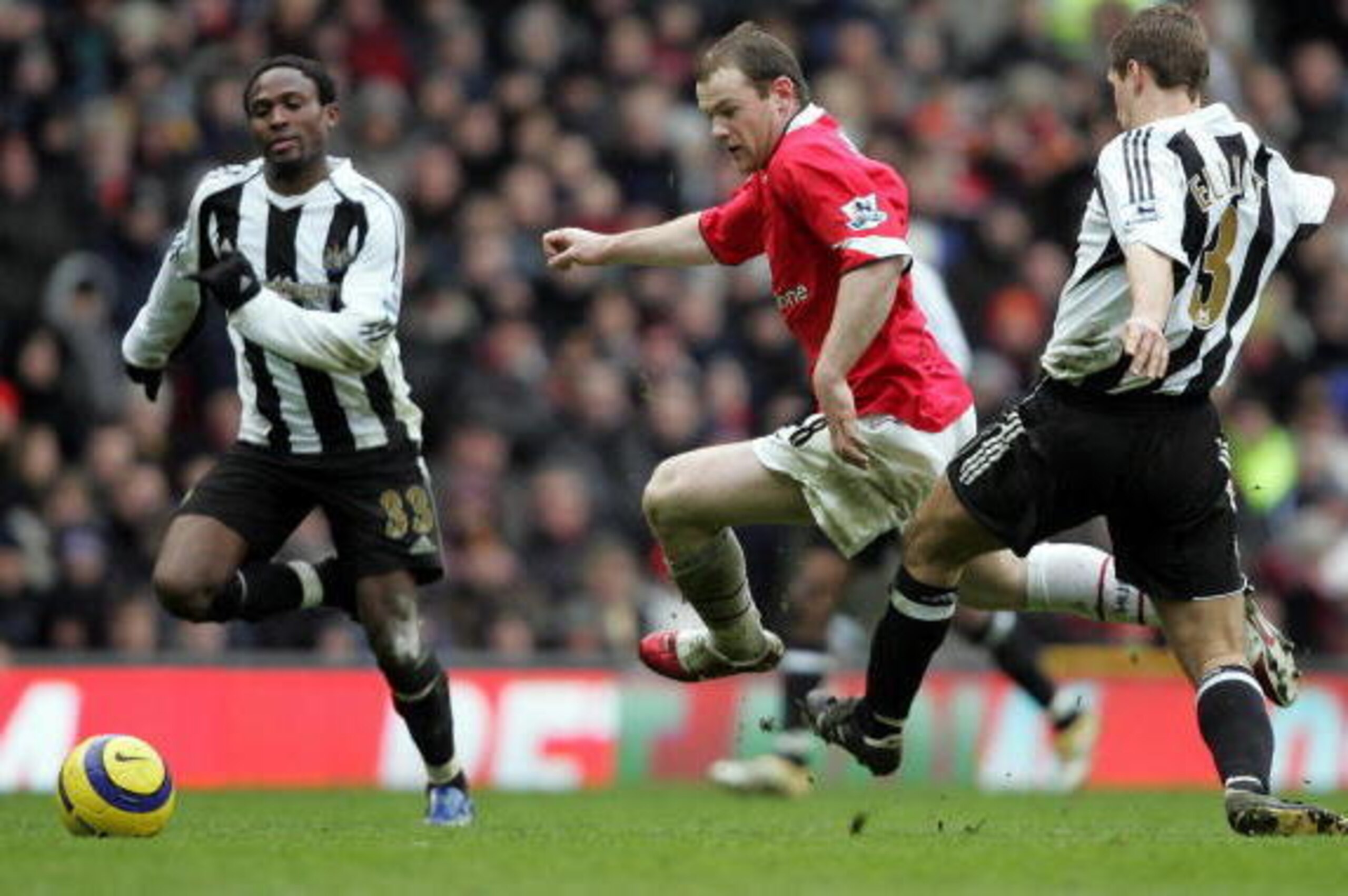
There have been individual awards too: PFA Players' Player of the Year in 2009/10, United's Player of the Year that season and in 2005/06.
Interestingly, those last two awards were given to almost totally different players. By 2009/10, Sir Alex Ferguson had reinvented Rooney as a striker. He developed a selfish streak he had kept on hold until Cristiano Ronaldo left the club in June 2009.
Ronaldo was always going to be the main man while he was at United, but in his absence, Rooney was free to take up the goalscoring slack.
Back in 2005/06, though, Rooney was a forward rather than a striker. And what a forward he was. He was 19 years old at the start of that campaign, and to watch him in action was to feel the thrill of potential.
There was the immediate possibility of what this boy could do with a football—the energy, impetus and skill he could bring to bear on a game. Any moment when Rooney was involved was a moment that could suddenly become magical.
He was an instant hero to the fans, playing with the ferocity every person standing on the terraces imagined they would bring to a United shirt.
Then, there was the possibility of what could be in the longer term. What would happen if this player kept improving, if he hit a trajectory that took him to a peak some way down the line?
And therein lies the great paradox of Rooney's career. How can a player who has won so much be considered as one who never lived up to his potential?
On one hand, there are the numbers, which speak so spectacularly of his potential being fulfilled. There are also the trophies, the records, the marketing, the praise from his peers and his managers.
But can those who saw Rooney at his magical, visceral best as a teenager say he has had the career they thought he could have had?
Once upon a time, Rooney and Ronaldo were considered equals. But since the Portuguese megastar left United, their careers have taken different paths. Rooney has never threatened to win the Ballon d'Or. Rooney has never won another Champions League, though he did add a couple of league titles to his haul.
Sir Alex, speaking in the programme for Rooney's testimonial said, (h/t Sam Wallace of the Daily Telegraph)
"He was an exciting signing [in 2004]. It was fairly shortly after I’d got rid of the idea of retiring and changed my mind, and I had to rethink about how we were going to take the club forward.
When you make the decision to retire, you stop thinking, but once I decided to stay I started thinking again and it was really centred around bringing energy back into the team by looking at young players.
Of course there was Cristiano Ronaldo, then there was Rooney, and it was a fantastic period. The two of them were unbelievable.
Wayne came in as a first-team player right away, even though he was only 18, and he’s gone on to play for Manchester United for 12 years, which is very difficult in the present day.
"
That longevity is truly remarkable—it is why he would make an all-time United first XI composed of the club's record appearance-makers.
But would he make many people's first XI of United's all-time best players? Ruud van Nistelrooy has the edge as an out-and-out goalscorer. Ronaldo certainly has the edge as a wide forward.
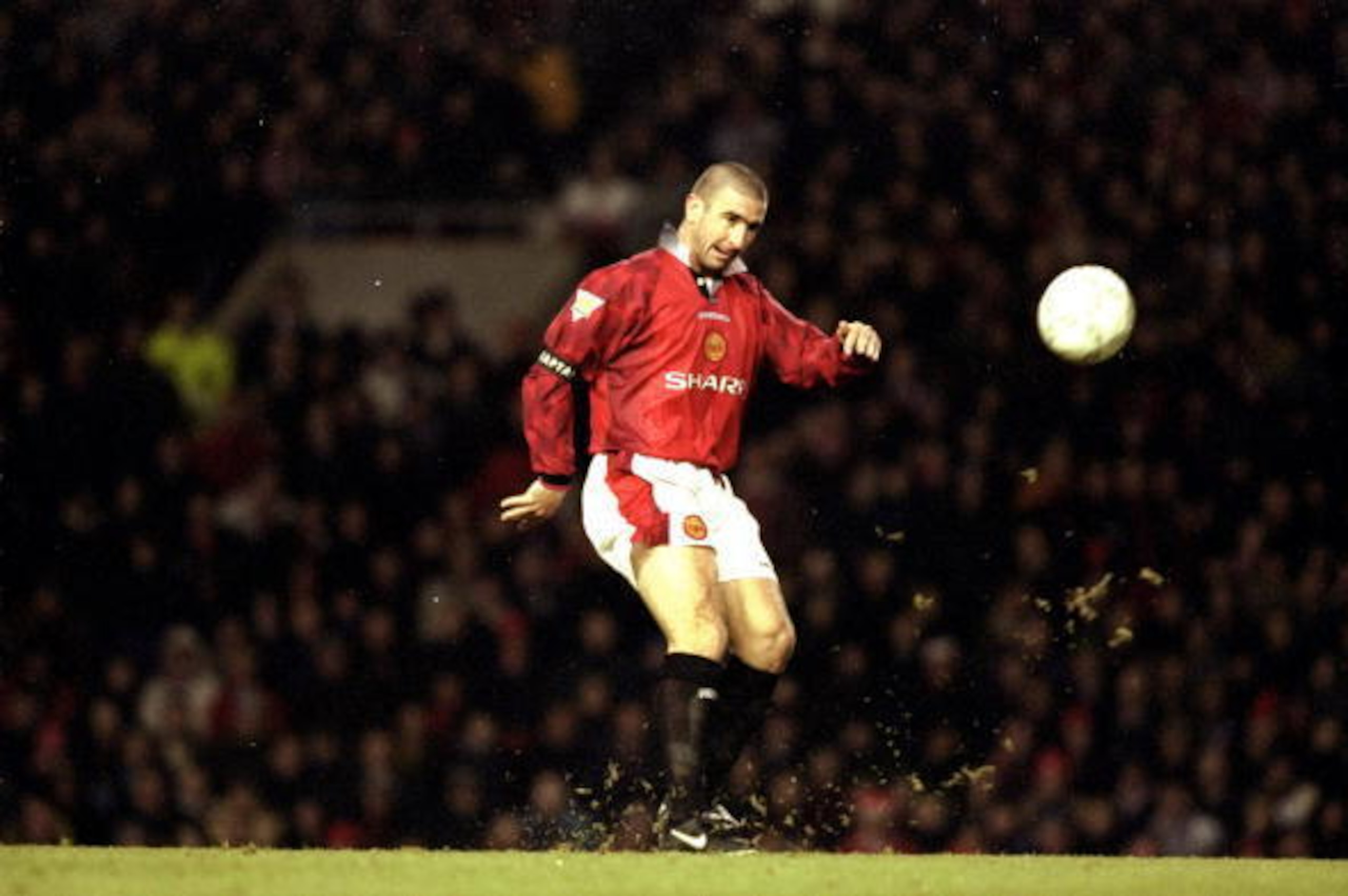
Eric Cantona was a more complete, more electrifying deep-lying forward, barring those early, devastating seasons when Rooney was it his raw best. Cantona is certainly immortalised as a hero in a much less complex way.
Law was a better poacher. George Best was a better magician.
People could perhaps argue the toss about a couple of those, but none are anything like outlandish claims.
However, that does not mean they all sit in the pantheon above Rooney as an all-time United great. They might pip him to a starting XI spot, but there are not too many managers who would turn down the option of having Rooney in their squad.
The fact he has to be compared to so many different kinds of player to assess what level he sits at speaks volumes of his versatility.

Of course, that versatility is much less exciting than the magic in his boots and fire in his eye he had as a young man, but it is the key to understanding his longevity—it is the means by which he has adapted and contributed so much to so many United sides.
If his career trajectory had continued on its best possible course, then Ronaldo and Lionel Messi would have had a genuine competitor to the title of world's best player. It did not, though, but the tangible, remarkable achievements he has attained should not be completely overshadowed by what he, and those who love football, may have missed out on.
Finding a definitive position for him among the greats is difficult from a subjective perspective because his career has taken in so many eras. But in the end, that does not matter The history books will almost certainly record his place as the man who scored more goals for one of the most storied teams in football history than any man had scored before him.
Whatever lies ahead, no one will be able to take that away from him. Whatever has gone before, Rooney has achieved remarkable sporting success. Asking for any more than that would just be greedy.
Appearance and goal data per Website of Dreams.


.jpg?w=2560 "Latest Peyton-Colts Rumors")


.jpg?w=2560 "Landing Spots for Trade Candidates 📍")
.jpg?w=2560 "Ugly Jets Scoring Stat 😳")