Breaking Down How Bayern Munich Can Get the Best out of Renato Sanches
Bayern Munich delivered a masterclass in transfer-market operations in May, when they announced the signings of Renato Sanches from Benfica and Mats Hummels from Borussia Dortmund on the same morning.
As many clubs were still focused on the remaining weeks of the 2015-16 campaign, some perhaps waiting until after Euro 2016 to take care of business, the Bavarians swooped to sign two of Europe's most coveted players before the transfer window officially opened.
In Sanches, Bayern managed to capture a teenager who appears to be on the cusp of greatness. The 18-year-old had a great season with Benfica, with the Bavarians witnessing his quality firsthand in the Champions League. He was included in the Portugal squad for Euro 2016, and although a benchwarmer in the early stages of the tournament, he grew into a star role.


.jpg?w=2560 "Seahawks Chiefs Football")
Sanches came off the bench at half-time in Portugal's final group-stage match, against Hungary, at a time when they were struggling. That game finished 3-3, and his team qualified for the knockout stages. He started every match thereafter, going the whole 120 minutes against Poland in the quarterfinals, a match in which he scored a stunning opener from distance before the game went to extra time and penalties.
During the Euros, Sanches became the youngest Portugal player to compete in a major tournament and the youngest player of any nationality to participate in a European Championship final. He was later named the Young Player of the Tournament ahead of fellow Bayern man Kingsley Coman and Portugal teammate Raphael Guerreiro.
Sanches' value most likely skyrocketed as a result of his fine performances at the Euros, but Bayern did well to snatch him before a bidding war could ensue. The next step for the Munich giants is to figure out how to best accommodate their new star to cultivate his abundant talent.
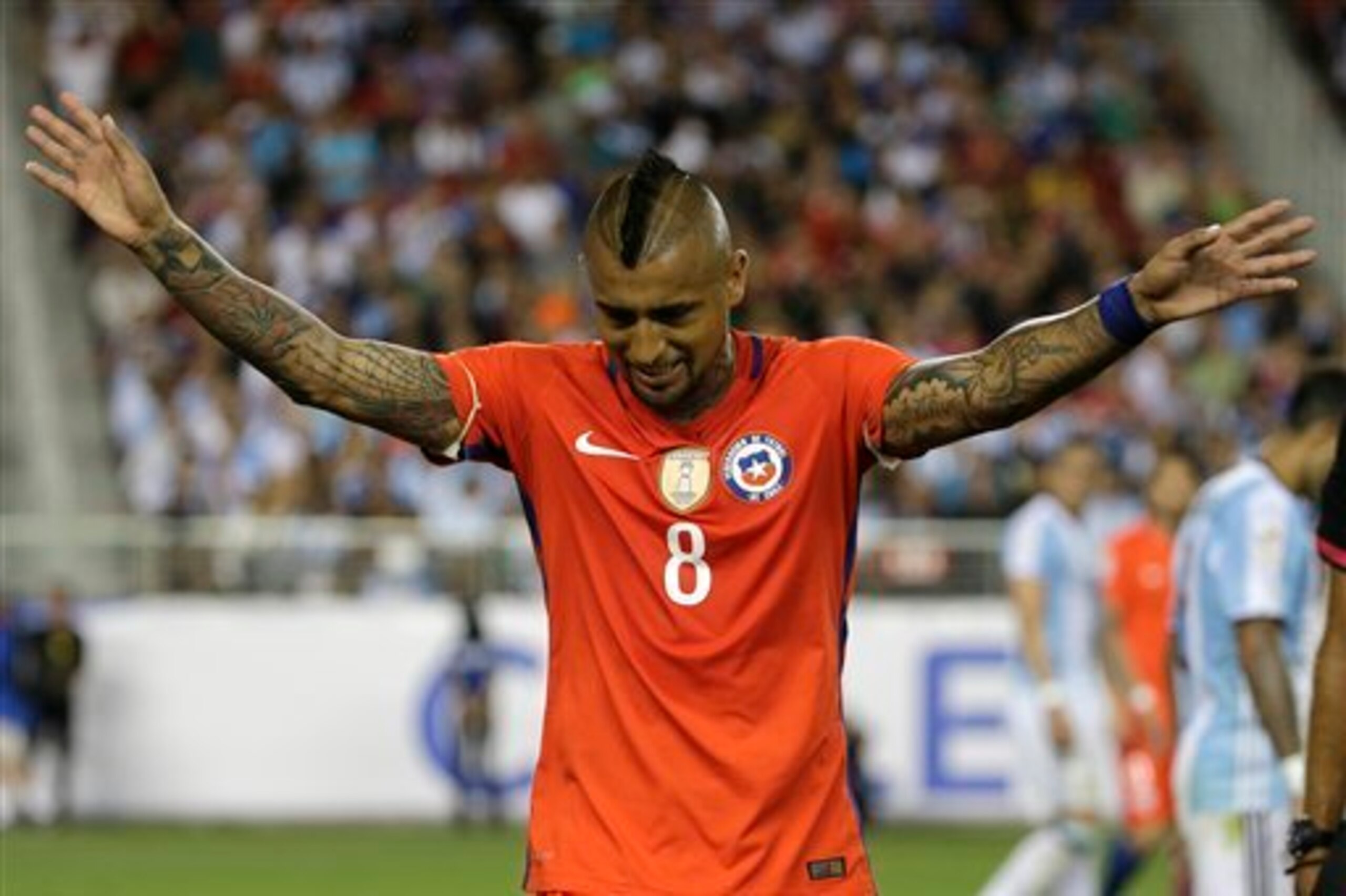
The first thing to consider is Sanches' ability and the type of player he is. Many have drawn parallels with Arturo Vidal, and the similarities are uncanny. The Portuguese is a physical monster, his chiseled chest more resembling that of an NFL player in his mid-20s than that of a teenage footballer.
He possesses pace in great bursts and can run for days, while his tenacity in trying to win the ball has few parallels. Vidal is nicknamed El Guerrero in his native Chile, and Sanches is well on his way to becoming O Guerreiro.
In games in which Bayern will need extra determination in midfield to close down space, it's reasonable and possible to use Vidal and Sanches in a double pivot. Their qualities are somewhat similar, although the latter is a bit more mobile. In such a scenario, it's important Bayern have plenty of creativity on the pitch. Franck Ribery and Thiago Alcantara are two good examples, as Coman, Thomas Muller and even Arjen Robben would need a bit more help in carving out opportunities in the final third.
Most of the time, however, Bayern will be playing against Bundesliga teams that cannot compete with them in terms of technical quality. Pep Guardiola often played with five forwards last season, regularly facing three central defenders flanked by a pair of full-backs. In those games, Guardiola generally used Xabi Alonso in midfield to act as a quarterback for the team, with the forwards tracking back enough to help clean up when possession was lost.
The German top flight will be a bit tougher in 2016-17, with Bayer Leverkusen and Schalke 04 having made significant improvements. And although he has pledged to Sky News (h/t ESPN FC's Stephan Uersfeld) not to make many changes to the team he inherited, coach Carlo Ancelotti will probably play a bit more conservatively.
Therefore, it is foreseeable that the trainer will rotate Vidal and Sanches to play alongside either Thiago or Alonso (or both, in the case of a 4-3-3 formation). The Chilean was brilliant last year, but he had fitness troubles as a Juventus player, and his aggressive style of play doesn't bode well for his longevity.
After playing throughout the Copa America Centenario this summer, and as he will turn 30 before the impending season is out, Vidal may need a rest from time to time. At the very least, Sanches can be his backup and perhaps even the first choice if he progresses enough in the coming months.
Sanches may have been signed as a teenage prospect with his best years still far away, but he's looked more and more like a player worthy of starting at Bayern with each passing week since his signing. He convinced Portugal coach Fernando Santos to start him at the Euros and now faces his next challenge in convincing Ancelotti to do the same.
There are definitely possibilities for Bayern to support Sanches' development; despite having plenty of competition, the Bavarian giants play enough games for the youngster to rotate or even play as a starter. Sanches has exceeded expectations already this summer and could make a giant leap in 2016-17.