

Rangers Help Themselves in Long Run with Smart Trade for Mika Zibanejad
In attempting to name a winner in Monday's trade between the New York Rangers and Ottawa Senators, let's start with this: Neither the Rangers nor the Senators were going to win the Stanley Cup this coming season.
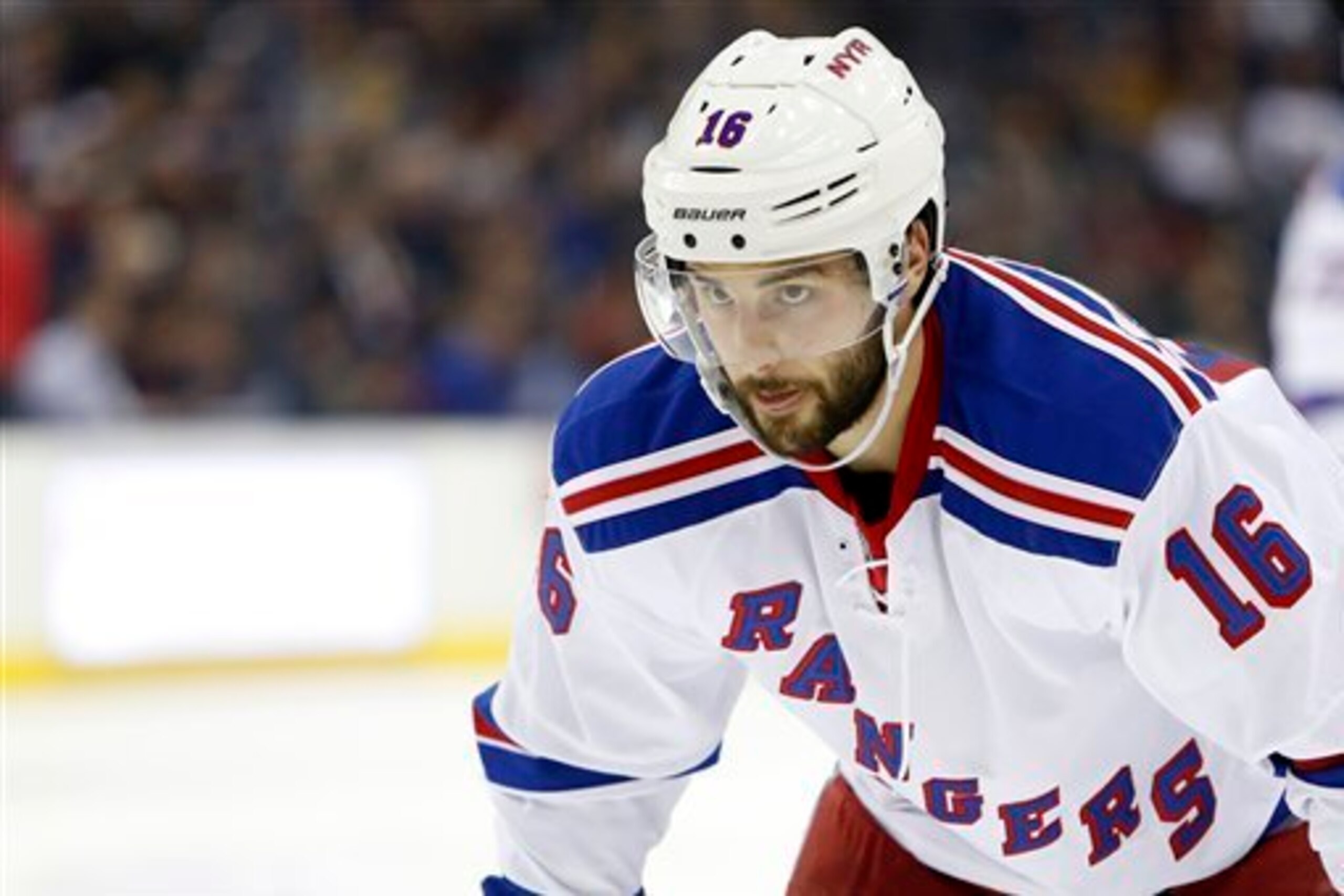
That said, the Rangers come out better in the deal that sent Derick Brassard and a seventh-round pick in 2018 to the Senators for Mika Zibanejad and a second-rounder in 2018. The Rangers got younger, cheaper and therefore more cap-flexible and got the much better draft position.
It's true, though, the Senators probably got the better player for right now in Brassard, the 28-year-old center who scored a career-high 27 goals, along with 31 assists, in 2015-16. But the Rangers probably are getting the better player for the long term in the 23-year-old center Zibanejad, the sixth overall pick in the 2011 draft who also is coming off a career high for goals (21) and points (51) in Ottawa.
If the Senators were arguably just one player away from winning a Cup, they would have gotten the winner's checkmark here. But unless Craig Anderson stands on his head almost every night in goal and/or Erik Karlsson puts up 140 points, that's not happening.
The late Montreal Canadiens general manager Sam Pollock once theorized that whichever team got the best player won the trade, so he might have awarded the Sens the victory in this deal. But with respect to Pollock, the differences between Brassard and Zibanejad aren't stark enough to make that proclamation. And when you add in the other factors, especially the Rangers getting that second-round pick, New York comes away the winner.
Zibanejad had only seven fewer points than Brassard while averaging nearly the same amount of ice time per game (17:53 for Brassard, 17:46 for Zibanejad). Seven of Zibanejad's goals were game-winners, compared to five for Brassard.
While the latter did have the better plus-minus (plus-12 compared to Zibanejad's minus-two), Zibanejad's Corsi for percentage was slightly better (48.9 to 47.6, according to Hockey-Reference.com).
Some other hockey pundits also thought the Rangers came out ahead in the trade:
Brassard, a native of Hull, Quebec, which is just outside of Ottawa, waived his modified no-movement clause to play for what is essentially his hometown team. He has three years left on a contract containing a $5 million cap hit, which the Sens could easily afford. Even after the deal, the Sens still are roughly $14 million under the cap of $74 million.
Zibanejad has one year left on a contract that carries a $2.6 million cap hit. He figures to get more expensive after this season, but he'll only be a restricted free agent, so there is little chance of this being his only season in New York. The Rangers are roughly $11 million under the cap, although restricted free agents Chris Kreider and Kevin Hayes are due new contracts, with Kreider slated to go to arbitration.
In New York, there is always pressure to win now. But that pressure used to be greater when there was no salary cap. With a budget that was perennially among the biggest in the NHL, former Rangers GMs were always under pressure to make the biggest free-agent signings (i.e. most expensive) and swing the biggest trades. That led to a lot of bad trades and signings (hello, Bobby Holik!).
While the pressure is still there for Rangers management, GM Jeff Gorton made a move better designed for the longer term with this deal. And based on the stats from this past season, it wouldn't seem that the Rangers have significantly weakened themselves in the short term either.
With the Stanley Cup not being in the near future for either club, the Rangers did themselves the better favor Monday.
Salary and cap-hit information courtesy of General Fanager.
Adrian Dater covers the NHL for Bleacher Report. Follow him @Adater
.jpg?w=2560 "NHL Trade Grades Connor Hellebuyck")


.jpg?w=2560 "Malik Beasley Negotiating Plea Deal (AP)")


.png?w=2560 "Week 8 Winners & Losers 📊")

.jpg?w=2560 "Aikman Blasts Cowboys WR 🫣")
.jpg?w=2560 "Jonathan Taylor Landing Spots")