

Devising a Game Plan for Germany to Finally Beat Bogey Team Italy
No matter how cool he seems in the buildup to the match, and no matter how often everyone in the Germany camp says they aren't afraid of Italy, head coach Joachim Low knows Saturday's Euro 2016 quarter-final against the Azzurri is going to be a special game. And it will take a special performance to finally get over the hump.
Germany have never beaten Italy in a competitive match, as detailed in an earlier piece, and even though the 56-year-old said, per Jonathan Wilson for Sports Illustrated, "we have no Italy trauma," Germany will play against that record just as much as they will against the likes of Gianluigi Buffon and Leonardo Bonucci.


The match in Bordeaux pitches arguably the two best sides in the tournament against each other in what many believe would make for a great final.
Although Germany and Italy's performances in the group stage developed in reverse directions—the world champions got better with every game while the Azzurri started with a bang against Belgium but struggled against Sweden before losing with a second-string XI against the Republic of Ireland—they enter Saturday's contest at their absolute best.
Germany's 3-0 win over Slovakia in the round of 16 was mightily impressive, with the result barely reflecting their superiority. Wilson called the performance "probably the best by any side in the tournament so far."
One day later, however, Italy beat Spain 2-0 in what was an even more impressive showing considering the quality of their opponents. Antonio Conte has rightfully received a lot of praise for his tactical plan against Spain, who have rarely looked as ordinary as they did in Stade de France on Monday.
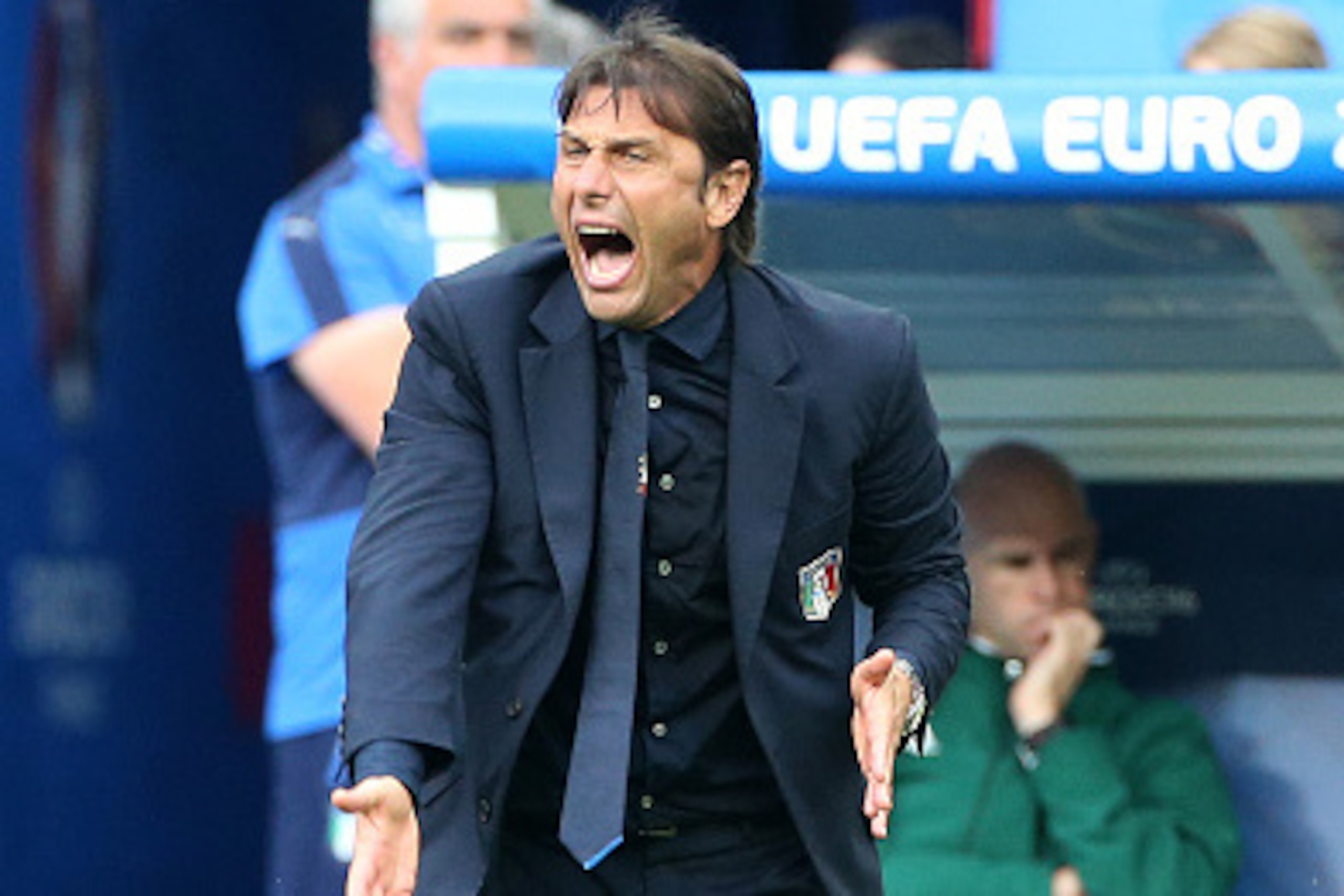
"Conte has concocted the perfect game plan, one that excels when utilized against better teams," Mina Rzouki wrote for ESPN.co.uk. "Showcasing a reactive form of football that defends with might and attacks in numbers, Italy have achieved formidable victories."
Seeing Italy dismantle Spain should've been of great help for Low and his coaching staff as they prepare for the heavyweight clash. With the world champions and La Furia Roja having plenty of similarities in their styles of play, Germany know some potential pitfalls to circumvent and mistakes to avoid.
Low's first priority will be to prepare his team for Italy's counter-attacks. Although Conte's men displayed a surprising comfort on the ball for large parts of their round-of-16 clash, especially in the first half, the clear strength of Italy lies in sitting deep and waiting for the right moment to attack.
Wilson described them as "a team that is at its best using an opponent's strength against itself." Against Germany, that could mean they concede possession and lure the World Cup holders into a false sense of security in the hope that too many men commit to the attack and expose a back line without much protection.
With the magnificent Juventus block in defence, Italy can rely on their back line more than any other team would. Bonucci, Andrea Barzagli and Giorgio Chiellini win so many challenges at the right moment that no fan of the Azzurri breaks into a cold sweat when they see an opposing team combine around the box.
Once they win the ball, long passes toward Southampton striker Graziano Pelle from Bonucci or the wing-backs have been Italy's most frequent weapon. A towering presence with excellent timing in aerial duels, the 30-year-old has flicked on countless balls for his strike partner Eder or the midfielders making runs into the area.
It may not be an overly elegant solution for some personnel woes in midfield—without Andrea Pirlo, the injured Marco Verratti and Claudio Marchisio and Napoli's Jorginho, who didn't make the final squad, there's a distinct lack of creativity in the centre of the pitch—but there's no denying the effectiveness of that strategy.
With Pelle a frequent target for long passes in a midfield position and Germany missing a physical defensive midfielder, chances are a centre-back will have to advance and cover the Saints striker, thus leaving a gap for players such as Eder or Emanuele Giaccherini to exploit.
One could assume Low would have liked to insert the experienced Bastian Schweinsteiger for additional stability in this matchup, but the team captain looked exhausted after a 20-minute cameo against Slovakia and is unlikely to be more than an option from the bench.
Low will have to hope Jerome Boateng and Mats Hummels can win enough confrontations with Pelle for it not to become a huge issue, but chances are Italy will get some runs at an unorganised Germany defence. The imposing Manuel Neuer may well have to keep his team in the game at some point.
Going forward, patience could be the magic word.
Spain lost their calm after 20 minutes or so, committing men in an attempt to counter-press Italy's back line, but that strategy only compounded their own issues and invited the Azzurri to more counter-attacks.
With a battering ram of a striker coming on for the second half in Aritz Aduriz, "Spain gave up their strategy of breaking the opponent down with a precise passing game and intelligent spacing," as tactics blogger Constantin Eckner wrote for Spielverlagerung.com. "Of course, they continued to move the ball through the centre in the first phase, but then quickly turned their attention to both full-backs who were supposed to deliver the assists."
Even though Germany have found their offensive rhythm with the introductions of a classic No. 9 in Mario Gomez and the technically skilled Joshua Kimmich at right-back, old-fashioned wing play from advancing full-backs isn't one of the team's strong suits, as this graphic indicates:
The team should trust in the abilities of the attacking players to make things happen through combinations around the box and through runs off one another. Mesut Ozil's passing in tight spaces, Thomas Muller's timing or Julian Draxler's strength in one-on-ones could be the key.
The most important players on the pitch for the world champions, however, should be Toni Kroos and Boateng. The Real Madrid midfielder "has been the heartbeat of Germany's game, linking defence and attack," according to Stephan Uersfeld for ESPN.co.uk.
A metronome for the team's possession game, Kroos' importance for the ball circulation can't be overstated. Seeing as taking Sergio Busquets out of the game seemed to be a top priority for Conte in the last round—Pelle's exemplary work against the Barcelona midfielder was the key to the match—expect a lot of pressure on Kroos on Saturday.
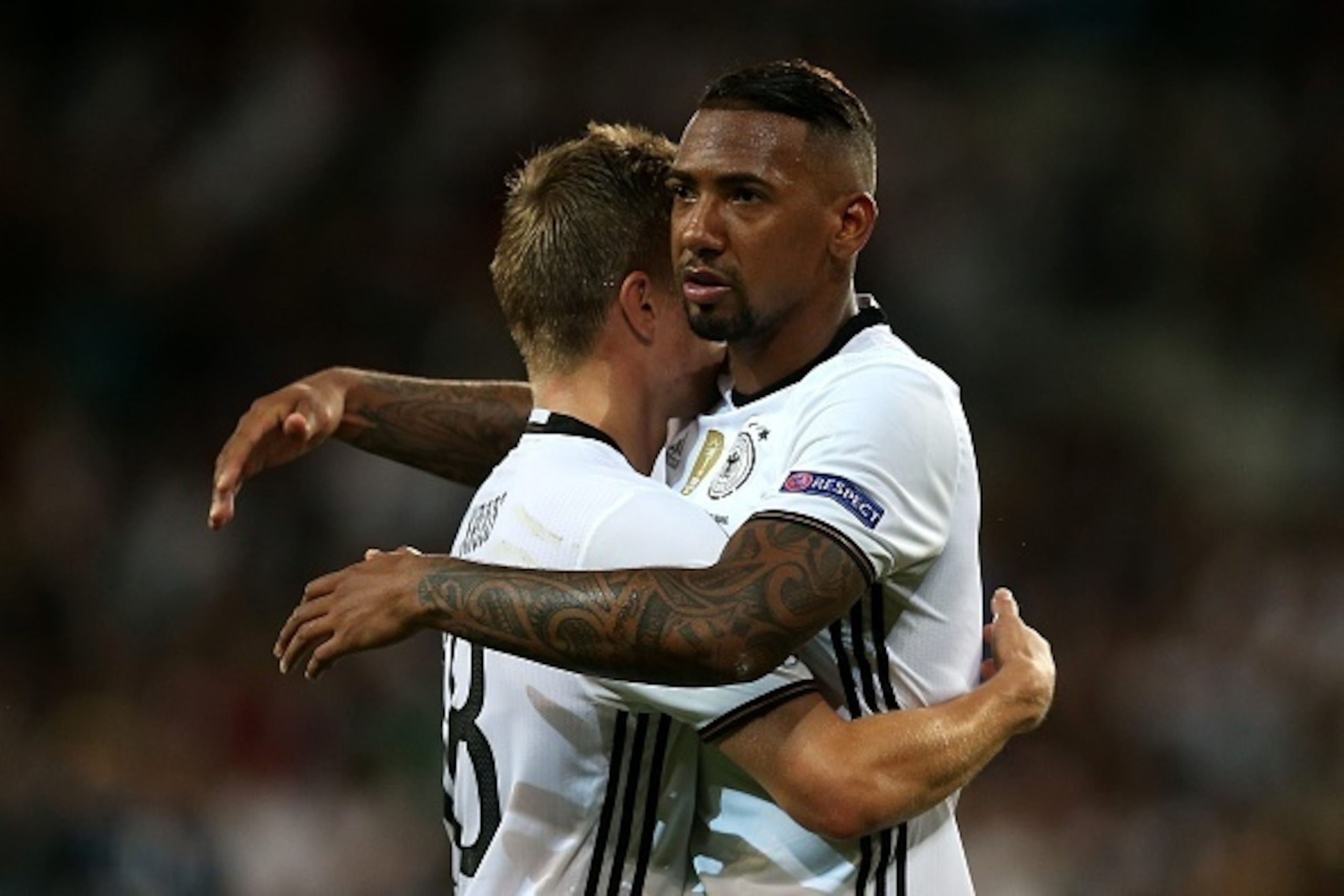
Thankfully for Germany, Boateng is there to pick up the slack if the 26-year-old can't be as dominant as he usually is. "In the past few weeks, Boateng has become the leader of not only Germany's defence, but the team as a whole," Uersfeld noted. "Not by words, but his performances and his personality both on and off the pitch."
The 27-year-old has not only been superb in what little defensive work he's had to do in the last few matches, but he's also displayed his passing range time and time again with accurate shifts toward the wings and sharp low passes cutting through defensive lines.
Attempting to take both him and Kroos out of a game would be to ask for the impossible. And in Hummels, Germany would still have a great passer in the buildup phase if Italy were to somehow manage that impressive feat.
That depth of men with playmaking abilities could be the difference on Saturday. If Germany remain calm and stick to what they do best, their chances of finally beating their bogey team look good.
Lars Pollmann is a Featured Columnist who also writes for YellowWallPod.com. You can follow him on Twitter.

.jpg?w=2560 "NBA Gambling Charges")

.png?w=2560 "Week 8 Winners & Losers 📊")

.jpg?w=2560 "Aikman Blasts Cowboys WR 🫣")
.jpg?w=2560 "Jonathan Taylor Landing Spots")