

England Need to Embrace a New Culture and Banish the Fear Factor
The best comedy has always been rooted in the truth, however bleak.
In the aftermath of England’s woeful capitulation to Iceland on Monday night, a darkly amusing Vine emerged of manager Roy Hodgson on the side of the pitch.
It was in the 56th minute, with England trailing 2-1 to Iceland and desperately trying to find a way back into the game; the camera focused on an anxious Hodgson, who did a double take when he realised he was on the stadium’s large screen, and he quickly placed his hand upon his chin to adopt a thoughtful pose intended to show he was still in control.
TOP NEWS
Billboard Trolls Man City 👀

New NFL contenders starting to emerge after Week 4
.jpg?w=2560 "Cardinals Giants Football")
NFL investigating 2 referees for separate viral exchanges
Of course it was an act. The game was almost up for Hodgson, and despite the pose, he had no real clue; England were out of Euro 2016 just half an hour later.
While these six painful seconds both epitomised and damned Hodgson, it also starkly revealed the wider issue of the Football Association’s own lack of a plan, for they had entrusted the health of the national team to one man alone.
The culture at the governing body has long been to avoid planning ahead and simply lurch from one crisis to another. Can anyone at the FA be seriously surprised at what has just unfolded over the last two weeks in France?
Hodgson proved to be woeful at the FIFA World Cup in Brazil two years ago, and he continued this at Euro 2016.
The FA had been warned, and yet their planning extended to handing him full control for another tournament, which ended in further humiliation. The governing body invested far too much trust in one fallible individual.
On the domestic scene, Southampton have become a model of what can be achieved in spite of, and not simply because of, their manager.
The structures, plans and philosophy are already in place at St. Mary's Stadium, and so they have managed to remain successful even when their manager—and players—have changed.

Southampton have proved to be bigger than one man, and so should England.
And yet the FA’s lack of forward thinking and planning means that in the wake of Hodgson’s resignation, they are now out of options.
For the last two years, it has been abundantly clear that Hodgson would be moving on after Euro 2016—unless he won the tournament this summer—and yet the FA only appear to now be drawing up plans for his successor.
At the moment, the favourite to replace Hodgson is Gareth Southgate, only ever an average manager at Middlesbrough, and this appears to be more because he is the safe and easy option, and crucially, he already has an office at Wembley.
Over the last two years, the FA should have been exploring options, talking to coaches and even had a successor already in place, instead of hurriedly looking around for a replacement.
Amid the gloom, FA chief executive Martin Glenn, who had the refreshing honesty to describe himself as “not a football expert," announced the need for a “definitive review.” Yes, another one.

England should urgently review why their teams are unable to simply play as a team, and not a collection of clearly talented, but disjointed, individuals.
At the World Cup in Brazil, it was Costa Rica, a squad of modest players, who were able to outperform England, and the same has happened at Euro 2016, with both Iceland and Wales, who extracted so much more from inferior players.
At every tournament, other usually smaller nations are able to get their players to play above themselves, whereas England’s players routinely slump, rather than reach a higher level, or even just the expected level.
Ahead of the 2010 World Cup, I spoke to the England captain Steven Gerrard, who said playing for the national team could be a “burden," before adding, “I can certainly say I used to experience fear…The pressure from supporters always transmitted itself on to the pitch.”
Six years later, nothing has changed, and as was witnessed on Monday night in Nice, a new generation of England players are now playing with that same all-consuming fear.
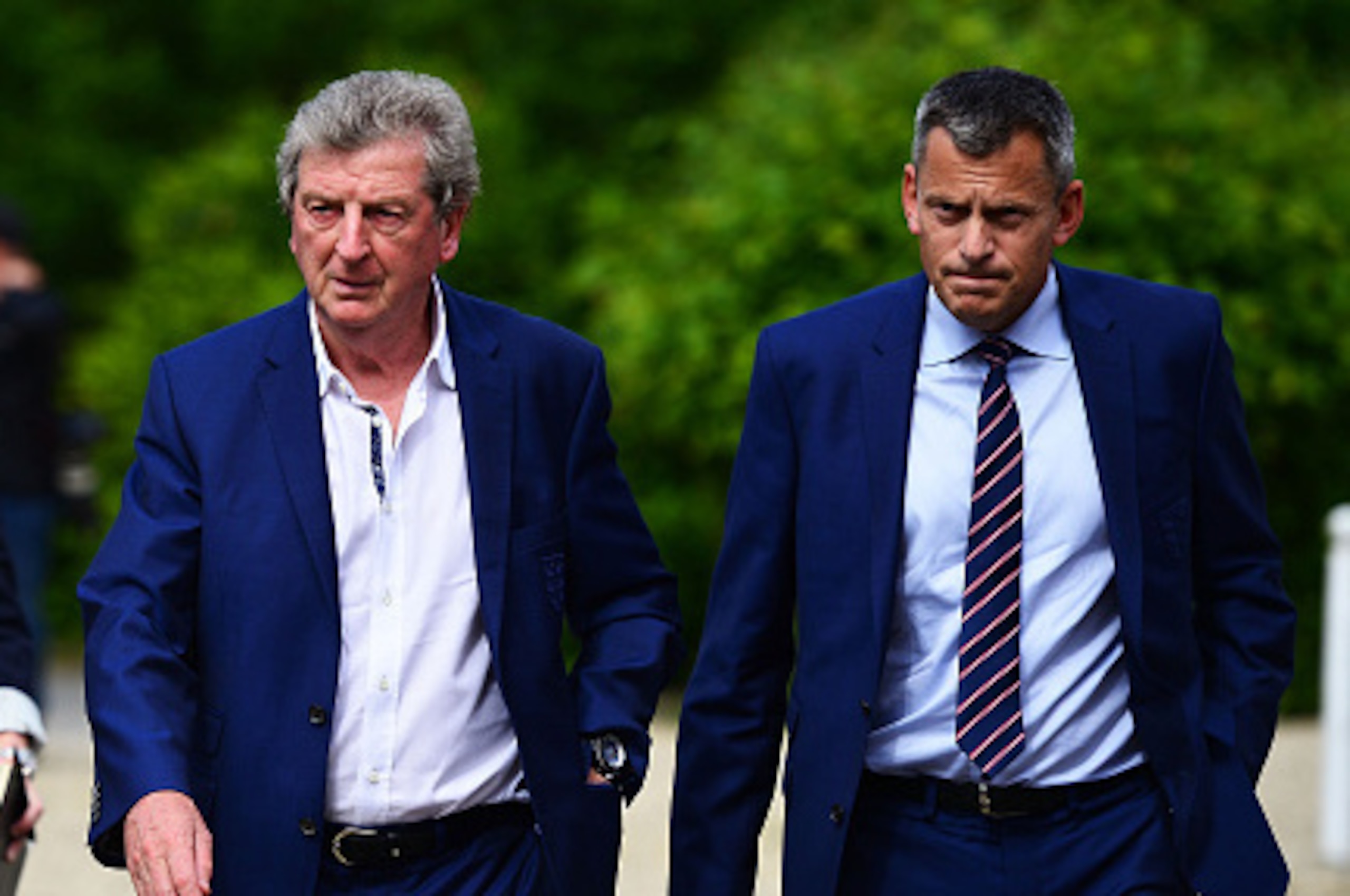
England need a new culture, aligned with a new manager, that is able to banish these fears and properly harness the talents of the likes of Dele Alli, Marcus Rashford and Harry Kane.
Only three months ago, England played without fear in Berlin when they beat the world champions Germany 3-2 in a friendly, but as soon as they started playing tournament football, that same confidence quickly evaporated.
England have the players, but they will continue to falter if they don’t address the more fundamental issues, and begin to encourage a different culture.
This is not about personnel or technique; this is about confidence.
Iceland do not have a single player who would get into England’s starting lineup, and yet they beat them by playing as a team and with a greater confidence.
Finally, England might be addressing the problem. This week, Martin Glenn told the Times: “We have started to invest a lot more in the psychological side of things […]. It is not unique to Roy’s watch, but it’s something we need to fix.”
There you go, finally some proper planning; it might work.

.jpg?w=2560 "Hill Injury Update Football")
.jpg?w=2560 "OBJ Calls Out Giants After Release")
.jpg?w=2560 "Tyreek makes another cryptic post amid Chiefs rumors")


.jpg?w=2560 "Greenlaw Talks Payton Exchange")
