

Analysing If Sergi Roberto or Aleix Vidal Should Start as Barcelona's Right-Back
The departure of Dani Alves from Barcelona to Juventus has left a void in the Catalan team's lineup, which is arguably as big as that left by Xavi Hernandez in 2015 or Carles Puyol in 2014. The Brazilian right-back was an important fixture in Barca's team ever since his arrival in 2008.
Alves left on Monday having won the Champions League three times along with six La Liga titles, and his rapport and linkup with Lionel Messi down the right flank has been a feature of the team over the last couple of seasons, even if Alves' own performance levels wavered at times.
TOP NEWS

Final Men's Ballon d'Or Rankings 📊
World Football Moments 🍿
_0.png?w=2560 "CFB Top 25")
Unranked Teams Cause Chaos in Rankings 📊
Rumours have already been rife as to who Luis Enrique and his team will sign to replace Alves, with reports in England suggesting Manchester United's Matteo Darmian is an option, per the Daily Star (h/t Marca's Ryan Wrenn), while Marca's Xavi Hernandez—not the former Barca midfielder—suggested that club sporting director Robert Fernandez is not looking to bring in a replacement.
Only if a "unique opportunity presents itself" will Barcelona look to sign a new right-back this summer, per Hernandez. With other areas of the side needing strengthening, that would leave Aleix Vidal and Sergi Roberto as the two names in the squad who can fill the gap left by Alves.
So who fits the role best?
2015-16
Despite not starting the season as an immovable part of the first XI, Alves predictably played an enormous role in the team over the course of the entire year, clocking up 3,800 minutes in his final campaign. The other two couldn't have shared more different seasons.
Vidal signed knowing he'd be ineligible to be registered until January, with Barcelona under a transfer ban in the summer. He ended up playing just 850 minutes from the start of 2016 until May, most of which came within five weeks of his debut; from mid-February onward, he made just three appearances in La Liga and was injured in April as the team chased another treble.

Despite playing 90 minutes in both legs of the Copa del Rey semi-final against Valencia, Vidal was usurped from the starting lineup by Alves for the final itself and didn't come off the bench. The scenario was a familiar one for the former Sevilla man, who was unused from the bench or left out completely for Barca's last nine La Liga games.
Roberto, on the other hand, enjoyed a hugely productive first half of the campaign before settling in to a more steady, if unspectacular, second half.
It was Roberto who got the nod at right-back early on with Alves injured and then left out, and he performed superbly in the position before moving back into midfield, his more natural role in the team.
Injuries and rotations meant the 24-year-old played all three midfield roles for the side, at full-back on both flanks and even on the right of the attack. He became a reliable performer for Luis Enrique and really left his stamp on the Barcelona first team for the first time.
There were only three matches in La Liga that he didn't feature in, for at least a few minutes, from mid-December onward, and he was also on the bench for the Copa final, coming on for the final stages of the game.

Roberto totalled 2,800 minutes for Barca over the course of the campaign and made his debut for the Spain national team.
Styles and traits
Barcelona don't need an entirely defensive-minded full-back on the right side; they need an offensive presence, a smart operator and a good link player to take advantage of the movement and skill of Lionel Messi without leaving the defence vulnerable to counters.
Both Vidal and Roberto fit that description, though in different ways: Vidal is a winger in his true nature, fleet of foot and happy to carry the ball over the ground, while Roberto emerged as a central midfielder and displays all the hallmarks of a La Masia schemer when in possession, namely composure, vision and great technique.
Vidal suffered with his form last term, but part of that has to be attributed to going five or six months without any meaningful action off the training pitch; the same fate thwarted Arda Turan's efforts to integrate into the team.
At his best, he's an outlet for the team by dribbling into enemy territory, beating defenders one-on-one and looking to deliver from wide areas. But in truth, that's not a great requirement for the role.

Vidal still has some adapting to do to fit in properly, needing to be quicker to release possession in the final third and look to set forwards clear more readily rather than be the carrier himself. He will draw defenders away from the Barcelona front-line players because of his speed and can exploit gaps if they ignore him, but the end product has been lacking.
A big positive in his favour, though, has to be how quickly he tries to win back possession. Whether from midfield or defence at Sevilla, a key hallmark of his game was a willingness to challenge and tackle, setting the team away high upfield whenever possible and exploiting spaces behind the defence.
Roberto is a more cultured player in possession but showed in his stint at right-back last term that he has the physical traits to mirror the pace and penetration required by the role. A surprising turn of pace saw him drive deep into the final third at times, and rather than looking to cross, his natural inclination to retain possession often sees him play clever infield passes to the forwards or look to move into the penalty area.
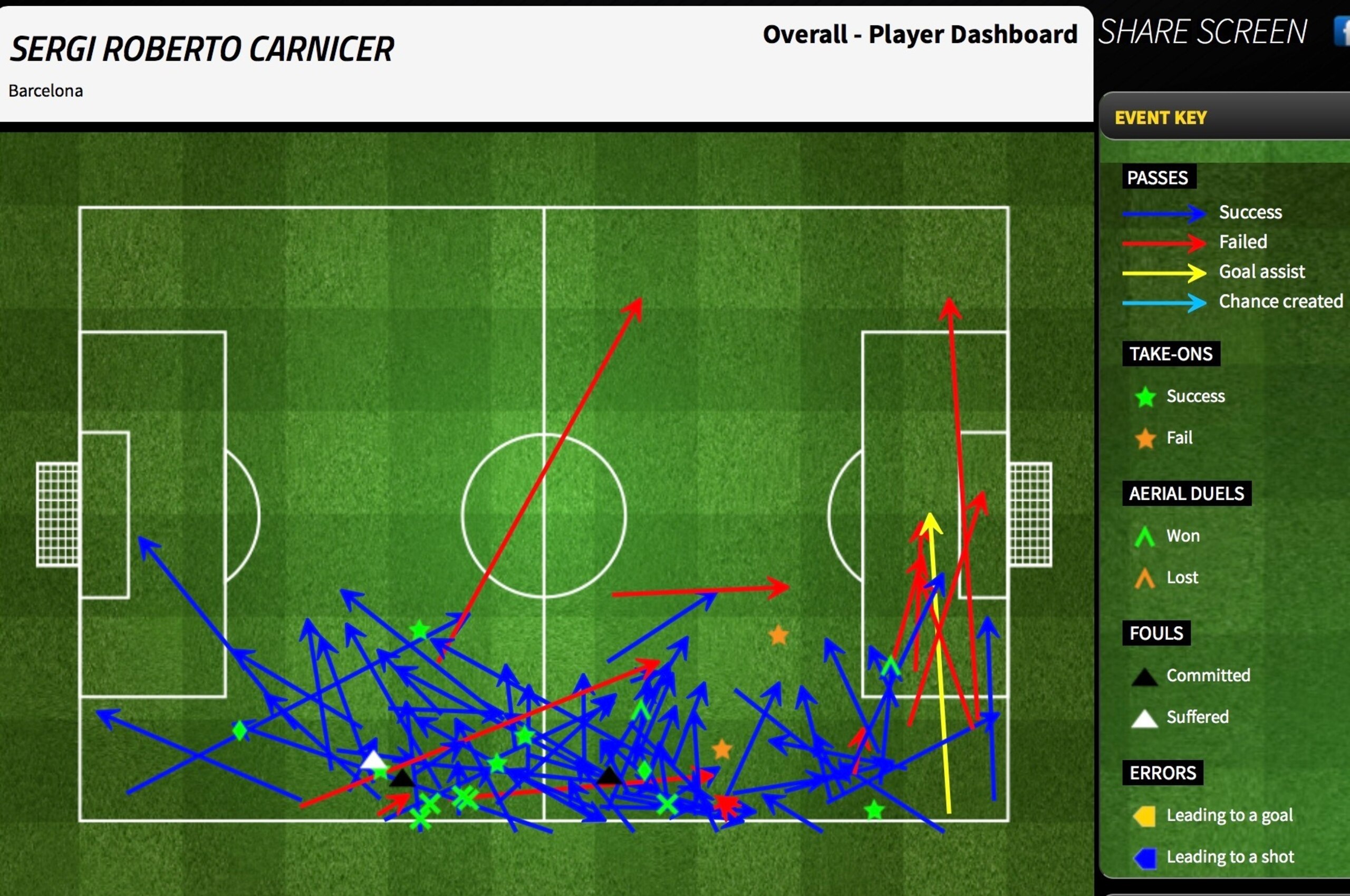
Defensively, Roberto is a sound operator, even if he's still learning the role somewhat. He is robust in the tackle, will put his body on the line to make a block, is agile enough to change directions quickly and can, in the Barcelona fashion, pass the ball well out of the defensive line. It's worth recalling that Luis Enrique was the one who noted Roberto's tactical intelligence as key to his ability to switch positions.
Sport's Ivan San Antonio reported a year ago that it took several conversations and training sessions for the manager to convince his player that a positional switch was a positive aspect of his game.
Starter and rotation
By every reasonable measure, and certainly when taken as an overall package, Roberto is a standout candidate to start the season at right-back if Barcelona don't opt for a new signing.
However, two options are very much needed in the side, for two reasons.
Firstly is Roberto's midfield talents. He's the only real alternative to Sergio Busquets as a holding midfielder in the squad at present, unless Javier Mascherano is shifted out of defence or one of Sergi Samper or Gerard Gumbau is given much more of an opportunity than previously.
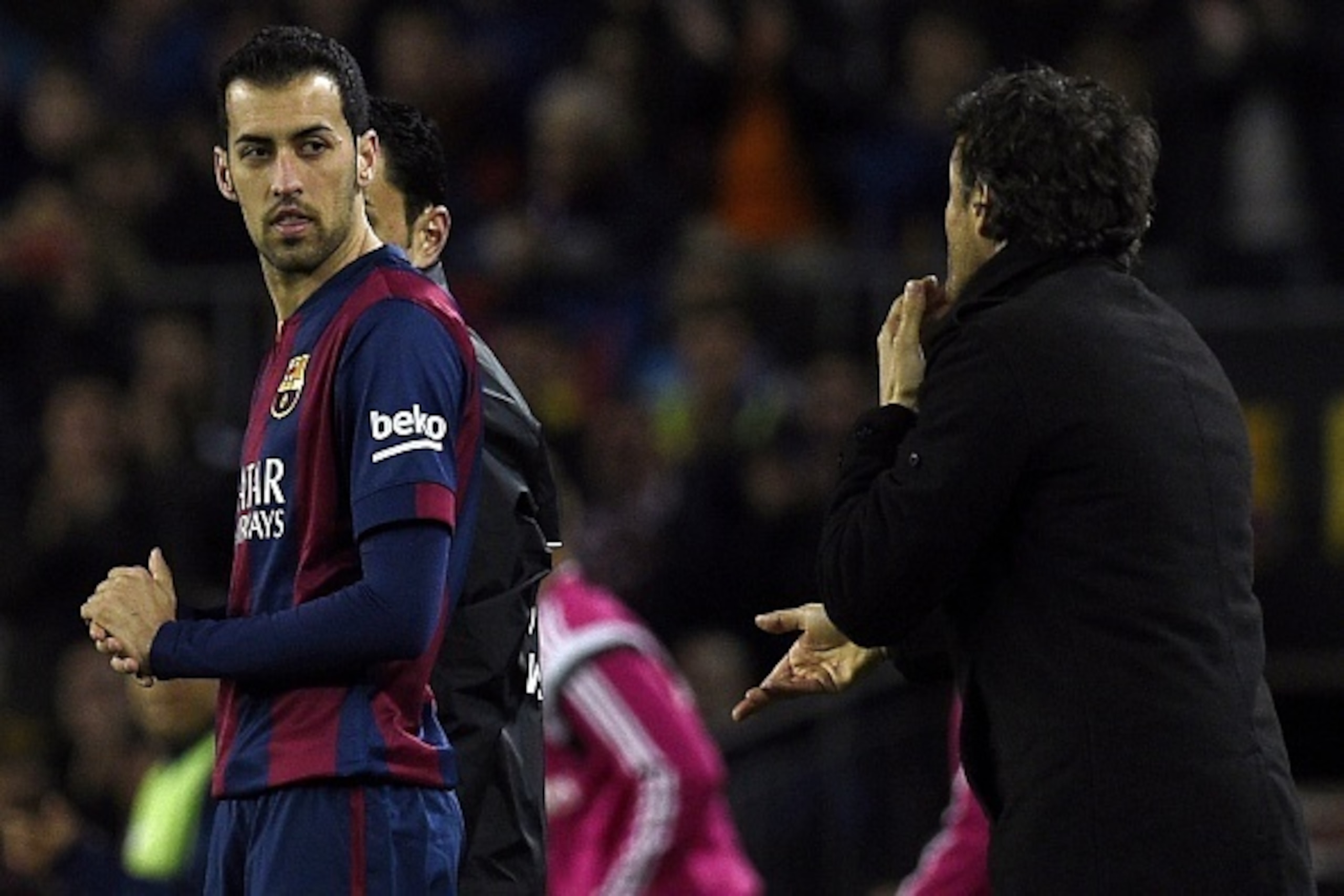
When Busquets is rested or unavailable, it will inevitably be Roberto who is ushered into one midfield role or another, and Vidal will be required to play right-back.
The other reason is a simple question of footballing styles: Roberto as the right-back—whether overlapping, building up play or looking to deliver from deep—will inevitably fail to shine against certain opponents, not quite having the pace to keep up with a winger or perhaps simply suffering a downturn in form.
One way or another, Vidal will get his chances to earn a run in the team and will have to step up considerably to make the position his.
At the start of 2016-17, though, it looks almost certain that Roberto will be the best bet to line up alongside Gerard Pique and Co. in defence.

.png?w=2560)
.jpg?w=2560 "Jonathan Taylor Landing Spots 📍")





