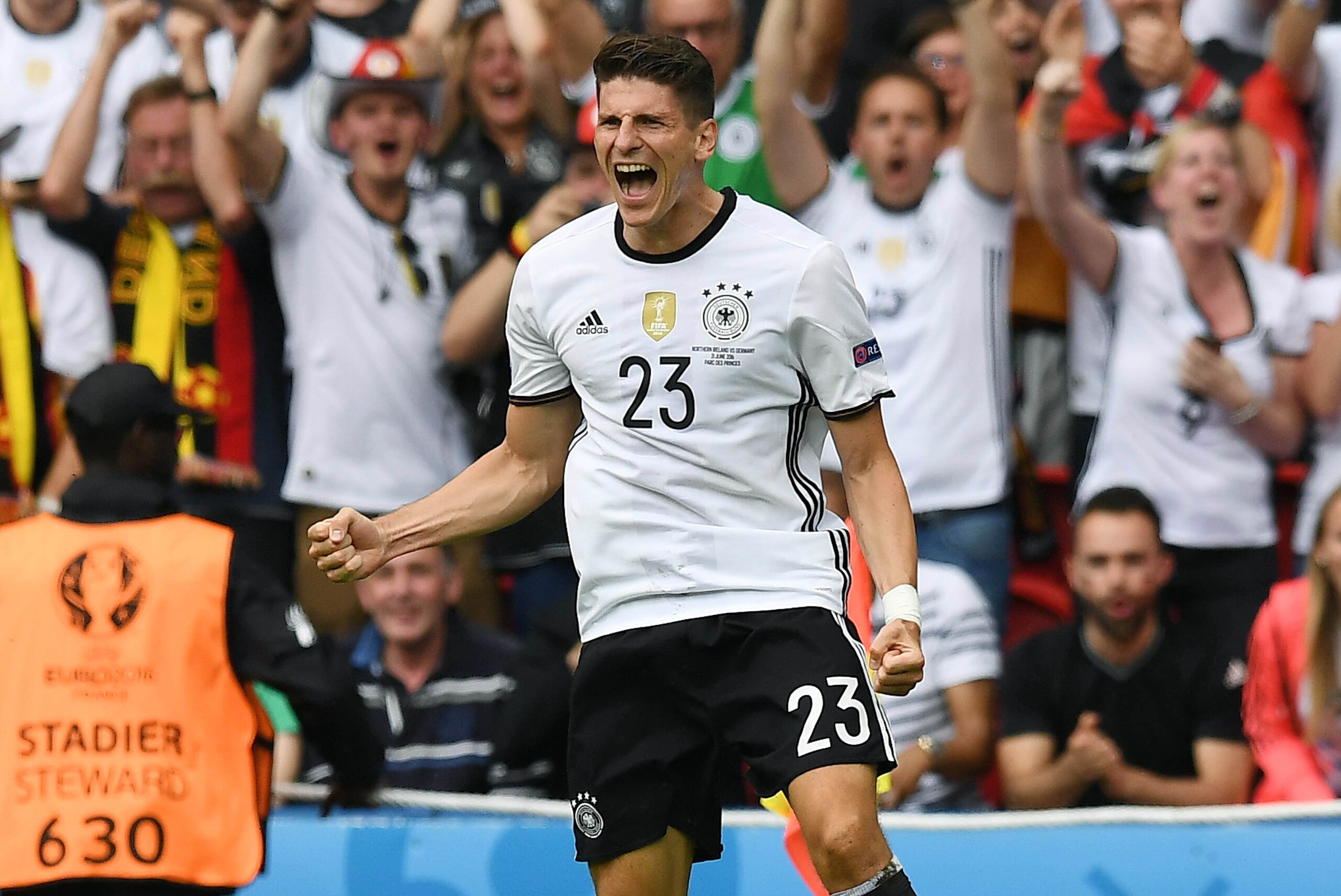

Mario Gomez Must Keep His Spot as Euro 2016 Really Kicks off for Germany
With the knockout stages right around the corner, there's a sense that, for Germany, Euro 2016 is about to really start.
Failure to get out of a group that also contained Northern Ireland, Poland and Ukraine would have gone down as perhaps the biggest surprise in Euros history, and even winning it with seven points and not conceding a goal can't be seen as anything more than par for the course.
"We are where we wanted to be—it was what we had to manage," centre-back Mats Hummels said following the group stage, per Ian Rodricks of Reuters (via MailOnline). Goalkeeper Manuel Neuer echoed those thoughts:
TOP NEWS

New NFL contenders starting to emerge after Week 4
.jpg?w=2560 "Cardinals Giants Football")
NFL investigating 2 referees for separate viral exchanges

Deion Playbook Found at Hotel
Those three teams, even though Poland confirmed their status as one of the more interesting dark horses in France, can't serve as a measuring stick for Germany's Euros credentials. Chances are round-of-16 opponents Slovakia won't be one, either.
But after the match on Sunday in Lille's Stade Pierre-Mauroy, there will only be heavyweight meetings until the final on July 10.
In the quarter-finals, Germany would face Spain or Italy, two teams that have been something of a nemesis to the World Cup holders in recent years—or, in Italy's case, seemingly since the dawn of time. In the final four, host nation France or rivals England seem the two most likely opponents.
Joachim Low's men need to improve on their performances from the group stage to stand a chance in any of those prospective matches, and it's surprisingly obvious where that improvement is needed most: in their attack in general and their finishing in particular, as assistant coach Thomas Schneider recently admitted:
Neuer also alluded to it in his press conference on Friday:
"Slovakia are deservedly in the last 16, but a decisive victory for us would really push us on. It's a different type of pressure in the knockout rounds compared to the group stage but for me personally, nothing changes. We want to be successful. We are not out to break records.
So far, we've only played against teams who have parked the bus. It's obvious that in games like this, you’re not going to win by a lot. Against teams who want to take us on, Germany can win by a lot.
"
Germany should have won by a lot in their final game of the group stage against Northern Ireland, but a spectacular goalkeeping performance from Michael McGovern, bad luck and a lack of composure in front of goal kept the result down to a modest 1-0.
The scorer of that one goal, Mario Gomez, made his first start of the tournament against the Green and White Army and made a huge difference. The Fiorentina man, who spent last season on loan at Besiktas, where he won the Turkish league and the Golden boot, replaced Mario Gotze up front and Germany looked far better.
Thirty-year-old Gomez was a physical presence, capable of holding his own against Northern Ireland's hands-on approach and linking up well with team-mates making runs from the wings or deeper parts of the pitch.
The former Stuttgart and Bayern Munich striker was active in front of goal as well, as this graphic shows:
His goal showed two sides of Gomez's play: one unheralded and one that made him famous.
First, he laid the ball off beautifully to Thomas Muller, once again proving he's far better in combinations than he's ever gotten credit for.
Then, when Muller pulled back for his team-mate, Gomez took the ball first time with his left foot, scoring via a deflection. A poacher's goal showing that, even after an up-and-down career since 2012, the 30-year-old still has the instincts of a deadly finisher.
His and Joshua Kimmich's inclusions in the starting XI against Northern Ireland made a big difference, revitalising an attack that had looked surprisingly stale for the first two matches in France, and both Gomez and the versatile 21-year-old should keep their spots against Slovakia.
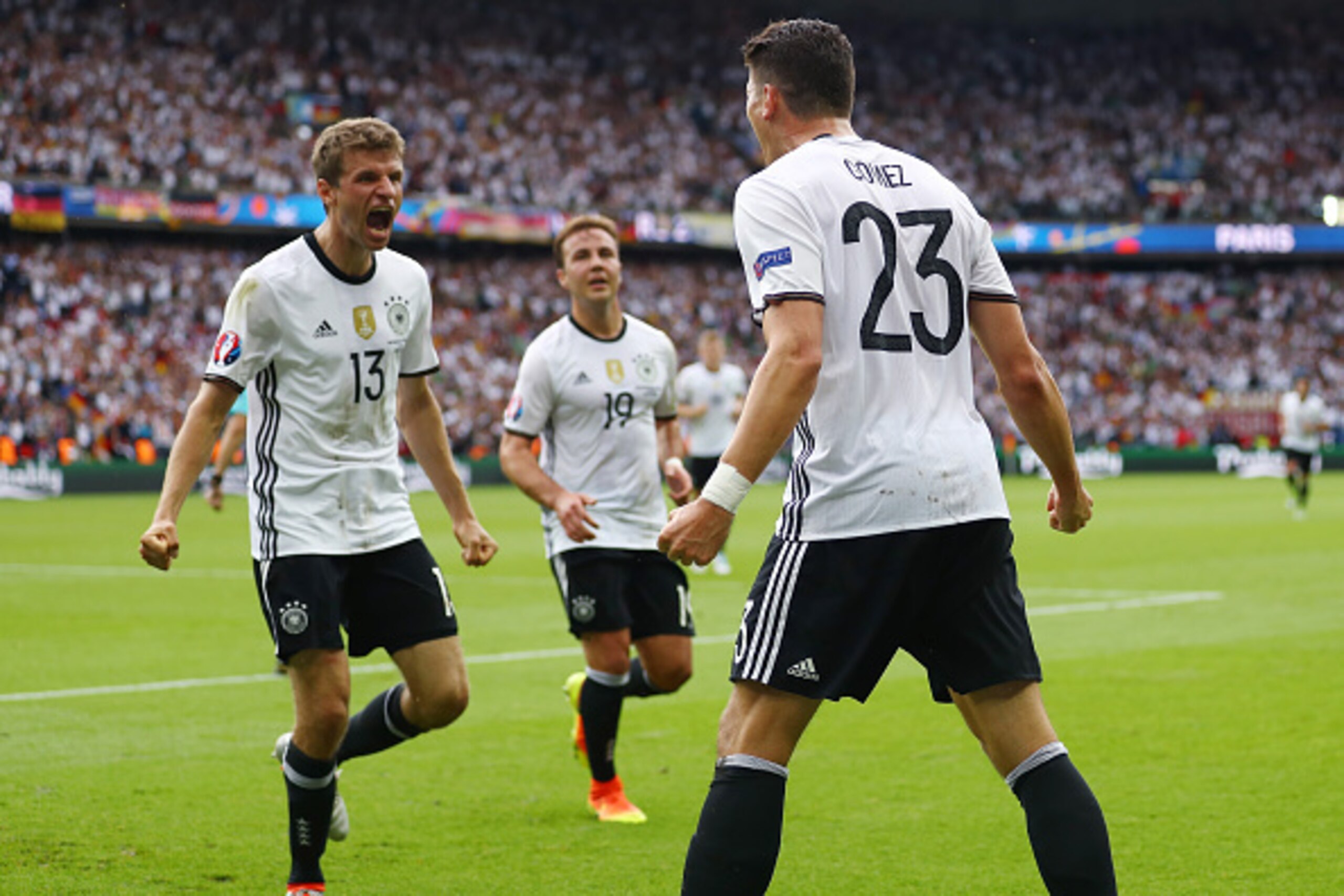
The biggest beneficiary of the two changes was Muller, who played two of the most nondescript games of his illustrious Germany career against Ukraine and Poland.
Kimmich provided the necessary width in the team, allowing his Bayern team-mate to abandon the right wing and play in a more central role, appearing in the hole behind Gomez at one point and next to him at another; Muller was almost a secondary striker against Northern Ireland.
He's still waiting for his first goal at European Championships, having also failed to score in 2012, but there's reason for optimism.
Joachim Low said he wasn't worried about Muller, per the Associated Press (via NBC Sports): "If he hadn't any chances, I'd have had to have a couple more thoughts on how we'd solve it. But as soon as a forward has chances it's a good sign. He was close. I think it'll work out the next time."
The 26-year-old has always looked best when he plays off an out-and-out striker, be it Miroslav Klose at international level or Robert Lewandowski at Bayern, and the immediate improvement against Northern Ireland confirmed as much.
Muller was desperately unlucky not to finally get the Euro monkey off his back in that match—he has yet to score in a European Championship finals—hitting both the post and the crossbar, seeing one effort saved very well by McGovern and another whizzing just wide of the goal.
Close enough is not good enough, of course, especially not in the knockout stages of a tournament Germany still very much look capable of winning, but Muller remains an automatic selection. Unlocking his potential as a goalscorer has to be right atop Low's to-do list against Slovakia, and Gomez's presence in the middle has to be a big part of the plans.
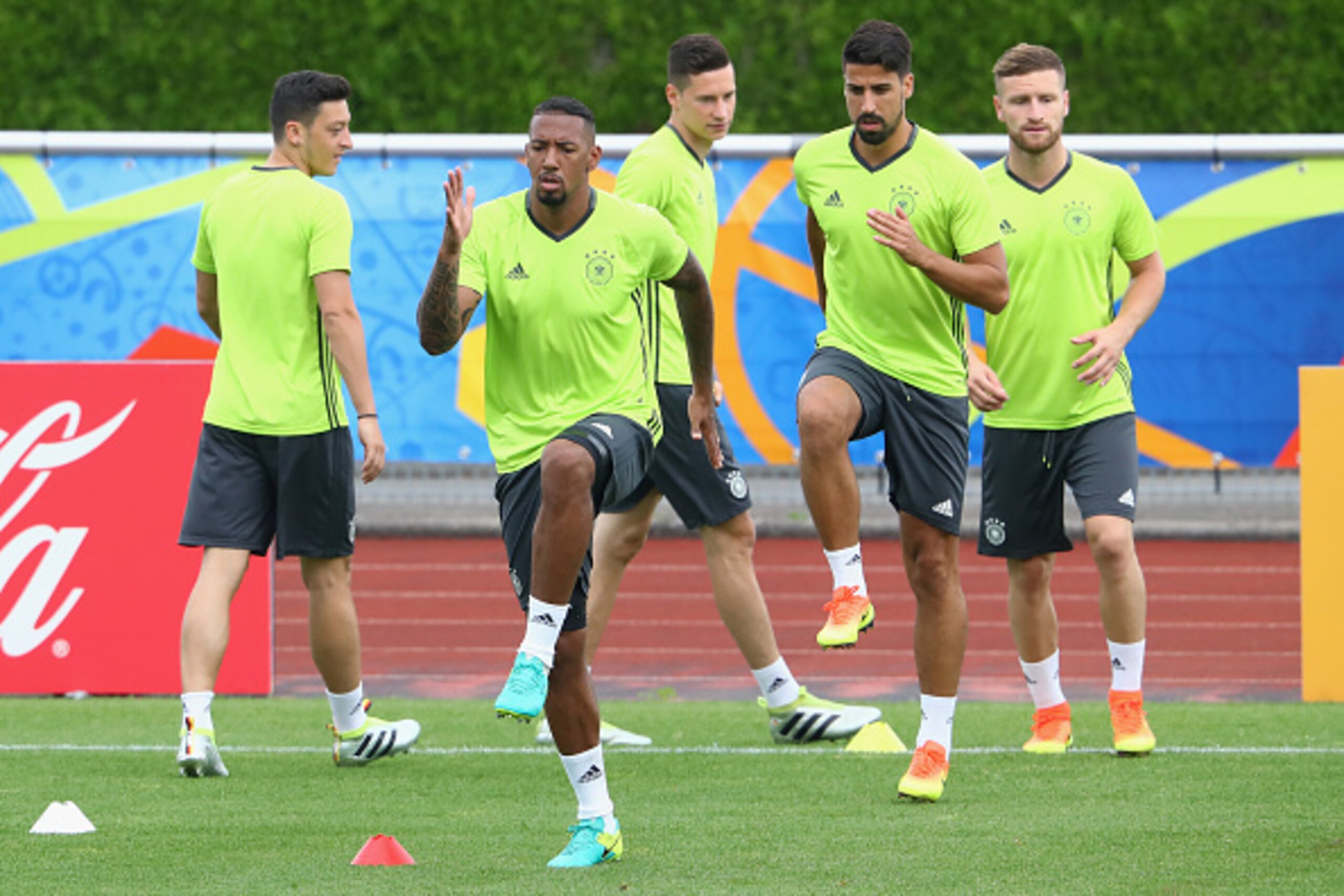
Elsewhere on the pitch, it seems Germany dodged a bullet with Jerome Boateng. The centre-half, arguably Germany's best player in the group stage, participated in team training on Saturday, per Sportschau's Marcus Bark, and he should be able to play against Slovakia.
With Sunday's opponents likely to employ similarly defensive tactics to those of Northern Ireland, Boateng's presence both as defensive cover and as a ball-playing centre-back will be important.
Slovakia will presumably try to hit Germany on the counter and do a better job of that than Northern Ireland, with Napoli's Marek Hamsik masterfully pulling the strings, so Boateng's athleticism and strength in duels would be sorely missed if he were unable to start.
"We know it's our job to win the one-on-ones against opposing strikers," his partner in central defence, Hummels, said, per Rodricks. "We are very confident in these duels because we know our quality, and that is really something you can build the team on."
Both 27-year-old defenders made important interventions in the one match they played next to each other at Euro 2016, against Poland, and Germany can attack with a clear conscience against Slovakia's defensive block knowing that one of, if not the best centre-back pairing of the tournament is there to clean up after them.
All in all, Slovakia should not be more than a start to the knockout stages for the world champions, a match to get into the right state of mind for heavyweight clashes to come.
Lars Pollmann is a Featured Columnist who also writes forYellowWallPod.com. You can follow him on Twitter.
.jpg?w=2560 "Hill Injury Update Football")
.jpg?w=2560 "Titans Giants Football")
.jpg?w=2560 "Tyreek makes another cryptic post amid Chiefs rumors")


.jpg?w=2560 "Greenlaw Talks Payton Exchange")
