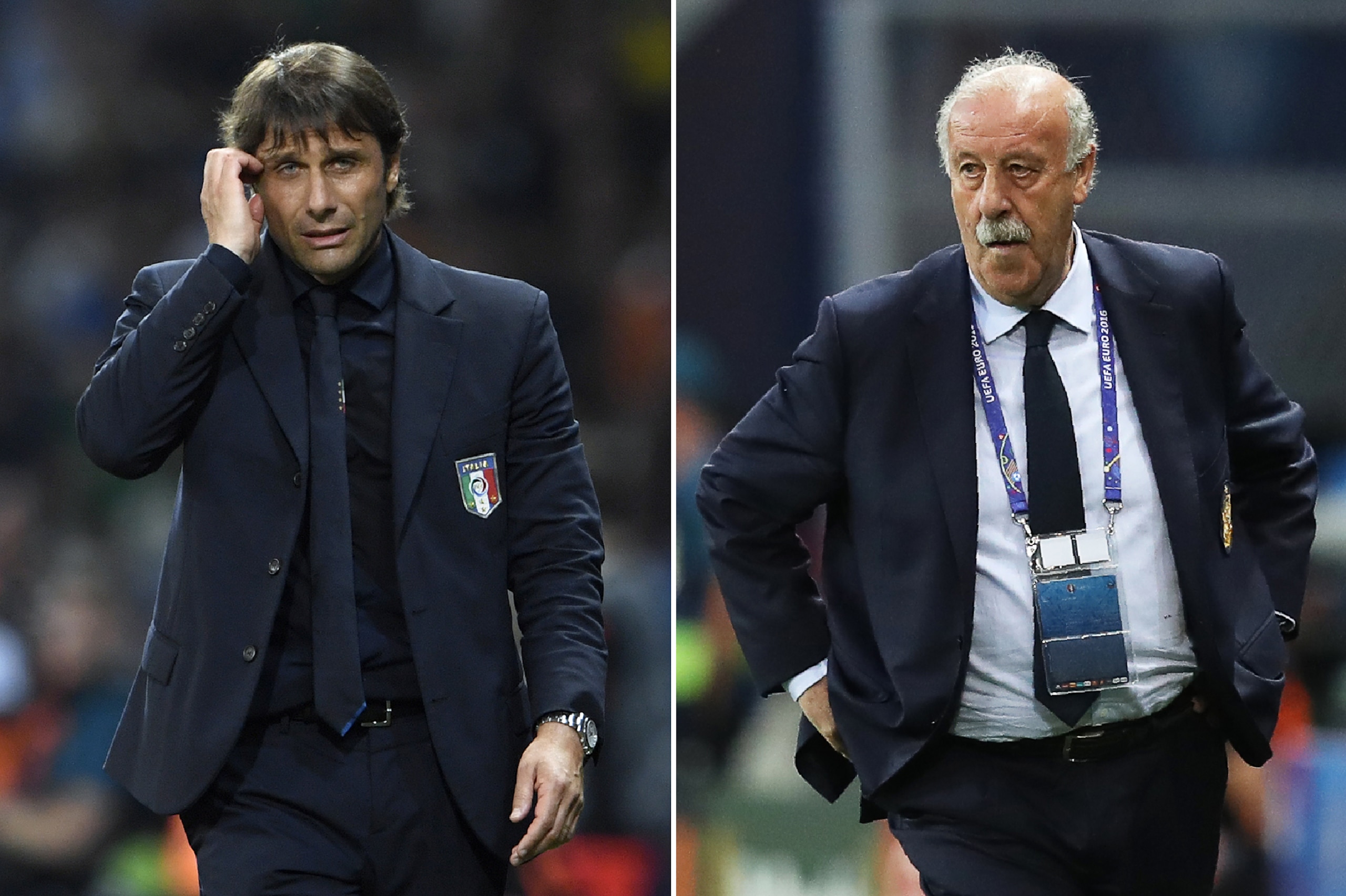


Vicente del Bosque was prepared to admit it. It was late on Tuesday evening in Bordeaux, and after a shock loss to a weakened Croatia, his Spain outfit had just been sent to the daunting side of the Euro 2016 draw that would start with an undesirable round-of-16 clash with Italy on Monday.
"We are not on the path we wanted to be, but we have to rise to the situation," said La Roja's frustrated and downbeat manager in his post-match press conference.
Translation: We didn't want Italy, not this early and not like this.
TOP NEWS

Final Men's Ballon d'Or Rankings 📊
_0.png?w=2560 "CFB Top 25")
Unranked Teams Cause Chaos in Rankings 📊

Brown with an all-time summary of relationship with Tatum
For Spain, the thought of a blown opportunity will have gripped them in recent days, particularly given what they now face. They'd been staring at the most gentle of runs to the tournament's final, but 13 seconds changed everything—not just for them but for almost everyone, Italy included.
Indeed, though Spain didn't want Italy, it's also true that Italy didn't want Spain. Topping one's group is normally rewarded with a more favourable opening clash in the knockout rounds, but for their efforts, Antonio Conte's men have been handed the defending champions.
"Italy are probably also concerned because they have to face us," noted Juanfran at a pre-match press conference this week.
This looms as an intriguing clash, then. Spain remain capable of the breathtaking but don't carry the supremacy they once did; Italy are functional and well-drilled but not exactly imposing. In essence, it's a meeting between two giants who've slipped a little from their peaks, but Spain will be wary of the Italians' tournament knowhow.
After all, few countries so regularly demonstrate an ability to grind through and navigate an event such as this. Under Conte, Italy are well set up despite their lack of star quality, and thus, this will be a gruelling tactical affair for Spain to get through.
Here, we examine Italy's strengths and how Spain can combat them.
Defend from the Front
It's no secret that Italy's primary strength is their defence that is led by the Juventus block of Leonardo Bonucci, Andrea Barzagli, Giorgio Chiellini and Gianluigi Buffon. Yet what is often overlooked is how pivotal Italy's defensive line is to the team's building of attacking moves.
In Bonucci and Barzagli in particular, the Azzurri possess two of the game's finest distributors from the back—something that was evident time and time again in Italy's dismantling of a talented Belgium outfit in their Euro 2016 opener.
With little pressure exerted on them from Romelu Lukaku, Eden Hazard and Kevin De Bruyne in the Belgian attack, Bonucci and Barzagli consistently had the time and space to slice open their opponents' shape with precise passes through the lines.
Particularly in the first half, Barzagli split the Belgians open with piercing balls into the feet of forwards Graziano Pelle and Eder. With the Belgium holding pairing of Radja Nainggolan and Axel Witsel rendered irrelevant, Italy were able to move swiftly through the thirds of the pitch with alarming ease:

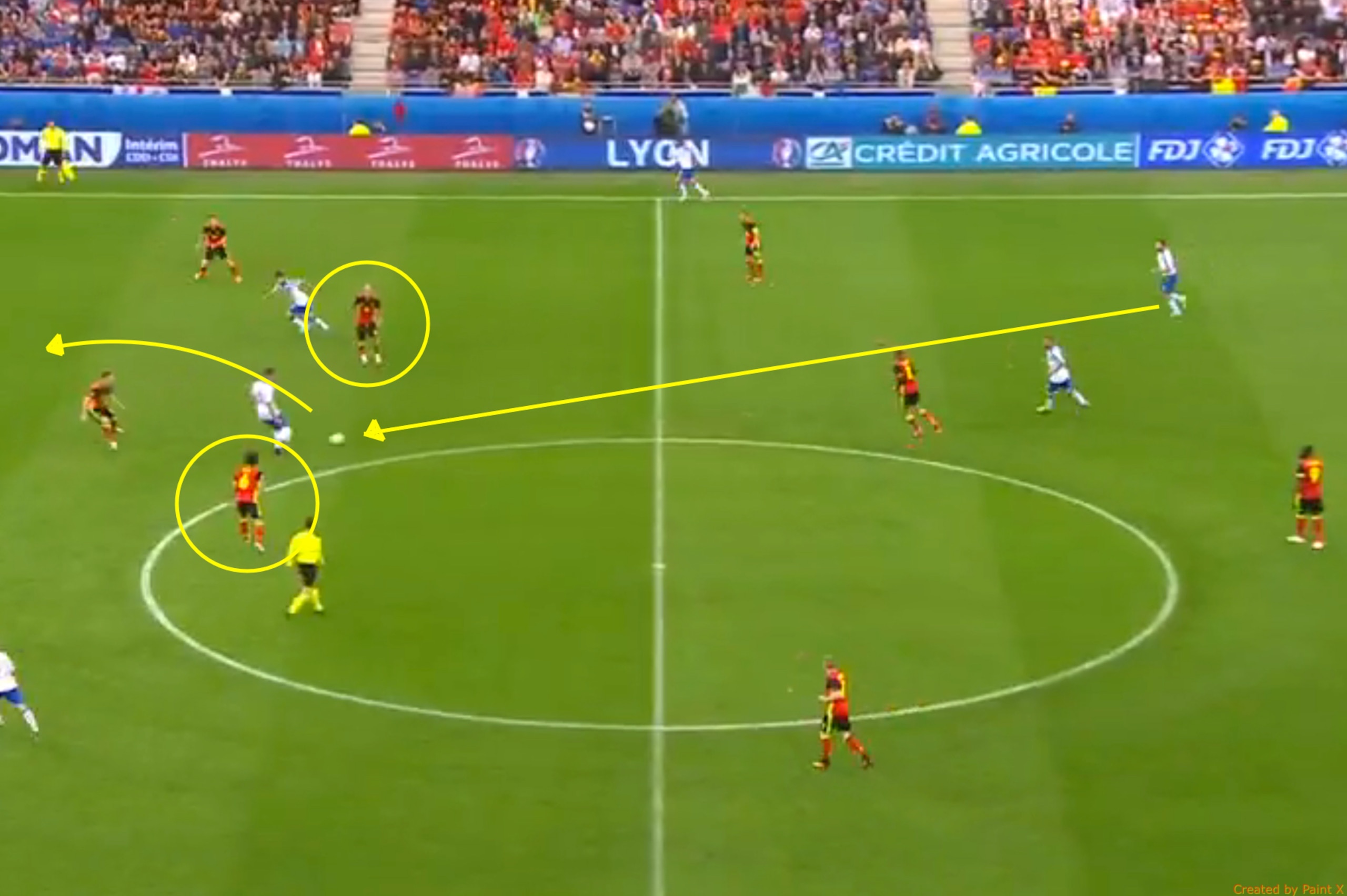
In response, the concerned Belgium defence looked to push up to limit the space available for the Italians, which then allowed the excellent Bonucci to pick out Emanuele Giaccherini with a precise long ball over the top.
This combined with Barzagli's work was a wonderful demonstration of how diverse and lethal Italy can be when playing out from the back.

In Italy's games that followed, both Sweden and the Republic of Ireland did a better job of closing passing angles for the Azzurri centre-backs, but not Belgium. Due to their lack of pressure from the front, Marc Wilmots' men allowed Bonucci and Barzagli to conduct the play like deep-lying midfielders, which covered up Italy's lack of central creativity.
This, of course, is an Italian side without both Marco Verratti and Claudio Marchisio, who are both missing through injury. What's left is an uninspiring midfield, but Belgium didn't expose that weakness because they allowed Italy to effectively bypass the midfield with direct balls from the defenders to the forwards.
Thus, Spain's first task on Monday in Paris will be to defend from the front and press Italy's defensive line. Amid that, the likes of Bonucci and Barzagli do possess the technique and passing range to avoid trouble, but it's imperative that La Roja prevent Italy from piercing their shape from deep and force their opponents' limited midfield to build the team's attacks.
Width, Width and More Width
Italy play a back three. When facing a back three, you must maintain width—something that can be a problem for Spain.
In a technician-loaded 4-3-3 that features inward-drifting wingers in Nolito and David Silva, La Roja's shape tends to be quite narrow and asks full-backs Jordi Alba and Juanfran to almost exclusively provide the width.
Against Italy, then, that pair—Alba in particular—will need to be at their finest, stretching the pitch as much as possible and engaging Conte's wing-backs to pull them wide.
In Spain's opener against the Czech Republic, both men were often too narrow, but by working the sidelines against Italy, they can give Del Bosque's men the chance to attack the spaces to the left and right of the three central defenders—the key areas to target when facing a defence organised in such a way:

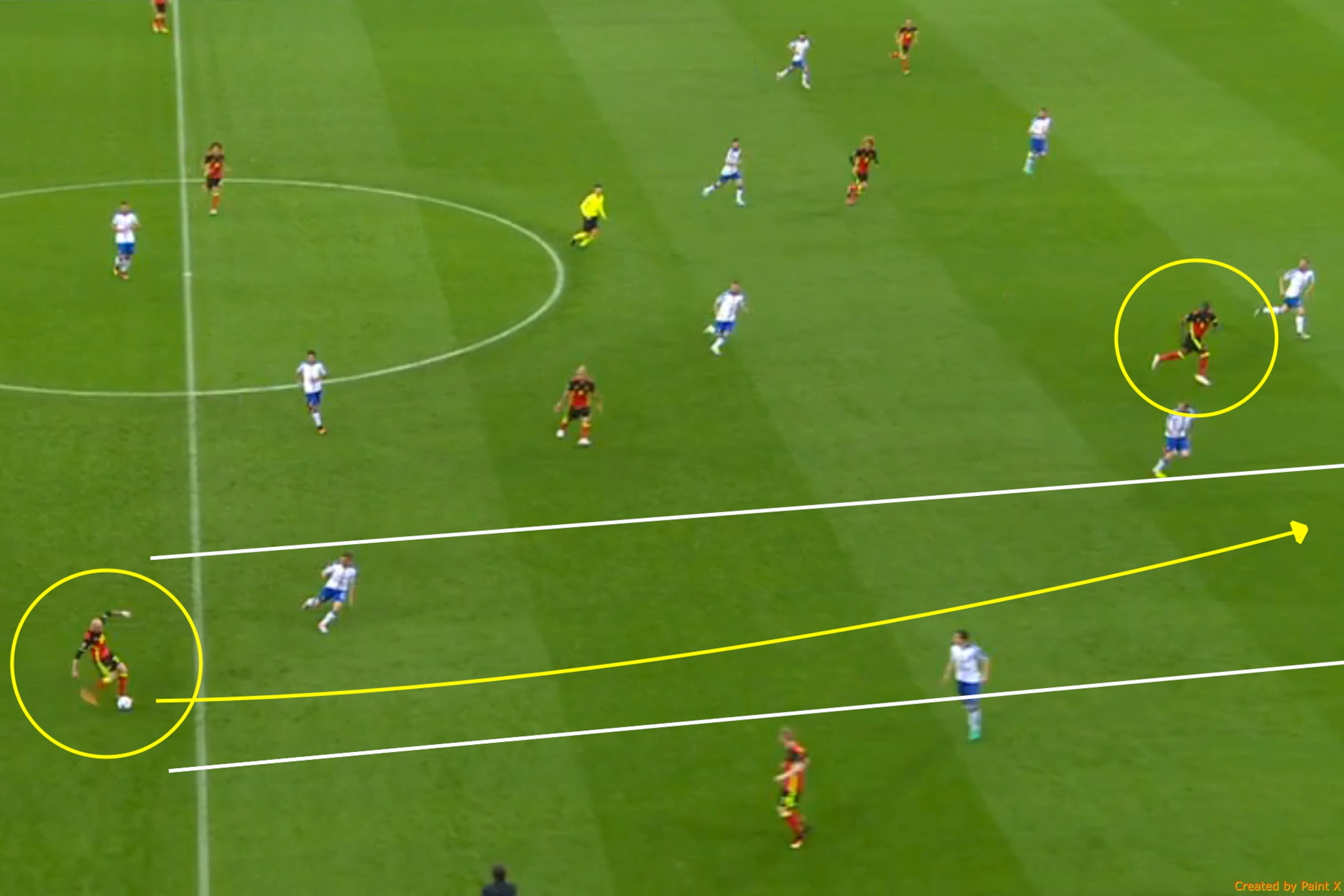
Already in the tournament, Sweden and Ireland in a 4-4-2 and a 4-4-1-1, respectively, were able to more naturally maintain width against the Azzurri, but Belgium's often-narrow 4-2-3-1 played right into Italy's hands—at both ends of the pitch.
In attack, the inclinations of Hazard and De Bruyne to cut inside meant Belgium often looked to play through the middle of Italy, which is exactly what Conte wants. The issue was exacerbated by the absence of genuine attacking full-backs to provide punch out wide, given that Wilmots is currently using four natural centre-backs across his defensive line.
That also meant Italy had a decisive advantage along the flanks when attacking themselves. With Matteo Darmian and Antonio Candreva pulling Laurent Ciman and Jan Vertonghen wide, Italy were able to target the spaces left by a back-four that has limited pace and mobility:
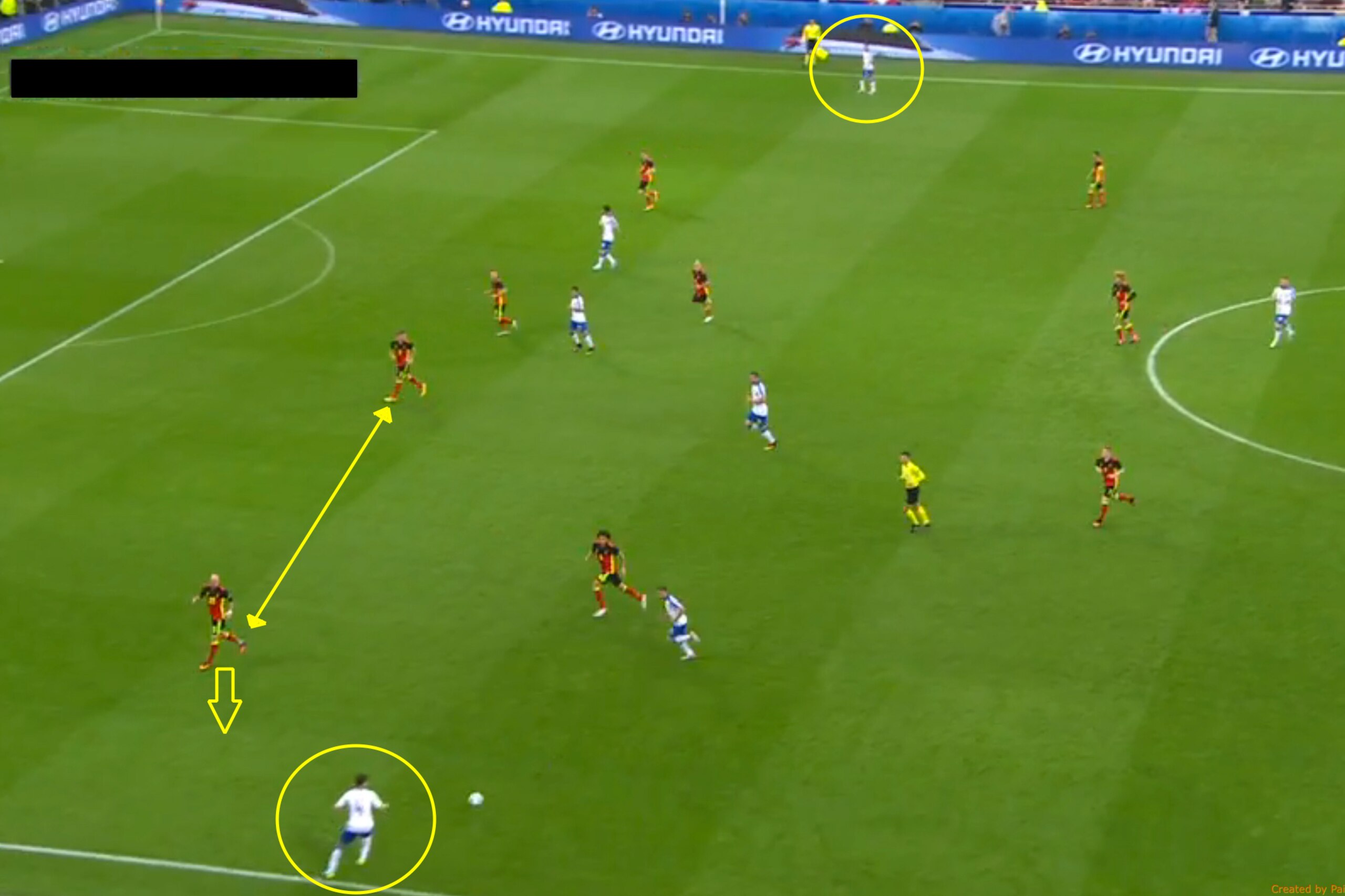
For Spain, that lack of dynamism in defence isn't an issue given the presence of Alba and Juanfran, but maintaining width going the other way will be imperative.
As a result, don't be surprised if Del Bosque turns to the sideline-hugging Lucas Vazquez in attack at some point on Monday if Italy are proving difficult to break down.
Capitalise On Transitions
Though it's all well and good to highlight the necessity of attacking the channels either side of a back three, against Italy, that's rarely possible if you don't capitalise on transitions.
When presented with slow buildups, the Italians' 3-5-2 seamlessly becomes a 5-3-2, with the wing-backs tucking in and the deepest midfielder, Daniele De Rossi, dropping back to form an almost impregnable, six-man defensive block.
In such situations, attacking teams find themselves doing little but running into clusters of defenders, and therefore, it's critical for Spain to make the most of opportunities to run at Italy's defence at speed.
At this tournament, it's no coincidence that the best chances Belgium, Sweden and Ireland saw against the Azzurri arrived in situations when the ball had been turned over in midfield, with Italy's wing-backs caught high up the pitch.
When that happened, the forwards of those respective teams were able to run at three back-tracking central defenders rather than at a well-set back five:

For Spain, then, the key ingredient is the pace of their thinking and ball movement when winning possession from the Italians—something that sounds basic but doesn't always happen for La Roja.
Against the Czech Republic, Del Bosque's men were regularly too slow in working the ball forward, with Cesc Fabregas particularly guilty of passing the ball sideways and backward with little intent. Against Turkey, Fabregas and his team-mates were considerably better in that respect and looked to pierce the lines with much greater urgency.
That is what Spain will need against the Italians. With Alvaro Morata pressuring the defensive line and Alba and Juanfran providing width, La Roja's midfield contingent must look to move the ball with speed and in a direct manner in transitions, attacking the back three and exploiting the positioning of the wing-backs.
If you allow Italy to get set in their shape, theirs is the best defence in the tournament and perhaps by a considerable distance. But if you can turn the ball over and run at them, it's a different story.
.png?w=2560)
.jpg?w=2560 "Colts Football")





