

2016 NBA Draft Prospects: Breaking Down Pro Future of UW's Dejounte Murray
Dejounte Murray is an example of why "this is a weak draft" has been the narrative for the last year.
He appears a couple of years away from being a factor in an NBA lineup, yet also got one of 16 invites to the green room, according to Jonathan Givony at The Vertical.
| Age | 19 (Born Sept. 19, 1996) |
| Team | Washington |
| Height | 6'4 ½" |
| Weight | 170 |
TOP NEWS

Pic of LeBron's Helicopter Commute 🚁

Duren Calls Out 'False' Rumors

NBA Power Rankings Entering Preseason 🔢
The Washington freshman combo guard is an upside pick who will require patience and the right mix of skill development and coaching to turn him into a quality player at the professional level. He has measurables (6'4 ½" with a 6'9 ½" wingspan) and skills that make him intriguing, but he lacks a proven jumper and plays like a college freshman who needs to clean up a lot of things with his game.
Relevant stats
| PPG | RPG | APG | SPG | FG% | 3P% | FT% | Off. Rating |
| 16.1 | 6.0 | 4.4 | 1.8 | 41.6 | 28.8 | 66.3 | 97.8 |
Murray filled up the stat sheet, and he's a bucket-getter. The problem is his inefficiency.
Also worth noting is that Murray's numbers are slightly inflated by Washington's style of play. The Huskies averaged the second-most possessions in college basketball, per KenPom.com, and Murray played a lot of minutes (33.5 per game).
Strengths
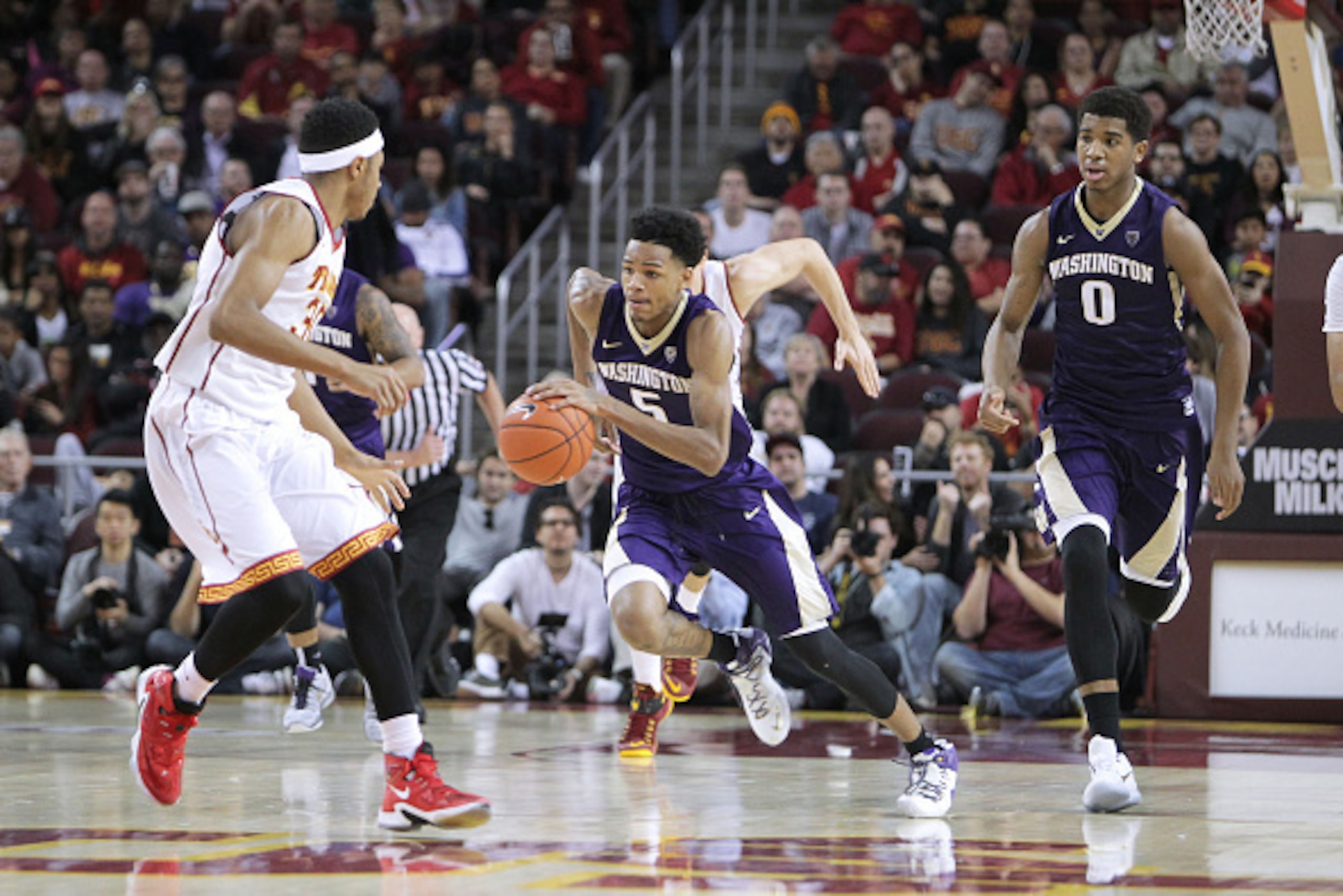
Murray puts pressure on defenses with his ability to slither into the paint. He has a lot of shake to his game in space, mixing crossovers and an array of dribble moves.
It's rare to find a player at his size who is so clever off the bounce. He had a drive against Arizona State where he started going left almost parallel with the free-throw line, then when a defender cut him off, he went behind the back and took one more dribble to explode to the bucket from the charity stripe. That kind of improvisation off the dribble is special.
When Murray is under control, he's dangerous once he gets into the teeth of the defense. He has the vision to set up teammates or finish in the paint with either hand.
Murray also plays more physically than you'd think when you see his thin, 170-pound frame. He doesn't shy away from contact on drives—draws 5.0 fouls per 40 minutes—and he's an aggressive rebounder, particularly on the defensive glass. (He had a better defensive rebounding rate than teammate and projected top-five pick, Marquese Chriss.)
Once Murray secures a rebound, he looks to push the ball, and the open court is where he excels.
Defensively, Murray will be a project, but he has upside. His combination of quick hands and length results in a lot of steals. Once he learns how to compete and focus on that end, he could be a really good defender.
Weaknesses
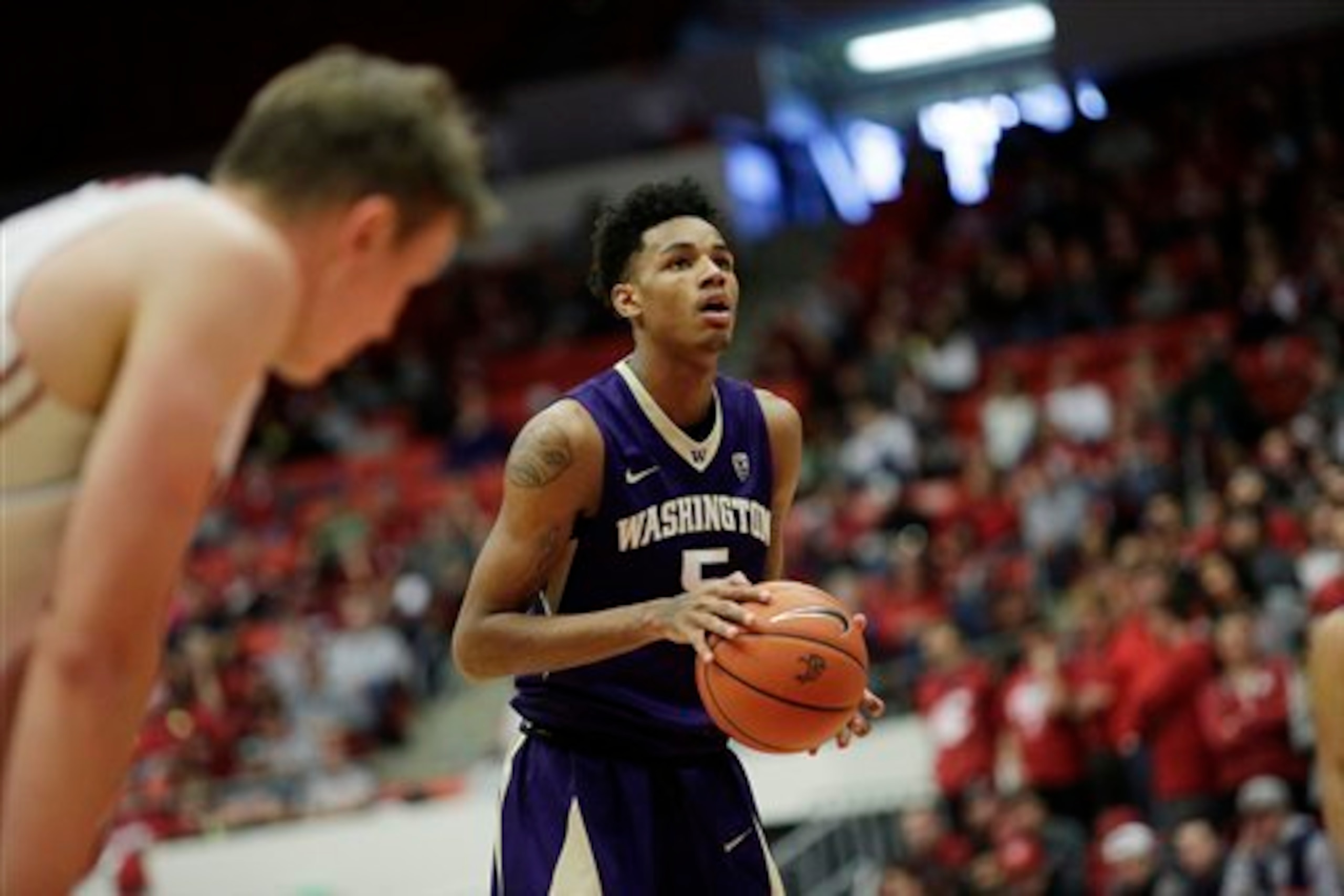
Murray will be a first-round draft pick because of his unteachable attributes. But the team that lands him better get ready to coach him up—he needs more seasoning across the board.
The major concern is his jump shot. His release doesn't look terrible, but he's not a reliable shooter at this point either. Not only are his percentages bad from the perimeter, but he takes too many jumpers where he's off balance and fading away.
Defenses didn't have to respect his shooting, and Murray compensated by relentlessly trying to attack. Sometimes he looks like a pro doing so, but when he faces pressure or gets stuck in traffic, he's turnover-prone. He can also be reckless on his drives, getting stuck in the air too often trying to finish difficult shots in the paint and around the rim.
On the defensive end, Murray is also boom or bust. He gets a lot of steals, but he's not always engaged, especially off the ball.
These are flaws that aren't unusual for a freshman and should get better with age and coaching.
NBA player comparison

Devin Harris has always been able to dance with the ball, and Murray has some of that mixtape shake to his game. Murray might not be Harris-in-his-prime quick, but both players shine in the open court.
Will Barton is also a talented scorer off the bounce who struggled shooting the three during his first year of college. Barton made just 26.5 percent of his shots from behind the arc as a freshman at Memphis in 2010-11. He's become a much more serviceable shooter as his NBA career has progressed—34.5 percent this past season.
Like Murray, Barton has good size for a guard, can rebound and is long. The former is more of a distributor, and that's why he should be able to play both NBA guard positions.
Best-case scenario
Barton's career started to take off when he was traded to the Denver Nuggets, a franchise that has always committed to playing uptempo basketball. Murray's best chance to succeed is going to be landing with a similar franchise that wants to push the pace.
Murray is in a favorable spot because he will go high enough in the draft that whichever team takes him will have enough invested to be patient. That's going to be key—it will take some time before he's ready to contribute.
Worst-case scenario
The green room invite is a good indication that Murray shouldn't slip far past the middle of the first round. But if there was ever a year where someone has a long wait in the green room, wouldn't this be it? Past the first two picks, this draft appears unpredictable.
Murray could fall as far as the second round. That could be scary for a guy who is a D-League player at this point in his progression. It would make getting a real shot less of a certainty.
Prediction
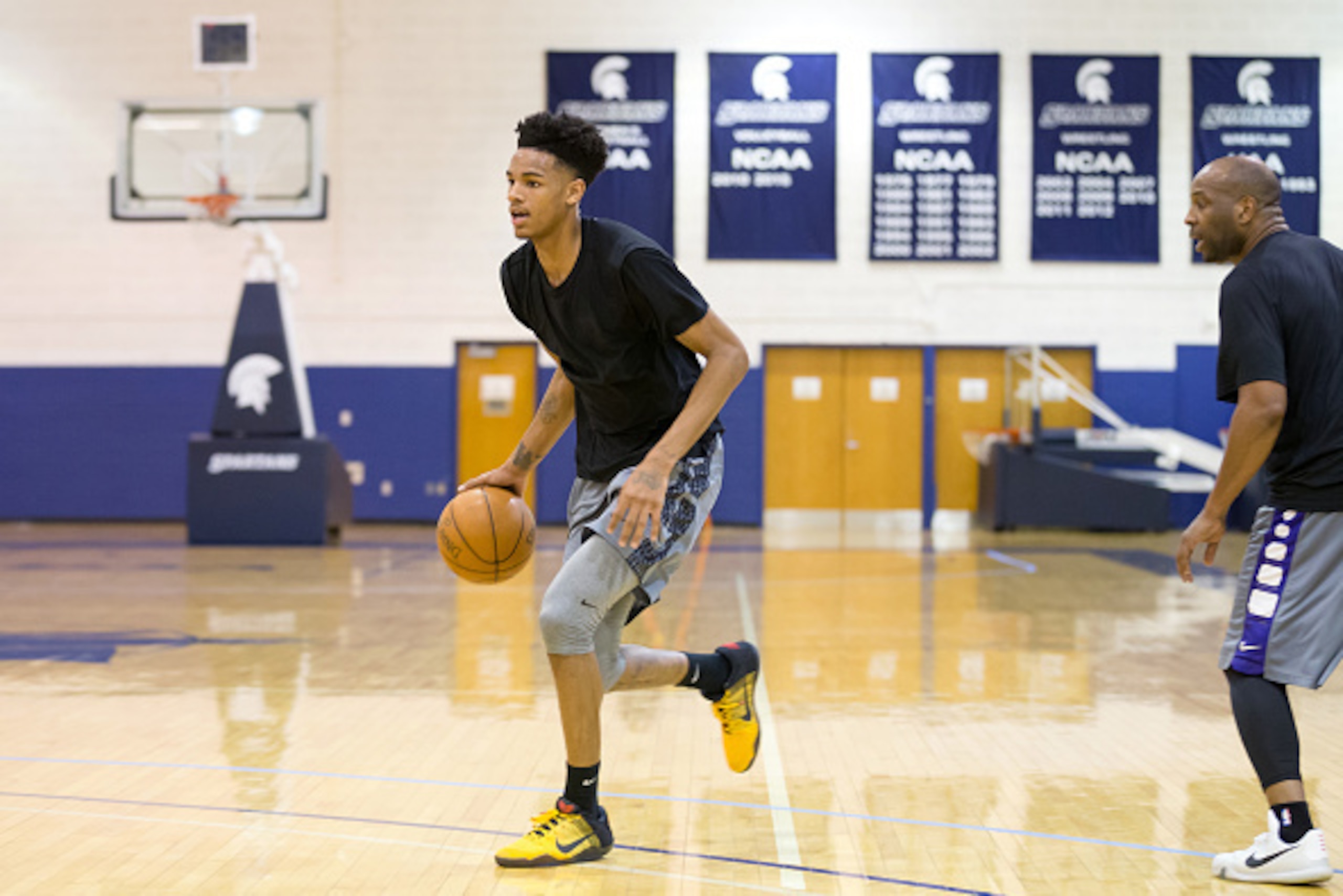
Murray has enough upside that he'll likely land in the first round. He would have been a good candidate to go back to school and refine his game, but it's hard to blame him for leaving when next year's draft class should be stronger.
The Nuggets have three first-round picks, including the 15th and 19th, and seem like a logical landing spot. That's where DraftExpress.com currently projects Murray to go. Denver's backup point guards are veterans Jameer Nelson or D.J. Augustin; neither probably factors into the team's long-term plans.
Murray would be a good option for the future, eventually backing up Emmanuel Mudiay and giving the Nuggets another guard who excels in a fast-paced game. Whether it's Denver or another team, the plan should be to bring him along slowly. He's not likely to contribute much as a rookie, but by his second or third year in the league, he projects as a quality scorer off the bench.
C.J. Moore covers college basketball for Bleacher Report. You can follow him on Twitter @CJMooreBR.

.jpg?w=2560 "NFL investigating 2 referees for separate viral exchanges")

.jpg?w=2560 "Report: Chiefs Contact Hill's Agent")
.jpg?w=2560 "OBJ Calls Out Giants After Release")
.jpg?w=2560 "Tyreek makes another cryptic post amid Chiefs rumors")

.jpg?w=2560 "Greenlaw Talks Payton Exchange")