

5 Keys That Will Decide Game 5 of the 2016 NBA Finals
The next 2016 NBA Finals game decided by single digits will be the first. And yet, this is still a series for the history books.
The Golden State Warriors made a pair of entries during their 108-97 Game 4 win Friday, hitting a Finals-record 17 threes and picking up their unprecedented 88th win of the campaign.
More history could still be ahead.
The Cleveland Cavaliers not only have their city's 52-year championship drought hanging over them, but they're also looking to become the first team to escape a 3-1 deficit in the NBA Finals. (Thirty-two others have tried and failed.)
The Warriors enter Monday's Game 5 with the chance to validate their record-setting season and clinch the first championship on their home court since they moved to the Bay Area in 1962.
But there's more basketball to be played before one of these teams goes parading into the offseason. After scanning both the numbers and using the eye test, five focus areas for Game 5 surfaced.
5. Complacency vs. Urgency
1 of 5
That the Warriors never shied away from discussing their pursuit of 73 wins should surprise no one. With last year's title under their belt, and so much of their core in or still entering their primes, this group was and is supremely confident and keenly aware of its greatness.
That has its perks, such as keeping the faith while being written off for dead amid a 3-1 deficit to the Oklahoma City Thunder in the Western Conference Finals.
But there are drawbacks, too: Golden State was surprisingly prone to skating through some contests, knowing full well a dominant stretch or two could turn the contest in its favor.
"Among the many trends defining this Warriors season, one of the more troubling was a decided lack of urgency," Bleacher Report's Grant Hughes wrote. "That sounds like an insane hallmark for a 73-win outfit, but Golden State engineered many of its victories by putting on inspired bursts that overshadowed much longer periods of malaise."
Focus shouldn't be an issue for the Warriors on Monday with a raucous Oracle Arena crowd behind them. This fanbase has never celebrated a championship in person, as Golden State's 2015 and 1975 titles were both captured on the road. The magnitude of the moment won't be lost on the crowd.
But it will be even more apparent in Cleveland's locker room. The Cavaliers not only face a win-or-go-fishing scenario, they're also shouldering the burden of a debilitating drought—not to mention the likelihood of changes with another Finals defeat.
This game means everything to Cleveland, so it must carry the same weight for the Warriors.
4. Making Size Matter
2 of 5
Execution was never going to be enough for the Cavs. The regular season provided 82 games of evidence that proved the Warriors brought more to the table on both ends.
Cleveland had the campaign's fourth-best offense; Golden State's attack was historically efficient. The Cavs held the top 10's final spot in defensive efficiency, while the Warriors tied the Boston Celtics and Los Angeles Clippers for fourth overall.
Cleveland needed to maximize its advantages—namely, soak up all possible production from LeBron James and use its size to control the interior. The Cavs have done the latter to a limited extent, enjoying edges in per-game rebounding (43.3-40.5), second-chance scoring (19-12.5) and points in the paint (46-39). But those areas only made a major impact during Game 3, and Golden State acknowledged it wasn't itself that night.
"We as a team had to understand that, yeah, we were a little lackadaisical, didn't really show up, and myself included in that," Stephen Curry said, per Yahoo Sports' Dan Wetzel. "[Friday was a chance to show] who we are as a team on both ends of the floor and play with confidence. We did what we were supposed to do."
The Warriors are a physical group, but Cleveland can't get pushed around. Golden State has gone long stretches without a traditional big on the floor, which should open things up for James' penetrations, Kevin Love's post scoring and Tristan Thompson's offensive rebounding. But the Dubs defense has held its ground in the first two areas, and the Cavs have sometimes traded Thompson's activity for more spacing.
With Golden State (mostly) corralling James, and Kyrie Irving's isolation scoring not helping the players around him, Cleveland is running out of potential advantages. Size is one of them. That doesn't mean rolling Timofey Mozgov out of rotation retirement, but the Cavs should lean heavily on Thompson.
3. The Fuel Tanks
3 of 5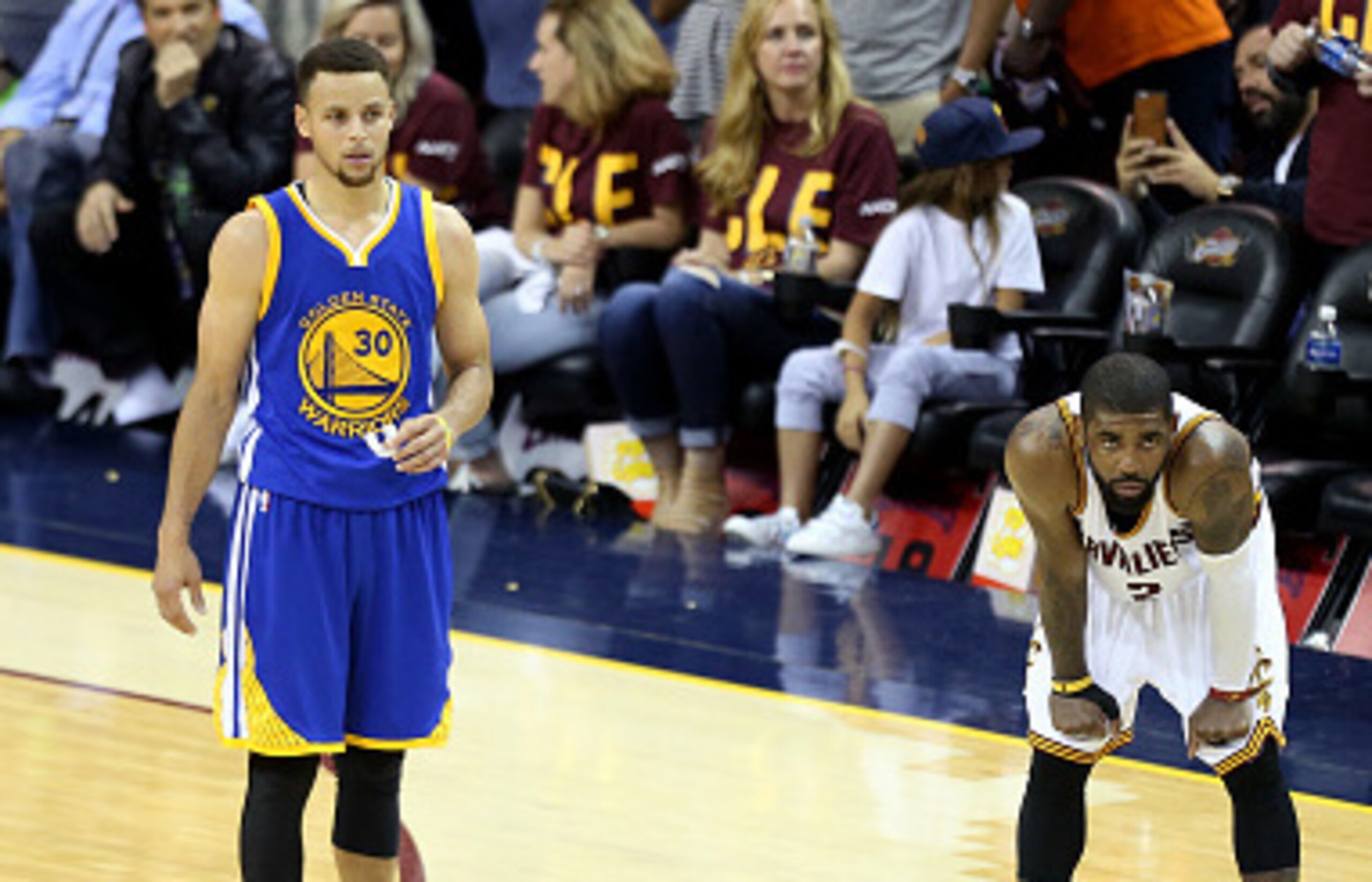
Cleveland suffered an all-too-predictable collapse late in Game 4. Among its many miscues was a deflating 12-1 Golden State run, during which the Cavs went nearly seven minutes without a field goal.
The Warriors' suffocating, switch-everything defense had a lot to do with that dry spell, but the heavy minutes played by LeBron James, Kyrie Irving and J.R. Smith might have been just as much to blame.
James and Irving never came off the floor during the second half. Smith sat for all of five seconds after intermission. Each player cleared the 43-minute mark, while Golden State had only two guys reach 40 minutes: Draymond Green (42) and Harrison Barnes (40).
Cleveland lost all movement late and, though the players wouldn't admit it, fatigue seemed to be a primary culprit.
"It hurt us," Cavs head coach Tyronn Lue said, per Cleveland.com's Chris Fedor. "I went with my best players in the fourth quarter, down 2-1, and it didn't work."
That Warriors head coach Steve Kerr got away with giving a handful of meaningful minutes to fringe/non-rotation players such as James Michael McAdoo and Anderson Varejao felt like salt in Cleveland's wounds. But it speaks to Golden State's massive advantage in depth.
The Cavs have three of the four minutes leaders in this series, while the Warriors hold a colossal 140-70 edge in second-team scoring.



2. Cleveland Committing to Running an Offense
4 of 5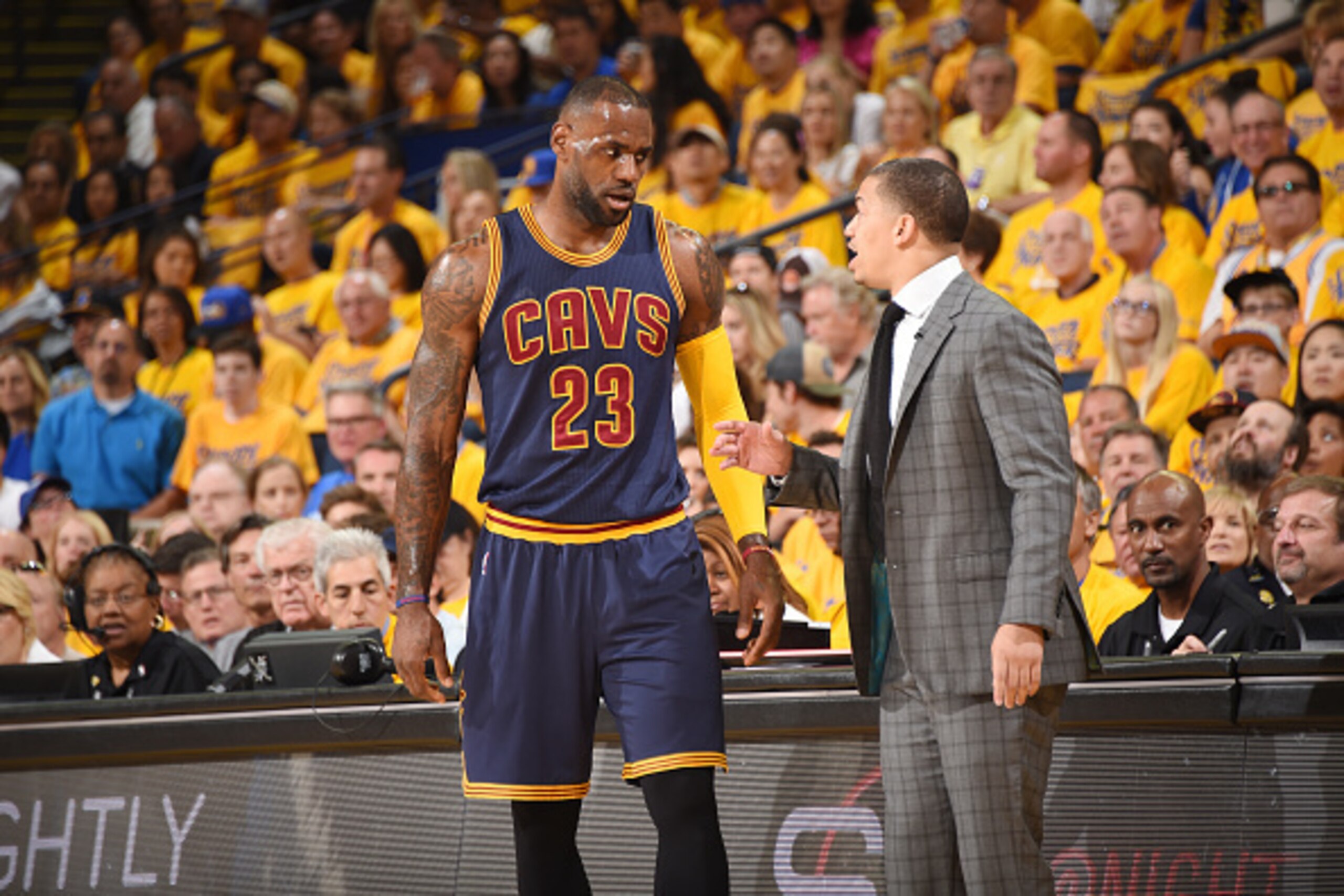
Dominant offensive execution was the one constant during the Cavaliers' sprint through the Eastern Conference. The ball zipped from one player to the next, threes rained down from the sky and they kept turnovers to a minimum.
That attack has been seldom seen during these Finals outside of Cleveland's 120-90 runaway in Game 3. The Cavs have often fallen back into their unsightly ball-stopping tendencies, and the second half of Game 4 was an extreme example of their worst.
Cleveland had more turnovers (seven) than assists (five). LeBron James and Kyrie Irving took 33 of the team's 38 field-goal attempts. In the fourth quarter, only 19 percent of its shots (four of 21) came off a pass, per ESPN Stats & Info, down from 40 percent (24 of 60) through the first three quarters.
The Cavs were a step slow at both ends of the floor.
"When players stand around on offense, it tends to lead to stagnant defense," the Plain Dealer's Terry Pluto wrote. "That's what happened in the second half. The trust factor broke down on both ends of the court."
Cleveland was outscored 58-42 after intermission—its lowest point total in any half at home this postseason, per B/R Insights. It failed to reach its magic number of 100 points and is now 0-5 this playoffs when it doesn't crack triple digits—and 13-0 when it does.
A simplified, predictable attack can't dismantle a defense as stout as the Warriors'. The Cavs can ill afford to let too many weapons go unused, as they did Friday.
1. Keeping the Pond Thawed
5 of 5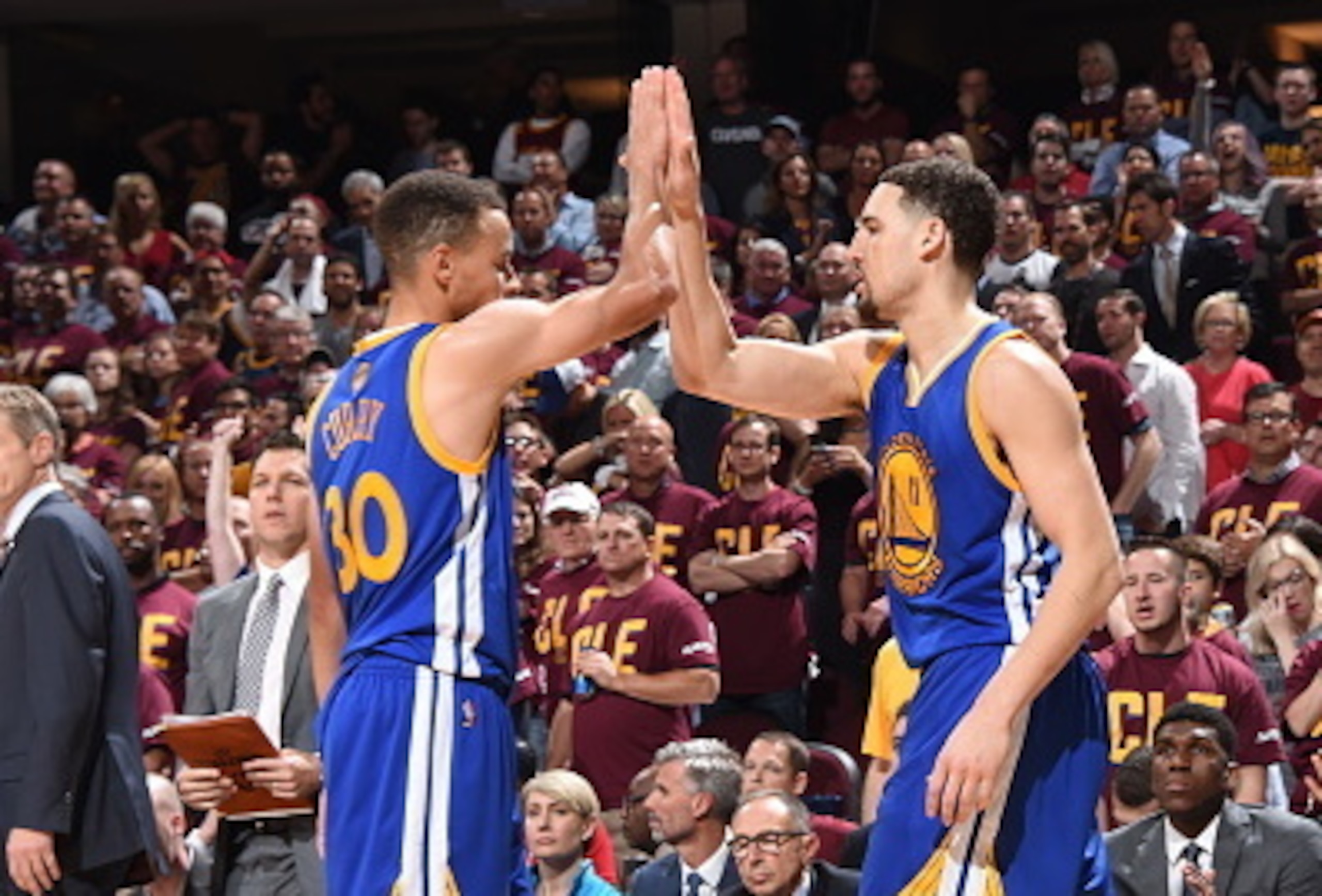
Though the Cavs had, in the words of one reporter, "frozen the pond for the Splash Brothers" during the first three games of this series, the law of averages said the waters wouldn't stay that way forever.
The ice melted in Game 4, and the Warriors' All-Star guards turned that pool into their personal hot tub.
After averaging a combined 28 points and 5.3 triples in the first three games—a steep decline from their regular-season marks of 52.2 and 8.5, respectively—Stephen Curry and Klay Thompson erupted for 63 points and 11-of-22 three-point shooting.
"I don't know that the shots were that much better than they've been, I just think they got going," Golden State head coach Steve Kerr said, per CSN Bay Area's Monte Poole. "Sooner or later, it's going to happen."
Truth be told, Cleveland's defense showed a bit of slippage, too. According to B/R Insights, the Splash Brothers set their series high in both uncontested takes (19) and makes (11).
The Cavs couldn't find the offensive firepower to cover for those breakdowns and were outshot from outside by Curry (seven threes to six) and throttled overall by the Warriors (51-18 in three-point scoring).
Considering Golden State already has a pair of double-digit wins this series on subpar nights from the Splash Brothers, another nuclear performance by them would likely doom Cleveland.
Statistics courtesy of Basketball-Reference.com and NBA.com unless otherwise noted.

.jpg?w=2560 "NFL investigating 2 referees for separate viral exchanges")

.jpg?w=2560 "Report: Chiefs Contact Hill's Agent")
.jpg?w=2560 "OBJ Calls Out Giants 😳")
.jpg?w=2560 "Tyreek makes another cryptic post amid Chiefs rumors")

