

Who Will Lead Germany's Line at the Euros: Mario Gotze or Mario Gomez?
With the start of Euro 2016 in France just around the corner, nostalgia is in full flow. Especially in England, where Germany last hoisted the trophy 20 years ago—documentaries on various television channels, full reruns of famous matches and more are being shown.
Narrow successes are always the sweetest, and it doesn't get much narrower than winning the semi-final against the hosts on penalties and the final against the Czech Republic thanks to the now-defunct golden-goal rule.
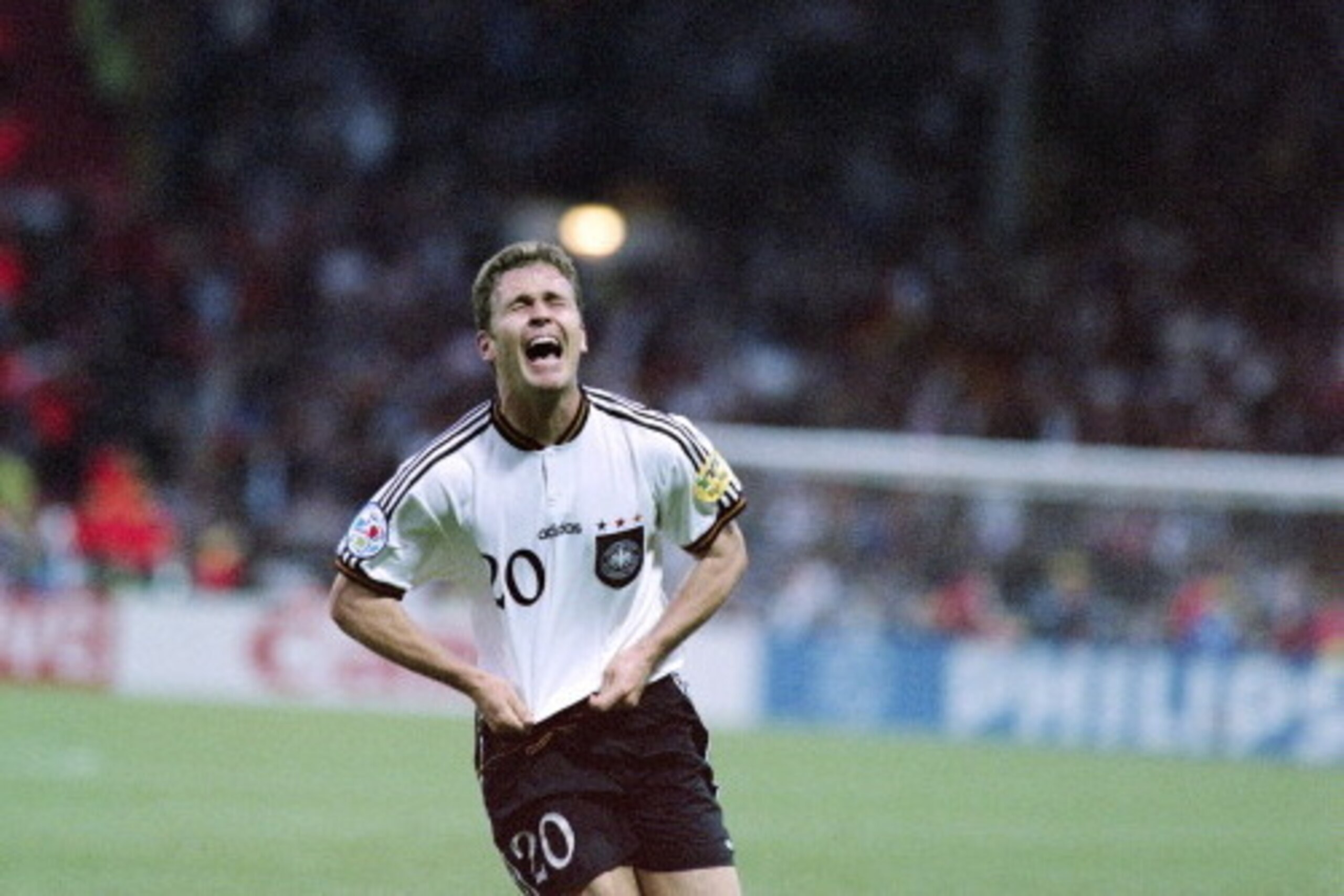
Looking back at Germany's last European triumph and comparing the squad from then with the one that will start on Sunday against Ukraine in Lille, one thing is striking: Berti Vogts had four out-and-out strikers at his disposal in Oliver Bierhoff, Fredi Bobic, Jurgen Klinsmann and Stefan Kuntz in 1996.

.jpg?w=2560 "Cardinals Giants Football")
.jpg?w=2560 "Jets Dolphins Football")
All four played their part in Germany's success, with Klinsmann hitting the most goals (three), Kuntz scoring the equaliser against England and Bierhoff going down in history as the man who won the tournament for his country.
In contrast, Joachim Low brings only one true No. 9 to France this summer in Mario Gomez.
It's not like he had much choice, though. Looking at the goalscoring charts from this season in the Bundesliga, Darmstadt's Sandro Wagner, an uncapped 28-year-old journeyman, was the German central forward with the best tally at 14 goals.
Germany, who always had great strikers when they won at the Euros—Gerd Muller and Jupp Heynckes in 1972; Karl-Heinz Rummennige, Horst Hrubesch and Klaus Allofs in 1980—don't have a strong strike force at the moment.
The ever-reliable Miroslav Klose retired from international football after the 2014 FIFA World Cup, and no young forwards have made a big enough step in that time to play themselves into consideration.
One may argue that Thomas Muller ought to be considered a striker, and there's some merit to it, but he's rarely led the line for Germany, most often playing from the right wing.
Others will have to play in the centre of attack. Realistically, Low has two options: Mario Gotze and Gomez.
The 24-year-old Bayern Munich man is not a natural striker—or goalscorer, for that matter, despite his well-taken winner in the World Cup final against Argentina two years ago—but he's capable leading the line nonetheless.
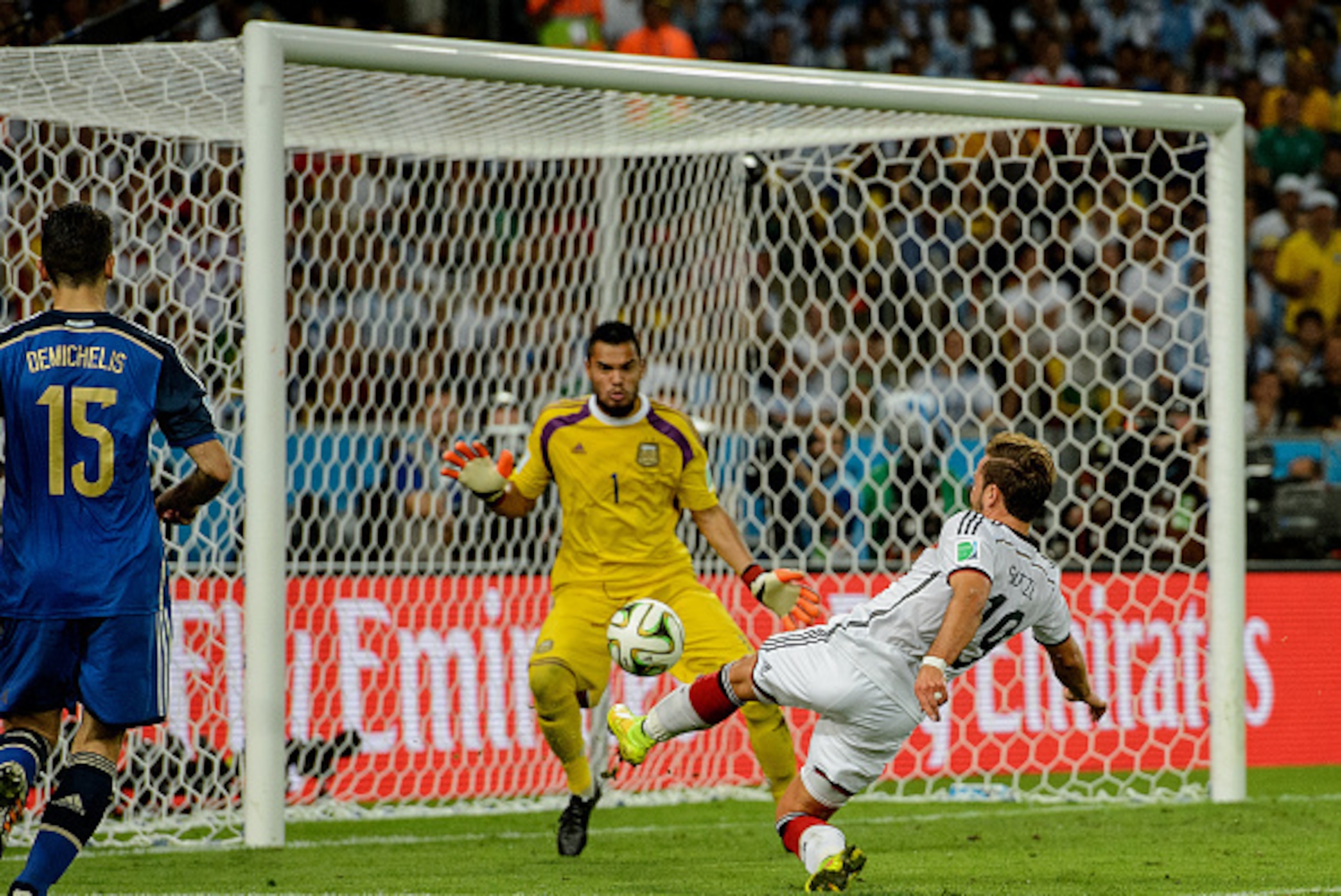
Germany don't have classic wingers in the team, with Muller and Julian Draxler, the presumptive starters against Ukraine, drifting into the middle far more often than going towards the byline and whipping the ball into the penalty box, so Gotze's lack of height isn't a big issue.
His technical skills allow him to hold the ball up despite defenders being bigger and stronger than him, even with his back to the goal. His background as a creative midfielder by trade makes him a very good passer, which is important for a Germany side that will have the majority of the ball in just about every match they'll play in France.
Movement is Gotze's best attribute when he plays up front, however. He's not a traditional No. 9, meaning he won't wait for a ball into the box. Instead, he'll pop up on the wings to help overload the flank in one moment only to sneak back into a finisher's position in the next, or drop into the the half-spaces to allow Muller to move to the front for a bit.
As tactics blogger Constantin Eckner pointed out, "a fluidly moving and shifting offense featuring Gotze, Mesut Ozil and Muller must be a scary thought for every opponent."
The 24-year-old didn't play a big role for Pep Guardiola this season, but that doesn't have to be a bad thing. Playing in only 21 matches across competitions for the Bavarians, Gotze missed months with a muscle injury.

Upon his return in February, the World Cup winner hardly featured in the important games. In the six matches in the UEFA Champions League knockout stages against Juventus, Benfica and Atletico Madrid, for example, Gotze played a grand total of six minutes, per Transfermarkt.co.uk.
However, he's started seven of the last nine Bundesliga matches, entering Germany's training camp in good shape despite suffering a broken rib on the last matchday against Hannover, where he scored a brace.
Those starts late in the season seem to have been a good warm-up programme for Gotze, who's looked fresh and sharp in the friendly matches against Slovakia, where he was arguably the lone bright spot in a disappointing 3-1 loss, and the 2-0 win over Hungary at the weekend.
His performances presumably have won Gotze a spot in the starting XI against Ukraine, but one would have to imagine he'll be on a short leash, because Gomez has also shown well for himself.
The 30-year-old experienced a veritable resurgence on loan at Besiktas last term, winning the Turkish Super Lig and the Golden Boot with 26 goals. One shouldn't forget it's only the Turkish league, where 35-year-old Samuel Eto'o managed 20 goals for ninth-placed Antalyaspor, but Gomez has always found the net wherever he has played.

That includes a healthy return of 27 goals in 64 caps for Germany, but it's no coincidence he was sparingly called up between Euro 2012 and November 2015. Out of favour at Bayern and often injured at Fiorentina, Gomez's Germany career looked pretty much over until he joined Besiktas.
His return to the national team is a story of great perseverance, and it wouldn't be surprising to see him crown his return with an important goal or two in France.
If Germany need a classic striker, a physical presence in the box, Low knows he can count on Gomez, who will turn 31 on the day of the final, July 10.
The former Stuttgart striker is confident ahead of the Euros, telling the German Football Association's official website: "I've always been a player who relies on instinct. I've had a good eye for goal and known where to position myself inside the penalty area. But instinct and good positioning isn't worth anything if you lack self-assurance in your attempt on target. With every goal you gain assurance."
One thing that speaks against Gomez is "he can't play on the shoulder of the last man given his lack of pace," as Raphael Honigstein pointed out for ESPN FC.
Ultimately, it seems Low will prefer Gotze, at least to start the tournament.
"A nod to the scorer of the World Cup-winning goal in Rio would suggest that Low will stick to his aesthetic principles in attack rather than adopting a more direct approach," Honigstein wrote.
With both players in good form ahead of the Euros, however, and thanks to their being so vastly different in almost every way, Low has the luxury of being able to pick his starting forward with regards to the opposition and form on a given matchday.
They may not bring a typically fearsome strike force to the Euros, but both Gotze and Gomez are more than capable of leading the line towards a possible fourth European Championship for Germany.
Lars Pollmann is a Featured Columnist who also writes for YellowWallPod.com. You can follow him on Twitter.
.jpg?w=2560 "Titans Ravens Football")


.jpg?w=2560 "NFL investigating 2 referees for separate viral exchanges")