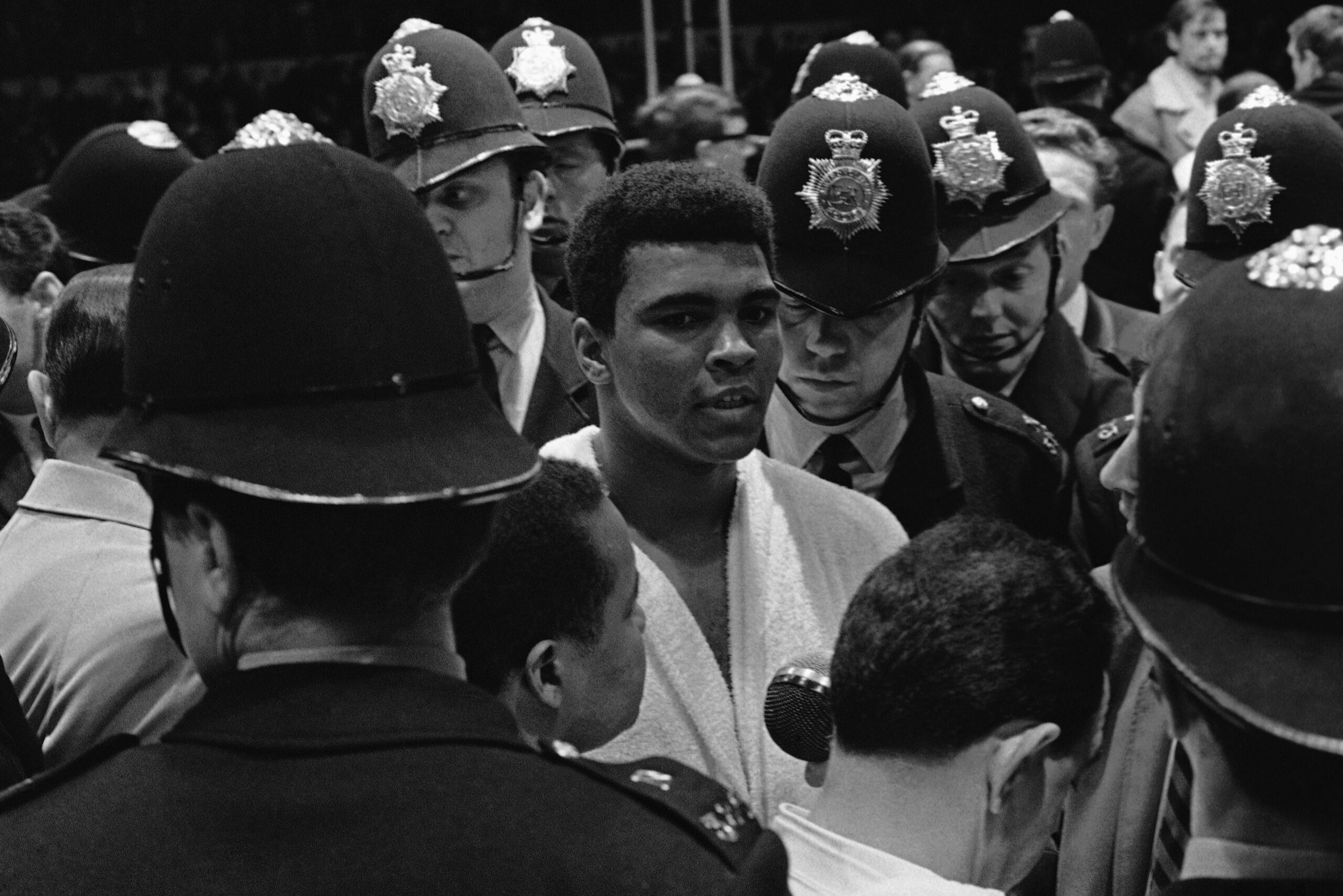

Muhammad Ali and 5 Other Famous American Heavyweights Who Fought in Britain
"I am the greatest. I said that even before I knew I was. I figured that if I said it enough, I would convince the world that I really was the greatest."
Considering the reaction following the news of his death, there can be little doubt that the late Muhammad Ali was indeed the greatest.
A three-time heavyweight champion of the world, the Louisville Lip transcended his sport. He was a larger-than-life character who has left a lasting legacy.
Ali finished his pro career with a 56-5 (37 KOs) record. Famously, of course, he was involved in the Rumble in the Jungle and the Thrilla in Manila, two historic bouts that helped cement his greatness.
However, British fight fans will also fondly remember his two meetings with Henry Cooper in England.
Their first fight, in June 1963, saw Ali—who was still known as Cassius Clay at the time—end up on the wrong end of 'Enry's 'Ammer. Despite being knocked down, he went on to force a stoppage in Round 5.
The rematch took place in May 1966. Cooper fought bravely again, but a bad cut forced the bout to be stopped.
According to London24.com, the American later said: "Cooper is the best fighter I ever met. He’s really a great fighter and you can’t take anything away from him. He shook me every time he hit me."
Ali isn't the only famous heavyweight from the U.S. to fight in a British ring.
Here, Bleacher Report has picked out five well-known American big men who made a splash across the Atlantic.
Jack Johnson
1 of 5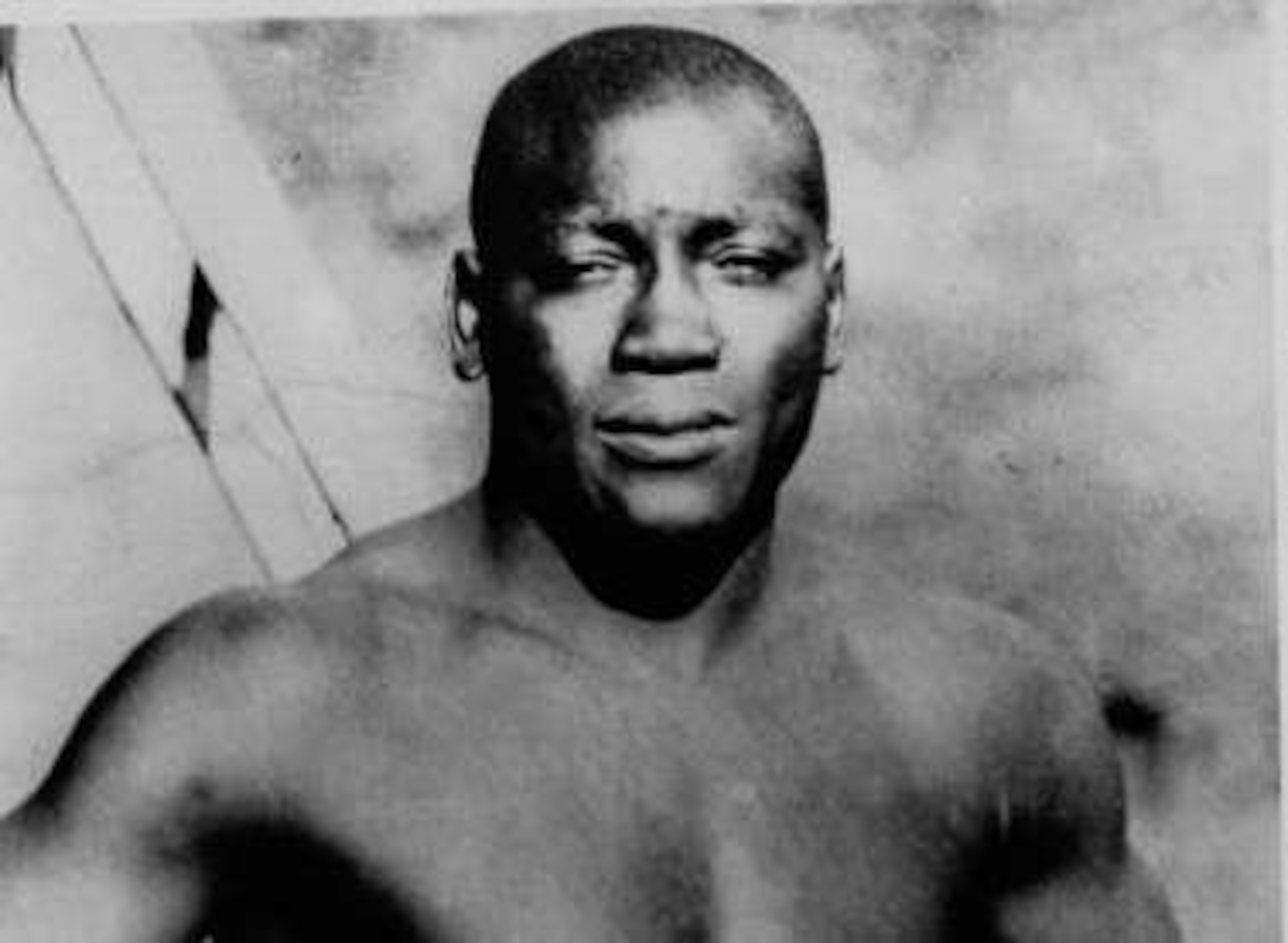
Jack Johnson made history when he became the first black man to win the world heavyweight title in 1908.
He achieved the feat by beating Canadian Tommy Burns on points in Sydney, Australia. The bout was cut short after 14 rounds by the police, per an agreement made prior to the start.
Johnson had previously been the world colored heavyweight champion, but he had to wait patiently for his opportunity at the universal belt.
In his last fight before facing Burns, the man nicknamed the Galveston Giant travelled to Britain to compete at a rather unusual location.
On July 31, 1908, Johnson took on Ben Taylor at the wonderfully named Old Cosmo Rink in Plymouth, England.
Taylor—who had lost his three previous outings before taking on Johnson—managed to last until Round 8 before the bout was stopped.
BoxRec's profile of the Englishman declares him a "competent fighter who probably would have gone further had he trained with more diligence."
Considering he finished with a record of 27-22-4 (20 KOs), it is fair to say Taylor had an up-and-down time of it in the ring.
Floyd Patterson
2 of 5Henry Cooper and Floyd Patterson had something in common when they met at Empire Pool, Wembley, in London on September 20, 1966.
Both men went into the bout off the back of defeats to Muhammad Ali.
Patterson had been out of the ring for nearly a year after being stopped by his fellow American in Las Vegas.
Cooper, meanwhile, was returning to action just four months after a bad cut had stopped his second clash with Ali in Round 6.
His problem against Patterson wasn't so much steering clear of cuts as staying upright.
The home favourite was knocked down three times as he lost in Round 4.
However, Patterson revealed after the fight that his biggest concern had been the potential for Cooper to shed blood, per BoxRec:
"Quite frankly I never want to fight Cooper again. I have watched a number of Cooper fights on television, and he cuts like I have never seen anybody cut before. He didn't cut much tonight. But I kept on looking at his face. I usually look at the other man's chest. In this fight I kept looking up and wondering when the bleeding would start.
"
Patterson also fought in Sweden the following year but failed to take the WBC title from Jimmy Ellis.
Joe Frazier
3 of 5
Before stepping into the ring to take on George Foreman in 1973, Joe Frazier was the undefeated heavyweight champion of the world.
In under six minutes of action against Foreman in Jamaica, Smokin' Joe not only lost his perfect record but also his grip on the WBA and WBC titles.
Frazier—who had been knocked down six times by Foreman inside two rounds—returned to action just under six months later.
He flew to London to take on Joe Bugner, a former British, Commonwealth and European champion.
It was far from an easy comeback. Bugner went into the bout off the back of a points loss in the first of two bouts against Muhammad Ali.
Frazier was forced to settle for a points triumph in the English capital, although he did drop his rival in Round 10 with a lovely left hook.
In recalling the fight, Bugner told Tom Gray of The Ring magazine:
"He [Frazier] was so tough and I landed everything I had in that fight. He dropped me in round 10 with a huge left hook and I remember looking at Andy Smith (manager) who gave me the signal to get up. I got to my feet and suddenly Joe left himself wide open and I caught him with a perfect right hand on the button. His leg went from under him and his knee almost touched the canvas.
"
Frazier's next bout saw him lose a rematch with Ali, who he had originally beaten in 1971.
However, the pair would go on to meet for a third time in Manila, in 1975. The final part of their trilogy turned out to be pretty special indeed.
_0.png?w=2560 "CFB Top 25")
George Foreman
4 of 5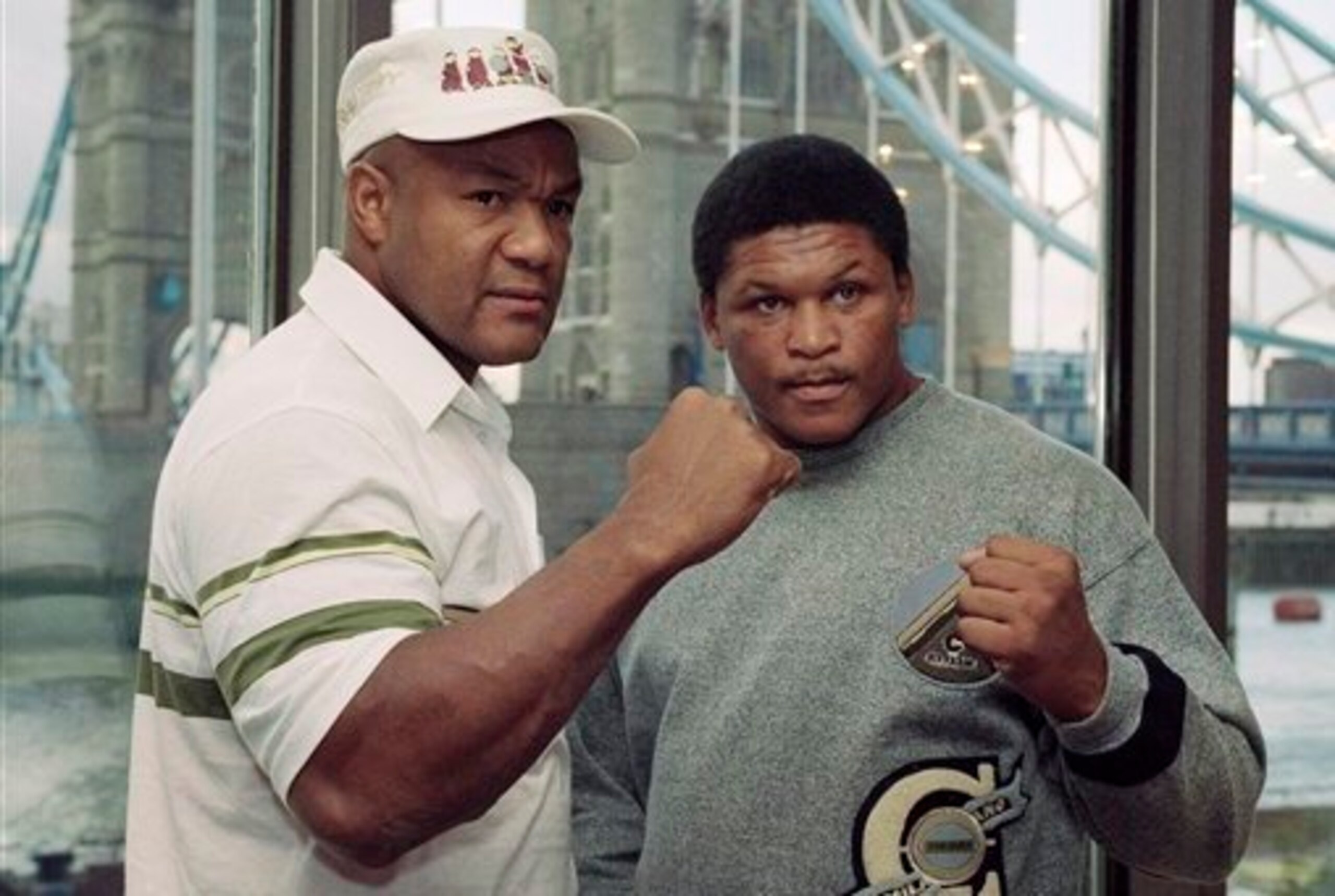
By the time he arrived in London to fight fellow American Terry Anderson on September 25, 1990, George Foreman was well and truly on the comeback trail.
After losing to Jimmy Young in 1977, the former world champion had what he believed to be a religious experience in his dressing room and promptly retired to become an ordained minister.
But, nearly a decade later, Big George decided to fight again.
He reeled off a steady stream of knockouts. It was like the Foreman of old, albeit the standard of opposition wasn't quite up to scratch.
Anderson—a fighter flown in from Florida to be tenderised at the New London Arena in the English capital—became victim No. 24 in the second chapter of Foreman's career.
The underdog paid the price for walking onto a big right hand at the end of Round 1.
Foreman was impressed with the finish. He told the Associated Press (h/t BoxRec): "The guy ran right into a straight right hand. That was the hardest right hand I've ever thrown. My power is back. I thought I had lost it to Muhammad Ali and now I feel as strong as I did as a teenager."
He departed with some kind words for England, too, per Matt Christie and James Slater of Boxing News: "You cannot be a heavyweight champion, or a former heavyweight champion, not having fought in London."
Foreman returned home to challenge IBF, WBA and WBC champion Evander Holyfield.
He lost on that occasion but ruled the world again in 1994 after stunning Michael Moorer.
Mike Tyson
5 of 5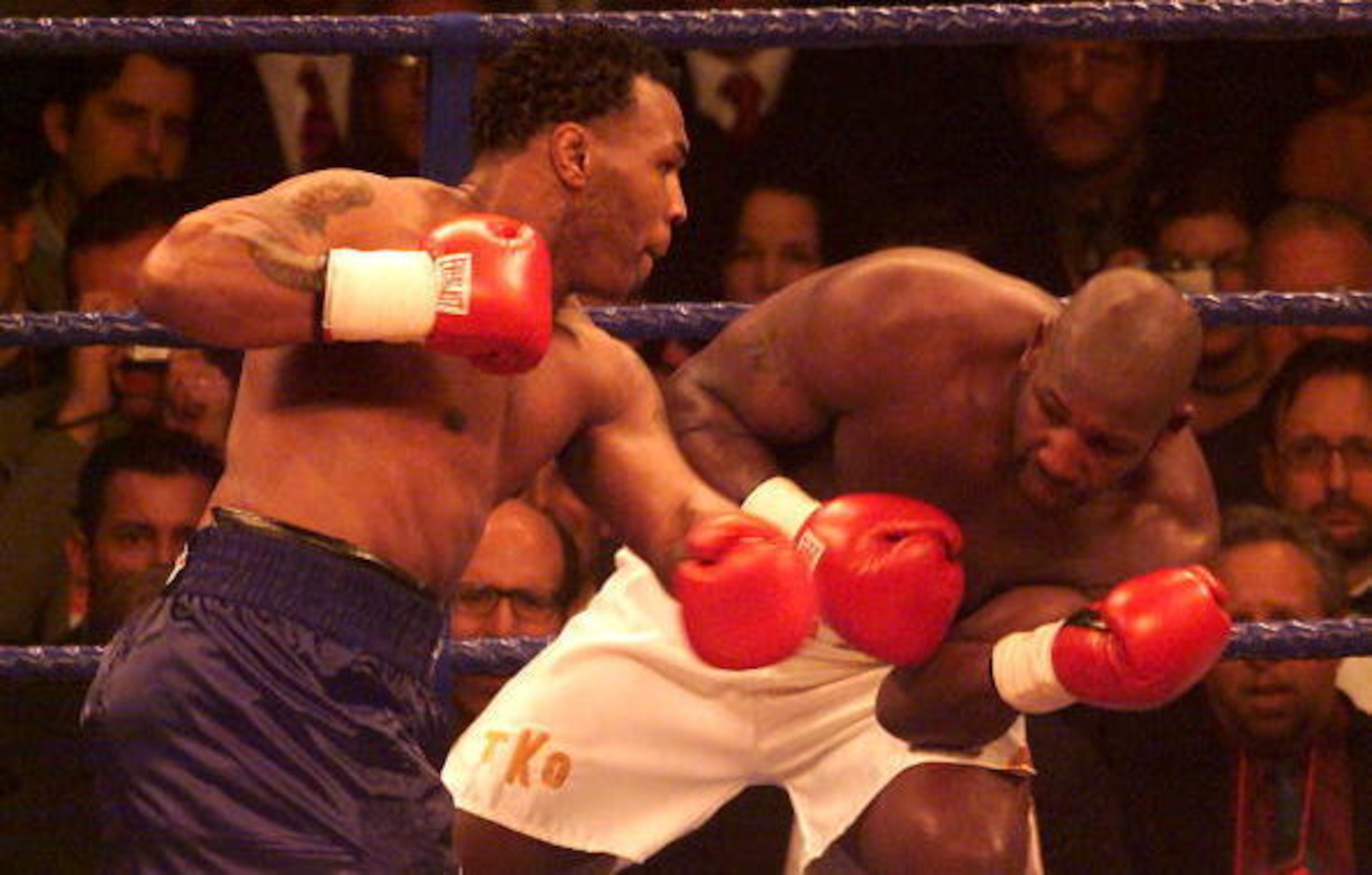
Mike Tyson's two fights in Britain were memorable—but not because of what happened in the ring.
Iron Mike made his European debut on January 29, 2000. The M.E.N. Arena in Manchester, England, was the stage for a mismatch against Julius Francis.
Having twice spent time in jail, the American needed special dispensation just to get through passport control at Heathrow Airport.
He then brought Brixton to a standstill during a leisurely stroll, spent fortunes on shopping trips and nearly flew home after a disagreement on the day of the weigh-in.
Francis was a domestic fighter who was given a chance to fill his boots. He did just that by getting the soles of his shoes sponsored by a national newspaper.
The Daily Mirror received some exposure, too, as the Englishman was knocked down five times inside two rounds. The one-sided bout was stopped just over four minutes into the action.
That fight, however, was made to look like an all-out war when compared to Tyson's clash with Lou Savarese in Glasgow, Scotland, later in the same year.
Savarese lasted all of 38 seconds. It might have been over earlier, but Tyson's desire to do damage saw him knock over referee John Coyle, who was trying to call a halt to proceedings.
The American then cut loose in his post-fight interview. Per James Mossop of the Telegraph, Tyson said: "I'm coming for you Lennox Lewis. God I am mad. I'm going to rip your heart out."
Funnily enough, he never boxed in Britain again.

.png?w=2560)
.jpg?w=2560 "Jonathan Taylor Landing Spots 📍")





