

2016 NBA Draft Prospects: Breaking Down Pro Future of Providence's Ben Bentil

From afterthought to top-20 scorer in just one year, Providence's Ben Bentil has emerged as a breakout name in the 2016 NBA draft discussion.
You wouldn't know Bentil was putting up 20-plus points per game based on the coverage or buzz he received most of the year. This was largely due to the star power of teammate Kris Dunn blinding the nation. Up until the Big East tournament, only scouts had taken notice.
Following his sophomore season, Bentil declared for the draft and participated at the combine without an agent. After one of the better performances there, he kept his name in to remain eligible for June. He'll now have workouts and interviews to sell himself as a first-round talent.
TOP NEWS

Brown with an all-time summary of relationship with Tatum

Heat, Giannis were down by 20+ in each of their 3 losses

Power Ranking Every NBA Team's Starting Lineup 🔢
Relevant Stats
| PPG | RPG | APG | BPG | FG% | 3PT% | ORtg | Usage |
| 21.1 | 7.7 | 1.1 | 1.0 | .462 | .329 | 115.6 | 29.6 |
A scoring machine, Bentil's 21.1 points per game rank second (behind Oklahoma's Buddy Hield) among prospects I consider draftable. He had a number of monster offensive outputs later in the year, including a 31-point game during a win over the national champion Villanova Wildcats. He'd later go for 42 points against Marquette, 31 at Seton Hall and 38 against Butler.
Though his 32.9 percent three-point mark isn't particularly impressive, the fact he hit 52 threes in 35 games (and shot 78.2 percent from the free-throw line) highlights capable long-range shooting and promising stretch-4 potential.
On the downside, he totaled just 40 assists all season despite playing 34.2 minutes a night and sporting a heavy 29.6 percent usage rate. His 12.4 percent rebounding percentage and 3.1 percent block percentage are also significantly below average for a big man.
Strengths

Bentil compensates for lack of traditional height with a 7'1 ½" wingspan and strong upper body (229.2 pounds). He also had the biggest hands at the combine, measuring 9 ½" by 10".
But the real draw stems from his skill set and the most notable development in his game: a jumper that gets beautiful arc and 25-foot range.
A spot-up threat from three, Bentil also projects as a weapon in the pick-and-pop game. And when isolated from the mid-range or short corner, he's flashed the confidence to jab-step and fire right over the top of his man.
Bentil uses his mobility and body control, as well as the threat he poses as a shooter, to face up, attack closeouts and separate into runners off one foot in the lane.
Though he prefers operating away from the basket, he's tough at the rim, where he plays through contact and finishes at a 62.9 percent clip, per Hoop-Math.com. He can ultimately hurt defenses with power or beat them with finesse around the perimeter. That's the sort of versatility NBA teams covet at the position.
Weaknesses
Bentil isn't an explosive athlete and doesn't have great height (6'8 ¼") for a forward who can only play the 4. When you take into account how few shots he blocked (36 in 1,198 minutes) and the idea he could have to guard quicker NBA hybrid 4s, his defensive outlook isn't promising.
Between his weak defensive effort and abnormally low rebounding rate (8.9 rebounds per 40 minutes), these are holes starting-caliber players don't have. For a strong big man, Bentil's interior presence isn't felt.
Though a dangerous scorer, you won't hear any scouts calling him the type of player who makes his teammates better, either. He finished without an assist in 15 games this season. His mind appears to be in constant score-now mode, and he'll occasionally take shots that look preplanned prior to him getting the ball.
It's no surprise many of his field-goal attempts are contested or low-percentage looks.
Feel for the game certainly isn't one of Bentil's strong points. He'll have to do a better job of picking his spots and converting within the flow of the offense.
Pro Comparison

Brandon Bass/Patrick Patterson
Los Angeles Lakers power forward Brandon Bass was a second-round pick who's carved out a 10-year journeyman career for himself averaging 22.4 minutes per game. Like Bass, Bentil projects as a shot-maker and finisher off the bench.
Since entering the league, Bass has shot 45.5 percent from 16 feet to the arc, per Basketball-Reference.com, a number that's allowed him to hold down a rotation job. Bentil will be similarly valued for his mid-range shooting touch. However, I suspect the NBA three-ball will ultimately become part of his everyday arsenal, the way it did for Toronto Raptors stretch 4 Patrick Patterson.
Best-Case Scenario
Depending on where he ends up, Bentil could eventually crack a starting lineup, though it would likely have to be on a team desperate for firepower. That's what Bentil ultimately brings to the NBA table—the potential to generate offense when the game slows down in the half court.
He's either averaging 15 points for a mediocre team or 10-12 points in a sixth-man-type role for a playoff contender.
Worst-Case Scenario
Bentil would make a fine pro overseas, but his scoring ability should keep him afloat in the NBA. At the very least, he'll stick as an eighth or ninth man whose role is to catch and shoot in the 15-25-foot range.
A worst-case scenario envisions an inefficient Bentil—overly reliant on an inconsistent jumper—who struggles to board and defend.
Prediction
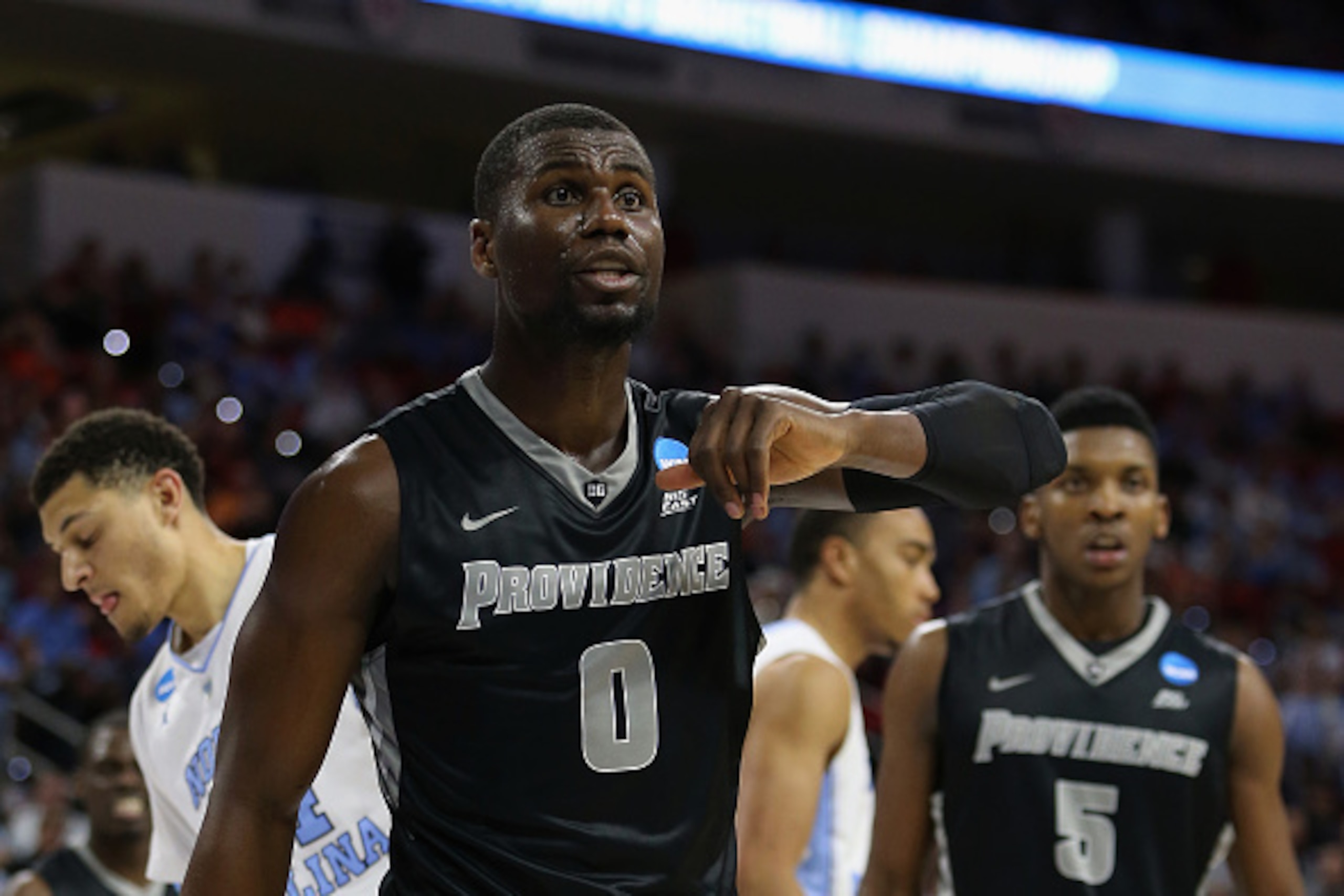
Limited defensive potential, soft rebounding presence and low basketball IQ will make it difficult for Bentil to crack the first round. He's missing qualities role players are typically required to possess.
On the other hand, his offensive attack looks tailor-made for an NBA that values bigs who can space the floor. His jumper and scoring instincts should translate, even if his well-documented weaknesses hurt his overall value.
I expect him to be one of the first names called early in the second round, and though I wouldn't bank on Bentil following Paul Millsap or Carlos Boozer as low-pick surprises, he's a good bet to make a team and hang around as a reserve.
_0.png?w=2560 "Unranked Teams Cause Chaos in Rankings 📊")
.png?w=2560 "Week 8 Winners & Losers 📊")
.jpg?w=2560 "Jonathan Taylor Landing Spots 📍")



