

Logan Couture's Comments on Sidney Crosby a Desperate Ploy to Bias Officials
San Jose Sharks' Logan Couture stirred up quite the hornet’s nest Wednesday night when he accused Pittsburgh Penguins' Sidney Crosby of cheating in the faceoff circle and implied the tacit cooperation of NHL officials in the rule-breaking. He’s almost certainly right about Crosby, but his comments likely have more to do with influencing said officials than they do with any legitimate issue with how Crosby takes draws or real perception of bias.
ESPN.com’s Craig Custance first tweeted Couture’s complaint:
.jpg?w=2560 "NHL Trade Grades Connor Hellebuyck")
It would be shocking if Crosby didn’t cheat on faceoffs. For that matter, it would be deeply surprising if Couture didn’t cheat on faceoffs. All the best centres do.
Sean Gordon of the Globe and Mail wrote about Manny Malhotra back in 2014 when he was playing for the Montreal Canadiens and had established himself as the league’s most dominant faceoff man. Gordon asked Malhotra about cheating on the draw.
“Cheating is kind of an ugly word,” he said, laughing. “Anticipation is the word I’d rather use.”
Small wonder that Gordon described the faceoff circle as “the one place on an NHL rink where testing the maximum flexibility of rules is not only common practice but essential to success.”
Yanic Perreault, a predecessor of Malhotra as the NHL’s faceoff king and now a development coach with the Chicago Blackhawks, resisted the word cheating when he was asked about the art of faceoffs in 2015. Like Malhotra, he preferred the term “anticipation.”
“I could go backhand, forehand, use my feet,” he told Sportsnet’s Damien Cox. “I was not cheating. One thing I was doing well was anticipating; my timing was good.”
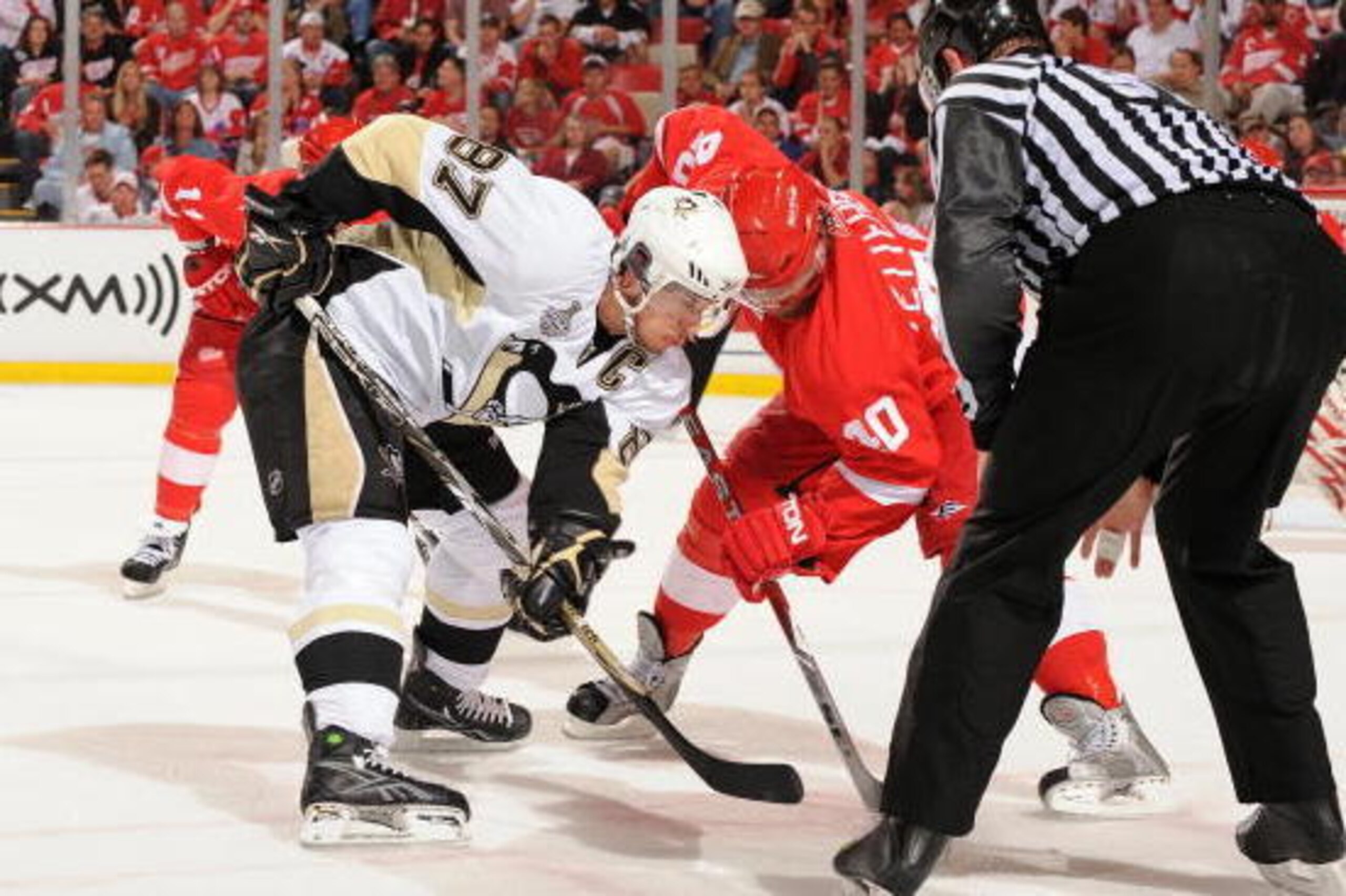
Perreault’s denial aside, it is commonly accepted that winning faceoffs requires a willingness to cheat. Henrik Zetterberg told MLive.com’s Ansar Khan that the best cheaters are the best faceoff men, and he praised his former teammate Kris Draper as “the best cheater” in the business.
“His first advice was cheat as much as you can,” Zetterberg said.
The history of Couture and the Sharks suggest he's aware of this truth about the game. Although Couture's personal faceoff percentage was low this year (47 percent), his San Jose Sharks were a top-10 team in the NHL in 2015-16. The Sharks also happen to be the best overall faceoff team in the NHL since Couture first joined the club in 2009-10.
Couture was also on the ice for what might be the best example of "if you ain’t cheating, you ain’t trying" in the NHL in the last decade:
Leaving aside the unlikely possibility that Couture detests his team’s gamesmanship, that he’s the lone honest man in a sport full of scoundrels, he must have had some other reason for saying what he did. In that vein, it’s interesting to note that complaining about the way the NHL favours the Penguins is a fairly common tactic.
Consider what Washington Capitals coach Barry Trotz said during the second round, after Caps defenceman Brooks Orpik was suspended for a hit on Pittsburgh blueliner Olli Maatta. Via Isabelle Khurshudyan of the Washington Post:
Accusing neutral officials of favouring the opponent is not a particularly subtle way of influencing their future calls, but one could argue that if doing so was Trotz’s aim, then he succeeded.
The league announced Orpik’s suspension on May 1, and over the last four games of the series, the Penguins had 17 penalty kills and the Capitals just 12. Even if we dock the Pens’ three puck-over-the-glass infractions from that total, Washington had more power-play opportunities.
An observant player might look at those penalty counts and wonder whether Trotz’s comments had anything to do with the officiating the rest of the way. A particularly cunning one might wonder if there was a way to replicate the experience.
San Jose has some history with getting the calls to go its way. Most good teams tend to draw more penalties than they take, but over the last five seasons, the Sharks have been devastatingly effective at this. San Jose has gone to the power play 1,259 times over that span and been down a man just 1,050 times, meaning the club has averaged 40 more power plays per year than its opposition over that span.
In the same period, Pittsburgh has had just 27 more power plays total than its opponents.
Penguins coach Mike Sullivan was exactly right in his response to Couture’s comments. Via NHL.com’s Wes Crosby:
"All centers, when they're taking faceoffs, they're trying to get an edge. That's just the reality of it. They're doing the same thing that our guys are doing. The way I look at it, that's all part of being a center-iceman and trying to figure out ways to get an edge and be successful. So, Sid's not doing anything that their guys aren't doing.
"
Couture’s team is down 2-0 in the series. In Game 2, Crosby won 71 percent of his draws; Couture won just 40 percent. The overtime game-winner came off a faceoff play in which Crosby beat Joel Ward, who was filling in for Couture as the second line’s faceoff man. It’s natural for Couture to be looking for any edge his team can get.
But the truth is that everyone cheats in the faceoff circle, and there’s no evidence to suggest that the NHL particularly tries to help the Penguins there or anywhere else. Sullivan is right to be dismissive.
Statistics courtesy of NHL.com.
Jonathan Willis covers the NHL for Bleacher Report. Follow him on Twitter for more of his work.
_0.png?w=2560 "Unranked Teams Cause Chaos in Rankings 📊")

.png?w=2560 "Week 8 Winners & Losers 📊")
.jpg?w=2560 "Jonathan Taylor Landing Spots 📍")





