Wales Reliant on Strong Core, but Wide-Open Euro 2016 Group Gives Them Hope
Chris Coleman only ever played with a back three once as a club manager, the final game of the 2005-06 season, when his Fulham side beat Middlesbrough 1-0.
Yet as manager of Wales, after struggling to a 2-1 win away in Andorra in their opening Euro qualifier, he has played with three at the back in any game in which there was any serious defending to be done—that is, not in the home games against Cyprus or Andorra. It is a clever system, one that seems perfectly designed to get the best out of the players available, but it is also one that brings risks.
TOP NEWS

Soccer Stock Check 📈📉

New NFL contenders starting to emerge after Week 4
.jpg?w=2560 "Cardinals Giants Football")
NFL investigating 2 referees for separate viral exchanges
Coleman’s reputation as a coach is mixed. Incidents such as the one when he missed training while at Real Sociedad after attending a student night—claiming to have had problems with his washing machine—or forgetting his passport when heading to Macedonia became notorious. How could somebody guilty of such errors of judgement or basic lapses be trusted in charge of a national side? But he deserves great credit for the team he has built.
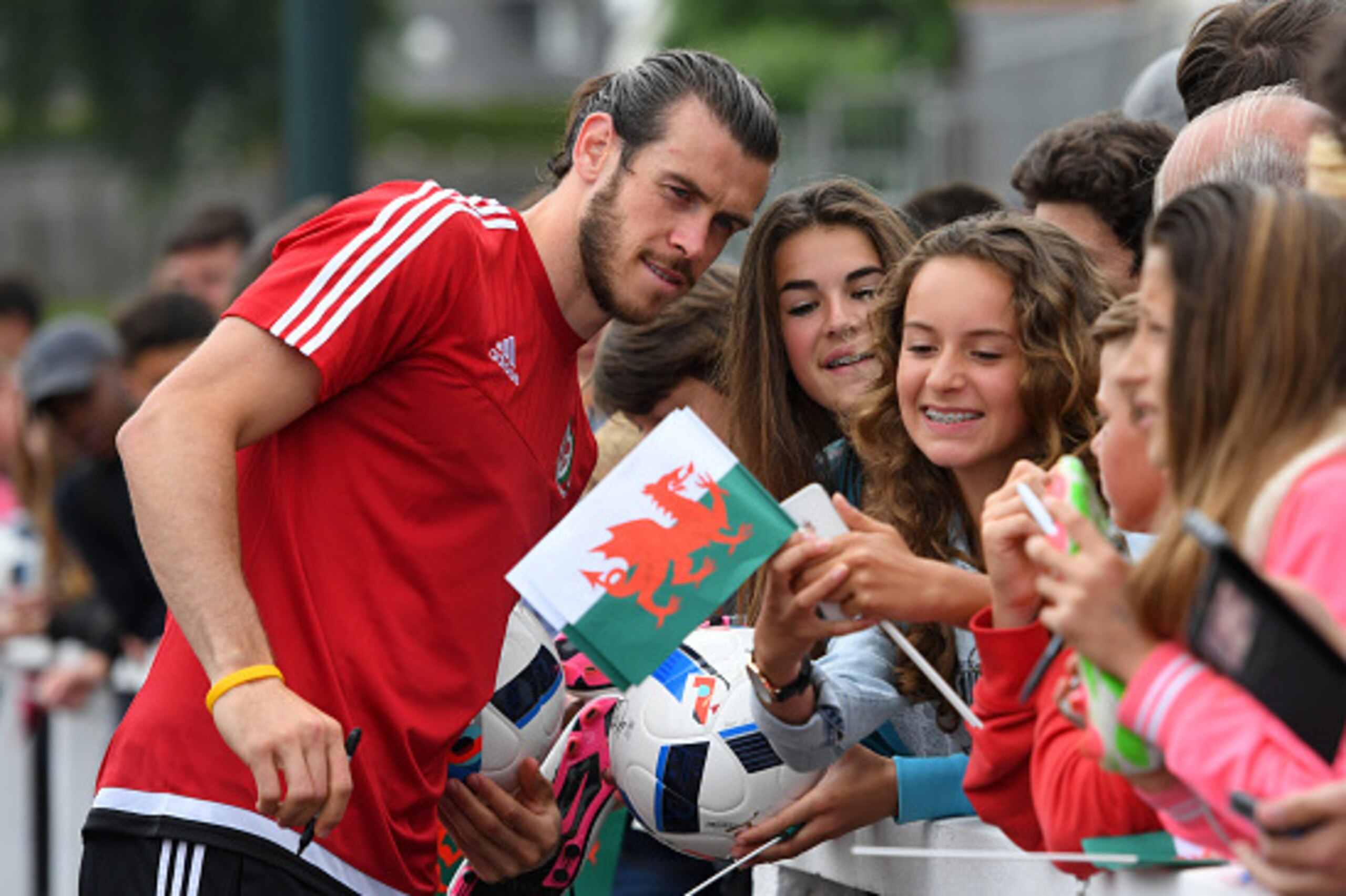
At the heart if it, of course, is Gareth Bale. Of Wales’ 11 goals in qualifying, he scored seven and set up two, making him by some distance the most influential player—in terms of goals scored—of any country in qualifying. Bale also had the second-most attempts on target (24) and the most attempts off target (21) of any player in qualifying.
Helpfully, Bale seems to relish playing for Wales, which hasn’t always been true of the better Welsh players in the past. From Coleman’s point of view, that meant creating a system around him, making sure Bale gets on the ball as much as possible while having freedom to search for room on the pitch. That’s all the more important because he is at his best when he has space to move into and can use his prodigious acceleration.
That means playing Bale centrally and absolving him, as far as possible, of defensive responsibility. In turn, that means having no more than one player in front of him. Let eight defend and Bale roam free. In the absence of a high-class goalscoring striker, the centre-forward’s role then becomes less about finishing chances himself than about creating space for Bale to move into.
That’s why Hal Robson-Kanu, typically a winger at Reading, has been so effective. He has the personality to play what is a largely thankless role, to endure the sneers of those who point out he scored a single goal in qualifying, and he is also used to operating in wide areas.

Coleman could have played with that front two with two banks of four behind—although the danger then from an attacking point of view might have been Robson-Kanu and one of the wide midfielders getting in each other’s way. But in a sense, Wales’ relative lack of options forced his hand.
Wales’ best five players are, without too much dispute, Bale, central defender Ashley Williams and central midfielders Aaron Ramsey, Joe Ledley and Joe Allen. Coleman cannot afford to leave out any regular Premier League performer, so picking all three of them meant a central-midfield three. Assuming a basic symmetry to the formation, that can only be achieved with a back three and wing-backs.
Coleman has also benefited form the fact the three midfielders have such complementary qualities. Arsenal at times used Ramsey from deep this season, but he still contributed five goals, four assists and 2.2 shots per game with his forward bursts, according to WhoScored.com. It’s his job to get forward to support Bale when required, something he did successfully enough to bring two goals in qualifying.
Ledley, meanwhile, is a scuttler. He made 0.8 tackles and 1.7 interceptions per game for Crystal Palace last season, darting about, filling in gaps and harassing opponents.
Allen, infamously dubbed “the Welsh Xavi” by Brendan Rodgers when he brought him from Swansea to Liverpool, may not quite have the former Barcelona player’s neat passing ability, but he did complete 84.1 per cent of passes in the Premier League last season. As such, he offers Wales a measure of control; it’s not all about defending deep and getting the ball forward quickly to Bale.
Add in Chris Gunter and Ben Davies, or Jazz Richards and Neil Taylor, full-backs who are comfortable getting forward, and the mix is complete. This is a team structure that accommodates all of Wales’ best players in positions that may fairly be deemed natural to them. The problem, though, is what happens to a bespoke system when injury strikes.
Robson-Kanu has had an Achilles injury, Allen had a knee problem and Ledley is just coming back from a broken leg. All three have returned to training, and it seems as though Robson-Kanu and Allen should be fit to start against Slovakia on Saturday. Ledley may have a reduced role, per Chris Wathan of Wales Online.
That’s problematic, not only because all three are among Wales’ best players but because when a system has been designed for a specific group, finding like-for-like replacements is almost impossible.
Wales stuttered through the end of qualifying—perhaps an understandable tightening up as the goal of a first major finals in 58 years came within reach—but more concerning is their form in friendlies, which have this year yielded a draw against Northern Ireland and defeats to Ukraine and Sweden. It’s true key players were missing from all three games, but that suggests just how reliant Wales are on their core.

If they can get a near-full-strength team on the pitch and Bale fires, they are clearly dangerous, but there is a lack of depth to the squad that could undermine them.
Opponents, meanwhile, know if they can stop Bale—or even can make him play with his back to goal—then Wales’ attacking firepower is significantly reduced. With Russia struggling with midfield injuries, the group is open. Wales could take advantage, but they, too, are vulnerable.

.jpg?w=2560 "Hill Injury Update Football")
.jpg?w=2560 "OBJ Calls Out Giants 😳")
.jpg?w=2560 "Tyreek makes another cryptic post amid Chiefs rumors")