

Inside the Glamour-Free Life of an NBA Draft Long Shot
LOS ANGELES — Damion Lee’s phone rang around half past three in the afternoon on a Tuesday. His agent, Aaron Goodwin, was on the other end.
“Are you still in Oakland?” Goodwin asked.
Lee, a Baltimore native who finished his college career at Louisville, was in the East Bay, preparing for the NBA draft.
TOP NEWS

Pic of LeBron's Helicopter Commute 🚁

Duren Calls Out 'False' Rumors

NBA Power Rankings Entering Preseason 🔢
“So what do you think about working out for the Clippers?”
Lee took a moment to mull it over. An offer to audition for the Los Angeles Clippers, an interview for a dream job in the NBA...
Five minutes later, a text came through. Lee, a 6’6” wing, had a 6 p.m. flight to L.A. that evening. The next day, he was in Playa del Rey, scrimmaging with five other NBA hopefuls: Indiana’s Yogi Ferrell, Texas’ Isaiah Taylor, Clemson’s Jaron Blossomgame, Maryland’s Robert Carter Jr. and Providence’s Ben Bentil.
You won’t find Lee on many mock drafts, if any. NBADraft.net has him going 59th overall to the Sacramento Kings. Most mocks don’t even bother projecting past the first 30 picks. To hear his name called during the draft on June 23, Lee has to be ready to move at a moment’s notice, willing to crisscross the country and able to play ball wherever he lands.
"I just have to make sure that my phone’s not on 'Do Not Disturb' and my ringer’s on at all times," Lee said, "because I never know when a call is going to come."
If looking for a regular job is a full-time gig in itself, finding one in the NBA is, for most draft-eligible prospects, both a 24/7 commitment and the pursuit of a lifelong goal, all packed in between the end of the college season in April and draft day in June.
Stacking the Odds
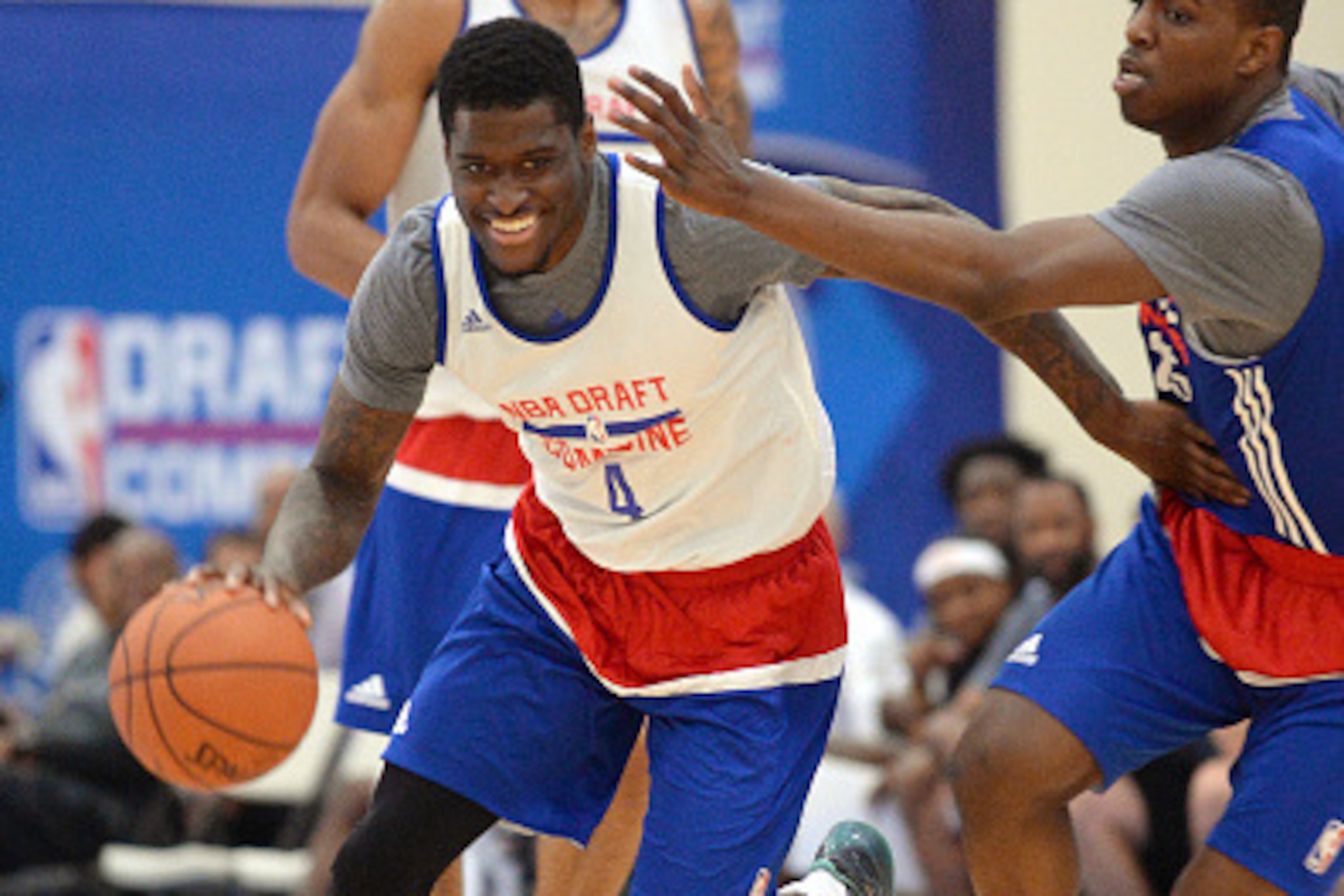
Every year, the world’s best basketball league selects 60 players from a pool of hundreds. This year, 162 prospects—117 college underclassmen and 45 overseas prospects—filed as early entry candidates. The NCAA's early entrants had the option of heading back to school as late as May 25.
Most of the other potential draftees—hundreds more—have already exhausted their college eligibility.
The top prospects don’t have to sweat about selection. For the likes of LSU’s Ben Simmons, Duke’s Brandon Ingram and Croatia’s Dragan Bender, it’s a matter of when, not if, they'll be drafted later this month in Brooklyn, New York. These elite prospects and their agents can pick and choose where they work out and for whom.
Some players partake in workouts put on by agencies in single locales. Last year, the league descended on Las Vegas to watch Kristaps Porzingis and Myles Turner at ASM’s pro day. This year, every team turned out to Wasserman's event in L.A. to assess Michigan State’s Denzel Valentine and Gonzaga’s Domantas Sabonis, among others.
The rest have to hustle in hopes of securing a future in hoops.
A.J. English III made a name for himself—aside from the one his father, former NBA player A.J. English II, bequeathed him—at the annual Portsmouth Invitational Tournament in Virginia. His invitation followed a decorated career at Iona College in New Rochelle, New York. The 6’3” point guard averaged at least 20 points, five rebounds and five assists during his junior and senior seasons, the last of which ended in the NCAA tournament for the Gaels.
At Portsmouth, he was the MVP.
To the NBA, he’s another kid from a small school with a chip on his shoulder.
“The way I look at it, maybe it’s because I’m from a mid-major, every time I step on the court, I’m going to have to prove myself,” English said. “So whether it’s in a workout, had to go to Portsmouth or the combine, just outside playing basketball in the park, I feel like I have to prove myself.”
On the Road...Again
Before draft day arrives, English will have racked up thousands in frequent-flyer miles. So will Carter, a 6’9” forward from Thomasville, Georgia. He did some traveling of his own in college within the ACC, from Atlanta (two years at Georgia Tech) to College Park (one year at Maryland)—but nothing like his recent schedule.
L.A. one day. Brooklyn the next. Denver two days later. Dallas two days after that. Workouts in front of teams. Sessions on his own in between, when and where he can find a spare gym.
“I’m just getting on the plane and going wherever, man,” he said. “I’m looking at the itinerary like this is what it is today.”
Even Carter's tour can look tame compared to those of his peers.
Cat Barber, a speedy scoring guard out of North Carolina State, will have as many as 15 workouts under his belt by the time he's done. He's trying to bolster his draft stock, but a finite supply of days and energy forces him and his agent to choose his destinations wisely.
"We basically try to look at fits, teams that are picking in my range," Barber said. "We try to pick the teams to make sure it’s the right team, not going into a workout that I know it’s not worth it."
Zach Auguste, a 6'10" senior forward from Notre Dame, is taking a more open approach. With so much to prove and without a sure shot even in the second round, he's slated to show his skills to 18 different teams—and counting—before draft day.
"The more chances, the better your opportunity of getting to where you want to be," he said.
Auguste's chase has taken its toll. After his workout for the Clippers, he struggled to sort out which of his stops were upcoming and which had already passed.
"You forget the day, for sure," Auguste said. "It’s just another day in the week, and just moving from time zone, different state to state."
Through the Wringer
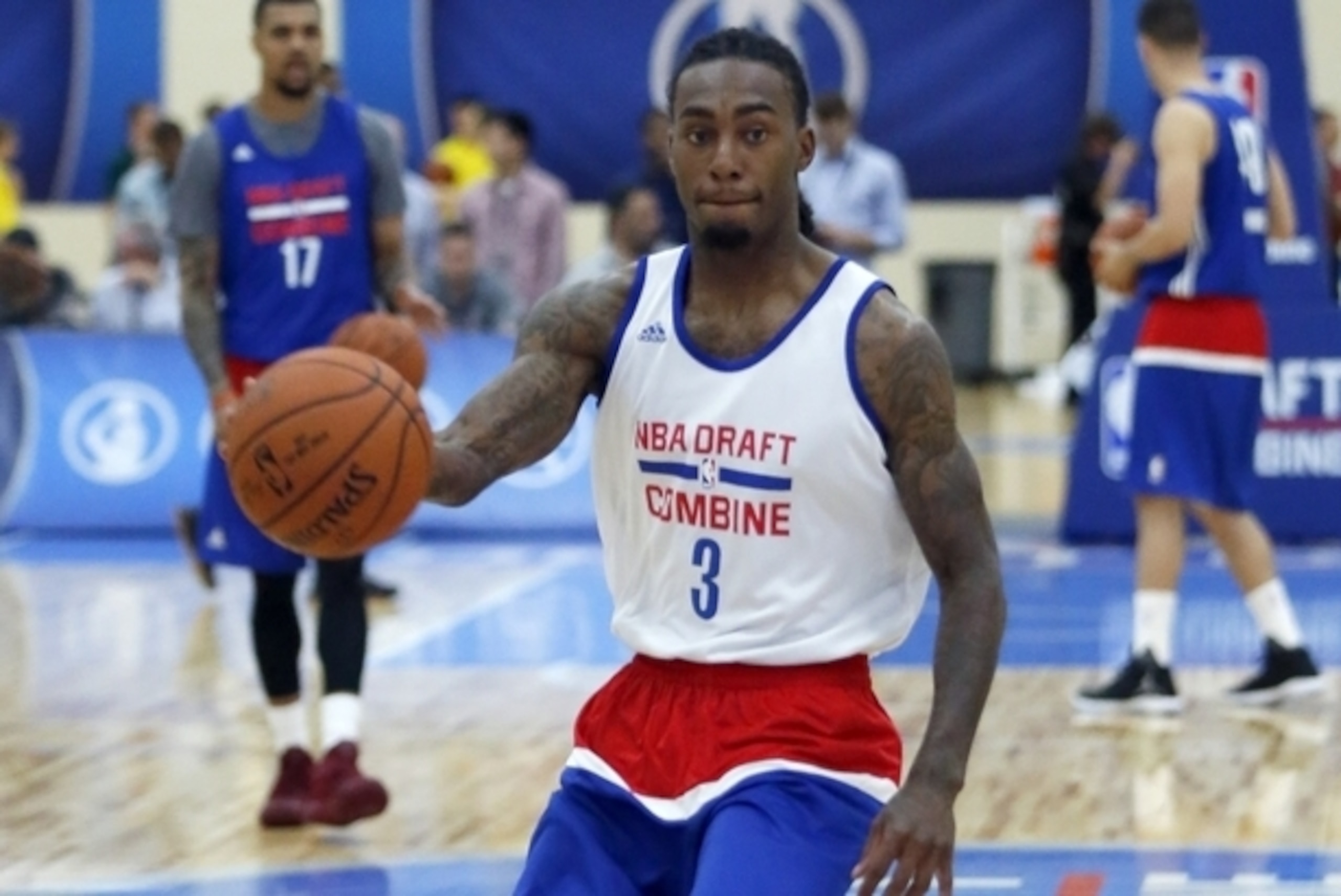
For these hopefuls, the predraft rigmarole is an introduction to the rigors of the NBA's working life. Hopping across the map can be draining, just as it is for pros who fly from city to city during a six-month, 82-game regular season. The workouts themselves can be taxing, even if they're not as intense, physical or pressure-packed as NBA games in front of full houses and watchful cameras.
"You’re not used to flying on planes back to back to back like this," Barber said. "You’ve got to make sure you’re eating right, get your rest, make sure you drink a lot of water."
That kind of diligence is simply necessary for a player's draft prospects.
The pace of the workouts is relentless. Rapid fire. Drills upon drills. Full-court scrimmages. And wind sprints...always the wind sprints.
“You’ve got to breathe,” Gary Payton II said. “It’s a lot of continuous drills, go right into shooting, a three-minute [running] drill like we just did. It’s a mostly mental game, so just take your time, breathe, focus on what drill you’re doing and just take your time on that drill.”
Payton, a 6’3” point guard from Oregon State, has been primed for this process for years by his father, Hall of Famer Gary Payton.
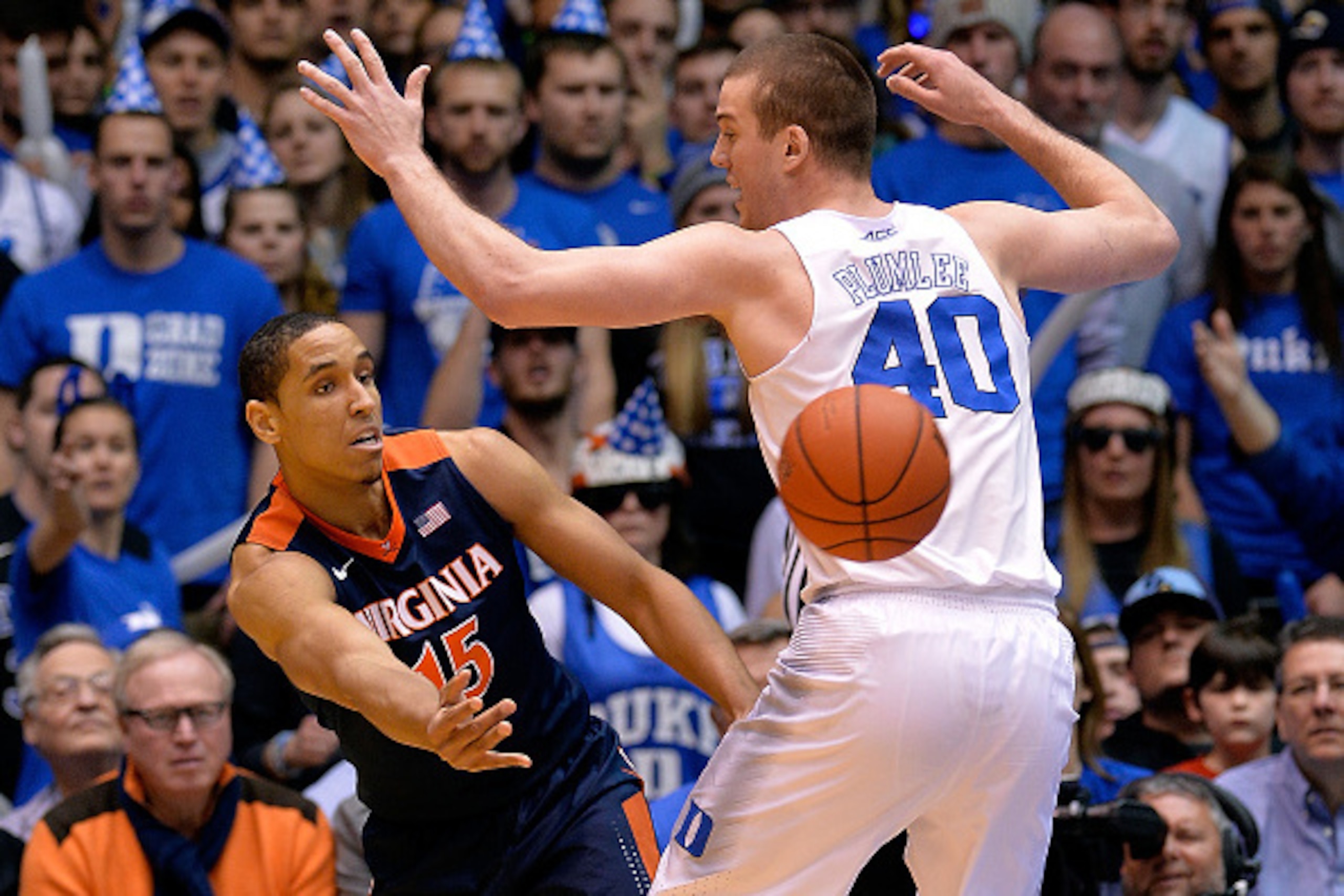
Marshall Plumlee got the rundown from his older brothers, Miles and Mason. They’ve already made the trek from Duke to the NBA that he’s yet to complete.
“You run your own unique race,” said Plumlee, a 7'0" center. “But no one’s run a more similar race to me than my brothers.”
Marshall’s route, should it lead him to the Association, is unique. He's a member of the Army reserves, though he has full support to pursue a path to professional basketball.
Last summer, during a Cadet Leadership Course at Fort Knox, Kentucky, he was up every morning at 4 a.m., leading 40 of his peers through a full day of exercises. Compared to his military training, Plumlee's predraft regimen is a cakewalk.
“I’m going to have to work out for team after team,” Plumlee told himself as he prepared for the predraft circuit. “I can’t have a down day. I have to show up and be my best every day.
“I think that’s something I’ve thought back to a lot in this process, and I feel tremendously prepared."
Competing Is Key
After a few workouts, most prospects should have a handle on what to expect. Each team introduces its own wrinkles, based on its needs, desires and slots in the draft order. But typically, prospects go through a slew of standard basketball drills—dribbling, passing, shooting and the like.
In these situations, players can show off the skills that, for one reason or another, teams haven't seen in action. Auguste, a beefy big man who spent his college career around the basket, has used the shooting exercises to flash a more fluid jumper.
"When you have a chance to showcase in the drills, do it," he said. "But when you go to live play, stick to what you’re good at, stick to what you’ve mastered and what got you here."
The scrimmages—one-on-one, two-on-two, three-on-three—aren’t about showing off skills.
“I feel like they watched you nonstop, whether you’re on the court or off the court,” English said. “Everybody knows exactly what you’re going to do.”
What's important for those partaking is to play hard, play smart and play to win.
“I think the biggest thing when you get into these workouts is the general managers, the coaches, everybody here, they want to see you compete,” Malcolm Brogdon said. “It’s not even about making shots. They want to see you push through the fatigue. They want to see you get a stop on defense. That’s really what it’s about.”
Brogdon, a 6’5” senior swingman out of Virginia, could have sought out a surer, safer path to post-graduate success. His father and oldest brother are both lawyers. His other brother will be one, too, once he finishes law school. His mother, on faculty at Morehouse College, has a Ph.D. in clinical psychology.
Instead, he chose a cutthroat career that lasts fewer than five years on average...if it happens at all.
“Everything in my family was competition,” Brogdon said. “I had two older brothers who were super competitive. We all wanted to be the best, and my dad from an early age made everything a competition and we learned how to work hard from my mom and dad because they worked so hard at their profession.”
A Feel for the League
Brogdon will have to lean on that same work ethic to catch on in the NBA, even if he’s drafted. He and most of his fellow rookies-to-be must scratch and claw for whatever playing time they get.
In the workouts, though, they have to collaborate as much as they compete.
“That’s the key of just showing good teamwork because we’re going to be rookies,” said Danuel House, a 6’7” slasher. “We ain’t even going to come up in here and do what we did in college.”
House was a decorated prospect in high school and a double-digit scorer at the University of Houston and then at Texas A&M. If he sticks in the NBA, chances are it will not be as an attacking offensive player but as a three-and-D specialist. That would be a new role; he improved as a jump-shooter in college but won’t soon (or ever) be mistaken for Klay Thompson.
Players of House’s ilk can learn a lot from these workouts, beyond how they measure up against other potential draftees and what prospective employers are looking for. At every stop, NBA coaches are running them through drills, instructing and guiding while poking and prodding.
“You try to learn,” Plumlee said. “All these organizations have great things to teach.”
That’s just one of the pro perks that pique prospects’ interest. Regulation courts—not the ones surrounded by thousands of seats in rumbling arenas, but the ones at state-of-the-art practice facilities. Team gear—not game jerseys, but practice ones.
“It’s definitely surreal just to have an NBA practice uniform,” Carter said, “Not a real uniform, a game uniform, but a practice uniform and just thinking about how many YouTube videos, how many practices I watched on TV and just knowing I’m right here.”
Even more surreal: having plays drawn up by NBA coaches. At the Clippers’ predraft workouts, Doc Rivers scribbled offensive sets for his bright-eyed pupils.
“That fired me up,” Plumlee said. “It’s an exciting opportunity. 'I’m working with a head coach right now.'”
Living a Dream

For some, the novelty of these moments will eventually wear off. Getting direction from coaches with championship credentials could be the norm. To get there, draft prospects will have to chase their own dreams, though they needn't do so blindly.
Plumlee can follow in his brothers’ footsteps. English can fall back on the days and nights he spent in Wilmington, Delaware, with his dad, a second-round pick of the then-Washington Bullets in 1990. Payton can boast of his genetic bona fides with a Hall of Famer father.
“They say it’s a percentage of people that make it to the NBA and stuff like that,” English said. “You’ve seen it in your own household. You’re eating at the same table. You’re joking with the same guy who played in the NBA back then at a high level and made it out of a small state.”
House doesn’t hail from hoops royalty, but he counts himself as part of John Lucas’ ever-expanding basketball family in Houston. Through his draft preparation in Oakland, Lee has grown close with Payton Sr. and Brian Shaw, an NBA veteran-turned-coach.
For all those familiar faces can do to prepare players for what’s to come, they can’t guarantee safe passage into the NBA. Not even the prospects themselves can do that.
Those who don't hear their names called on draft night will have to explore other routes to and through the world of pro basketball. Some will take their chances chasing their NBA dreams during summer leagues in Orlando, Salt Lake City and Las Vegas; at training camps across the Association in October; and in the NBA Development League thereafter. Others will take their talents overseas to Europe and Asia.
In the meantime, what all these prospects can do is leave good impressions at every outpost and enjoy the journey, regardless of the final destination.
“I’m just happy to be here, man,” Carter said. “I’m like a little kid in a candy store.”
All quotes obtained firsthand.


.jpg?w=2560 "NFL investigating 2 referees for separate viral exchanges")

.jpg?w=2560 "Report: Chiefs Contact Hill's Agent")
.jpg?w=2560 "OBJ Calls Out Giants 😳")
.jpg?w=2560 "Tyreek makes another cryptic post amid Chiefs rumors")

.jpg?w=2560 "Greenlaw Talks Payton Exchange")