

Joey Logano Emerges Victorious, Pockets $1M Amid NASCAR's All-Star Confusion
Some evidence suggested the best way to cope with NASCAR's most convoluted event in memory was to keep it simple. Take, for instance, the winner.
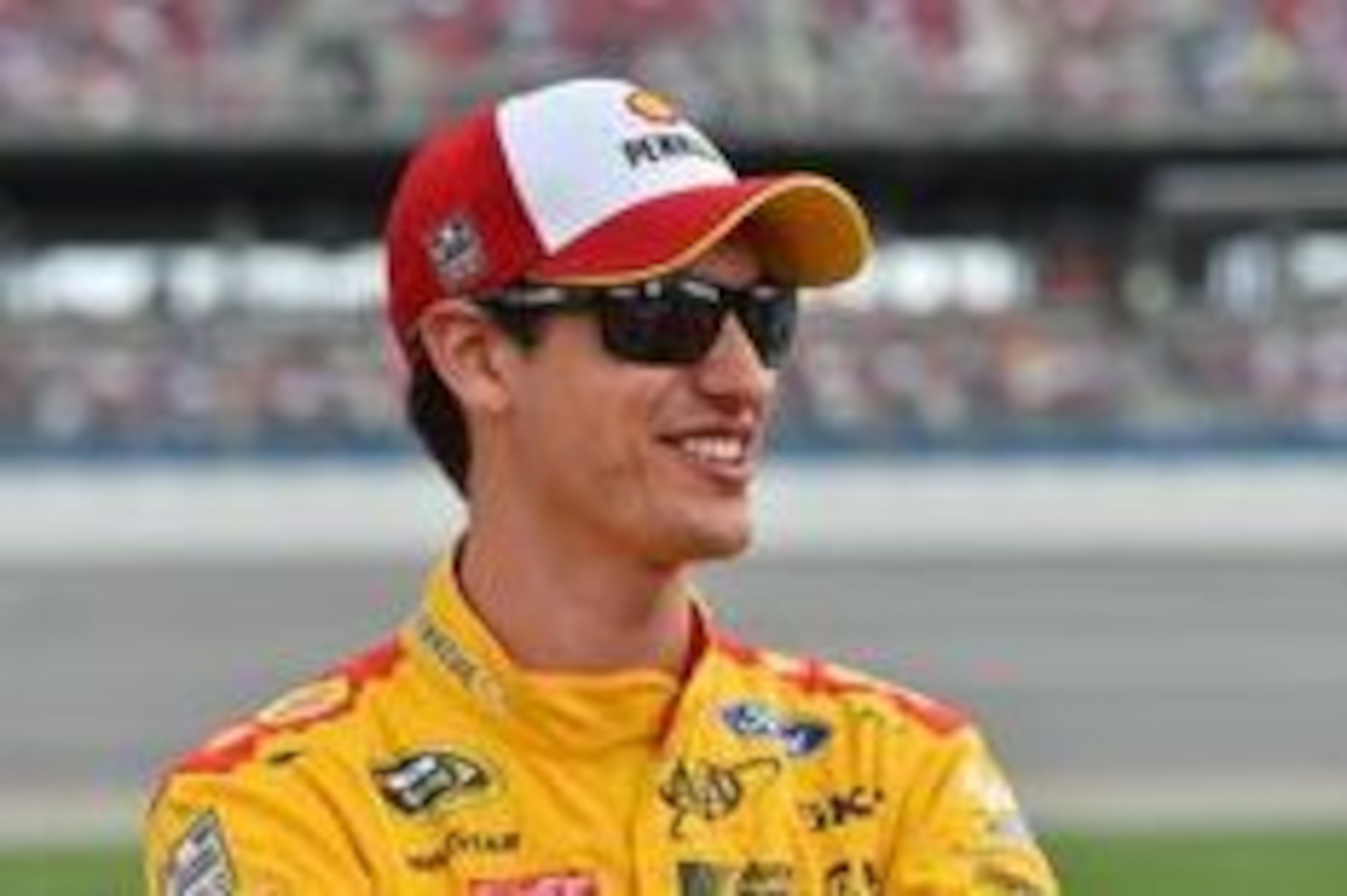
Joey Logano, who won the Sprint All-Star Race's $1 million prize, said after the rain had long stopped falling and the confusion settled:


"There was a point I came over the radio and said, 'I don't now what's going on. I don't really want to know what's going on. Let me drive the car and you (crew chief Todd Gordon) call the race,' because I was confused.
All I know is if there's a car in front of me, I probably should pass him, and that's kind of where my head was.
"
Logano continued, "Sometimes the simple life is a little easier inside the race car."
Ah, the simple life. Strapped into a loud race car. Traveling at breakneck speeds. Back to nature. Human nature.
The fans at home weren't so fortunate as to have a crew chief. They had to rely on Fox TV, whose announcers seemed as confused as they were.
Wow. How did that happen?
Beats me.
The format was announced in advance. Quite obviously, it wasn't suitably analyzed. It wasn't vetted, to borrow from the political parlance. The fans shouldn't be embarrassed. The actual drivers and teams were every bit as clueless.
| Starting Field | 20 |
| Lead Changes | 13 |
| Time of Race | 1:43:40 |
| Winner's Share | $1,000,000 |
| Segments | 3 (50, 50, 13 laps) |
| Caution Periods | 4 |
| Lead-Lap Finishers | 15 |
The driver who strained most to be upbeat was fourth-place finisher Carl Edwards, who said, "I wouldn't call it confusing because I kind of understood what was going on, but it took most of my brainpower to keep up."
Not exactly a ringing endorsement, huh?
When asked a question, Denny Hamlin replied to the broader audience with another question: "How do you keep up with it at home, to be honest with you? I knew, when it took about 10 minutes to explain the format in the drivers' meeting, it was going to be a complicated night."
"All this is to give the fans a great finish, and we're trying to fabricate something for them to look at this All-Star Race and say it's exciting."
"You want to create a last-lap pass every race you can, but you don't want to get too goofy trying to create it."
The Sprint All-Star Race doesn't have anything to do with the championship. It is an unofficial race meant to capture the flavor of a short track Saturday night.
"It was just an unorthodox way of doing it," third-place finisher Dale Earnhardt Jr. said. He continued:
"I don't know. I think they (NASCAR officials) ran into some scenarios they didn't anticipate and got caught off guard. I think the '20' (car of Matt Kenseth), obviously not pitting, however that worked out, that threw them for a loop and everybody was confused from that minute on.
"
Ah, the Kenseth quandary. A green-flag pit stop was required during each of the first two, 50-lap segments. The smart play, it seemed, was to wait until late in the segment, stop for two tires, finish it off and then pit between segments for the other two, thus entering the next segment with almost new rubber all the way around the car.
Unfortunately, on the 46th lap, Jamie McMurray's Chevrolet crashed, meaning Kenseth had no opportunity to complete a green-flag pit stop. NASCAR officials penalized Kenseth a lap, and he later crashed, along with five others, on the 73rd of 113 laps.
"I still don't understand," Kenseth said to Fox Sports. "I've never been this confused in a race car in my entire life. I hope everybody watching understands, because I have no idea what happened ever since the first car pitted until right now."
"I can't say I don't like it. I don't know what's going on."
Kenseth's crew was hardly alone in protest. Many failed to understand why they were scored a lap down during the break. Tony Stewart was also annoyed, especially so after being in the same crash as Kenseth.
The confusion got most of the attention, but NASCAR's aerodynamic rules experimentation passed every test. With measures taken to reduce downforce even more and minimize the side-draft effect, the race began with a five-lap, side-by-side duel between Kyle Busch and Kevin Harvick.
It looked like Charlotte Motor Speedway in the 1990s, which was a good thing. Logano and Kyle Larson, who had won the final segment of the Sprint Showdown earlier in the day to get in the race, fought it out until Larson crashed and limped in 16th. Logano sped away to a 1.142-second margin over Penske Racing teammate Brad Keselowski.
Keselowski, the man credited most with devising the format, was a bit defensive about it afterward:
"There were several passes for the lead. The last four (All-Star) races, there hasn't been a pass for the lead in the last 20 or 30 laps. I think our fans deserve a better format than that and they got it. I don't know how you can get much more compelling racing that what we saw, so they need to get unconfused and enjoy the racing.
"
Many fans couldn't leave their confusion at the door.
"Gimmicks and all that stuff, trying to trick up the race is going down the wrong path," Earnhardt said. "The way to make the racing exciting is to make the cars exciting."
Follow @montedutton on Twitter.
All quotes are taken from NASCAR media, team and manufacturer sources unless otherwise noted.
.jpg?w=2560 "LA Premiere of \"Chad Powers\"")


.jpg?w=2560 "Ugly Jets Scoring Stat 😳")
.jpg?w=2560 "Landing Spots for Trade Candidates 📍")