2016 NBA Draft: 1st-Round Selection Order, Analyzing Top Upperclassmen Prospects
The NBA draft process is straightforward from here on out. For the first time since the NBA implemented the lottery more than three decades ago, the 2016 draft order will be entirely based on record.
The Philadelphia 76ers' multiyear tank job finally paid off last Tuesday, as they won the No. 1 selection and the right to choose between LSU's Ben Simmons and Duke's Brandon Ingram. The Los Angeles Lakers go second and will take the leftover of the draft's clear top two.
Ingram and Simmons each spent only a year in college, and potential No. 3 pick Dragan Bender's been playing professionally overseas for Maccabi Tel Aviv. Other potential top-10 selections include Kentucky's Jamal Murray, California's Jaylen Brown and Marquette's Henry Ellenson—all one-and-doners.
TOP NEWS

J-Dub Suffers Gruesome Injury
Mazzulla Weighs In on Brown-Tatum Drama

Blockbuster Trade Idea To Shake Up the East
This falls in line with recent trends. Eleven of the first 13 picks in last year's draft played one or zero seasons of college basketball. The first senior didn't come off the board until No. 19 (Jerian Grant from Notre Dame).
That won't be the case in 2016—three upperclassmen may wind up going in the lottery on June 23. Let's quickly take a look at those three players, along with another familiar name who may wind up hearing his name called in the first round.
| 1 | Philadelphia 76ers |
| 2 | Los Angeles Lakers |
| 3 | Boston Celtics |
| 4 | Phoenix Suns |
| 5 | Minnesota Timberwolves |
| 6 | New Orleans Pelicans |
| 7 | Denver Nuggets |
| 8 | Sacramento Kings |
| 9 | Toronto Raptors |
| 10 | Milwaukee Bucks |
| 11 | Orlando Magic |
| 12 | Utah Jazz |
| 13 | Phoenix Suns |
| 14 | Chicago Bulls |
| 15 | Denver Nuggets |
| 16 | Boston Celtics |
| 17 | Memphis Grizzlies |
| 18 | Detroit Pistons |
| 19 | Denver Nuggets |
| 20 | Indiana Pacers |
| 21 | Atlanta Hawks |
| 22 | Charlotte Hornets |
| 23 | Boston Celtics |
| 24 | Philadelphia 76ers |
| 25 | Los Angeles Clippers |
| 26 | Philadelphia 76ers |
| 27 | Toronto Raptors |
| 28 | Phoenix Suns |
| 29 | San Antonio Spurs |
| 30 | Golden State Warriors |
Kris Dunn, PG, Providence (Big Board Ranking: 5)
Kris Dunn is the best pure point guard in this class. If he were three years younger, we'd be talking about him as the clear No. 3 pick in the draft.
As it stands, his first two years at Providence were lost to injury. A torn labrum held him out until December of his freshman year, and he never quite got to 100 percent. Another shoulder injury cost him all but four games of his sophomore year; no one quite knew what to make of him when he returned.
Dunn emerged as a legit pro prospect in the meantime, taking advantage of his rehab time to turn into a well-rounded player. The 22-year-old's more than two years removed from his last shoulder injury, and he improved his three-point percentage all the way to 37.2 on more than three attempts per game.
If Dunn ever becomes a semi-consistent outside shooter, he has All-Star potential. Measuring in at 6'4 ¼" with shoes with a 6'9 ½" wingspan and elite athleticism, Dunn's a lockdown defender waiting to happen once he acclimates to the NBA game. He's also going to fare far better in the slash-and-kick pro style over the more sluggish collegiate game; he was a pro playing a kid's game last season.
Age, shot consistency and occasional carelessness with the ball are Dunn's big knocks. Turnovers were down last season, but he still averaged 3.5 a game. Things are only going to get harder at the next level, and his shaky free-throw shooting is evidence he needs a lot more work on his shooting stroke.
Still, it's hard to see any outcome where Dunn doesn't wind up an NBA starter.
Buddy Hield, SG, Oklahoma (Big Board Ranking: 6)
Everyone knows Buddy Hield. He's the kid with the big game and even bigger smile who carried Oklahoma to the Final Four on a series of massive scoring performances. He and Michigan State's Denzel Valentine battled all season for Player of the Year honors, and Hield's a mortal lock for the top 10 after being a borderline first-rounder a year ago.
Part of that is the relative weakness of this class. But Hield deserves credit for making the leap from solid scorer to dynamo.
It's not just the points per game, which went from 17.4 in 2014-15 to 25.0 last season. It's every aspect of his game. He added nearly nine points to his overall field-goal percentage (50.1 from 41.2), nearly 10 to his three-point percentage (45.7 from 35.9) and saw a massive uptick in free-throw rate (88 percent from 82.3 percent).
There are areas where Hield's lacking, most notably on the defensive end. He's way too athletic for his general indifference, and his lack of improvement over a four-year college career is concerning. Creating off the dribble and finishing at the rim aren't strong suits; he's not going to have a Stephen Curry-esque pro career.
Hield is, however, the best shooter in this class and someone who might average 20 points a night. Teams like the New Orleans Pelicans and Boston Celtics, which both already have infrastructures in place, would be just fine with Hield as a volume scorer who doesn't need to be the franchise face.
Denzel Valentine, SG/SF, Michigan State (Big Board Ranking: 9)
Valentine's not the best player in this class. He's not even the fifth-best. That said, he's one of my favorites.
Listing Valentine as a shooting guard or small forward might be a little misleading. He's a Whatever Position Draymond Green Plays—only a little smaller (6'5 ¾" in shoes). There's nothing Valentine can't do on a basketball floor. He shot 44.4 percent from deep last season. He grabs rebounds at a power forward's rate (12.6 per 100 possessions for his career, per Basketball-Reference.com) and assists like a point guard.
Valentine and Simmons are the best multidimensional players in this class. Both players have such high floors because they do so many things well, and the things they don't seem so small. If Simmons shot like Valentine, he'd probably wind up being the best player in basketball in five years. If Valentine had Simmons' size and athleticism, you could say the same.
Instead, Valentine's an average athlete who will have to get by on his toughness and a 6'10 ¾" wingspan. Like Green, it's his length that will allow him to play out of position despite lacking ideal height.
Valentine doesn't have the ceiling of some of the players ranked ahead of him—he probably tops out as the third or even fourth player on a contender—but he's one of only a handful of guys after the top two I'd lay real money on sticking around for a decade.
Demetrius Jackson, PG, Notre Dame (Big Board Ranking: 20)
Demetrius Jackson's junior season didn't go the way anyone hoped. Finally given freedom as Notre Dame's primary ball-handler after the departure of Grant, Jackson saw an uptick in assists but a major dip in efficiency. His field-goal percentage went down more than five points, owing to a nearly 10-point drop from beyond the arc.
Efficiency came back during Notre Dame's run to the Elite Eight, but he now stands firmly in the middle muck of the first round. You could see him go as high as No. 14 to the Chicago Bulls. He could also last well into the mid-20s; the Los Angeles Clippers at No. 25 is the lowest end of his range. Mocking him to the Indiana Pacers at No. 20 feels like a solid middle ground.
Jackson should avoid falling out of the first round entirely because of his plug-and-play value. He's one of a select few guys in this range who should be able to step in right away, even if he tops out as a long-term backup. His athleticism and shot-creation skills are a good match for the NBA style, and Jackson showed he can be a more prolific ball-handler last season without a massive uptick in turnovers.
A simple mean regression with his three-point shooting will make him around average from that range—huge for his critics afraid he can't shoot. Jackson is also going to be a better defender than you'd expect for someone of his limited size (6'1 ¼" with shoes). He's smart off the ball and uses his 6'5 ½" wingspan to play a little taller than his height.
Taurean Prince, SF, Baylor (Big Board: 29)
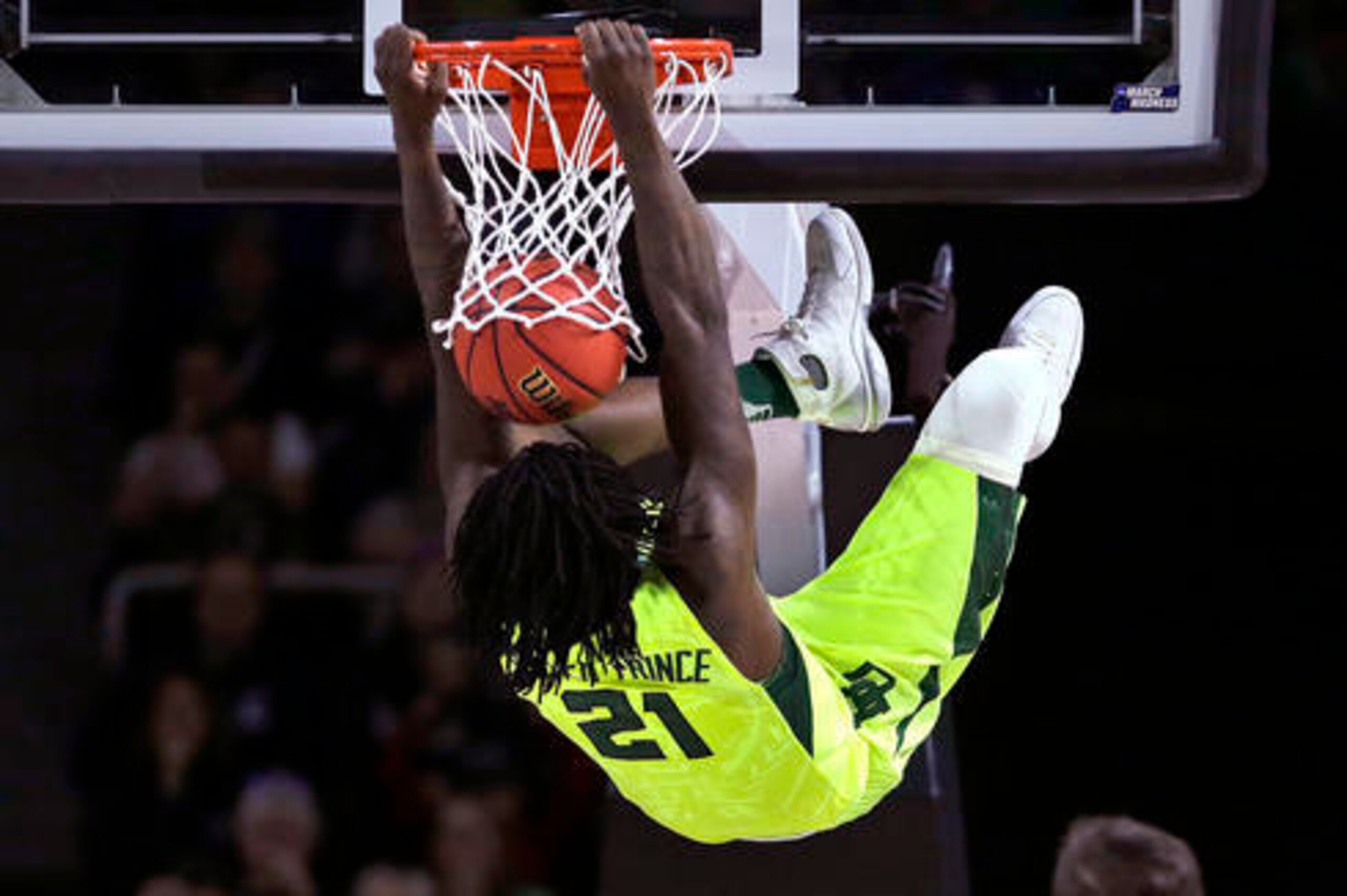
Prince might slip through the first-round cracks, but he shouldn't. The Baylor product has all the tools you look for in a three-and-D role player on the wing. He assuaged some concerns by measuring at 6'7 ¾" with a 6'11 ½" wingspan at the combine, giving teams faith he can even defend the 4 spot against smaller lineups.
After beginning his career as a seldom-used, raw athlete, Prince developed into a sound three-point shooter over the last two years. Shooting 77.4 percent from the free-throw line is a solid sign that he's worked out a majority of the kinks in his form.
Baylor relied on him far too much to create his own shot last season. That's not his game. Bad, off-the-dribble jumpers account for a good part of Prince's 4 percent dip in field-goal percentage in 2015-16. He'll be relegated to mostly spot-up duty as a pro.
The easiest NBA comparison we have for Prince is DeMarre Carroll, who bounced around the league before developing into a player who landed a $60 million contract. Prince probably won't take the most linear NBA path. He'll last late into the first round or perhaps into the second. If he's a first-rounder, finding playing time will be hard; if he's a second-rounder, finding a team with a real investment in his skills may prove difficult.
But the tools of a real NBA role player are here. Finding a smart organization willing to foster them will be key.
Follow Tyler Conway (@jtylerconway) on Twitter.



.jpg?w=2560 "Latest Peyton-Colts Rumors")
.jpg?w=2560 "Ugly Jets Scoring Stat 😳")

.jpg?w=2560 "Landing Spots for Trade Candidates 📍")