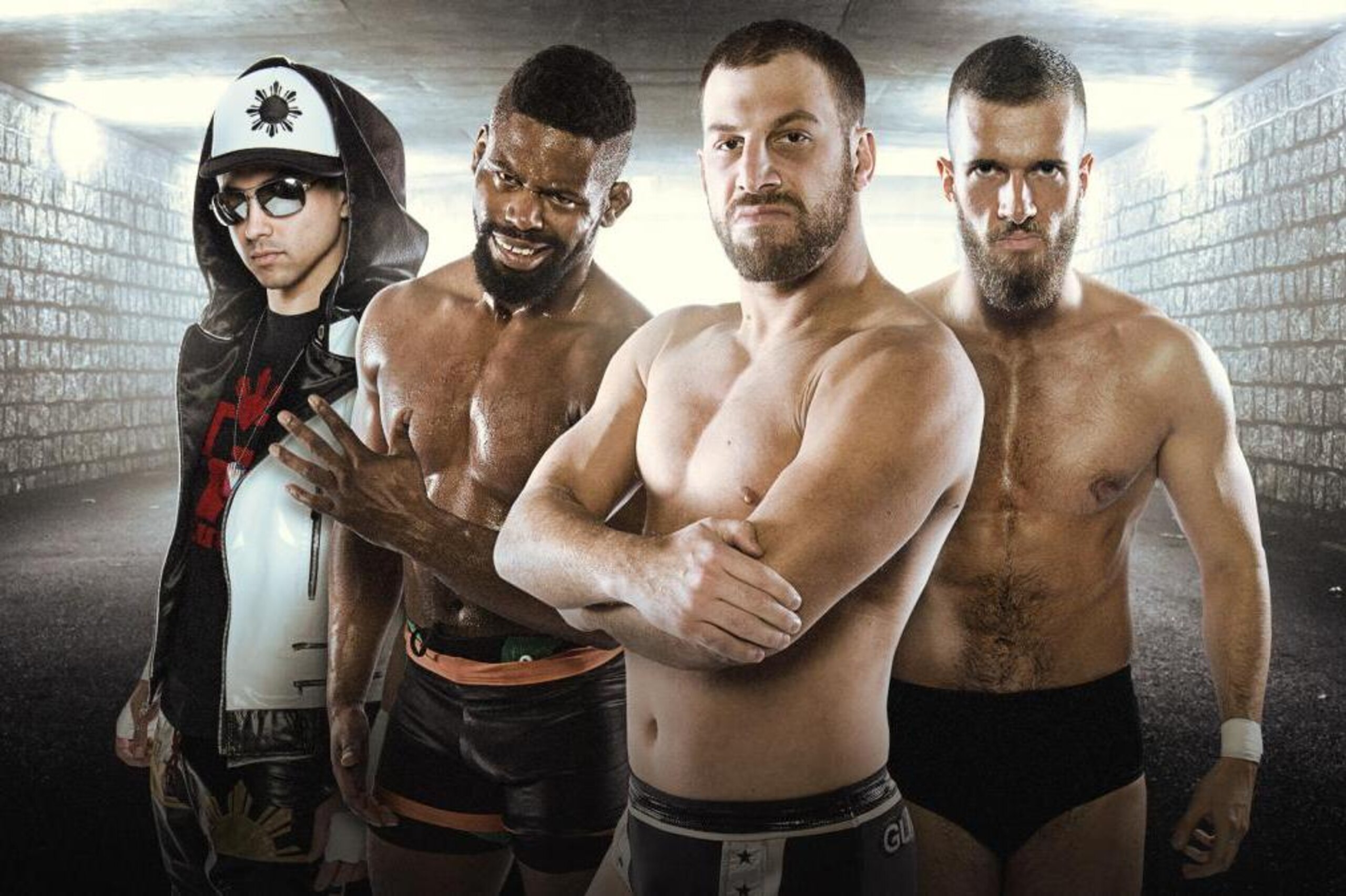

WWE Cruiserweight Classic Is Sign of Company Adapting to Changing Industry
The Cruiserweight Classic's existence is proof of WWE's mindset shifting, of the company embracing the evolution of pro wrestling.
When Hulk Hogan and Andre the Giant were colliding on the WWE stage, the concept of a tournament that was part salute to pure wrestling and part celebration of the cruiserweight would have been impossible to imagine.
WWE rarely acknowledged the independent promotions around the globe. It had little interest in showcasing smaller-profile wrestlers whose fanbases were made up of diehard fans.
TOP NEWS
Latest Wrestling Rumors
WWE and AEW's Mount Rushmore for Today's Era ⛰️
Predictions on Road to Survivor Series
But WWE is proving that it isn't a stationary entity. The upcoming cruiserweight tournament is a welcome departure from the norm, one that infuses its own product with promotions like EVOLVE and PROGRESS.
Qualifying matches are underway for the Cruiserweight Classic (formerly the Global Cruiserweight Series) that will air on the WWE Network beginning in July.
Rather than the specific brand of sports entertainment that WWE has sold its audience for years, the tourney will feature submission-based wrestling, mat technicians at work, indy favorites and a scaled-down version of the squared circle's spectacle.
In an interview with Inquisitr, Lince Dorado of Chikara fame said of the event, "You're going to see a lot of different styles, different characters, a lot of different 'gimmicks' that people have probably never seen, heard of, or even would think existed in professional wrestling."
WWE providing a means to showcase these styles is a surprising move. But it's one that points to the company wanting to appeal to diehard fans.
To increase subscribers to the WWE Network, officials have to find a way to draw in the part of the audience that follows Pro Wrestling Guerrilla, New Japan Pro Wrestling and British promotions like Revolution Pro Wrestling, and may dismiss WWE as too cartoony.
These are wrestling snobs in a way, the equivalent to folks who prefer films to movies.
The Cruiserweight Classic will feature a number of grapplers popular among that crowd, from Zack Sabre Jr. to Noam Dar.
The tournament is an acknowledgement that these underground stars have value worth pursuing. It speaks to WWE wanting to pull in and appeal to purist fans while also exposing its own fanbase to the kind of wrestling that is growing in popularity elsewhere.
That kind of fusion is creating a tangible electricity. WWE is merging two worlds, which increases interest in both.
Indy wrestler Gran Akuma is among those excited about what's ahead:
And seeing a company that folded criticisms about Daniel Bryan's height (5'10") into a major storyline recognize so many wrestlers under 6'0'' is surprising.
Brutes with bulging muscles like Sheamus and Ryback have long been the WWE prototype. This was the type of wrestler the company sold its audience on, convinced that fans wanted comic book superheroes flexing in the ring.
The industry as a whole, though, has seen that kind of competitor become rare.
Sleeker, faster and more agile athletes have become the norm. The world is bursting with skilled wrestlers like Dar (5'10'', 185 lbs) and TJ Perkins (5'10'', 200 lbs), while the industry's stock of giants has dropped.
That fact had Bret Hart lament on his Sharpshooter Show (h/t Uproxx), "Where's the big guys? Where's the King Kong Bundys? Who's hiding all the King Kong Bundys in the world?"
WWE has certainly found its share of larger wrestlers, like Braun Strowman and Colin Cassady, but it's also clearly recognizing how much of a goldmine of "undersized" talent there is on the indy scene. The Cruiserweight Classic allows the company to put those performers on display and offer a different brand of the art form than the one it airs on Monday nights.
That is a move that speaks to WWE having an open mind about the future of the business, and that's just as exciting as the matches themselves.


.jpg?w=2560 "Latest Peyton-Colts Rumors")



.jpg?w=2560 "Landing Spots for Trade Candidates 📍")