

Zidane Hasn't Improved Real Enough to Beat Atletico in Champions League Final
And still it goes on. Heading into the final weeks of the season, none of Europe's finest have managed to knock a Spanish team out of either the UEFA Champions League or UEFA Europa League.
Liverpool could alter that on Thursday against Villarreal in the latter, but on Wednesday, Real Madrid became the latest side to celebrate progression to a final—beating Manchester City to set up a derby in Milan, facing Atletico Madrid in the Champions League final on May 28.
It will be, of course, a repeat of the Lisbon final two years ago. On that occasion, Atleti led and were within minutes of completing a Liga and European Cup double before Real equalised late on and ran out rampant winners in extra time.

And this time? It's improbable, to say the least, but Zinedine Zidane faces the prospect of winning Europe's biggest prize a mere four-and-a-half months after taking over Real, having begun the season managing the club's reserve team against the likes of Real Union, Barakaldo and Toledo in Spain's third tier.
There's no doubt he has progressed as a manager in small but notable ways since taking charge of Real's senior team, but the first lesson he was handed was perhaps the hardest: Diego Simeone's Atletico are one of the best around and the toughest to beat.
Zidane has not yet improved Real Madrid so immeasurably to suggest they are on par with Atleti, measured man-to-man, or to the extent they will head into the final as favourites—even if the bookmakers still opt to say differently, per Odds Shark.
February Matchup
Zidane's ninth game in charge was the Madrid derby, hosting Atletico in the Santiago Bernabeu. He had previously won six and drawn two, though it's fair to say Real had ridden their luck on more than one occasion, most notably against Malaga.
It was reasonably early in his tenure, and the Frenchman was still assessing his squad, but his tactics were already clearly identifiable, and Real have rarely altered in approach since then: a 4-3-3 with an emphasis on overlapping full-backs and playing into the channels to get behind the defence—and a wide-open defensive line, prone to conceding chances behind the full-backs and allowing runners from deep through the centre, untracked by midfielders.
Simeone's Atletico, of course, have had time to fix both style and personnel. The eventual 1-0 win for Los Rojiblancos was typically impressive, on and off the ball, and a measure of their present dominance over Real.
Atletico have been higher in the Liga table than Real for most of the season, have defeated more impressive opponents in Europe and, well, exited the Copa del Rey in more conventional fashion.
Zidane's main lesson on the day of the derby was his side were not top dogs, not even in their own city. Not by a long way.
Balance in Midfield
Lessons have been learned by Zidane. The Champions League, and the fact Real Madrid are in the final, proves it.
He has so far suffered two defeats as a top-level manager, that Liga game to Atleti and the quarter-final first leg against Wolfsburg. In that match in Germany, Real went on the offensive—as they always do—and were stripped apart by the Bundesliga club's counter-attacks, diagonal balls and pace on the break.
In the semis against Manchester City? Nothing even close. Real were compact, guarded and rarely broke out of shape.
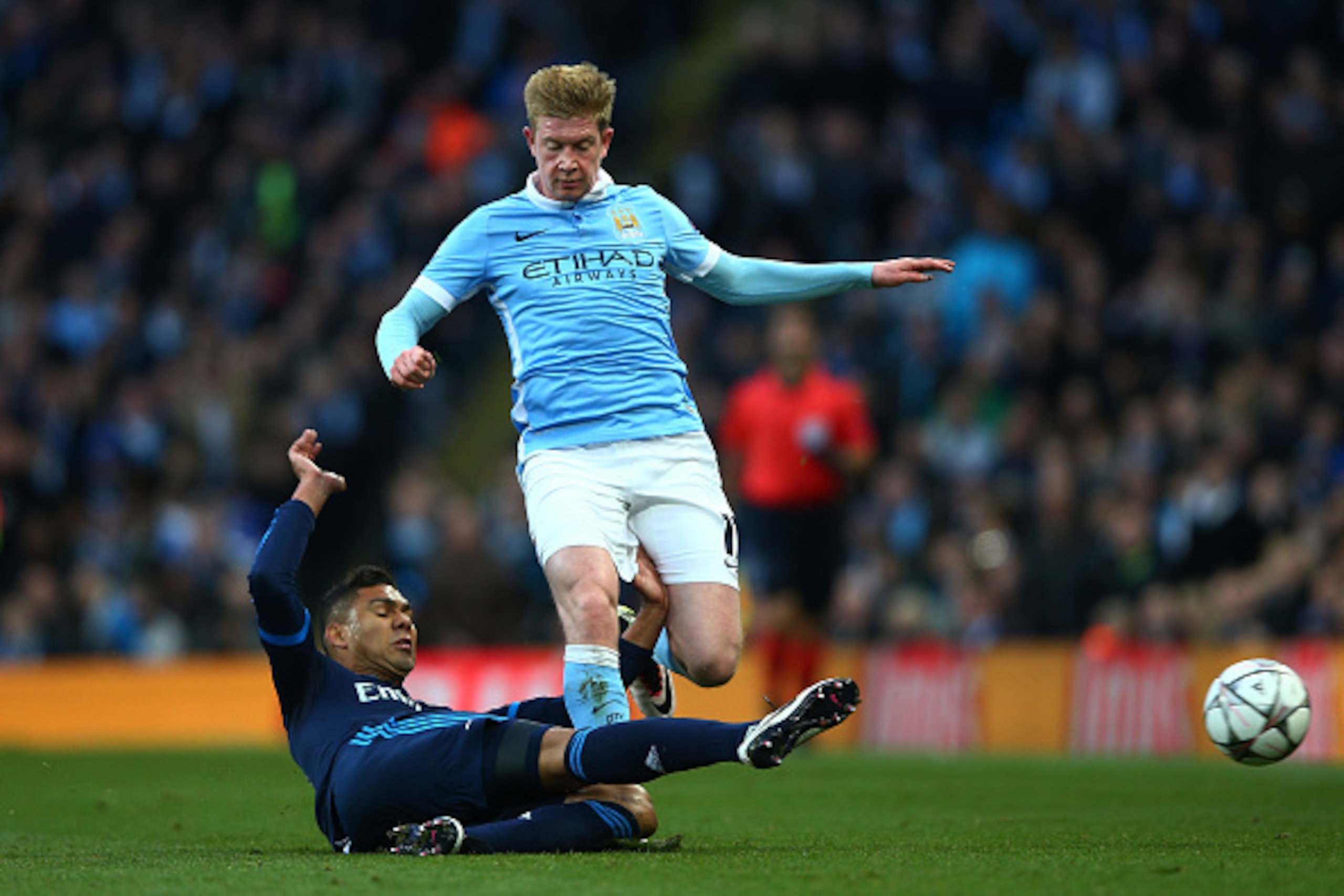
The manager had taken on board that despite Real's status as a huge club, it matters little within the scope of a 90-minute game on the road, especially with such high rewards at stake. A more pragmatic approach was required, designed and implemented.
Within his team structure also, Zidane has evolved. Initially, there was the attempt to integrate one of James Rodriguez or Isco, but both have been jettisoned, by and large, in favour of Casemiro as a holding midfielder.
Arguments and discussions could go on all day over whether James or another of the current reserves should be in the regular XI, but it's the right call to have Casemiro protecting the defence.
Again, that additional solidity and closing out of spaces in front of the defence is likely a lesson learned in two matches: the defeat to Atletico and draw with Malaga. In the latter, Toni Kroos was an embarrassment to the position of defensive midfielder, run ragged and lacking the physicality or (for once) the technicality in his game to effectively shield Real's back line. But for some extremely questionable finishing from the Malaga forwards, Zidane's track record would read three defeats.
Issues at Both Ends
The shape and balance in midfield might be improved, but questions remain elsewhere. Naturally, with Zidane not yet afforded a summer transfer window to alter his squad in any significant way, he's simply making do with what is available to him—not that most managers would consider that a hardship given the names of the players involved.
Nonetheless, rarely has Zidane been able to field his first-choice front three for a full 90 minutes; Gareth Bale was initially struggling with injury, while more recently Karim Benzema and Cristiano Ronaldo have both been sidelined. Others have filled in, admirably at times, but playing the BBC takes Real's threat and overall game up another level.
In defence it must be a worrying thought that Pepe, now 33, has been the team's most consistently impressive defender. Danilo is derided by the crowd, Raphael Varane has had a down year in his development and Sergio Ramos has been woefully inconsistent.
That Keylor Navas remains a standout, even in bog-standard Liga matches against middle-of-the-road teams, tells onlookers everything they need to know about Real Madrid's continuing openness.
Opportunism
The difference between the sides couldn't be greater. Where Real are fluid, Atletico are structured. Where Real want to outscore opponents, Atletico beat them down then shut them out. Where Real are always talking themselves up as the best, the biggest and the greatest, Atletico are happy to play the underdog card—even when they shouldn't be seen as such.
It's partly a defence mechanism from Atleti, of course, to temper the scrutiny should they lose any given battle for silverware, but it also points to their identity of absolute self-confidence: Even though we're not as big as you, we still believe we'll win.
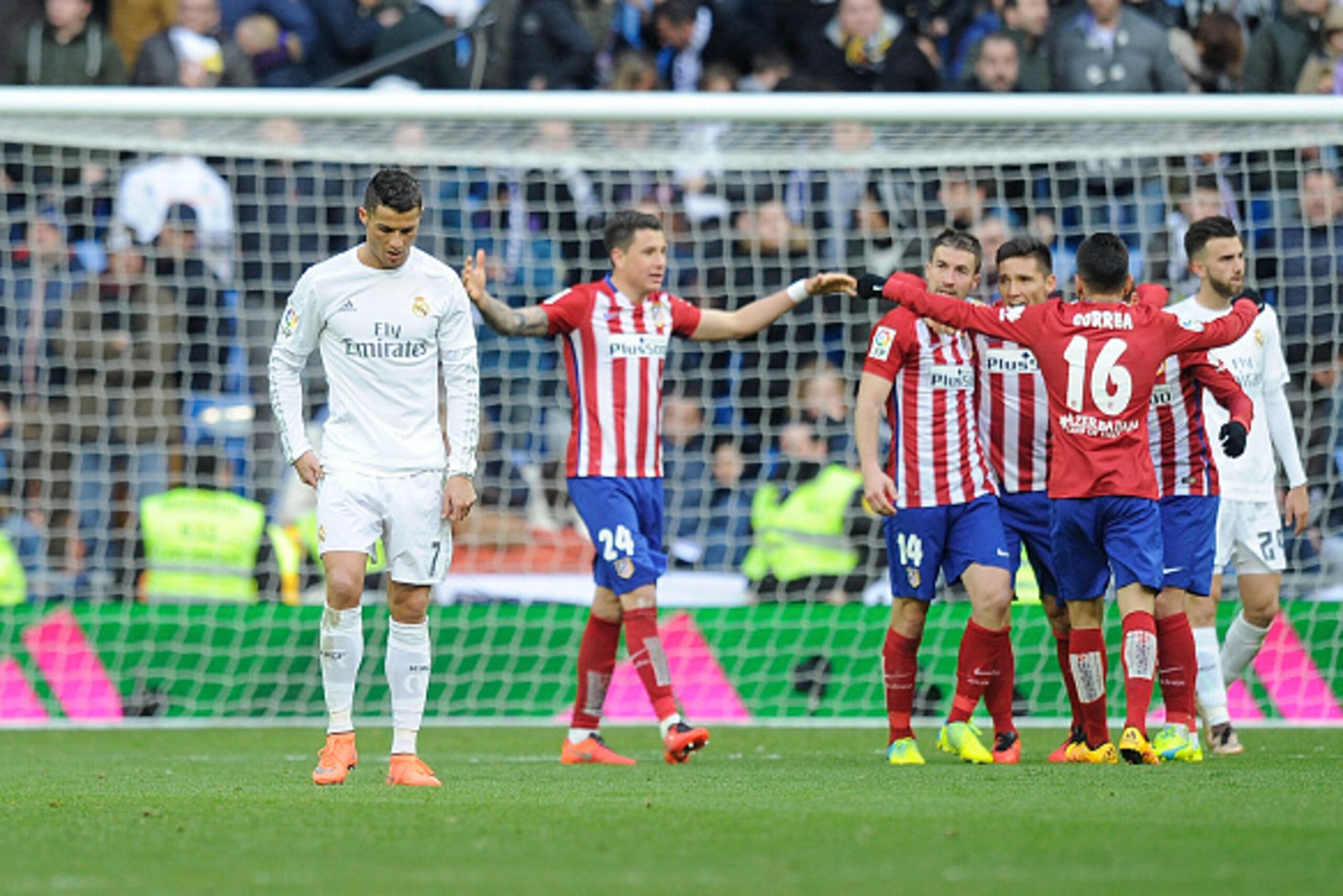
Atletico hunt their opponents, exploit a moment, take their opportunity and back themselves unconditionally to see out the game defensively, if need be.
The semi-final against Bayern, the Bernabeu win over Real—both showed the same basic premise that they were good enough to score against huge opposition and also good enough to keep them at bay just enough to secure the win.
Real Madrid's opportunism in the Champions League has been slightly different: an absurdly straightforward run to the final, all things considered.
AS Roma, Wolfsburg and Manchester City. None are in the top tier of European talents, and none are in the elite group of sides expected to be in the running to lift the trophy. By contrast, PSV Eindhoven, Barcelona and Bayern Munich presented a far harder route to the San Siro. As such, it's still a little difficult to judge just how good Zidane's team has become.
They won El Clasico with a defensive mindset against a Barcelona side in the midst of a slump. There's nothing wrong with that, but it's still not quite a true measure in determining how they will fare against Europe's best. Nor were any of their knockout games under Zidane.
The isolated occasion when he has had to face an elite side in absolute form, Zidane tasted his first defeat. There have been improvements, but perhaps not enough. Atletico have form, cohesion, understanding and an ironclad will.
They also have revenge in mind for two years ago and have already shown this season they are better than Real Madrid.


.jpg?w=2560 "Latest Peyton-Colts Rumors")


.jpg?w=2560 "Ugly Jets Scoring Stat 😳")
.jpg?w=2560 "Landing Spots for Trade Candidates 📍")