

The Denver Broncos come into the 2016 NFL draft with a handful of needs and a lot of picks to fill them, which could lead to an exciting three rounds for the team and its fans.
While general manager John Elway and the rest of the front office have targeted the best player available over need in past years, that might change after free agency and retirement left a few gaping holes in the starting lineup. With 10 picks beginning at No. 31 overall, however, the organization could have a few different options for strategy.
No matter what the team chooses to do, you can use this article as a guide for analysis and grades updated after every pick throughout the weekend. We will be right here from the start of the draft Thursday at 8 p.m. ET through the very last pick on Saturday. After each selection by the Broncos, remember to come back for the latest breakdown on the newest member of the team.
Pick Tracker
1 of 9The Broncos might have to wait until the end of the first round to make their first selection, but a deep draft will give them plenty of opportunities to upgrade the roster. They have four out of the top 100 picks to potentially add some starters and then six more picks on Day 3 to add some more depth.
These excess picks also could provide Denver with the flexibility to make some trades if necessary, giving the squad plenty of options in the draft.
Round 1, Pick 26: Paxton Lynch, QB, Memphis Tigers
2 of 9
The Broncos traded up five spots (giving up a third-round pick) to get their man, and it ended up being the best-case scenario in the first round.
While the squad had a number of needs heading into the draft, none was bigger than quarterback after the retirement of Peyton Manning and Brock Osweiler leaving in free agency. Denver needed a long-term replacement at the position, and it got it with Paxton Lynch.
Lynch has all the tools you look for in a quarterback, beginning with excellent size at 6'7". He has a strong arm with the accuracy to complete passes all over the field and good enough athleticism to make an impact with his legs. The quarterback also showed throughout last season his ability to handle a blitz, posting an NFL passer rating of 100.6 when pressured, per Pro Football Focus.
He is a tough player who could develop into a legitimate star.
With that said, there is a reason he didn't go No. 1 overall; he is still very raw heading into the NFL. He needs to adjust to a pro-style offense and handle a major step up in competition from what he saw at Memphis. He would be best suited sitting on the bench early in his rookie year and learning behind a veteran such as Mark Sanchez.
Although this might not give the defending Super Bowl champs the immediate upgrade they need to stay in contention, it is exactly what the Broncos needed to do to start the draft.
Grade: A
Round 2, Pick 63: Adam Gotsis, DT, Georgia Tech
3 of 9
Defensive line was a major need heading into the draft, but the Broncos went in a strange direction by selecting Adam Gotsis.
The Georgia Tech player projects as a versatile pro who is capable of spending time anywhere on the defensive line. He might be best as a 3-4 defensive end, which is what Denver needs after losing Malik Jackson to free agency. At 6'4", 287 pounds, Gotsis has decent size for the position and could become an above-average run-stopper in the NFL.
Unfortunately, the Australian is still raw for the position and will likely take some time to contribute at a high level. That would be true even if he weren't coming off an ACL tear suffered in late October.
The Broncos are relying on a player who is recovering from a major knee injury to develop in order for him to contribute somewhere down the road. Considering the team needs someone to help at the position right away, the pick remains an interesting decision.
It wouldn't be surprising to see the team add even more defensive line depth later in the draft with its surplus of picks.
Grade: B-


Round 3, Pick 98: Justin Simmons, S, Boston College
4 of 9
Denver got a true playmaker on defense with the addition of Justin Simmons.
The safety was on a truly awful Boston College team but managed to finish with five interceptions and three fumble recoveries during his senior season. He led the team with 76 tackles as a junior and followed that up with 69 tackles his final year.
Simmons was simply always around the ball in college and has a good chance to replicate this type of production in the NFL. Not only does he have good size for the position at 6'2", 202 pounds, but he is one of the more athletic players in the class. At the combine, he finished with an impressive 10'6" broad jump and the top vertical jump (40 inches) at his position.
Even without elite speed, he has the instincts necessary to cover a lot of ground in the secondary.
While the Broncos don't have an immediate hole at safety, they lack depth behind starters T.J. Ward and Darian Stewart, both of whom missed time because of injury last season. Although the team still has a few other needs, Simmons can be a quality backup and eventually a starter at free safety down the line.
Grade: A-
Round 4, Pick 136: Devontae Booker, RB, Utah
5 of 9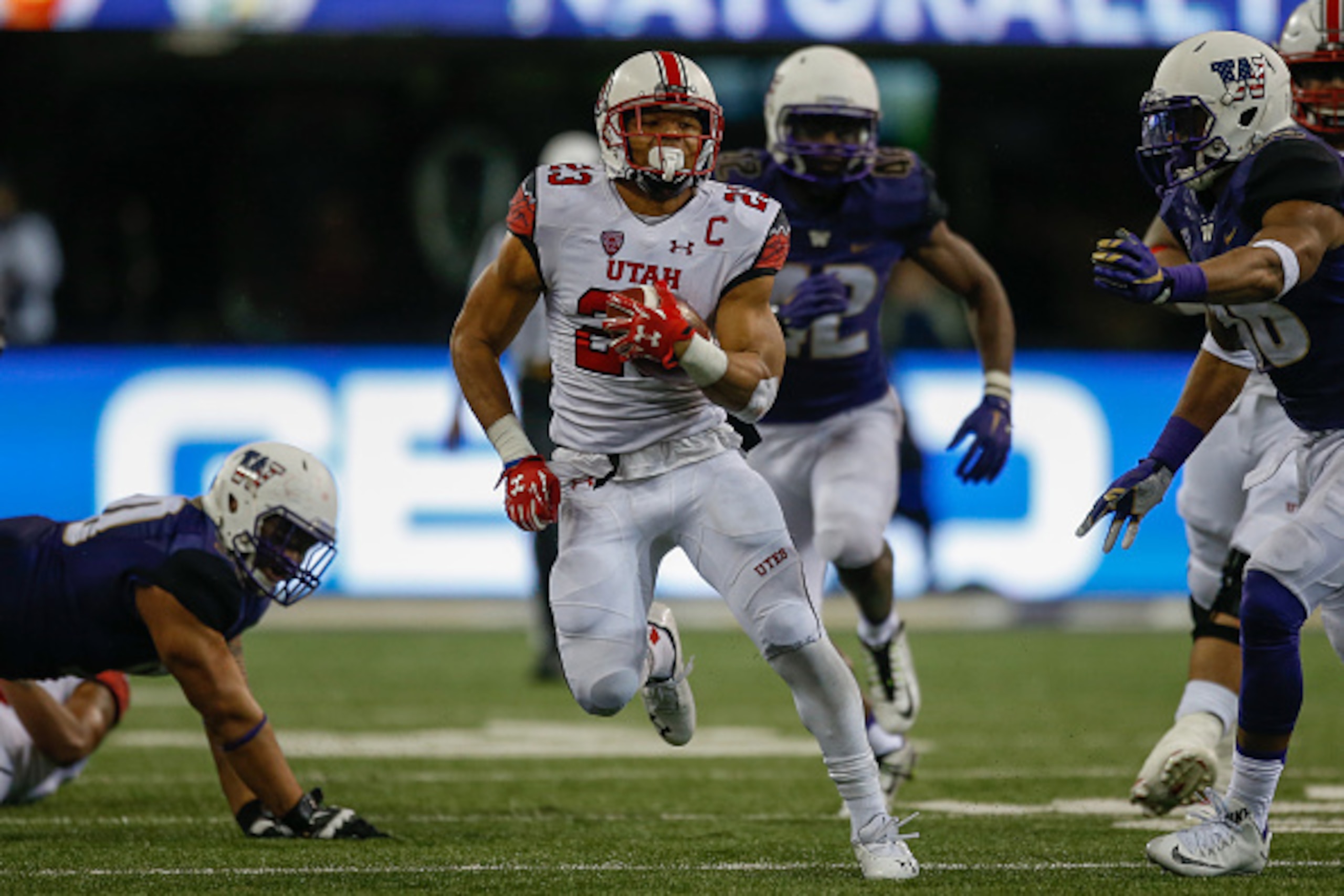
There is certainly a lot of value in this pick with Devontae Booker being one of the top skill players in the entire class.
Booker had an extremely productive college career, totaling 1,512 rushing yards and 10 touchdowns as a junior before adding 1,261 yards and 11 touchdowns in just 10 games as a senior. However, this shortened season is a big reason he likely fell on draft boards, as a torn meniscus forced him to miss the last three games of the year.
The running back was unable to participate in drills at the combine, and it is unknown when he will be able to contribute going forward. He also had a fumbling problem in college, something that could be a concern at the next level.
On the other hand, the upside is obvious as a complete running back who could be a three-down player in the NFL. Not only does he run hard and have enough quickness to make players miss, but he also could be a quality receiver out of the backfield.
These traits are why Mike Mayock of NFL Network had Booker rated as the No. 2 running back in the class, ahead of Heisman Trophy winner Derrick Henry.
This is a value pick that could help for the future, although he might not make a big contribution right away.
Grade: B+
Round 5, Pick 144: Connor McGovern, OG, Missouri
6 of 9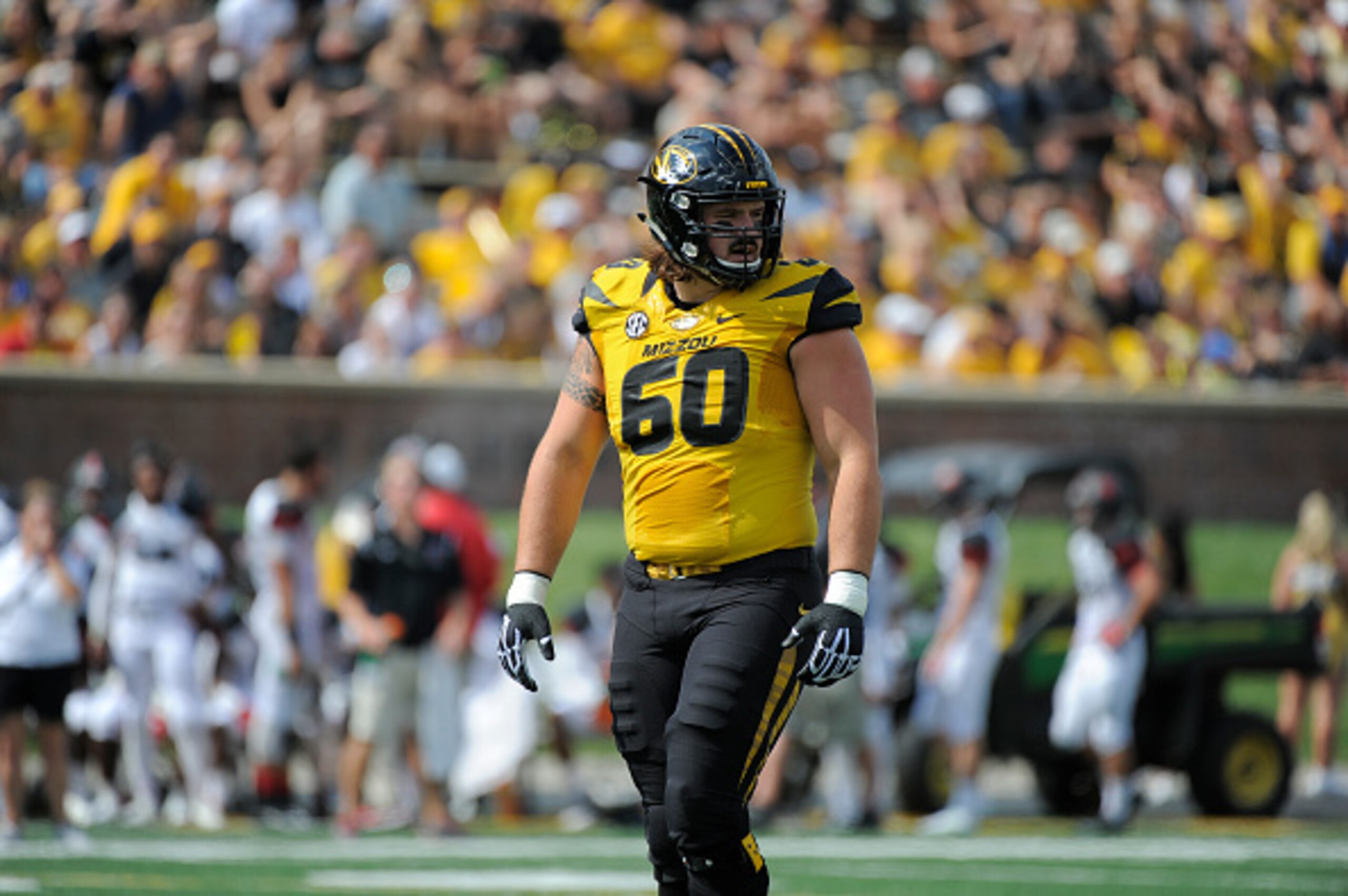
Although Denver drafted a quality running back in Devontae Booker right before this pick, Connor McGovern might have a bigger impact on the Broncos running game next season and going forward.
The guard projects to be an excellent run-blocker at the next level as one of the strongest players in the entire class. He tallied 33 reps on the bench press at the combine, second only to Christian Westerman of Arizona State.
McGovern still needs to improve as a pass-blocker, but the 6'4", 306-pound lineman has the physical tools necessary to succeed in this area. There is a reason ESPN's Todd McShay had him as the No. 4 guard in the class.
Additionally, McGovern has the type of versatility that could help provide extra depth on the offensive line. He has spent time at guard and tackle on both sides of the line and could give the coaching staff plenty of options during the 2016 season.
After losing Evan Mathis and Louis Vasquez, the Broncos needed help at guard, and McGovern represents an immediate upgrade.
Grade: A
Round 6, Pick 176: Andy Janovich, FB, Nebraska
7 of 9
After trading back almost 20 spots from No. 157 (picking up a 2017 sixth-round pick in the process), the Broncos went in a surprising direction by adding fullback Andy Janovich.
The Nebraska player was utilized as a ball-carrier last season, rushing for 265 yards on 6.3 yards per carry. Despite this production, his lack of speed (4.81-second 40-yard dash at the combine) will prevent him from being a primary runner in the NFL.
What this selection could do is signify a change in offensive strategy in the post-Manning era. The Broncos have already drafted a power runner in Booker and a strong blocker in McGovern, and this latest pick adds to the idea of a smash-mouth rushing attack.
Still, Janovich seems most likely to contribute on special teams and short-yardage plays. With useful players remaining on the board and a few holes still on the roster, this was a reach pick that isn't likely to provide much value.
Grade: C
Round 6, Pick 219: Will Parks, S, Arizona
8 of 9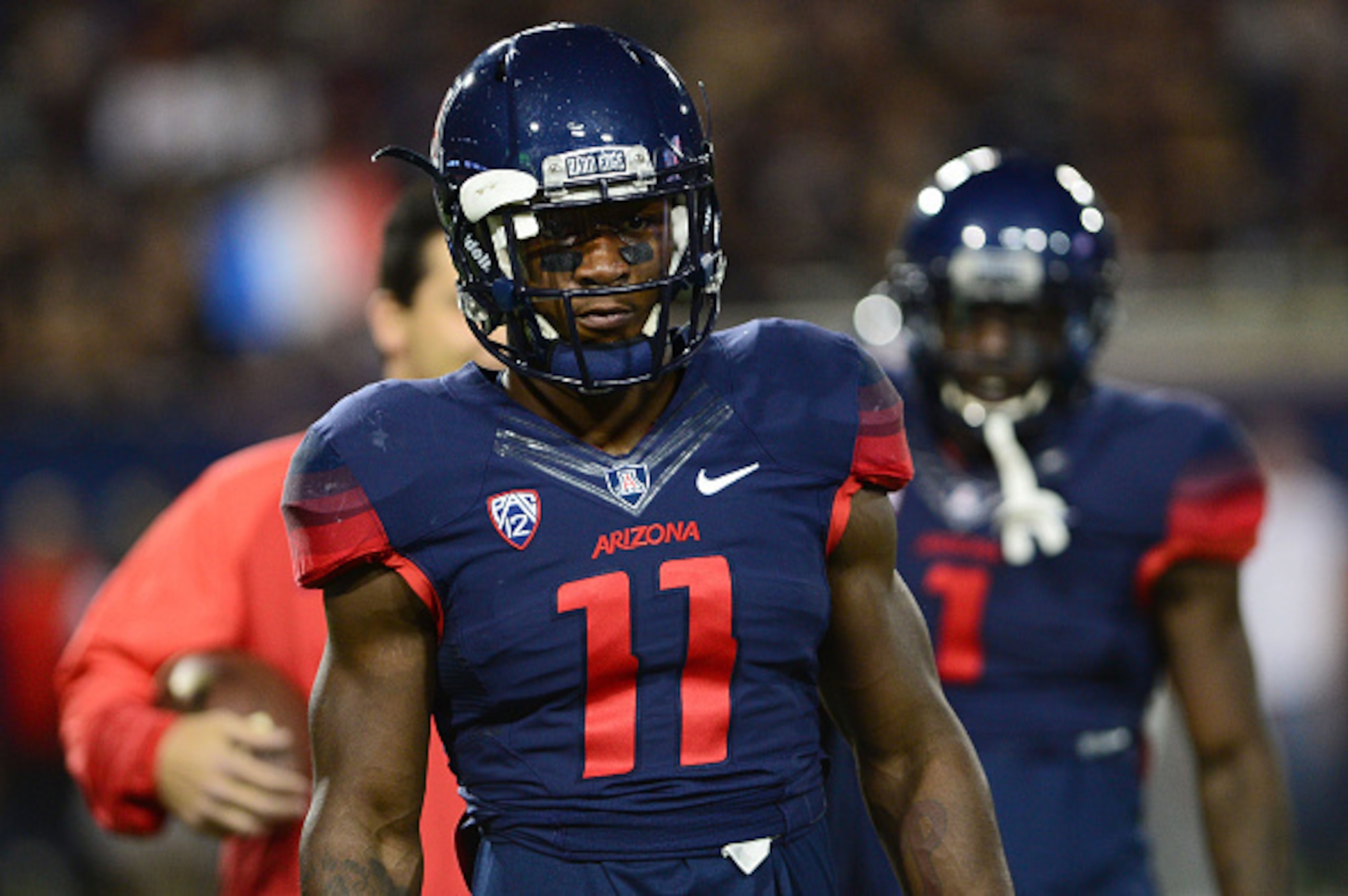
With David Bruton and Omar Bolden gone, the Broncos added not just one but two safeties in the 2016 draft, the latest being Will Parks.
While third-round pick Justin Simmons is best as a free safety playing deep in coverage in a center field role, Parks is better utilized in the box, closer to the line of scrimmage. He is a versatile player with the skill to lead Arizona with 76 tackles while also tallying seven pass breakups on the season.
According to Pro Football Focus, his plus-12.1 rating against the run was third-best among safeties in this class. Josh Liskiewitz of PFF said the safety "may be the biggest steal of the last 50 picks."
On the downside, Parks doesn't have great speed while being also undersized at 6'1", 194 pounds. He has good instincts, but a lack of athleticism will limit his upside at the next level. While he has the versatility to play multiple spots in the defensive backfield, he doesn't appear likely to ever be a starter.
Parks can be a solid player, but there are needs at linebacker, receiver and other spots that could have been used instead.
Grade: B
Round 7, Pick 228: Riley Dixon, P, Syracuse
9 of 9
The Broncos finished their draft by taking a specialist in punter Riley Dixon.
While most teams look for pure power from a punter, that isn't exactly what the Syracuse product provides. His average yards per punt was just 43.7, slightly ahead of current Denver punter Britton Colquitt, who finished last season 28th in the NFL with an average of 43.6.
On the other hand, Dixon does a great job of pinning opponents deep in their own territory. During his senior season, he put 28 of his 65 punts inside the 20 with only five touchbacks, per the school's official website. Another 28 kicks were fair catches, giving the opposing player no chance for a return.
The punter is a consistent performer who will be a trustworthy option at the next level.
With Colquitt costing $4 million against the salary cap, per ESPN's Jeff Legwold, getting younger and cheaper at the position makes a lot of sense. He also came three full rounds after the first punter selected.
Grade: B+
.jpg?w=2560 "LA Premiere of \"Chad Powers\"")