With the early-entry deadline having passed for the 2016 NBA draft, scouts and executives now have hundreds of names to sift through.
A handful will receive more love from teams than media or fans.
These may not be franchise players or future All-Stars; rather, they're overlooked prospects who could well emerge as NBA assets, based on personal perspective and feedback from scouts. The following six are flying below the radar for now, but they should eventually rise above it, whether it's at the NBA combine, during workouts or after the draft.
TOP NEWS

J-Dub Suffers Gruesome Injury
Melo's Quote on Confidence 😎
Mazzulla Weighs In on Brown-Tatum Drama
Patrick McCaw (UNLV, SG, Sophomore)
Draft Status: Hired an agent, staying in the draft
Despite a productive sophomore season, we didn't quite see the full eruption from McCaw.
Nevertheless, he hired an agent and entered the 2016 draft. A team that may have anticipated a huge junior year out of him—2016-17 was assumed to be his breakout—could jump the gun and reach this June.
McCaw offers a rare package of two-way versatility. He's an athletic, 6'7" 2-guard with a mix of shooting, passing and defensive playmaking, a fairly unique combination. The Missouri native averaged 2.1 threes and 3.9 assists per game while finishing sixth in the country in steals. He also added 14.7 points per game, a number he likely would have raised with another year at UNLV.
Analytics departments will favor McCaw, who did most of his work at the rim (76-of-115, 66.1 percent) or behind the arc (68-of-186, 36.6 percent), not on two-point jumpers (24-of-60, 40 percent), per Hoop-Math.com. His 2.9 steals per 40 minutes should also look good under the analytics lens, given the ties between steal rate and NBA success, as ESPN Insider Kevin Pelton pointed out.
In the 20-30 range, there will be an abundance of low-ceiling bigs and international projects (Diamond Stone, Damian Jones, Ante Zizic, Ivica Zubac) for teams to choose from. I'm betting one general manager looks to make a bigger splash. It may take a few years to see results, but McCaw is one of the more exciting draft prospects outside the lottery discussion.
Best-Case Draft Projection: Mid-first round
Worst Case Draft Projection: Second round
Ben Bentil (Providence, PF, Sophomore)
Draft Status: No agent, eligible to return
Bentil's monster sophomore numbers never translated to much NBA draft buzz during the year. He finished the season averaging 21.1 points and 7.7 rebounds, yet projected top-10 pick Kris Dunn received most of the attention at Providence.
Fans and media have overlooked the Friars big man in NBA draft discussion. One scout recently told me he thought Bentil could go in this year's first round.
At 6'9", 235 pounds, he looks big and strong enough to compete around the basket with NBA 4s. And though he's not a particularly bouncy athlete, Bentil flashed an encouraging perimeter game, having hit 52 threes as a sophomore and developing into a difficult face-up cover from the short corners.
It needs work, but his jumper looks convincing, while his improved footwork and one-handed touch fuel a post game consisting of go-to moves and counters.
Poor rebounding (8.9 boards per 40 minutes) and shot-blocking numbers (1.2 blocks per 40 minutes) weaken his draft case. But they shouldn't just negate all the positives—specifically advanced, inside-out versatility, pro-ready physical tools and the production to back it all up.
Unless he makes a dramatic rise following the combine and workouts, some team is going to find a steal in the late first or second round.
Best-Case Draft Projection: Mid-first round
Worst-Case Draft Projection: Second round
Malik Beasley (Florida State, SG, Freshman)
Draft Status: Hired an agent, staying in the draft
Beasley hasn't made too many headlines, as Florida State's absence from the NCAA tournament didn't help create any buzz down the stretch. But the freshman has been on scouts' radar throughout the season, and with the predraft process nearly underway, he's a potential riser to watch over the next two months.
"He'll be mid-first round, if not lottery," one scout told me.
Beasley passes the NBA eye test with 6'5" size and the type of explosiveness that is bound to turn heads during testing and workouts. Assuming his freshman-year numbers weren't fluky, he has a jumper to match the burst. He knocked down 1.6 threes per game, shooting 38.7 percent from beyond the arc.
Otherwise, Beasley flashed a developing stop-and-pop move and floater game. He has the quickness to effectively guard both backcourt positions, too. Depending on how far he takes his defense, he could draw some comparisons to three-and-D off-guard Wesley Matthews.
Beasley hasn't put everything together, but at 19 years old, carrying a life jacket inflated by shooting and athleticism, he looks like a low-risk, potentially rewarding draft pick in the 15-to-35 range.
Best-Case Draft Projection: Lottery
Worst-Case Draft Projection: Early second round
Caris LeVert (Michigan, SG, Senior)
Draft Status: Auto-eligible
LeVert was virtually removed from the first-round discussion after missing the final few months of his senior campaign with a left foot injury—the second consecutive year his season ended prematurely due to surgery on that foot. He'll enter the draft draped in red flags, and teams will pore over his medical reports.
"Teams are still interested, they're just looking to meet me at the combine," LeVert told Mark Snyder of the Detroit Free Press. "Everyone’s really anxious to see. Team doctors are anxious to get their hands on me."
Some scouts may have already written off LeVert as too big a risk, but I'd bank on others looking for value to keep tabs on him. Unless doctors find something that suggests he's untouchable, LeVert has the chance to be 2016's buy-low pick of the draft.
Given how long he's been around, it's easy to forget he's still just 21 years old. And when he's healthy, his 6'7" size, athleticism and versatility scream NBA potential.
LeVert finished his career at Michigan having shot 40.1 percent on 334 three-point attempts, including a career-best 44.6 percent as a senior. And before going down for good in February, he was averaging 4.9 assists, highlighting unique playmaking ability off of ball screens and penetration.
Size and quickness for the position, a tested jumper and above-average passing check valued NBA boxes. LeVert will fall under the boom-or-bust umbrella, but if his latest surgery and extended rest work, allowing his foot to strengthen and hold up physically, he could be a steal for a gambling general manager.
Best-Case Draft Projection: Late first round
Worst-Case Draft Projection: Undrafted
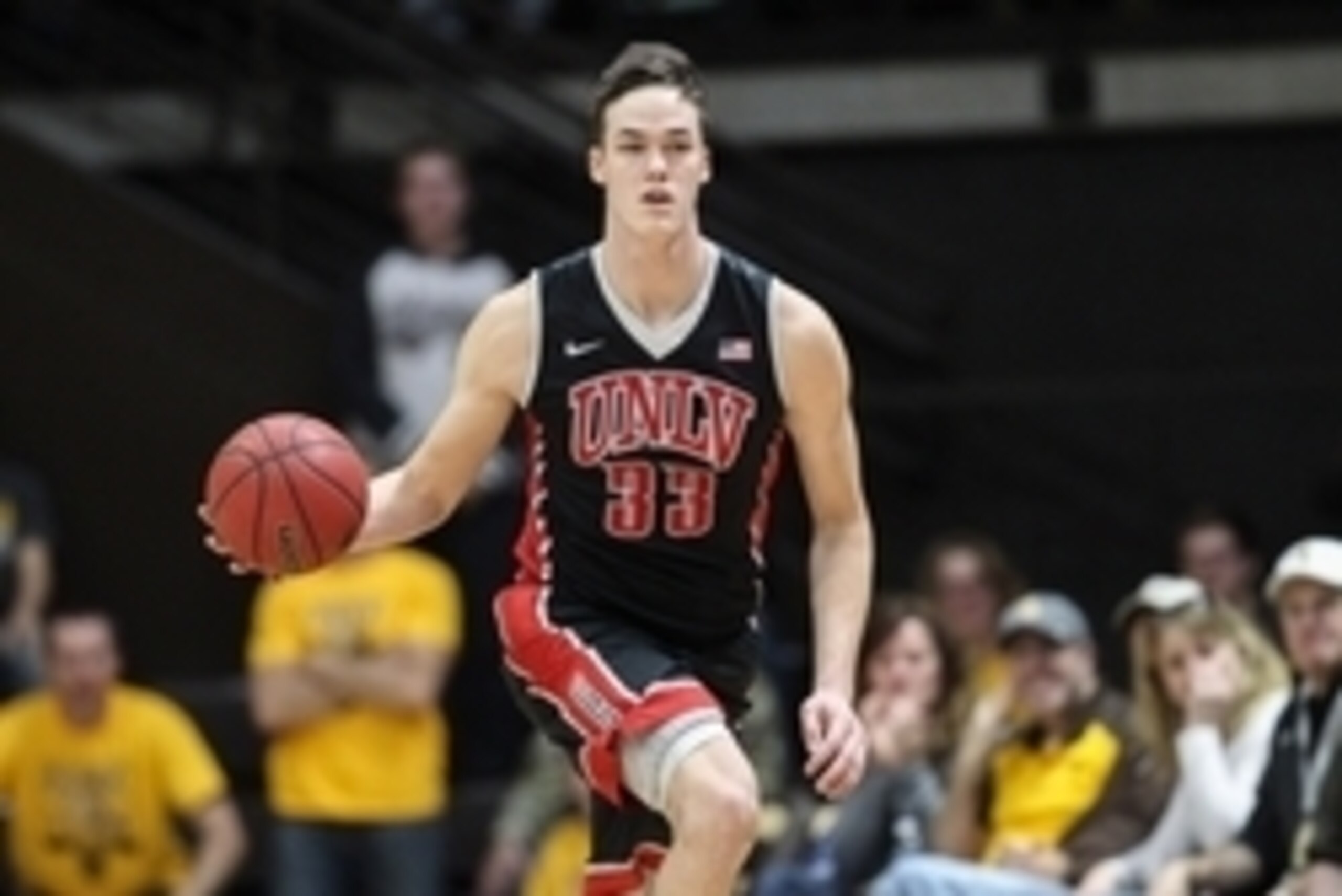
Stephen Zimmerman Jr. (UNLV, C, Freshman)
Draft Status: Hired an agent, staying in the draft
Along with McCaw, Zimmerman struggled to make much noise in a lousy Mountain West. He also missed five games during February due to a knee injury, finishing his freshman season with a total of just 680 minutes and 214 field-goal attempts (8.2 per game).
Between the knee, the conference, his role on the team and its record, Zimmerman didn't have a great opportunity to sell himself.
The NBA combine and workouts represent more fitting audition platforms. At 7'0", he's mobile and coordinated with enough bounce to finish above the rim. Though he didn't take too many jumpers at UNLV, he'll get to show off his shooting ability in practice settings during May and June. The big man has a promising stroke and range out to the three-point arc, having knocked down five triples as a freshman.
Zimmerman's footwork is encouraging as well. He's a threat to put the ball on the floor and attack in line drives or drop-step into a hook shot around the key. He isn't great in traffic or after contact, and he'll need to undergo intense strength training. Regardless, he still managed to pull in 13.4 rebounds and block three shots per 40 minutes.
There may be a bunch of "ifs" tied to Zimmerman, but if he can hold his own down low and continue to improve his shooting, his skill set for the position will be coveted.
Best-Case Draft Projection: Lottery
Worst-Case Draft Projection: Late first round
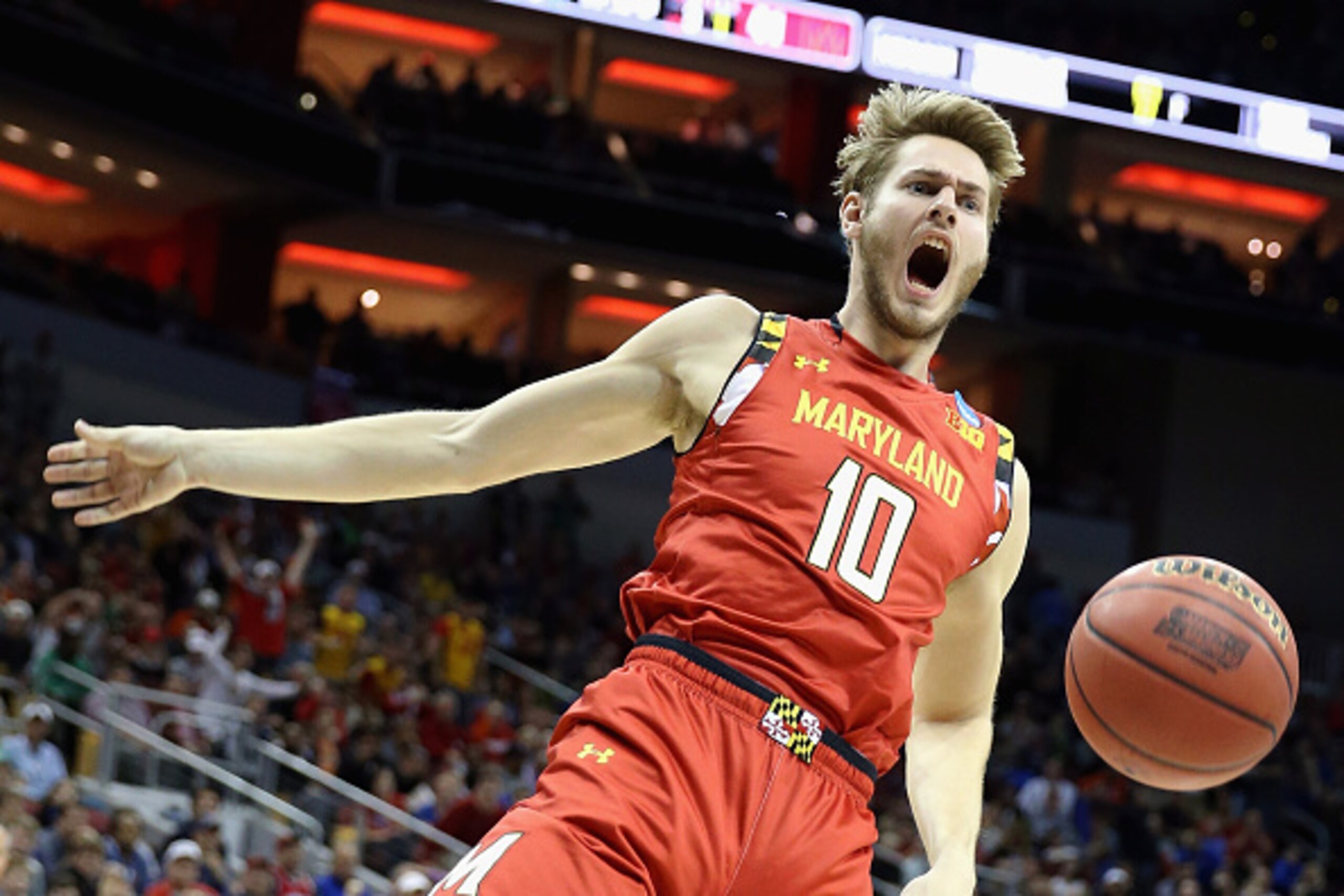
Jake Layman (Maryland, SF/PF, Senior)
Draft Status: Auto-eligible
Layman isn't a particularly sexy draft option, having averaged just 11.6 points and 5.3 rebounds as a senior. His production was never going to wow in a lineup with weapons such as Melo Trimble, Robert Carter Jr., Diamond Stone and Rasheed Sulaimon, but take a look at Layman's efficiency, which gradually improved each year:
| 2FG% | 3FG% | True Shooting % | |
| 2013-14 | .441 | .365 | .529 |
| 2014-15 | .530 | .378 | .589 |
| 2015-16 | .610 | .396 | .640 |
Possessing 6'9" size and athleticism that could work at either forward position, Layman was terrific in spot-up or catch-and-finish situations. Those are exactly the situations he'll find himself in with an NBA team.
He doesn't create—he's a role player who has to knock down the open shot, hit the open lane and move the ball. His shooting stroke looks legit, and though he's not an advanced ball-handler, he can capitalize as a line driver. His job in the pros won't be any different from what it was at Maryland.
Layman isn't going to receive much NBA love, given his age (22) and perceived limited upside. Team fit will also be big for him. He'll have a much better chance if he lands on a roster with established scorers and playmakers, which would allow him to play to his strengths as a supporting stretch big/fifth option.
That said, Layman is on my list of second-round sleepers because he's capable of thriving in the right rotation. For what it's worth, his numbers look fairly similar to Chandler Parsons' senior-year statistics.
Best-Case Draft Projection: Second round
Worst-Case Draft Projection: Undrafted






.jpg?w=2560 "Latest Peyton-Colts Rumors")