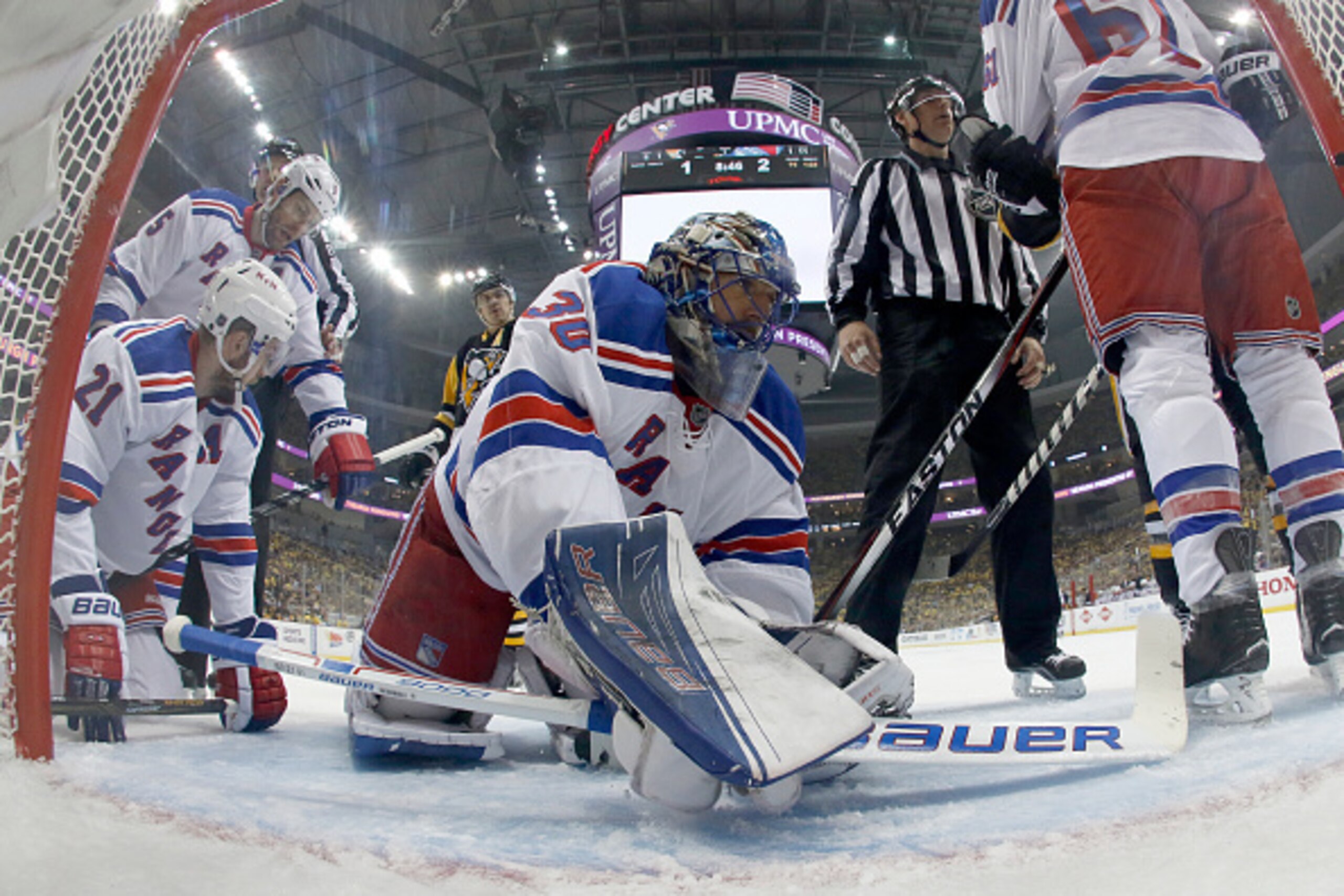

Who's to Blame for the New York Rangers' Early Exit from the 2016 NHL Playoffs?
On Saturday afternoon, the New York Rangers became the third team eliminated from the 2016 Stanley Cup playoffs following a humiliating 6-3 defeat at the hands of the Pittsburgh Penguins in Game 5 of their first-round series.
The loss marked the first time since 2011 that the Rangers had failed to win at least one playoff series—a crushing disappointment for a franchise that led the league with 113 regular-season points in 2014-15 and reached the Stanley Cup Final one season earlier.
Now, a long summer of soul-searching and offseason changes begins.
Here's a look at the biggest culprits to blame for the Rangers' early playoff exit.
Henrik Lundqvist
1 of 6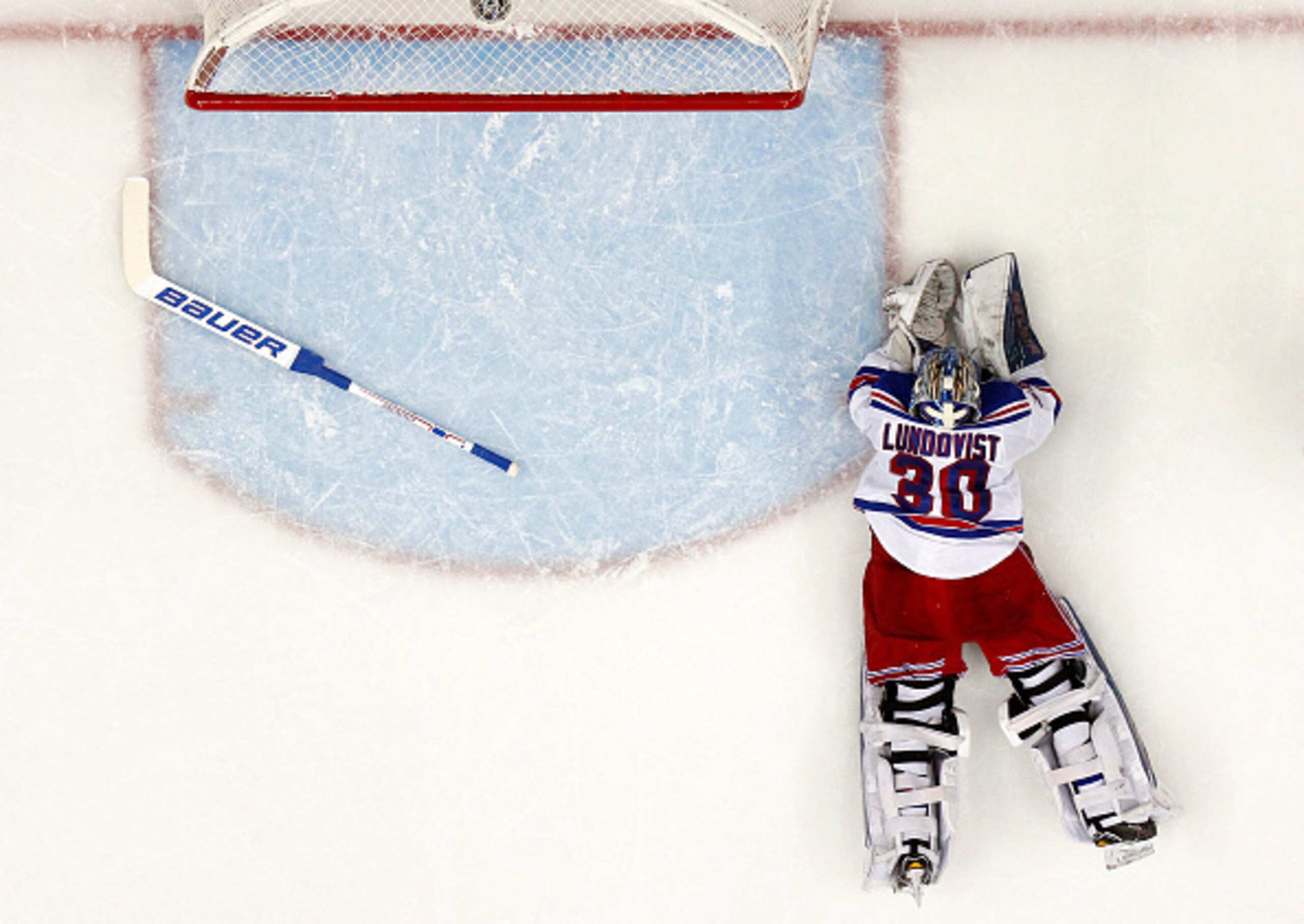
It's a strange world when Henrik Lundqvist is singled out as the weakness instead of the savior, but two Penguins rookies outdueled the Rangers' superstar in the first-round series.
Lundqvist's greatness has been the centerpiece of New York's success for the better part of the last decade. During that time, in the playoffs especially, he consistently gave the group in front of him a chance to win, even if the offense disappeared or the power play dried up.
Was Lundqvist still feeling the aftereffects of the eye injury that knocked him out of Game 1 of the series? It's hard to know. What's certain is the King couldn't do enough this time around to compensate for the rest of his team's shortcomings.
When you watch Lundqvist get shelled for four goals on 12 shots in the second period of Game 5 and then spend the last period of his season on the bench after being pulled, it's easy to wonder if the heavy workload he has shouldered throughout his career is starting to take a long-term toll.
Things could have been different for the Rangers if Lundqvist had delivered another one of his usual jaw-dropping playoff performances.
Percentage of Blame: 25 percent
Jeff Gorton
2 of 6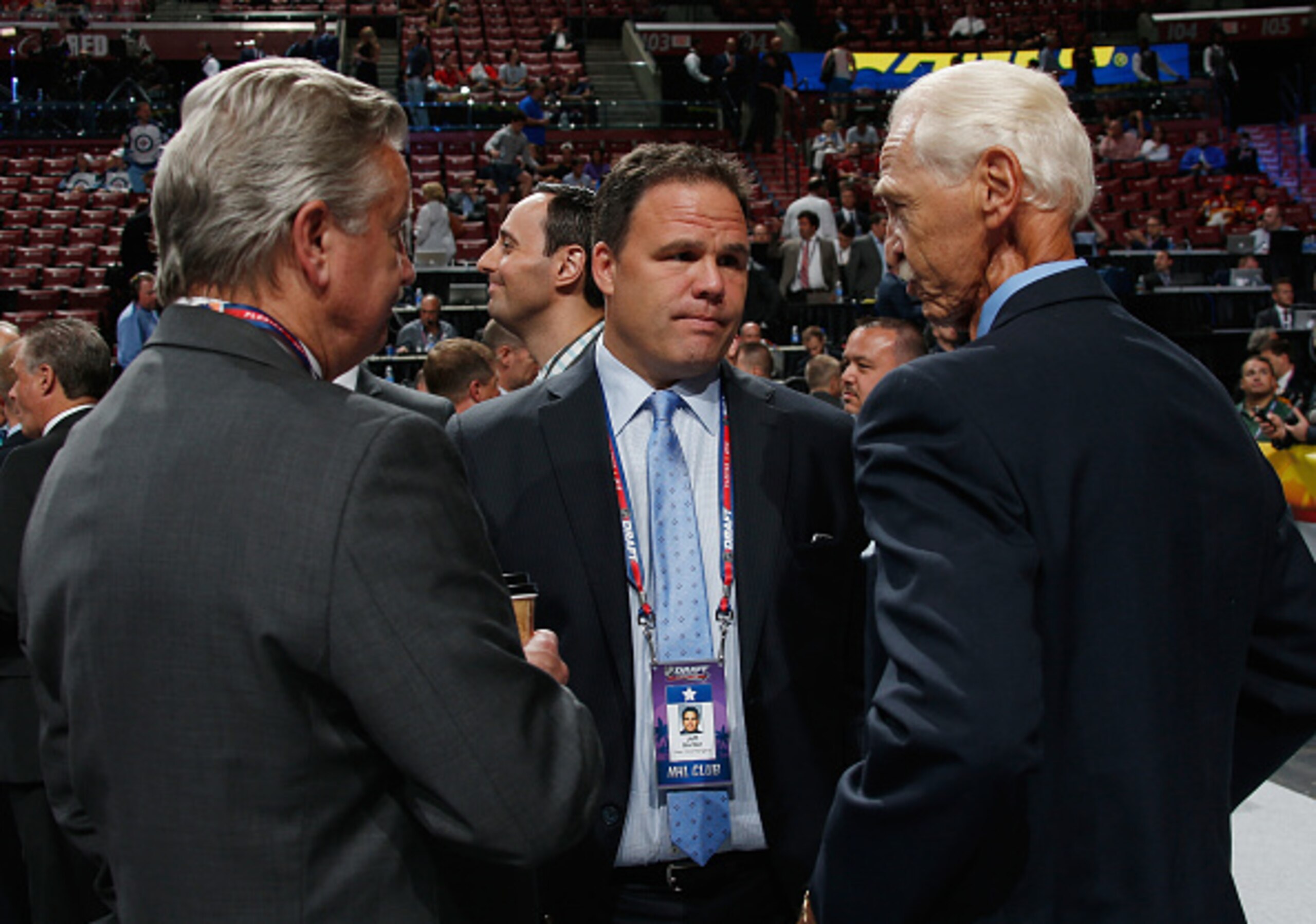
In his first season as the Rangers' general manager, Jeff Gorton delivered a team that dropped from 113 to 101 points and fell from first to ninth overall in the regular-season standings and then failed to win a playoff series for the first time in five years.
Here's a look at the significant player-personnel moves Gorton made after he shifted from his assistant general manager position and replaced Glen Sather on July 1, 2015, with transaction info from ESPN.com:
- Signed unrestricted free-agent center Jarret Stoll, who lasted 29 games before being released
- Traded winger Emerson Etem after he proved to be an unsuitable replacement for Carl Hagelin.
- Signed unrestricted free-agent winger Daniel Paille, who played 12 regular-season games and no playoff contests.
- Acquired Eric Staal as a trade-deadline rental for prospect Aleksi Saarela and two second-round draft picks. He scored zero postseason points.
Gorton inherited some roster challenges from his predecessor, but none of the moves he made this season paid off for the Rangers in the playoffs.
Percentage of Blame: 20 percent
Alain Vigneault
3 of 6
It's tough to put too much blame on a coach when he has been successful in the past—and when he has been dealt a difficult hand roster-wise.
Alain Vigneault is the same man who guided the Rangers to the Stanley Cup Final in 2014 and to a Presidents' Trophy in the 2014-15 regular season.
But Vigneault did raise eyebrows with some of his roster choices during the playoffs. Larry Brooks of the New York Post took the inscrutable coach to task before Game 5 for his loyalty to 39-year-old Dan Boyle, who managed just one postseason point, and his preference for power-play specialist Raphael Diaz over emerging defenseman Dylan McIlrath.
Boyle was scratched for Game 5, but it was Diaz who drew in rather than McIlrath, whose only playoff appearance came in the Rangers' Game 2 win. Could the Blueshirts have used more of his hard-nosed defensive play, especially as they gave up 11 goals in the last two games of the series?
Percentage of Blame: 20 percent


Glen Sather
4 of 6
Retiring 15 years after he took over as New York's general manager in 2000, Glen Sather's past decisions have led directly toward many of the Rangers' present problems.
His desire to ice a winning team and capitalize on the prime years of Henrik Lundqvist led Sather to bring in expensive, high-profile stars such as Rick Nash, sign aging free agents such as Dan Boyle and trade away first-round draft picks and bright prospects such as Anthony Duclair to bring in win-now players like Keith Yandle.
The team felt the impact of Sather's big, long-term contracts in this year's playoffs as Gorton tried unsuccessfully to improve his team within tight financial constraints. Those same issues—and the Rangers' lack of prospect depth going forward—will hamper the team even more dramatically in the years to come.
Percentage of Blame: 15 percent
Eric Staal
5 of 6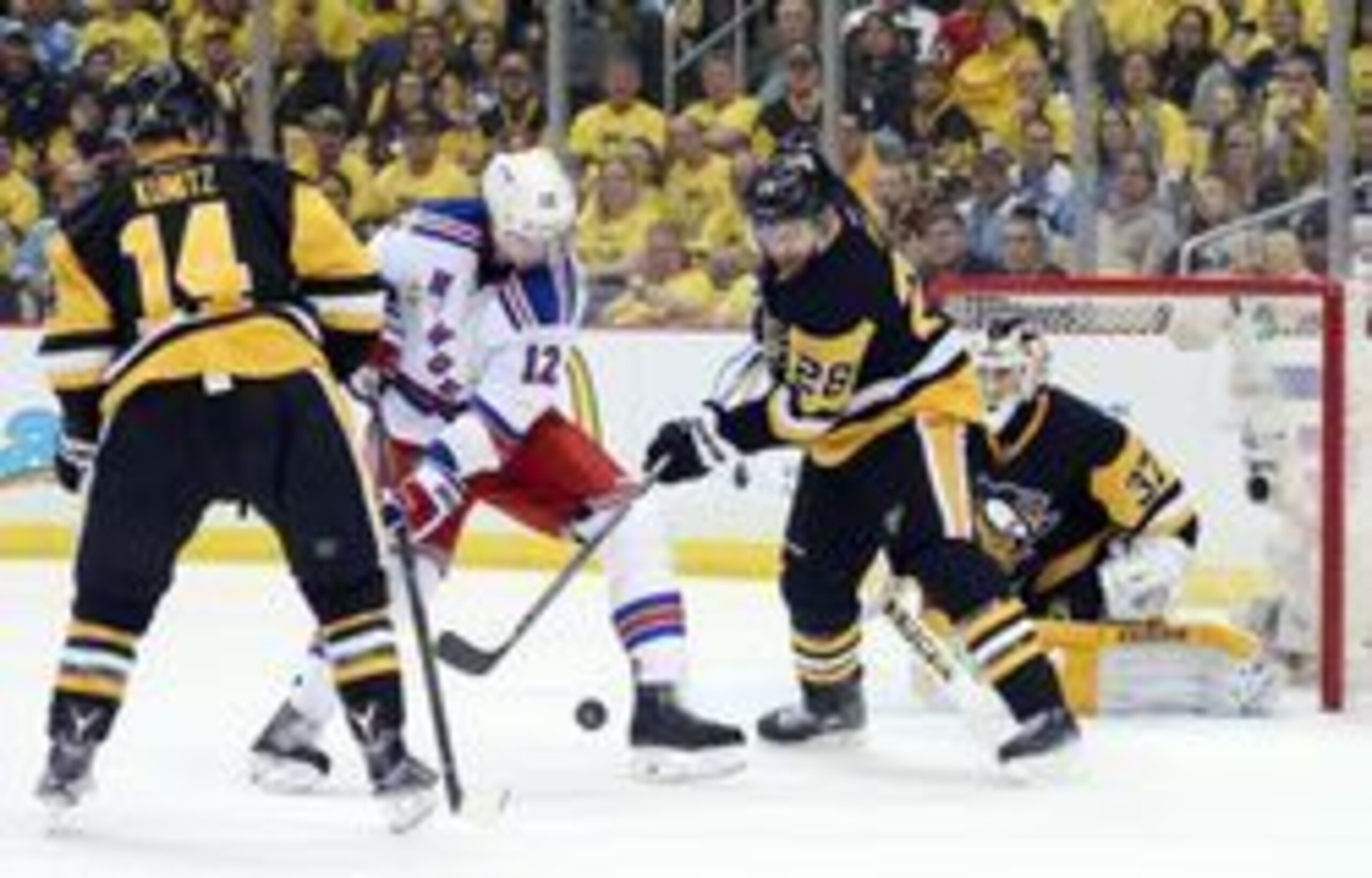
Considering that Eric Staal has been in steady decline since his career-best 100-point season a decade ago, perhaps we shouldn't be surprised that his late-season run with the Rangers didn't yield big dividends.
But given the price the Rangers paid to acquire him, the organization has to be disappointed with how things played out. Staal underperformed with three goals and three assists in 20 regular-season games, and then he went pointless and posted a team-worst minus-seven in the playoffs.
Staal spent most of his career flying under the radar in Carolina, so he's best remembered for his Stanley Cup win with the Hurricanes as a 21-year-old in 2006 and his Olympic gold medal with Team Canada in 2010. Though he's just 31, Staal's inability to chip in for the Rangers in the playoffs makes it look like his best hockey days are behind him.
Percentage of Blame: 10 percent
Matt Murray
6 of 6
The Penguins came into the playoffs as the NHL's hottest team, but they had one huge challenge to address—the health of their top two goalies.
The Rangers were gifted a golden opportunity when Pittsburgh coach Mike Sullivan was forced to turn to third-stringer Jeff Zatkoff to start the series. New York claimed home-ice advantage by splitting the first two games in Pittsburgh with Zatkoff in net.
But 21-year-old Matt Murray was ready to return to action for Game 3 at Madison Square Garden. The rookie allowed just one goal in two games in one of the most intimidating arenas in the NHL, outperforming one of the game's great netminders in Lundqvist along the way.
Starter Marc-Andre Fleury might be ready to return to action in Round 2, but Murray's work so far is going to make it hard for Sullivan to take him out of the net.
For the Rangers, getting bested by a hot young goaltender could turn out to be a catalyst for big changes this summer.
Percentage of Blame: 10 percent
All stats courtesy of NHL.com.
.jpg?w=2560 "NHL Trade Grades Connor Hellebuyck")


.jpg?w=2560 "Latest Peyton-Colts Rumors")



.jpg?w=2560 "Landing Spots for Trade Candidates 📍")
.jpg?w=2560 "Ugly Jets Scoring Stat 😳")