Making the Case for a Running Back as the New York Giants' 1st-Round Draft Pick
This is it: The last of my “Making the Case” analyses regarding the No. 10 overall pick by the New York Giants, who go on the clock for the 2016 NFL draft in about three weeks.
If you’ve been following this series, you've no doubt seen how the pendulum can swing either way in favor of a certain position being favored for Big Blue’s best pick.
This is perhaps why general manager Jerry Reese always preaches that the Giants will take the “best available” when they go on the clock, even if taking the best available leaves them with a surplus at one position while being short at another.


Let’s take a look at the final position in this series, which is running back.
Why it Should Be a Running Back
Where have you gone, Earth, Wind and Fire? Big Blue Nation turns its lonely eyes to you.
Not since the days of Brandon Jacobs (Earth), Derrick Ward (Wind) and Ahmad Bradshaw (Fire) has the Giants running game been anything to write home about.

In 2008, that trio accounted for 2,468 of the Giants' 2,518 rushing yards—98.1 percent—with Jacobs and Ward both enjoying 1,000-yard seasons.
To put those numbers in perspective, no Giants receiver that year topped 600 yards receiving, the closest being Domenik Hixon, who finished with a team-leading 596 yards.
How times have changed.
These days, the Giants have the dynamic Odell Beckham Jr. at receiver, a one-man wrecking crew. But imagine, just for a moment, if the Giants also had a 1,000-yard rusher on board.
Think about the options such a player could give that offense.
Makes you thirsty, doesn’t it?
That brings us to the second point about why the Giants should consider adding a stud running back if one should fall their way at No. 10: Rashad Jennings.
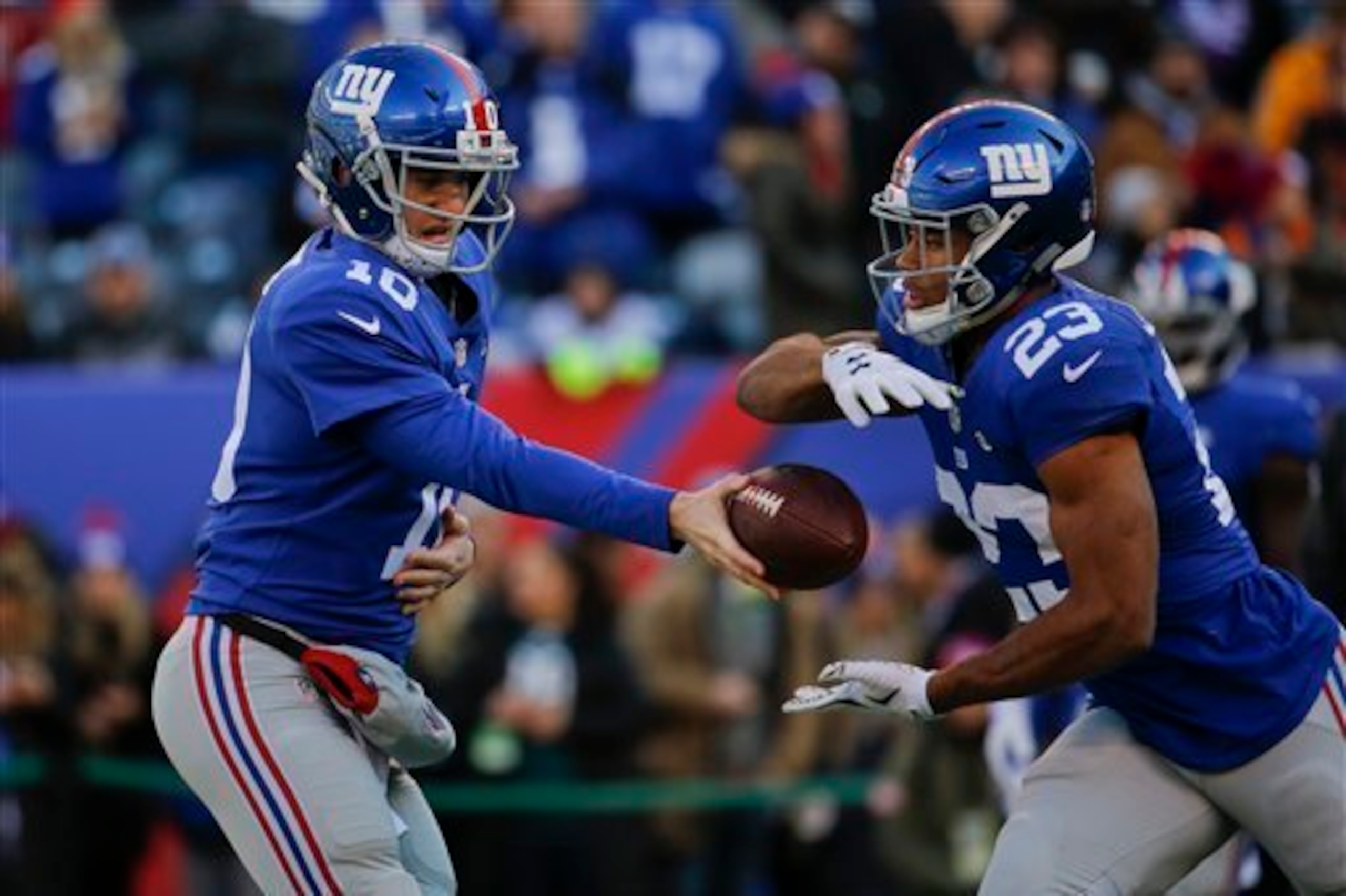
Although Jennings is coming off a career season last year (and his first 16-game season), he just turned 31 last month.
While under contract for two more seasons and expected to be on the roster this year, the chances of Jennings, who according to Over the Cap has a $3.062 million cap hit in 2017, sticking around to finish his contract aren’t in his favor.
If Andre Williams has a rebound year—and barring injury he should, if the coaching staff has permanently retired that four-man committee—the Giants could potentially move on from Jennings, thus saving themselves $2.5 million against the 2017 cap.
Why it Won’t Be a Running Back
The Giants might talk about “best player available,” but a question that isn’t really answered is whether all players at all positions are graded the same.
The answer is: probably not. For example, it’s highly unlikely that a team is going to put the same grade on an offensive lineman’s 40-yard dash as it might for a receiver, because a receiver’s speed obviously carries more weight.
Secondly, what happens if the best player available doesn’t fit a need? For example, the Tennessee Titans are thought to have their franchise quarterback in Marcus Mariota. So if North Dakota State quarterback Carson Wentz has a better grade than Ole Miss offensive tackle Laremy Tunsil, does anyone think for a moment that the Titans would go “best available” in this case?
With that said, it’s probably not a stretch to think that different people grade the prospects differently. And if that’s the case, then guess what? Need probably takes more of a front-row seat than teams are willing to admit.
Getting back to the Giants, they have four solid running backs on their team. While they’ll probably look to carry a fifth guy on their practice squad, it’s probably unrealistic to expect them to add a running back at No. 10 over some of the bigger needs on the team such as offensive tackle, receiver, linebacker and cornerback.
The X-Factor: Andre Williams
Many Giants fans might have grown frustrated to the point of giving up on Andre Williams, who three short years ago led the nation in rushing and was a Heisman candidate himself, but head coach Ben McAdoo hasn’t.
At the NFL combine, McAdoo told reporters that he believes the former Boston College rusher will “have a bounce-back year,” according to James Kratch of NJ Advance Media.
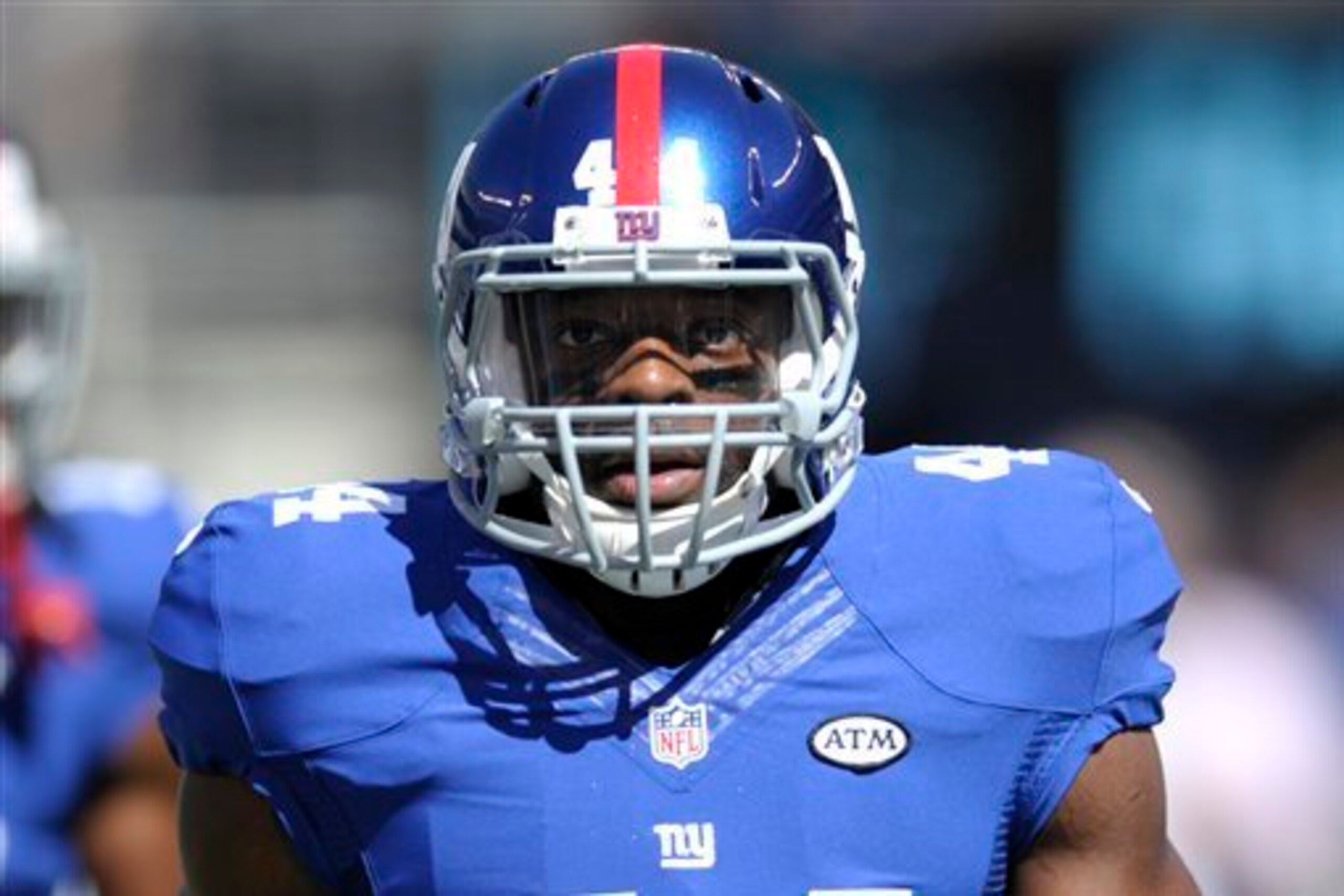
Why McAdoo believes that to be the case isn’t known, as no one at the combine bothered to ask what gives him hope that Williams will ultimately become the runner the Giants envisioned when they snapped him up in the fourth round of the 2014 draft.
Without speaking for the coach, let’s try to figure out the answer. And the first thing that comes to mind is the four-man running back committee the coaching staff forced-fed for most of last season, a system the Giants dropped in Week 14.
Williams, as noted in the past, is better off when he can get into a rhythm. Getting one touch every so often did him no favors, and his stats proved as much. In the Giants’ first 12 games, when the four-man committee was alive and well, he averaged 2.84 yards per carry.
In the final four games, his average yards per carry shot up to 3.23 yards, as the coaching staff would give him more than just a token appearance on every second offensive series.
However, there is still one factor concerning Williams that hasn’t really changed since he entered the league: He remains a subpar pass-catcher.
When Williams comes on the field, the defense has a 50/50 chance of guessing decoy or runner, given Williams’ inconsistency and awkwardness with catching passes.
Perhaps that is a reason why Williams' snaps have been limited—per Pro Football Focus, he took just 14.0 percent of the offensive snaps last season, tying him with teammate Orleans Darkwa for the fewest snaps taken behind starter Rashad Jennings (38.0) and third-down back Shane Vereen (38.7).
If Williams can initially show the coaches that he’s capable of being an every-down back, perhaps when the team ultimately moves on from Jennings, the changing of the guard will be a lot smoother than people are anticipating.
And the Pick Is…
This one is as much of a no-brainer as you’ll find anywhere in the draft: Ezekiel Elliott. Simply put, Elliott is probably the most dynamic and biggest playmaking threat in this year’s class.
Is Elliott on par with, say, a young Adrian Peterson? In an article for ESPN, Pro Football Focus’s Sam Monsoon wrote that the two are pretty close, which was echoed by ESPN’s Todd McShay (in the video atop the article).
In fact, Monsoon described Elliott as being a “very good runner” who “will only improve with a good blocking unit in front of him, but he can do a lot on his own, independent from the blocking.”
Given the unfinished state of the Giants offensive line, a player like Elliott who can gain yardage on his own would sure be tempting for a team that just can’t seem to complete the overhaul of its offensive line.
Patricia Traina covers the Giants for Inside Football, the Journal Inquirer and Sports Xchange. All quotes and information were obtained firsthand unless otherwise sourced. Advanced stats courtesy of Pro Football Focus.
Follow me on Twitter @Patricia_Traina.

.jpg?w=2560 "LA Premiere of \"Chad Powers\"")