For almost an hour, it was cagey, strangely uneventful and, in a sense, lived up to its billing by being so.
In the lead-up to Saturday night's Clasico at the Camp Nou between Barcelona and Real Madrid, a peculiar feel had surrounded the latest edition of this fixture. For the most part, it was still the Clasico as we know it—stars, extraordinary squads, emotion, undercurrents, mutual loathing—but there was also a certain something missing.
Punch, maybe. Big-picture context.

Indeed, given the complexion of the league table, this was a Clasico that was never going to be decisive. Instead, the UEFA Champions League games that loomed beyond it for both clubs looked as such, giving the Clasico a detached sort of feel—as though it still mattered, but not quite as much as normal.
And that's how it was played for almost an hour.
Until it exploded.
On 54 minutes, Lionel Messi drew a wonderful save from Keylor Navas. A flurry of Barcelona corners followed, and from that moment, it was on: Gerard Pique scored, Karim Benzema answered right back, Barcelona wilted, Madrid surged, Gareth Bale had what looked like a winner but wasn't, Cristiano Ronaldo hit the bar, Sergio Ramos was sent off and then Ronaldo settled it.
"A Real raid," wrote Marca's Arch Bell.
"Remarkable rally," said AS English.
As finishes go, it was breathless. And for Madrid, it was massive: They'd arrived with questions over their identity, structure and credentials, and left having given strong answers in all three cases.
Of course, it's changed nothing in terms of the league title. But emotionally, it's changed everything.
Casemiro, Structure
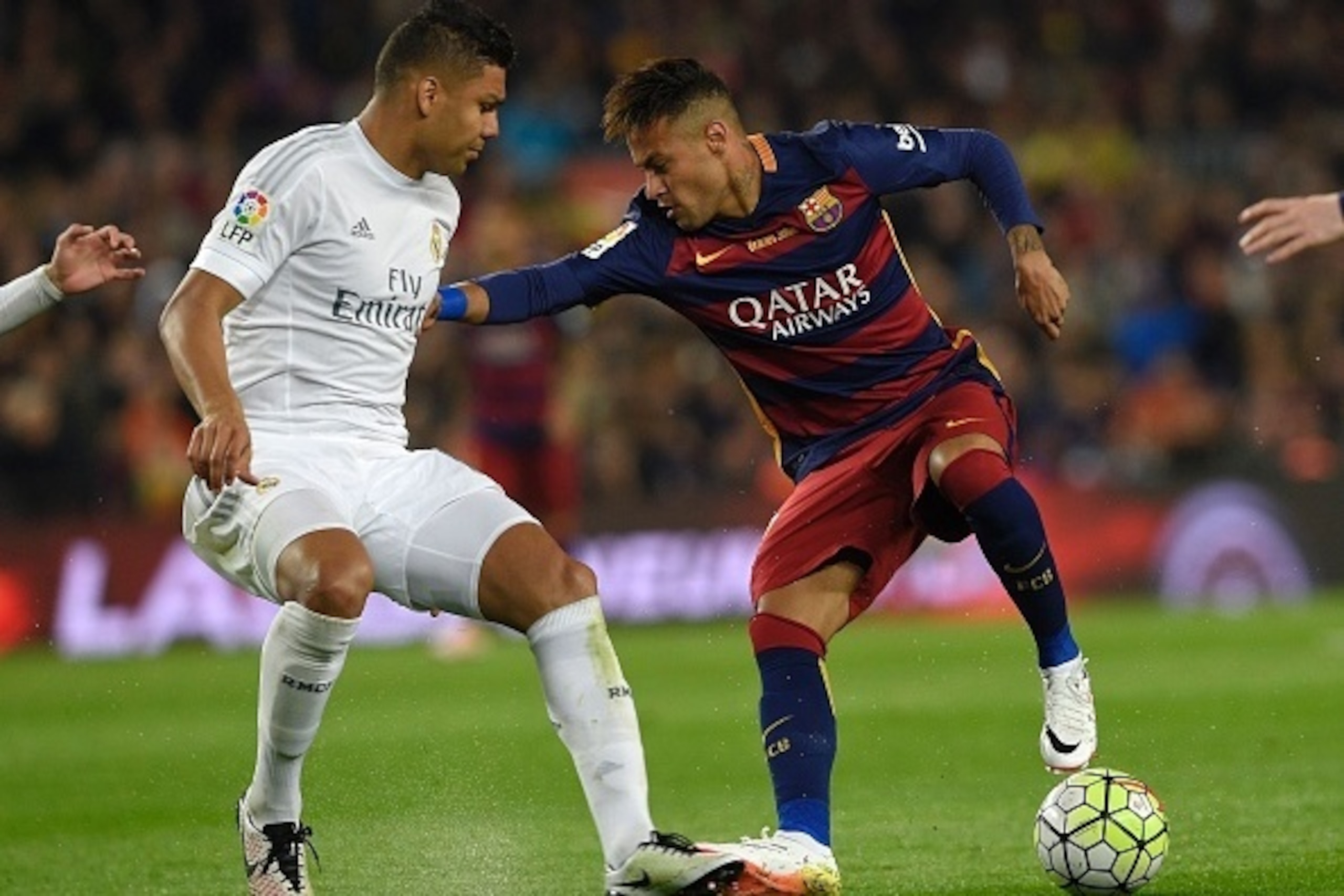
Splashed across the cover of Marca on Monday morning was a picture of a smiling Casemiro with both thumbs up. Presented behind him were three images from Saturday's Clasico: him tackling Lionel Messi, him tackling Luis Suarez and him tackling Neymar.
"The tank," ran the headline.
Casemiro isn't without his flaws, but against Barcelona on Saturday, the Brazilian once again showed why he must start for Madrid. Rugged, forceful, attentive and prepared to do what others aren't, the defensive midfielder was tireless in the face of Barcelona's attack.
Making eight tackles, three interceptions, two blocks and a clearance, per WhoScored.com, Casemiro consistently closed down space, covered passing angles, broke up Barcelona's moves and gave Madrid a platform—essentially, everything they lack without him.
But it's not just what he does. It's what he means for others.
Released from the anchor role thanks to the Brazilian's presence, Toni Kroos was unshackled and grew into the game, linking up seamlessly through midfield with Luka Modric in the second-half assault.
As it had against Sevilla, this was a central trio that looked cohesive and balanced, diverse and purposeful.
Casemiro gave Madrid structure.
Zidane Looks Empowered

The wingers tucked in and tracked back. The defensive shape was 4-1-4-1. Bale and Ronaldo popped up in Madrid's own box. A collective conscience was evident.
In Saturday's Clasico, manager Zinedine Zidane had clearly asked for something, and he got it.
And that's significant.
Before him, Rafa Benitez never got a performance like this. In his last six months, Carlo Ancelotti didn't either.
"When I see a team that's united and all together, with everyone fighting for their teammates and for their coach, there's nothing better," Zidane told reporters in the wake of his team's triumph.
Zidane's gravitas and iconic status feel important here. From the Frenchman, a plan and an encompassing idea had evidently been presented, and his players listened, adhered and responded. Tactically, they were united. Their intensity was collective. Responsibilities were shared.
Admittedly, Madrid needed time to find a footing in the game, but that their intention never wavered demonstrated that Zidane has the authority and force of character to steer his players, to make them follow him.
Because he's Zidane.
Template for the Champions League
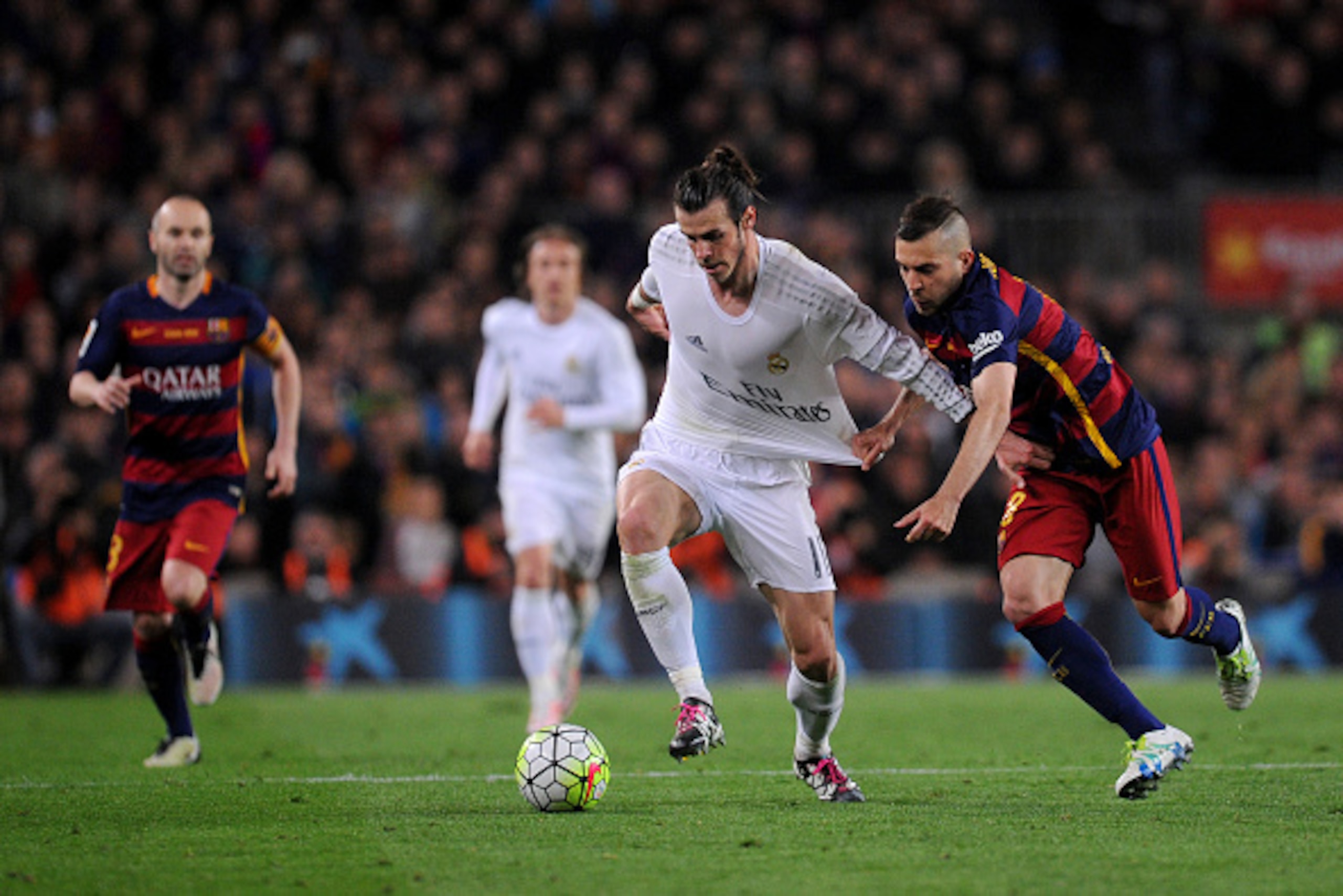
It looked like 2012 all over again.
As Barcelona slowed in the final half-hour at the Camp Nou on Saturday, Real Madrid reverted to their lethal, counter-attacking existence from Jose Mourinho's tenure: Possession was stolen in key areas, Ronaldo and Bale led the breaks, the midfield released their passes in a flash and the interchanges were rapid.
For Zidane and his players, this looked like a template for the Champions League.
All season, Los Blancos have struggled to settle on a defined method. At times, they've sat back. At others, they've looked to dominate. Sometimes, they've been at an awkward halfway point.
Problems have arisen when attempting each—most notably a vulnerability to counter-attacks when playing high and a lack of defensive energy when sitting deeper.
Here, though, Madrid unlocked an approach that looks perfectly suited to Europe.
Against the likes of Barcelona, Bayern Munich and Paris-Saint Germain—assuming the quarter-final tie with Wolfsburg is negotiated—Madrid will likely be afforded the opportunity to play as they did at the Camp Nou on Saturday.
Indeed, sides of such strength will come at Madrid and perhaps give Zidane and Co. clarity by limiting their options and presenting a single focus. Based on the Clasico, it might be exactly what Madrid need.





.jpg?w=2560 "Latest Peyton-Colts Rumors")