Can the Boston Bruins Bank on Brad Marchand's Scoring to Continue?
Brad Marchand is enjoying quite a campaign.
The Boston Bruins left wing has scored 34 goals already this season, which is six better than his previous career high and ties him for fifth in the NHL with Steven Stamkos and Vladimir Tarasenko. With seven games remaining on the schedule, he’s also just a single point back of the best total of his career.
The question for Boston now is what’s driving Marchand’s emergence as a high-end NHL goal scorer.

.jpg?w=2560 "Golden Knights Blues Hockey")
He has just one season remaining on his current contract, a four-year pact at the bargain cap hit of $4.5 million. The Bruins need to decide if this season was a pleasant aberration, a one-off unlikely to be repeated, or whether it represents the evolution of Marchand into a premier scorer.
That’s the question we’re going to tackle here.
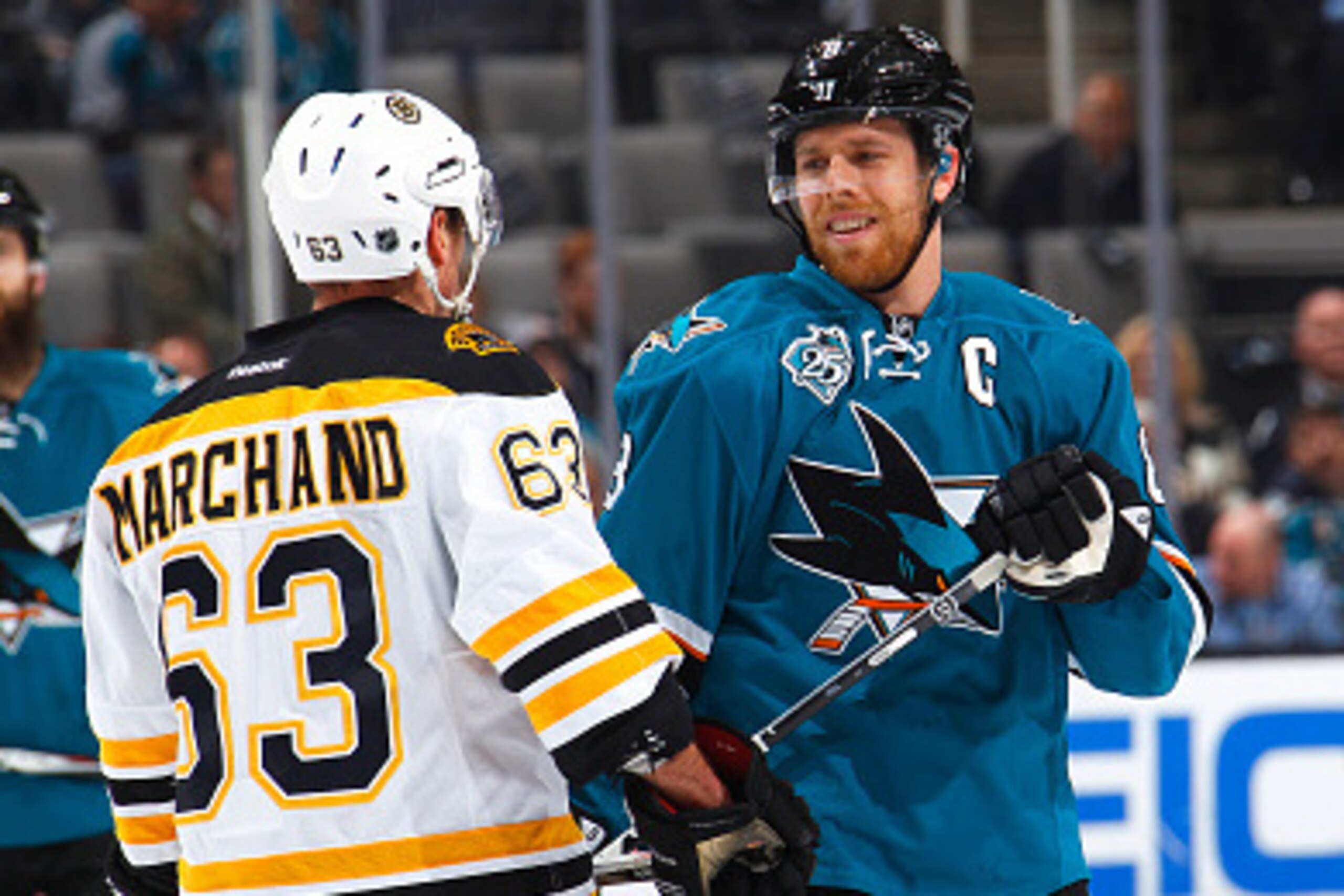
It isn’t an easy one to answer because both interpretations are plausible. Players have evolved mid-career before, with a prime example being Joe Pavelski, who sits one goal ahead of Marchand this season.
As ex-Bruin Gregory Campbell told reporters, however, sometimes things just come together. Back in February, Campbell suggested that Marchand’s success wasn’t a surprise but also hinted that perhaps he was having one of those seasons:
"He’s always been a goal-scorer—sometimes, you have little things go in more than others, and he’ll admit that himself. I talked to him about it. He’s having a really good year, and everything seems to be going in for him. But it’s no surprise. He’ll be one of the top scorers on that team year in and year out.
"
We should start by comparing Marchand’s work in 2015-16 to what he’s done in previous NHL seasons.
He emerged basically fully formed as a rookie just in time for Boston’s Stanley Cup win in 2011, scoring 21 goals and 41 points as a rookie. He improved upon that total as a sophomore in 2011-12 and has basically been the same offensive player ever since:
| 11-12 | 76 | 28 | 27 | 55 | 0.37 | 0.36 | 0.72 |
| 12-13 | 45 | 18 | 18 | 36 | 0.40 | 0.40 | 0.80 |
| 13-14 | 82 | 25 | 28 | 53 | 0.30 | 0.34 | 0.65 |
| 14-15 | 77 | 24 | 18 | 42 | 0.31 | 0.23 | 0.55 |
| 11-15 | 280 | 95 | 91 | 186 | 0.34 | 0.33 | 0.66 |
| 15-16 | 70 | 34 | 20 | 54 | 0.49 | 0.29 | 0.77 |
Comparing Marchand’s totals this year to his four-season average, we can see how big his goal-scoring surge has been this year. He has climbed from 0.34 goals per game (28 goals per 82 games) up to 0.49 this season (40 goals per 82 games). His assist totals have actually fallen off a bit, bouncing back from a poor 2014-15 showing but coming in just under his four-year average.
That makes it easy to narrow our focus to the goals department.

Normally, the first place we’d look is shooting percentage, but a cursory examination shows nothing out of the ordinary there.
Marchand is a 15.2 percent shooter this year, which is a high number, but it isn’t out of line with his established level of ability. His career shooting percentage of 15.1 percent mirrors this season’s numbers almost exactly.
Instead, the key point is that Marchand has climbed to 224 shots this season, 44 more than the career high he set last season. We need to know why that is.
Earlier this month, Adam Gretz of CBSSports.com pointed to a possible cause: increased ice time. Gretz noted that Marchand is getting more opportunity than he ever has before and posited that this was behind the surge in the player’s shot total:
"He is getting an additional two minutes of ice time per game compared to his normal career averages, including a much larger role on the team's power play. All of that has helped result in a spike in his shots on goal numbers and allowed him to get one additional shot on goal per game. Pretty much everything else about his play is right in line with the rest of his career.
"
It’s a plausible explanation and does provide part of the answer, but under further scrutiny, we find that Marchand’s play has actually shifted dramatically:
| 11-12 | 1028 | 7.1 | 14.9 | 1.1 | 161 | 7.8 | 23.8 |
| 12-13 | 599 | 6.9 | 14.5 | 1.0 | 76 | 4.7 | 66.7 |
| 13-14 | 1098 | 7.1 | 13.2 | 0.9 | 42 | 1.4 | 100.0 |
| 14-15 | 1041 | 8.5 | 9.5 | 0.8 | 73 | 5.7 | 14.3 |
| 11-15 | 3766 | 7.4 | 12.7 | 0.9 | 352 | 6.0 | 31.4 |
| 15-16 | 953 | 10.5 | 10.2 | 1.1 | 94 | 9.6 | 40.0 |
The last two seasons have seen Marchand transition into more of a volume shooter at even strength, and his shooting percentage has suffered in the transition. The obvious read is that he’s being a little less picky with his shots, but as a result, a smaller percentage of them is going in.
It’s probably a positive change in his game, though—especially if he can keep up this year’s shot volume, which sees him fire on net more than 10 times for every hour he plays at even strength.
The big driver of change has been the power play. Marchand’s power-play shooting percentages look goofily high in several years, but it’s because he wasn’t used much. Between 2012-14 in five-on-four situations, he fired just seven shots in nearly two hours of play but scored five times.
This year, Marchand has taken on an increased role on the man advantage and brought the same volume shooting approach he’s taken this year at even strength. He’s scored on a whopping 40 percent of his shots, which is why his overall shooting percentage has stayed flat: The drop at even strength has been compensated for by a surge on the power play.
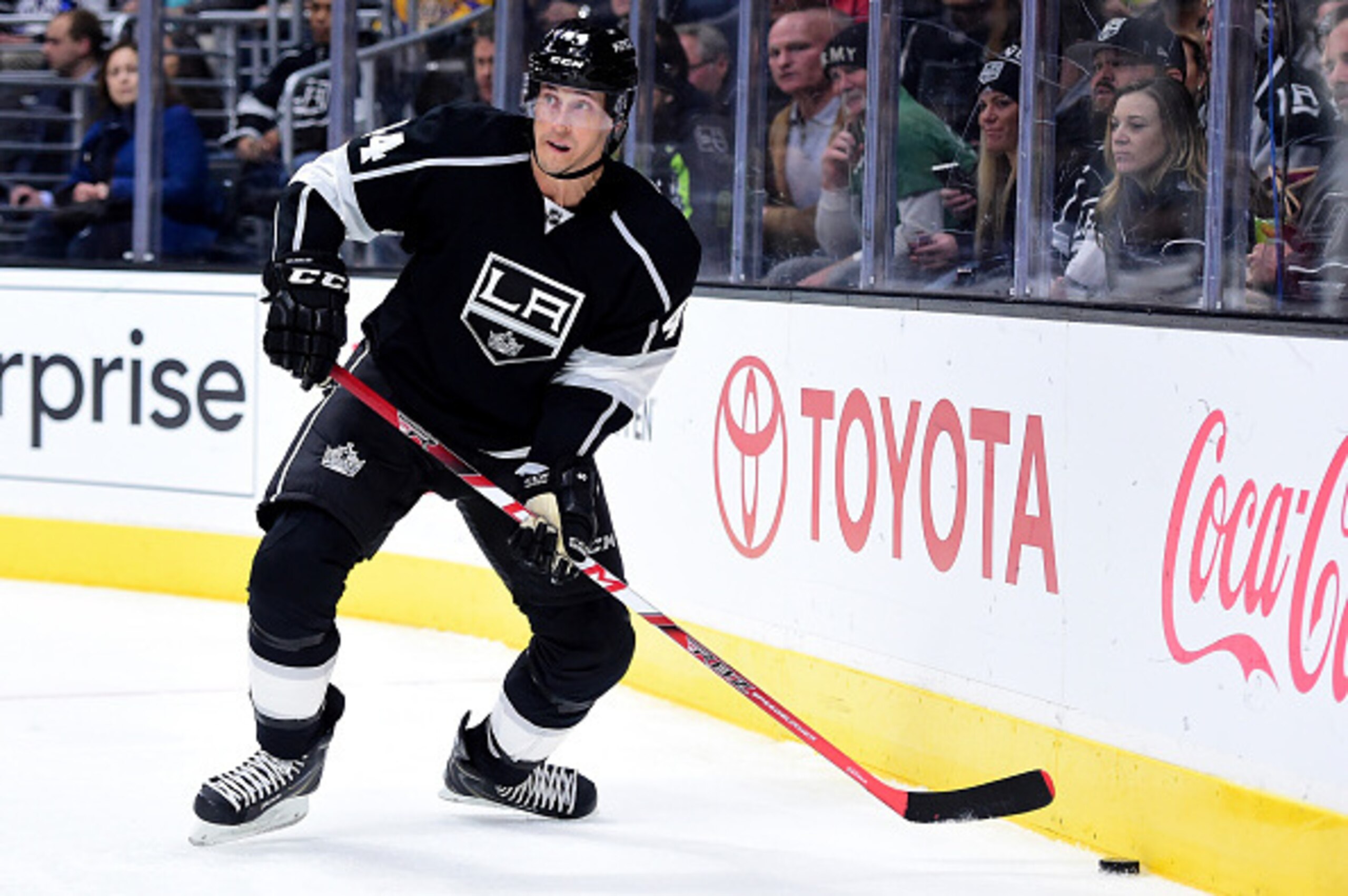
There’s reason for skepticism that the surge can last. Among players with at least five goals this season at five-on-four, only Vincent Lecavalier (50.0 shooting percentage) has a higher conversion rate than Marchand.
It’s not like he’s parked in front of the net on the power play, either. Just two power-play goals this year have been on high-percentage rebound shots. The rest have come from some distance out, including two top-corner shots from the margins of the scoring-chance zone.
It looks like Marchand has made beneficial changes at even strength which should be sustainable and improve him as a goal scorer.
However, his power-play gains are tenuous, and we need more time to make a firm determination on that front. He may be for real there, but if he falls off, we will remember 2015-16 using Campbell’s framing: A year when everything went in.
Statistics courtesy of Hockey-Reference.com and Stats.HockeyAnalysis.com.
Jonathan Willis covers the NHL for Bleacher Report. Follow him on Twitter for more of his work.

.jpg?w=2560 "Chiefs, Steelers Eye WR Trades")