Breaking Down How Antonio Conte Will Change Chelsea Tactically
It seems to be the worst-kept secret in football that Antonio Conte will be Chelsea's next manager.
We're still awaiting official confirmation that the Italian will take charge at Chelsea, but Conte's comments this week about the appeal of English football have intensified the belief that he will arrive at Stamford Bridge this summer after his Euro 2016 commitments with Italy are over.
"English football is definitely very attractive at the moment for players and coaches, not least because it's a very interesting league from many points of view," Conte said at a press conference.


Last month, Conte was being linked with the Chelsea job by the Guardian following reported talks with the club. That same report suggested a contract would soon be offered to him, although nothing has since been confirmed on that front by the Italian or Chelsea.
Conte didn't shy away from discussing Chelsea on Monday, adding that it was not "taboo" for him to be asked about the club.
What does remain an illicit subject is Chelsea's form this season. Put simply, performances haven't been good enough from the Premier League champions, and it's left the club in a precarious position.
For the first time in over a decade, there will be no UEFA Champions League football in west London next year. Currently sitting in 10th place in the table, qualification for the Europa League is also looking like a tough proposition, meaning Chelsea will not compete in Europe at all next season for the first time since the mid-1990s.
So how will Conte look to improve this Chelsea side? What can we expect him to change in order to re-establish the Blues among the Premier League's elite?
The system
We haven't seen sweeping changes across the board in the Premier League this season, but as 2015/16 has played out, the gradual shift in approach from managers is becoming clear.
We're back to seeing old favourites such as a 4-3-3 resurface as teams look to add an attacking edge to their game. All the while, Chelsea have remained faithful to the 4-2-3-1 system that delivered them the title last season.
It's seemed the formation of choice for many in recent years, but that's changing now, and Chelsea must adapt with the times.
In truth, it's looking as dated as this team. Playing two players in the midfield pivot has ensured that Chelsea have looked pedestrian this term, especially when Guus Hiddink has deployed Nemanja Matic and John Obi Mikel together.
There hasn't been enough edge going forward. The fact that Eden Hazard has been off form all season hasn't helped that, nor has a lack of personnel.
Hiddink inherited a side that remain in transition, and the feeling from Jose Mourinho will be that he hadn't completed what he started when he returned to the club in 2013.
With few options outside of the regular starting XI we've grown accustomed to, Hiddink couldn't change the 4-2-3-1 formation even if he wanted to.
That's where Conte will face a big challenge. It's also where Chelsea need to think on their feet with their transfer policy, as this current squad lack the ability to be interchangeable. Right now, the 4-2-3-1 is all they have.
Looking at Italy's Euro 2016 qualification campaign, Conte has tended to deploy a 3-5-2, 4-3-3 or 4-4-2, so we can expect similar variations at Chelsea, with the new manager moving away from the tired formation that has served Chelsea for the past five seasons or so.
Two strikers
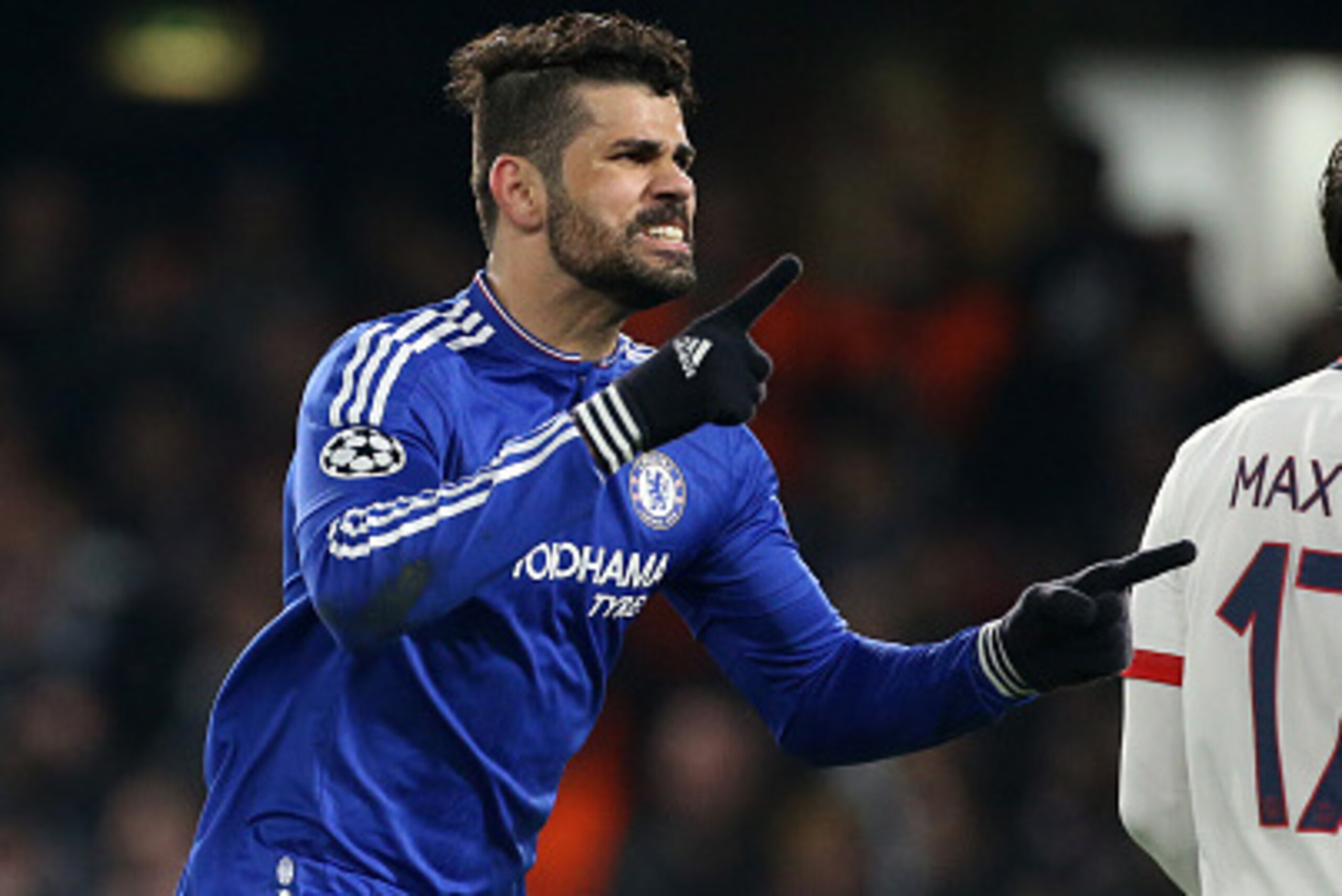
With two strikers tending to be Conte's preferred choice with Italy, it will mean a shake-up in terms of Chelsea's attack.
Not since Claudio Ranieri have we seen an out-and-out strike partnership at Stamford Bridge. When Mourinho arrived in 2004, Chelsea's attack was built around Didier Drogba being a lone striker, and despite things changing behind him over time, the club have stuck to that ideal of just one leading man.
If Conte sticks to what we've seen with the Italy national team, Costa will have to get used to having a strike partner—which isn't necessarily a bad thing.
Costa isn't a frontman in the same sense as Drogba, who relished the challenge of holding the ball up and bringing others into play around him. Costa is more about sitting on the last man and running in behind to latch onto Cesc Fabregas' through balls.
When we consider that the Spanish international has scored 35 goals in his first two seasons at Chelsea, it's difficult to criticise the system that has fed him. With that said, too often Costa can look isolated, and Chelsea have a reliance on the three attacking midfielders behind him to chip in with the goals.
This season, they haven't done that and Chelsea have suffered. They need more presence in attack and need to carry a more potent goal threat.
Working defences with two strikers will certainly do that. Chelsea's problem in that regard is that outside of Costa, they don't have another goalscorer, so they will have to promote from within for Costa's potential partner or invest in a player from elsewhere.
Wide men

As well as two strikers, the appointment of Conte could mean wing-backs at Stamford Bridge. With Italy, Conte has used the likes of Manchester United's Matteo Darmian and Mattia De Sciglio among others in this position.
Branislav Ivanovic and Cesar Azpilicueta have helped provide width as Chelsea's full-backs, but a 3-5-2 requires those wide men to work much more offensively without neglecting their defensive responsibilities.
Azpilicueta is dynamic and athletic enough to occupy the right side of that midfield five for Chelsea. Despite the criticism of his defensive capabilities, as a forward option, Baba Rahman could look an exciting prospect on the left.
He's still only 21 years old, so the expectation is that Rahman will mature defensively. Coupled with his attacking intent, he remains a player with much potential.
Playing with wing-backs encourages more width, and that should lead to a more fluid attacking game at Stamford Bridge. Too often this season, Chelsea have played centrally, congesting the midfield. It's meant they haven't always been able to counter teams in the way they would have hoped.
With wing-backs, it will also mean deploying Eden Hazard more centrally, allowing him to operate in an area that doesn't require him to always hug the touchline.
Of course, we can only guess at what Conte will look to achieve at Chelsea should he be appointed as their new manager. He's demonstrated in his past two years with the Italy national team how adaptable he is as a coach and tactician, though, which is what we should expect at Stamford Bridge.
It's something we saw during his three-year spell as Juventus manager when Conte built the side that has become a force in Europe once again.
Back then, he operated predominately with a 3-5-2, adjusting at times when scenarios dictated it.
If Conte is going to make his style of management of work, Chelsea must refresh their current squad as right now the Blues aren't dynamic enough.
Garry Hayes is Bleacher Report's lead Chelsea correspondent. All quotes were obtained firsthand unless otherwise noted. Follow him on Twitter @garryhayes.


.jpg?w=2560 "Dak to Stroud: Get Some Wins 💯")
.jpg?w=2560 "5 NFL Players Getting Trade Buzz")