
5 of the Most Interesting Radio Messages from 2016 Australian Grand Prix
Formula One's restrictions on team radio have been increased in the 2016 season, but ahead of the Australian Grand Prix, FIA race director Charlie Whiting reassured the sport's followers that "the juicy content" will still be aired.
As Whiting told the official F1 website, that content includes everything "people like to hear"—drivers calling one another "an idiot and all that sort of stuff."
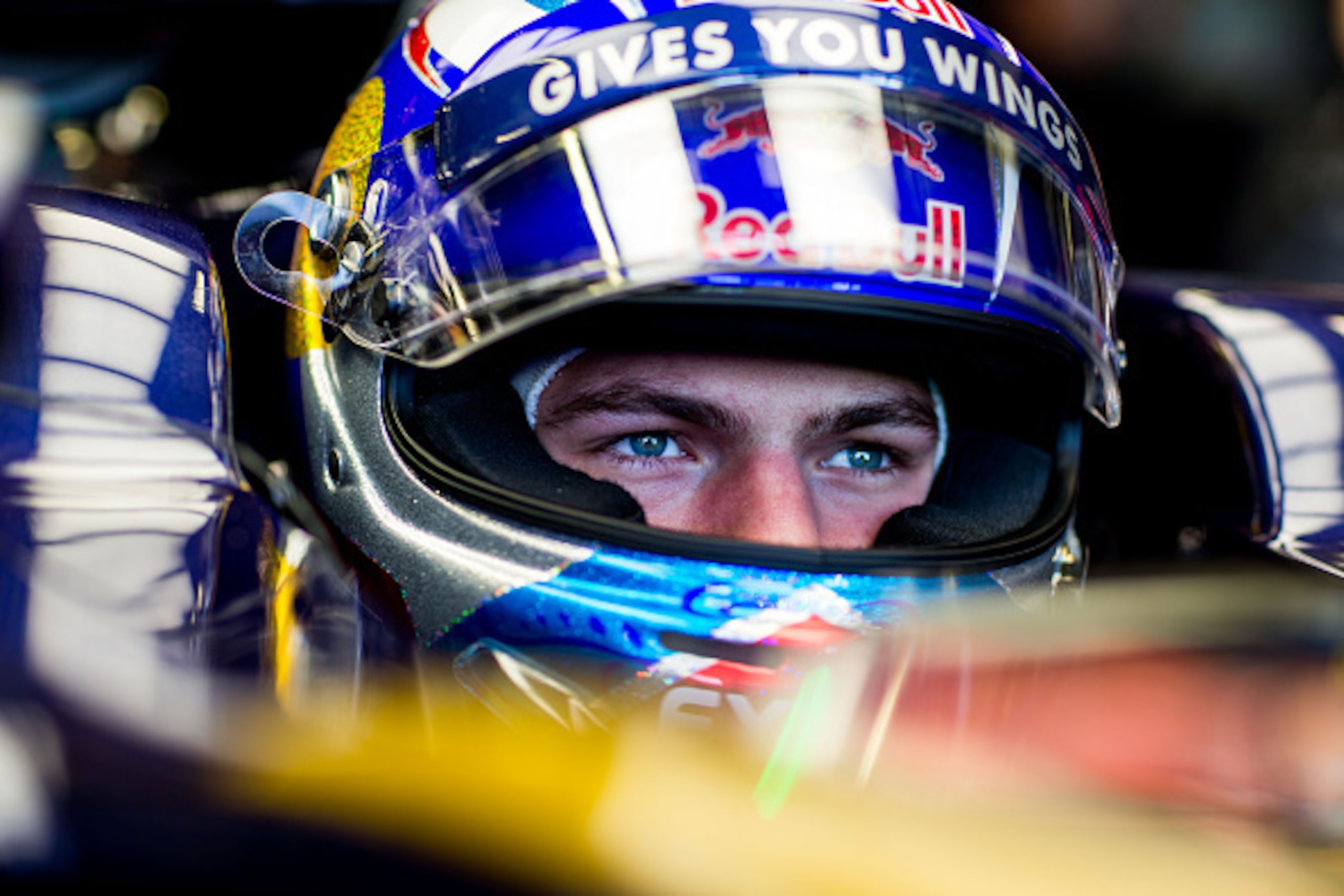
Yet the comments emerging from Max Verstappen's car in the the opening race of the season were far juicier than even Whiting could have envisaged.
The teenager had been on course to equal his best-ever finish at Albert Park until a number of questionable decisions by Scuderia Toro Rosso ultimately saw him finish 10th, with Verstappen ranting about his team and team-mate Carlos Sainz Jr. in the latter stages of the grand prix.
With a look at Esteban Gutierrez's concerns for Fernando Alonso's welfare, Romain Grosjean's post-race celebrations with Haas and the message that almost certainly played a part in the elimination-style qualifying format being dropped after one round, here are the most interesting radio messages from Australia.
Carlos Sainz Jr. Gets His Pit Stop out of the Way Before Max Verstappen
1 of 5
Every F1 team tends to offer the optimum tyre strategy to the driver in the lead of their in-house battle as a reward for outperforming their team-mate on the track. There are occasions, though, when they break F1's unwritten rule, and Scuderia Toro Rosso commit that crime more than most.
Having been on the receiving end of these tactics at last year's Hungarian GP—where Max Verstappen sneaked into the pits and gained an advantage over his team-mate with fresher rubber—Carlos Sainz Jr. knows how frustrating it is to drive more impressively than the man on the other side of the garage yet still end up behind.
On that occasion, he told Spanish publication AS (h/t GrandPrix.com) of his "anger" that Verstappen had been allowed to pass him in the pits, but in Australia, it was Sainz who benefitted from his team's inconsistencies.
Following the red-flag stoppage, fifth-placed Verstappen and sixth-placed Sainz—who were each promoted a position when Kimi Raikkonen retired—were among the four drivers to restart the race on the soft-compound tyres, meaning the Toro Rossos had neither the pace of the super-softs nor the durability of the mediums.
Although both were able to maintain their positions, Sainz was visibly struggling on his softs, locking up, losing time to Verstappen and defending desperately from Lewis Hamilton when, on Lap 31, he decided he could no longer go on.
"Guys, we need to stop. Stop," he pleaded before peeling into the pit lane and enjoying a near-perfect stop of 3.3 seconds.
Perhaps Verstappen's ability to pull away from his team-mate belied his true struggles with the yellow-striped tyres, leading Toro Rosso to believe that pitting Sainz was a bigger priority at that stage despite Verstappen's apparently frequent (yet unaired) pleas for a pit stop of his own.
Not only had the teenager been forced to wait a lap longer for his stop, but Verstappen's stop was delayed as his mechanics were late in preparing his medium tyres, meaning he rejoined in 12th position—one place and more than four seconds behind his team-mate.
"How many times have I said I have problems with the tyres? I wanted to pit first!" raged Verstappen on Lap 33, dropping an expletive into his rant for good measure as he began the pursuit of his team-mate, planting the seed for the first civil war of 2016...
Max Verstappen Becomes Increasingly Frustrated with Toro Rosso, Carlos Sainz Jr.
2 of 5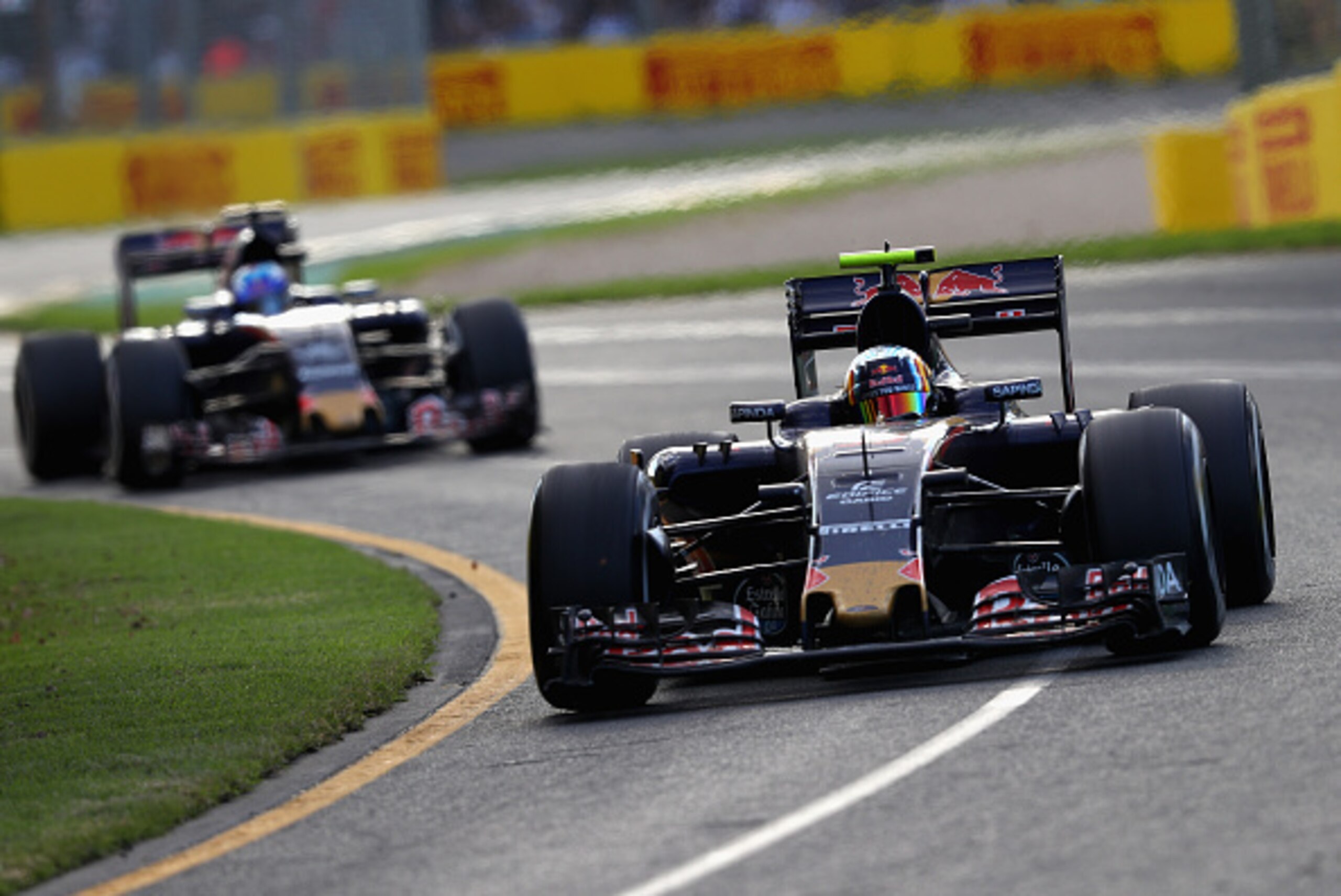
Incensed that his hard work had been undone through no fault of his own, Verstappen ragged his STR11 around Albert Park, and it took him just a handful of laps to close up to the back of his team-mate's car.
But the problem was that, by that point, Sainz had already closed up to ninth-placed Jolyon Palmer, with the Renault driver proving difficult to overtake on his grand prix debut.
Stuck at the back of a three-car group when he should have been on the fringes of the podium positions, Verstappen was in no mood to waste any more time and, on Lap 38, asked the team whether he could swap places with Sainz to attempt to pass Palmer himself.
"Can I try to get past?" he asked.
"Yes," came the one-word response from his race engineer, Xevi Pujolar, who crucially offered no indication that Verstappen would be gifted Sainz's position.
Despite being given the green light to "try to get past"—whatever that meant—Verstappen was still unable to overtake Sainz, whose half-hearted attempt at passing Palmer at Turn 4 only had the effect of further holding up the teenager.
"Let me try because this takes too long," Verstappen demanded later on Lap 38.
"Yes, do it," replied Pujolar, again not elaborating on whether the team had arranged for his driver to swap positions with Sainz. But by Lap 39, as the Palmer Express continued to lose precious time to the cars ahead, Verstappen didn't need to be told as his team-mate again showed no signs of moving aside.
"Come on, we have to do something!" the teenager pleaded, his increasingly anguished tone of voice piling pressure on the team and, specifically, Sainz's race engineer Marco Matassa.
"OK Carlos, push," Matassa said on Lap 40 as Sainz, even with the aid of DRS, remained behind Palmer.
"I am pushing, I am pushing! Don't tell me to push!" the Spaniard replied, dismayed at the suggestion that he wasn't already doing everything in his power to overtake the Renault.
"Yes. Otherwise we will swap next lap," Matassa said, seemingly warning his driver for the first time that team orders were on the horizon.
Although Sainz didn't appreciate being told to increase his pace, the threat of Verstappen seemed to do the trick as the Toro Rossos ambushed Palmer at the beginning of the 42nd lap, passing the Renault in the space of two corners.
With the benefit of free air, the pair soon caught the latest train of cars headed by sixth-placed Romain Grosjean. Still appalled that he had found himself in that position, however, Verstappen refused to let the prat perch forget that they had ruined his afternoon.
On Lap 46 he shouted: "The whole race I'm in front and I'm pulling away, and now you don't let me past, it's a f-----g joke, really!"
Verstappen's frustrations, of course, culminated on Lap 52, when he collided with Sainz at the penultimate corner and spun, condemning himself to a 10th-place finish.
Yet while the teenager has been criticised for his petulance and bad language in the post-race fallout, the entire controversy would have been avoided if Toro Rosso—not for the first time—had managed their drivers in a more effective, smarter fashion.
Esteban Gutierrez Checks Fernando Alonso Is OK After Turn 3 Crash
3 of 5
In results terms, Esteban Gutierrez has done very little in Formula One since making his grand prix debut at the beginning of 2013, but the Mexican has been involved in two of the most spectacular accidents of the modern era.
"Woah, what was that?!" was his memorable query to the Sauber pit wall in the 2014 Bahrain GP, when his car braked for the first corner, turned toward the apex and suddenly performed a somersault, leaving him completely unaware that he had become the latest victim of Pastor Maldonado.
But this time, there was no confusion and no time to consider the whys and wherefores. This was serious. He knew it. He could sense it.
Such was the way that his Haas VF-16 spun into the gravel trap at Albert Park's Turn 3 that Gutierrez wouldn't have understood exactly how his accident with Fernando Alonso played out at first.
He would have felt the collision between his rear-left tyre and Fernando's front-right, he may have just seen a flash of black and red as Alonso's car charged in front of him and headed for the outside wall, and—provided his eyes weren't shut at that stage—he might have caught a glimpse of the McLaren as it began its first barrel-roll.
But it wouldn't have been until Gutierrez sat in the gravel, peered into his right-hand mirror and saw the dust cloud surrounding the crumpled McLaren, overturned against the crash barrier, that he knew how severe the crash had been.
"Yeah, I'm OK," he told the pit wall, before quickly turning his attention to Alonso's condition. "Is he OK?"
"Yeah, Esteban. Alonso is fine," came the words of reassurance from Gary Gannon, his race engineer.
Gutierrez's panic was evident in the way he hurried toward and embraced Alonso before he had even refitted the steering wheel to his own car, resting his hand on the Spaniard's shoulder almost as if to convince himself that Alonso was fine after all.
It was another reminder that while these people may force each other off the track and fight for every inch of track, there remains a deep-lying respect between the drivers.

Romain Grosjean Celebrates His 'Win' for Newcomers Haas
4 of 5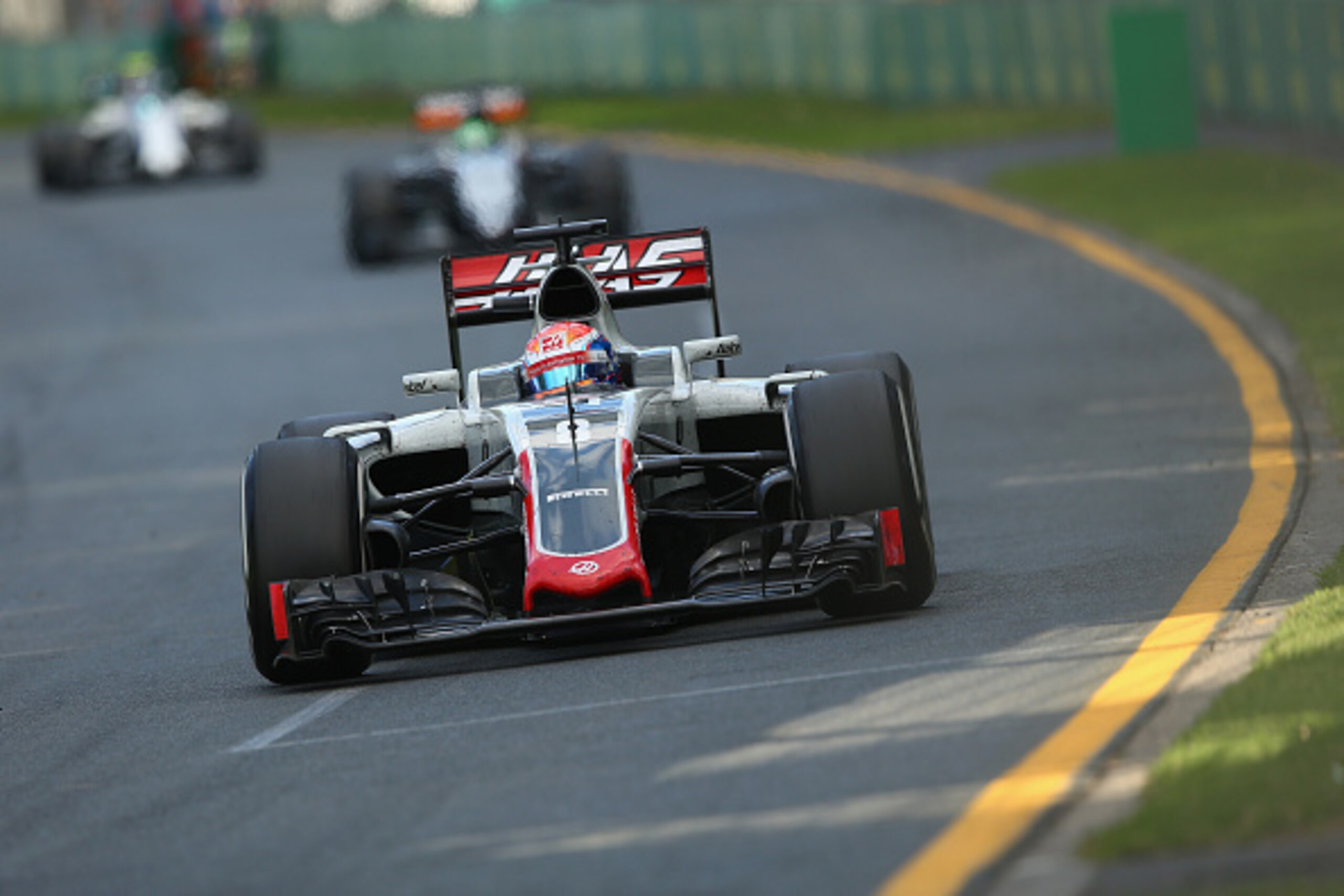
As he stood with his hands on his hips beside his broken VF-16 on the penultimate day of pre-season testing, having caused three red-flag stoppages in a single day, Romain Grosjean surely must have wondered what he had let himself in for by joining Haas, the first new team to enter F1 in six years.
Those doubts, those second thoughts, will surely have increased after qualifying, when he finished 19th on the timesheets, despite claiming he was eliminated from the session before he had the chance to improve his lap time, per the team's official website.
Yet his performance on race day proved why the Frenchman may have been justified in deserting his spiritual home of Team Enstone at the end of 2015, as well as adding extra weight to the theory that Grosjean remains one of the most underrated drivers on the current grid.
His long opening stint on the soft-compound tyres meant he was in a perfect position when the crash involving his team-mate Esteban Gutierrez and Fernando Alonso led to the race's suspension, allowing him to complete the remainder of the race on the medium tyres.
Although Nico Hulkenberg and Valtteri Bottas, both of whom had much faster cars at their disposal on the evidence of qualifying, also switched to mediums, Grosjean managed to keep the Force India and Williams—not to mention the squabbling Toro Rossos, who eventually joined the battle—behind until the chequered flag.
In finishing sixth, Grosjean had ensured Haas became the first new team to score points on debut since Toyota in 2002, and the joy—the relief—was tangible on the cool-down lap.
"Chequered flag, Romain, chequered flag! Absolutely amazing, dude!" exclaimed the pit wall against a background of cheers, whistles and applause.
"Guys, listen to me, this is a win for us! This is a win!" replied a clearly emotional Grosjean who, remember, has claimed 10 podium finishes over the course of his F1 career. "Unbelievable for everyone, unbelievable. I don't even know where we finished...Unbelievable!"
Grosjean's admission that he initially had no idea where he finished suggested that simply scoring a single point—never mind eight—would have been the equivalent of a race win for Haas, as well as offering an insight into how his expectations have adjusted since his arrival from Lotus.
Rather than losing his temper on the bad days—as he did on a regular basis during his former employers' miserable 2014 campaign—Grosjean is fully embracing the challenge, the highs and the lows of leading a new team.
Sebastian Vettel and Ferrari Give Up the Fight for Pole Position
5 of 5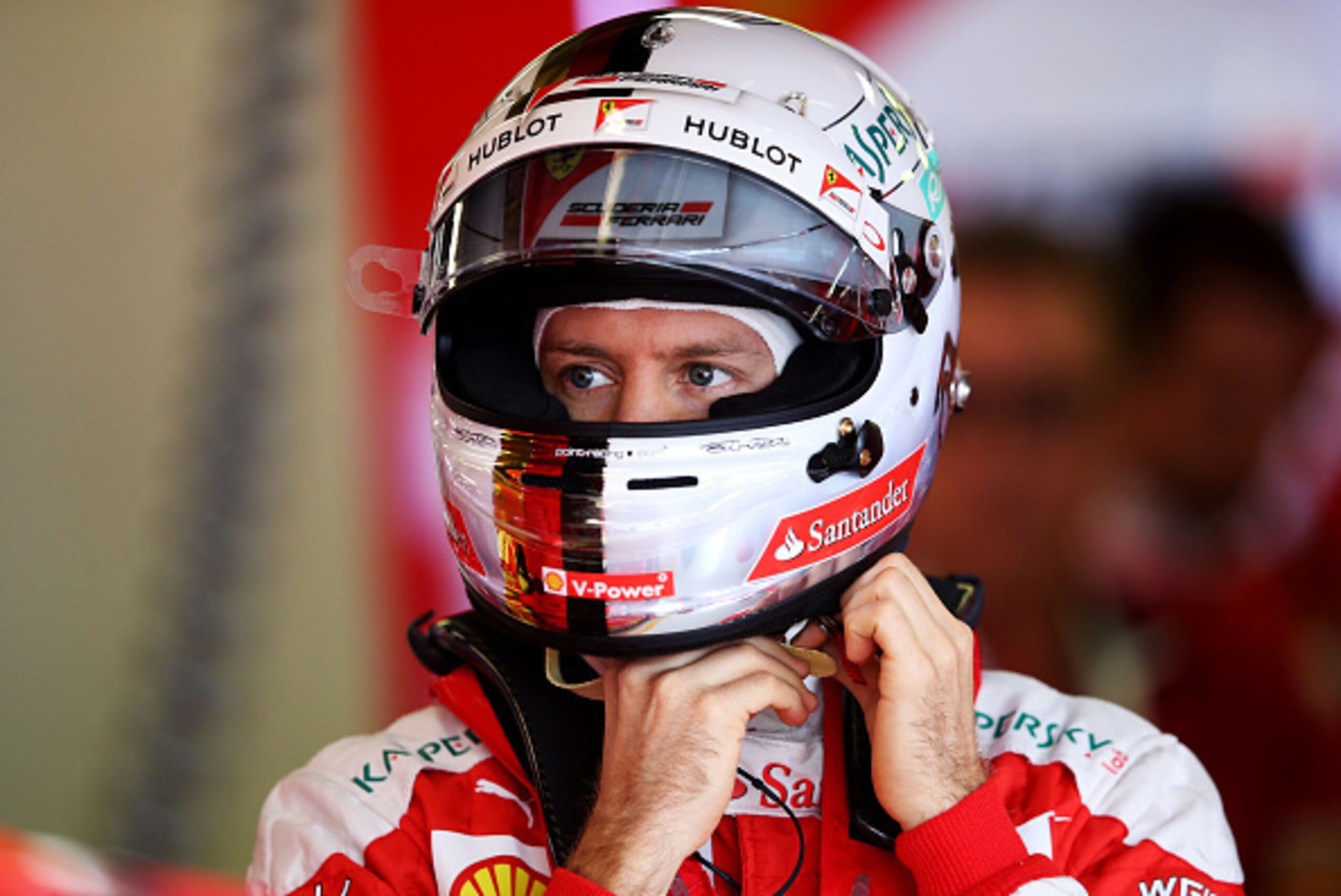
After the first run of Q3 under the elimination-style qualifying format, Sebastian Vettel and Ferrari found themselves in second place, 0.542 seconds behind Lewis Hamilton and two positions clear of the sister Mercedes of Nico Rosberg.
As the German returned to the garage, it was thought that Vettel was composing himself before returning to the track to challenge Hamilton for pole or, at the very least, cement his place on the front row.
So imagine the shock that reverberated through F1 when it emerged that Vettel, still the most decorated driver on the grid, with four world titles to his name, and Ferrari—the most successful, sacred team in the history of the sport—weren't planning a final flourish.
Although Vettel's super-soft Pirellis were warming up nicely under their tyre blankets and the SF16-H's power unit was brought back to life in the garage, his race engineer, Riccardo Adami, confirmed the team were reluctant to take to the track.
"We are firing up but we are not planning to go out," he calmly told his driver with more than six minutes of the session remaining.
And sure enough, Vettel climbed out of his cockpit just seconds later and made his way toward the weighbridge, unstrapping and removing his helmet as he strolled down the pit lane before changing into his casuals—Ferrari sweater, jeans and trainers—ahead of the official end of the hour-long session.
Although the positives and negatives of the revised qualifying system had been up for debate until that stage, the sight of Vettel—someone utterly obsessed with claiming as many accolades as possible—deciding against challenging for pole was humiliating for F1.
From the moment Adami informed Vettel of Ferrari's plans, the elimination-style format was doomed and a return to the previous, three-part knockout system was inevitable.
All team radio quotes, as well as timing and tyre data, are sourced from the FOM television feed.
.jpg?w=2560 "Cowboys Texans Football")
.jpg?w=2560 "Browns Jaguars Football")