
Australian Grand Prix 2016: Winners and Losers from Albert Park Race
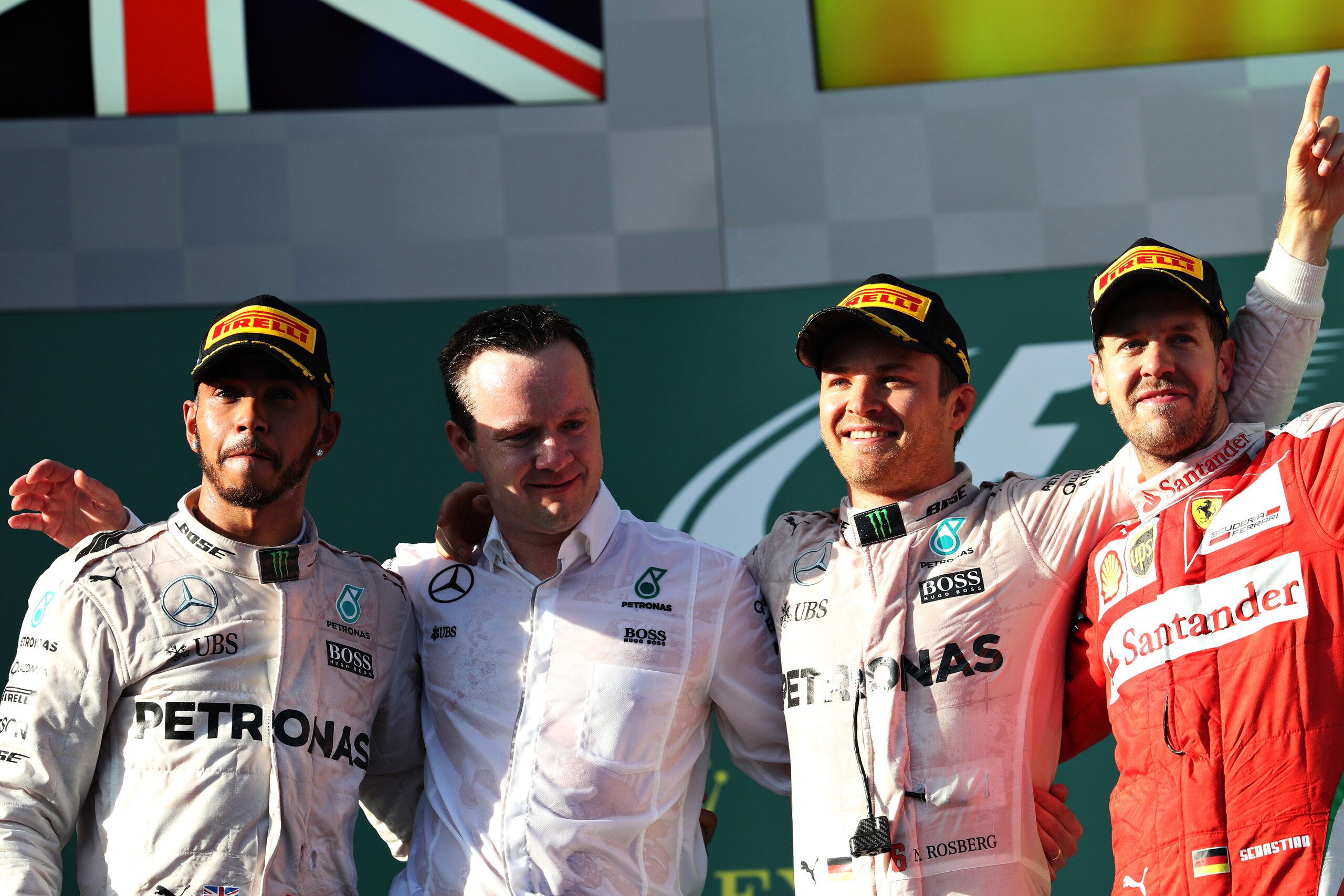
Nico Rosberg began the new Formula One season in the same fashion he ended the last by claiming victory in Sunday's Australian Grand Prix at the Albert Park circuit.
The German and team-mate Lewis Hamilton, the reigning world champion, recovered from poor starts to claim Mercedes' 33rd win in the last two years, but the Silver Arrows' latest victory was one of their most hard-fought since they emerged as F1's dominant force at the beginning of the 2014 campaign.
Indeed, four-time title winner Sebastian Vettel was the favourite to win in the early stages of the race, but a strategic error by his Ferrari team, who demonstrated their best and worst qualities over the course of the 57 laps, forced the German to settle for third.
With a look at Max Verstappen's race of two halves, Romain Grosjean's point-scoring exploits for the new Haas team and a solid debut for the Frenchman's replacement at Renault, here are the winners and losers from Melbourne.
Winner: Nico Rosberg
1 of 8
After his run of six pole positions and three victories at the end of 2015, the Australian Grand Prix was all about maintaining the momentum for Nico Rosberg.
Not necessarily by winning the race, but by proving normal service—Lewis Hamilton dominating him in the style he has done for much of the last 18 months—wouldn't be resumed without plenty of resistance.
Rosberg's weekend got off to the worst possible start on Friday when he lost control and hit the wall in practice, damaging one of Mercedes' new front wings, and the German was unconvincing in qualifying. He ran off track on his first lap under the short-lived elimination-style format before finishing 0.36 seconds adrift of Hamilton.
Yet the race, as we're so often reminded, is when it really matters, and Rosberg ensured he was in the prime position to exploit the variables.
Rosberg jumped Kimi Raikkonen at the first round of pit stops, but it was following the red-flag stoppage—when he opted for the durable, medium-compound tyres as Sebastian Vettel retained the super-softs—when his race truly came alive.
Prone to being outsmarted by his rivals in racing conditions in recent years, Rosberg ensured he remained close to Vettel at the restart and kept him in sight, which crucially prevented the Ferrari driver from building the advantage he needed to retain the lead ahead of his final stop on Lap 35.
From the moment Vettel admitted the gamble had not paid off and entered the pits, it became a typically measured Rosberg drive.
And despite late concerns about his car—Sky Sports' Ted Kravitz said Mercedes feared his tyres would lose grip with five laps remaining, while Toto Wolff told Motorsport.com's Valentin Khorounzhiy how his brake caliper temperatures were dangerously high—Rosberg claimed his 15th grand prix win, and his second at Albert Park, with relative ease.
In doing so, he has returned to the top of the drivers' standings for the first time since the 2014 Italian GP.
Loser: Ferrari
2 of 8
Rejoice!
Following a winter of wishful thinking, Ferrari finally seem to have a car fast enough matching Mercedes—or, at the very least, a car capable of challenging Mercedes regularly enough to be assured of a genuine title challenge.
And was it ever in doubt, what with the switch to push-rod front suspension, a shorter nose, a neatly sculpted rear end and further improvements to an already-well-advanced power unit?
Yet as loud as team principal Maurizio Arrivabene roared as his cars swarmed the Mercedes W07s at the start, and as comfortable as Sebastian Vettel and Kimi Raikkonen looked in the opening phase of the race, Ferrari's three biggest weaknesses were exposed over the first 57 laps of the new season.
First, there was reliability.
The doubts hanging over the sturdiness of the SF16-H since pre-season testing returned just 21 laps into the race, when Raikkonen lost power and returned to the pit lane to retire with flames poking out of his car's airbox.
Second, there was human error.
Both drivers' hard work was undone by slow pit stops, with a delayed front-right tyre change costing Vettel crucial time to the Mercedes drivers during his final stop.
And third, and most significant, were the strategic mistakes, the first of which saw Raikkonen spend 16 laps on the super-soft tyres in the first stint, while Vettel and Nico Rosberg, his closest competitors at that stage, discarded their red-striped rubber by Lap 13 at the latest, allowing the latter to pass him for second place.
The second was arguably the deciding moment of the race as Ferrari chose to keep Vettel's super-softs during the red-flag stoppage, while Mercedes handed mediums to Rosberg and Lewis Hamilton, ensuring their drivers were not required to stop again.
Ferrari have the tools to beat Mercedes in 2016, but—as ever in this sport where man meets machine—their success will depend on how effectively they use them.
Winner: Sebastian Vettel
3 of 8
From the ill-advised tyre choice to the painfully slow pit stop, Sebastian Vettel's team let him down at Albert Park.
Yet Ferrari's faults, and his ultimately disappointing finishing position of third, should not detract from the four-time world champion's performance, as Vettel again proved why he is fast becoming the most complete driver in F1.
While the German was perhaps aided by the extra formation lap due to Daniil Kvyat's pre-race breakdown, Vettel became the first driver to perfect the new single-clutch start procedure and vaulted from third on the grid to first during the relatively short run toward Turn 1.
With his wingman, Kimi Raikkonen, behind him in second—proving exactly why Ferrari retained him for 2016—the opening phase of the race felt like a throwback to the height of his Red Bull days, as Vettel established a healthy lead over the chasing pack.
Indeed, it is probable that he would have claimed his fourth victory in the scarlet red of the Prancing Horse were it not for the red-flag stoppage, which complicated matters for Ferrari and offered Mercedes a way back into contention.
Vettel, however, made the best of a bad situation and extended his middle stint on the super-soft tyres to 17 laps—the longest stint of the race on that particular compound—to enable him to reach the chequered flag on a set of softs.
The extent of his recovery allowed him to catch Lewis Hamilton in the closing laps, yet even if he hadn't run wide at the penultimate corner—his only mistake of the afternoon at one of the most deceptively difficult turns in F1—it is unlikely he would have passed the three-time title winner for second.

Loser: Max Verstappen
4 of 8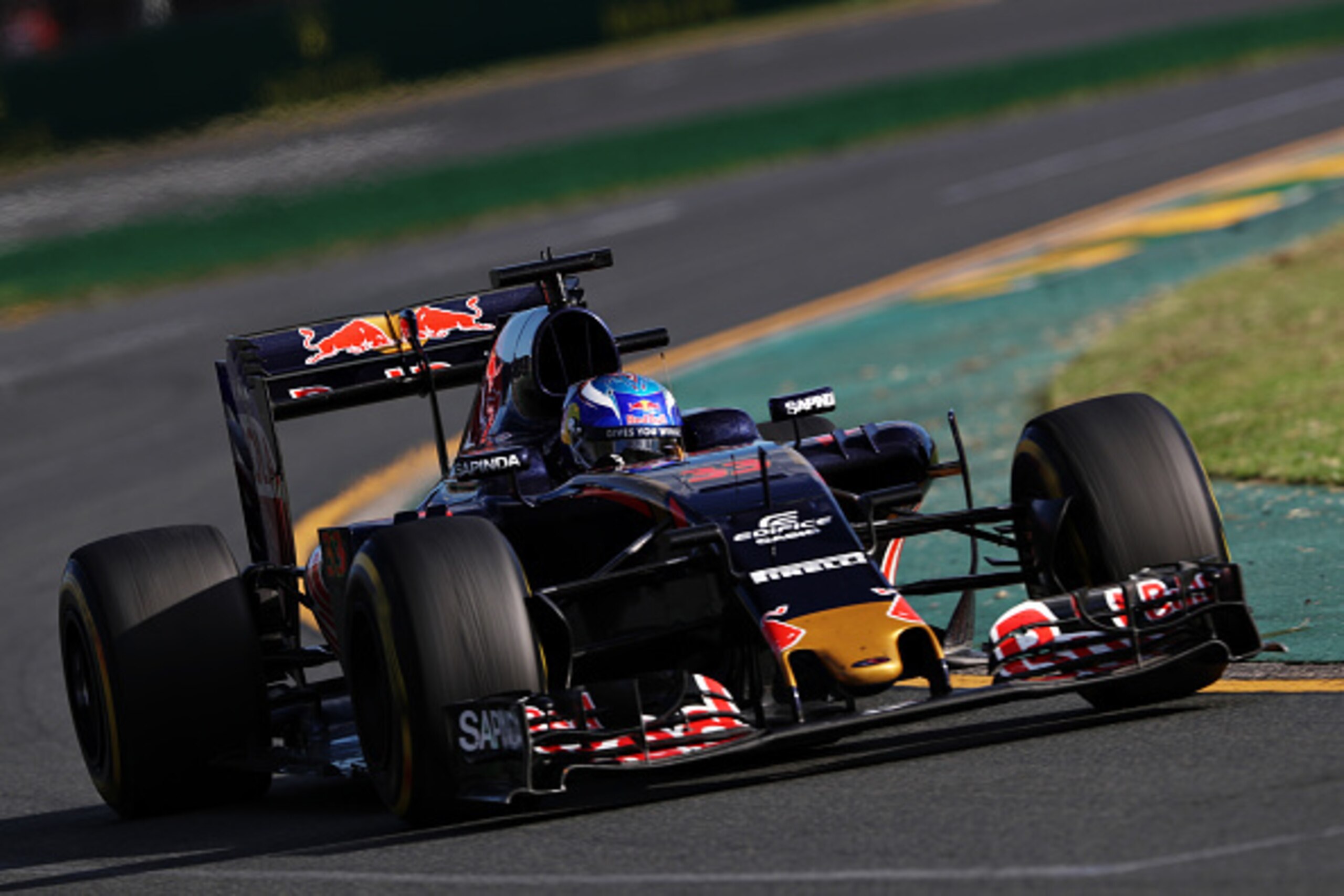
After charming us throughout his debut season in 2015, we saw the other side of Max Verstappen in the Australian Grand Prix in terms of both his driving and his behaviour.
Having claimed his career-best grid position of fifth in qualifying, the teenager who attacked relentlessly last year—effortlessly passing his rivals around the outside of Spa's high-speed Blanchimont corner—was forced to defend in the early stages at Albert Park.
But despite having the reigning world champion lurking in his rear-view mirrors in the fight for fourth, Verstappen was as flawless under pressure as he is on the offensive, to the point where Lewis Hamilton was telling Mercedes he couldn't "get past this guy" over team radio.
Indeed, the Dutchman again drove beautifully until the red-flag stoppage, when after laughing and joking with his Toro Rosso mechanics his afternoon soon "went downhill," as Verstappen later admitted via his official Twitter account.
Verstappen and team-mate Carlos Sainz Jr. were among the few drivers who opted for the soft-compound tyres for the restart, meaning they had neither the pace of the super-softs nor the durability of the mediums.
The 18-year-old, though, continued to run fourth until his final stop on Lap 32, when he stopped in his pit box to discover his mechanics were not prepared for his arrival—the long pit stop dropped him to 12th.
Yet rather than resetting his focus and settling back into a rhythm, Verstappen carried that disappointment with him for the remainder of the race and frequently berated the pit wall over pit-to-car radio as Sainz—in a potential act of revenge for the team orders saga of last season's Singapore GP—refused to let him pass.
Mad Max's frustration culminated in a collision with his team-mate at the penultimate corner on Lap 53, which spun his car, slightly damaged his front wing and condemned him to a 10th-place finish on a day he could have equalled or even surpassed his best F1 result.
Aside from a small rant in qualifying at Silverstone 2015, this was the first real sign of Verstappen's immaturity and inexperience as the boy wonder morphed into a problem child.
Winner: Mercedes
5 of 8
When you happen to be good at something—really good at something—time has a funny habit of slowing down.
Whether it is in music, sport or motor racing, the best piano players, the best athletes and the best drivers all seem to have more time to work their magic than their less talented or less successful peers.
Is it all about experience? Nerve? Poise? Or do these people simply have more spare brain capacity that allows them to operate subconsciously and make clearer, more calculated and ultimately better decisions in a shorter period of time?
It was worth considering that as Ferrari and Mercedes made vastly different choices in terms of tyre strategy during the red-flag stoppage during the Australian GP.
After the race, Maurizio Arrivabene told Motorsport.com's Jonathan Noble that Ferrari felt they had "to be a bit more aggressive" by retaining their super-softs "at that stage" despite being unsure whether it was the right decision—presumably because Ferrari, under the stewardship of Arrivabene, pride themselves on being bold and brave.
Mercedes, in stark contrast, appeared to take a more considered, confident choice by focusing first on getting Nico Rosberg and Lewis Hamilton back in the hunt with medium rubber and then giving their drivers the best chance of claiming yet another one-two finish.
The Silver Arrows' master plan, coupled with Ferrari's error, was the decisive factor in the outcome of the race, not only allowing Rosberg to inherit Vettel's lead and take the win but rescuing Hamilton from seventh place after he spent the first stint running out of ideas while trying to pass Max Verstappen's Toro Rosso.
Most of Mercedes' 33 grand prix victories over the last two years have come as a result of their cars obliterating their rivals with brute force and sheer speed, yet this was different.
It came when the Silver Arrows kept their heads as Ferrari lost theirs.
Winner: Romain Grosjean
6 of 8
"We would like to make the points. Qualifying, if we get to Q2 we will be fine," Gunther Steiner, the Haas team principal, told Sky Sports' William Esler of his Australian Grand Prix aspirations in January.
"To have a chance of points is our goal and to put on a good show. To show what we have worked the last two years for and we have no big dramas going on. That is our biggest aim at the moment."
Although the brand-new team's lofty expectations were to be admired, the prospect of Haas making the points on their grand prix debut was remote following a woeful end to pre-season testing, when they caused three red flags in a single day.
And in the aftermath of qualifying, when the VF-16 car proved to be only marginally quicker than perennial backmarkers Manor and failed Steiner's initial target of reaching Q2, the chances of Haas being able to even put on a semi-respectable show at Albert Park were almost non-existent.
It seemed the team would require something out of the ordinary to achieve their ultimate goal at Albert Park, and Haas did so by finishing the race without even making a pit stop.
As is the norm with backmarkers who sense an opportunity, Haas appeared to base their strategy around something out of the ordinary happening, with Romain Grosjean, on soft-compound tyres, the only finisher not to visit the pits prior to the suspension of the race.
So when his team-mate, Esteban Gutierrez, collided with Fernando Alonso at Turn 3, the Frenchman was effectively given a free pit stop due to the red-flag protocol, allowing Grosjean to restart as high as ninth with fresh mediums capable of going to the end.
More extraordinary than the sight of Haas running in the points, though, was the fact that they stayed there.
Grosjean was completely unflustered in keeping a number of faster drivers—including Force India's Nico Hulkenberg and Williams' Valtteri Bottas, who are expected to play prominent roles in this year's midfield battle—behind until the chequered flag, and he gave Haas sixth place and eight points on their debut.
It was a rather bumpy ride, but Haas' first mission has been accomplished.
Loser: Daniil Kvyat
7 of 8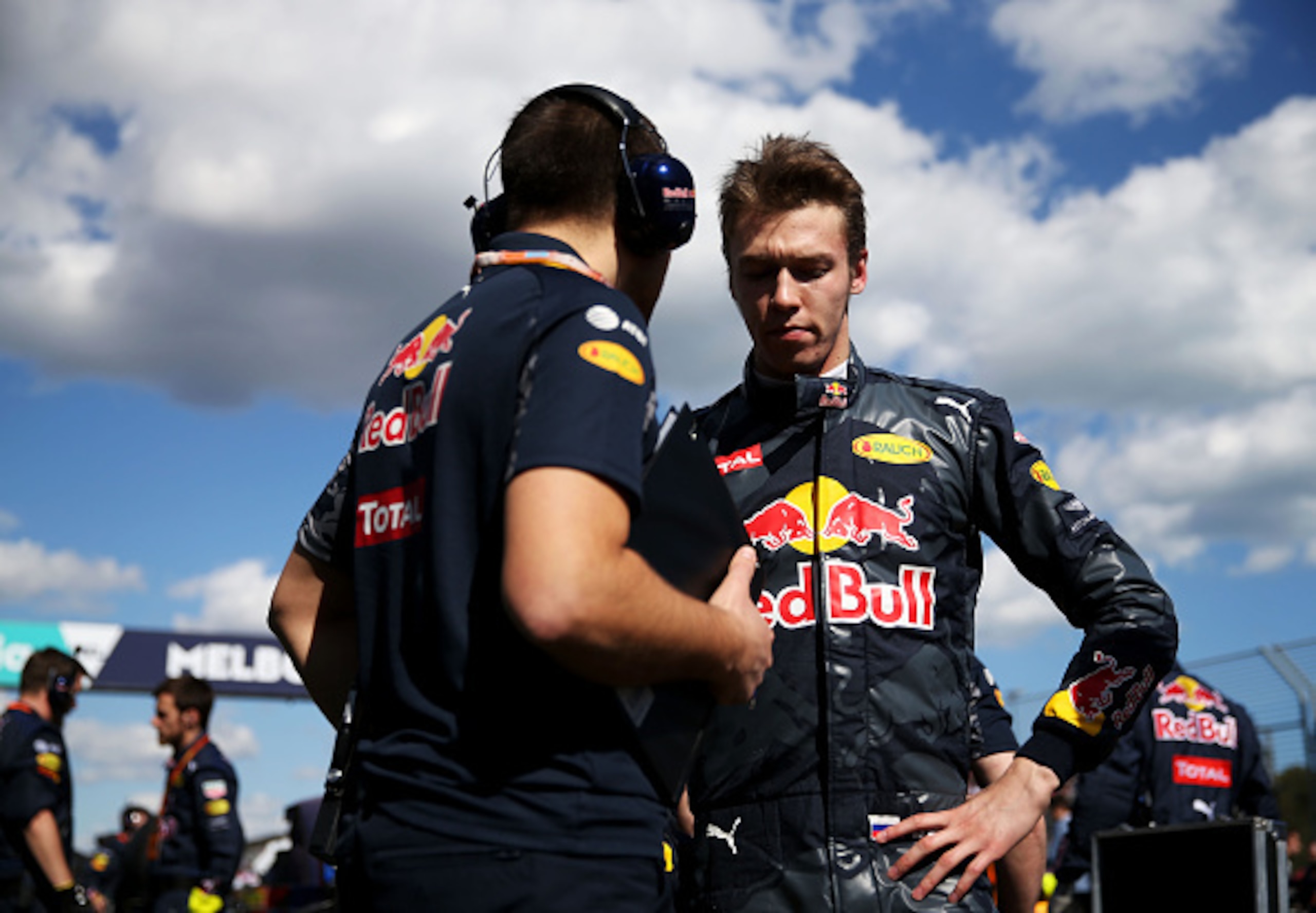
In the last seven races at Albert Park, only once has a full allocation of cars started the grand prix.
That rare occurrence happened in 2014, the first race of the V6 turbo regulations and the first race of Daniil Kvyat, who with a ninth-place finish became the youngest-ever driver to score a point in the history of Formula One at that point.
Since that breakthrough afternoon, however, Kvyat has failed to compete a racing lap in Australia after failing to start the Melbourne-based event for two seasons in succession.
The Russian's car stopped on the reconnaissance lap due to a gearbox problem ahead of the infamous 15-car race of 2015, and although Kvyat did make it to the grid this time, he didn't get much farther.
As the driver told Red Bull's official website, an "electronic issue" saw his RB12 "just shut itself off" at the end of the formation lap and left him stranded toward the rear of the pit straight as his rivals lined up ahead of the start.
After his stricken car was returned to the pit lane, Ted Kravitz reported during Sky Sports' television coverage of the event that Red Bull planned to send Kvyat on track to treat the race as an extended test session, but the 21-year-old never reappeared.
His misfortune, just 24 hours after qualifying a lowly 18th on a weekend each of his fellow Red Bull stablemates impressed for different reasons, has left Kvyat under pressure from the beginning of what could be a pivotal season in his stuttering career.
Winner: Jolyon Palmer
8 of 8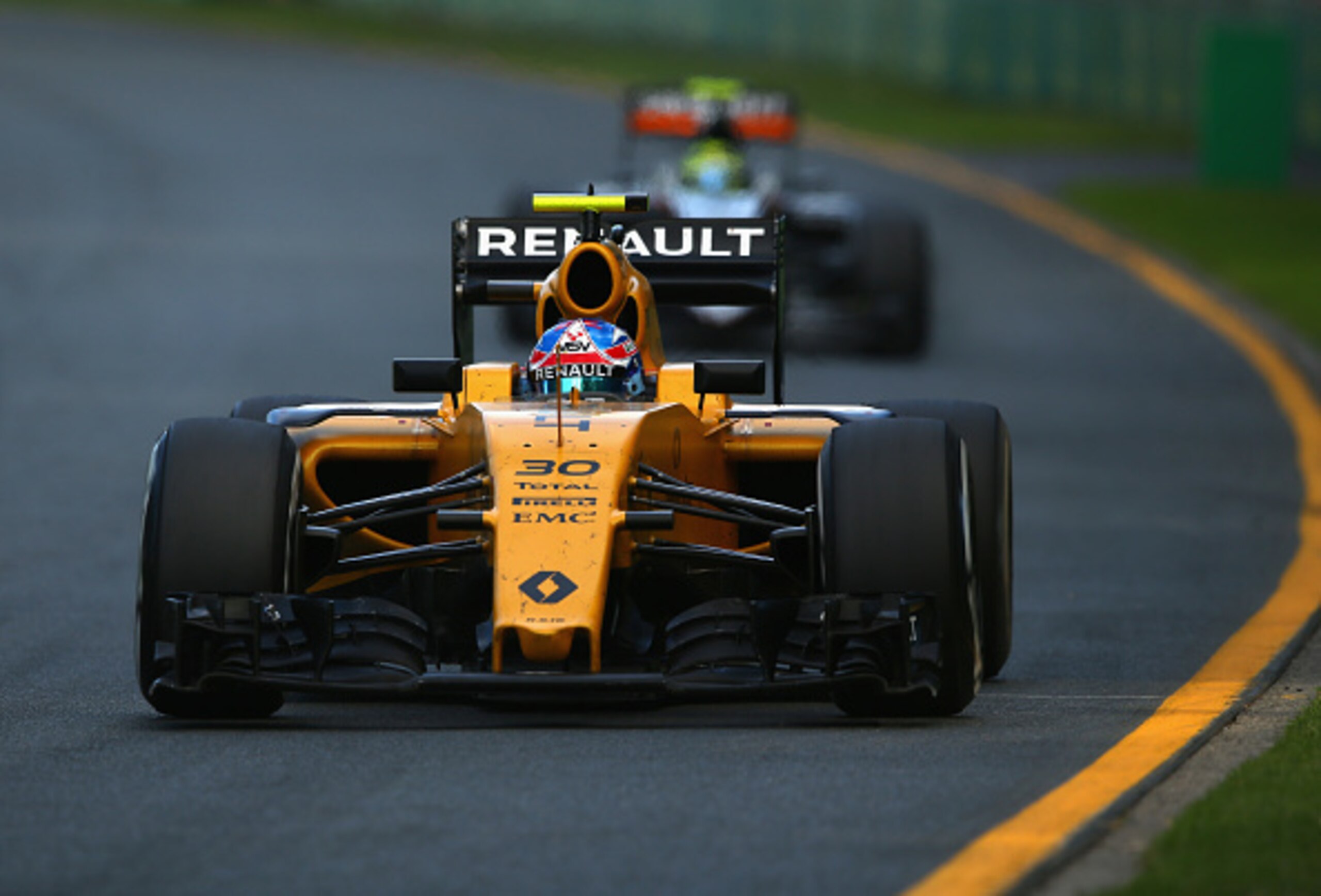
Prior to the start of the season, it had been uncertain whether Kevin Magnussen or Jolyon Palmer would act as Renault's team leader in 2016.
Sure, Magnussen had a year's experience racing in F1 in 2014 before being badly mishandled and mismanaged by McLaren, but Palmer had joined the team, then under the guise of Lotus, at the beginning of 2015 and made as many as 13 practice appearances last season.
Ahead of the Australian GP, though, Renault managing director Cyril Abiteboul told Autosport's Mitchell Adam that while the team have a "fantastic" and energetic driver lineup, they had enough faith in Magnussen's "natural talent" and "sufficient experience" to trust the Dane to "be a leader for the technical team."
There was no surprise that the team seemed to prefer their flamboyant, young marquee signing to their unfashionable, neat and tidy former reserve driver, but Abiteboul's statement meant Palmer began his F1 career with a little pressure to prove his worth to Renault.
But you would never have known it, for the 2014 GP2 champion drove with exceptional maturity throughout his debut weekend.
His under-pressure lap at the beginning of Q2, which effectively dumped Magnussen out of qualifying in a straight shootout between the Renault drivers, was an important early victory for Palmer at the beginning of their partnership, and he kept his calm in the race.
Although an early puncture for Magnussen prevented a fight between the Renaults, Palmer excelled in wheel-to-wheel combat—hugely impressive for someone who hadn't raced for almost 18 months. He jousted with Fernando Alonso on the opening lap and battled with Valtteri Bottas, avoiding a collision with the Williams driver at Turn 9.
Palmer later kept the squabbling Toro Rossos of Carlos Sainz Jr. and Max Verstappen behind for far longer than his car should have before finishing 11th, and he claimed it was "a shame to just miss out on the points," via his official Twitter account.
Even so, his performance wasn't bad for a No. 2 driver.
All timing and tyre data, as well as team radio quotes, are sourced from the official F1 website, the FOM television feed and Pirelli Motorsport's infographic on Twitter.
.jpg?w=2560 "Cowboys Texans Football")
.jpg?w=2560 "Browns Jaguars Football")