Why the Florida Panthers Are Paper Tigers in the 2016 Stanley Cup Race
Going by the standings, it’s pretty easy to break the Eastern Conference playoff contenders into three groups.
At the top are the Washington Capitals, a team that through the regular season has been head and shoulders above the competition. The Caps are already over the 100-point barrier. At the bottom are the bubble teams, with somewhere between three and four clubs realistically locked in a battle for the two wild-card slots.
In between is a group of five teams separated by all of two points. It’s a list that includes most of the teams one would expect. The last three Eastern finalists—the Lightning, Rangers and Bruins—are in this second standings tier. So are the New York Islanders, an up-and-coming young club and a 100-plus point team a year ago.

-(1).jpg?w=2560 "Bleacher Report")
The fifth member of that group is the Florida Panthers.
Based on where they sit in the standings, we might think that the Panthers are a legitimate threat to come out of the Eastern Conference. However, there’s an element of smoke and mirrors to their record, and they’ll need to overcome that if they are to win in the postseason.

The first is their reliance on shooting percentage. The Panthers have been a low-end shooting percentage team for years now, but this season spiked in a big way; only the Rangers have a better five-on-five shooting percentage than Florida’s 8.62 percent in 2015-16.
That matters for two key reasons. The first is that shooting percentage is fickle; it only takes one seven-game series in which a team doesn’t make its shots to kill its playoff hopes. The second is that to the degree that shooting percentage is predictable, it tends to regress toward long-term patterns. Florida’s long-term pattern is not good:
- 2011-12: 6.58 percent (28th in the NHL)
- 2012-13: 5.77 percent (30th in the NHL)
- 2013-14: 7.20 percent (25th in the NHL)
- 2014-15: 7.27 percent (22nd in the NHL)
- 2015-16: 8.62 percent (2nd in the NHL)
Even if Florida were a consistently strong shooting percentage team year over year, there’d be a risk of puck luck running the wrong way and the Panthers' poor puck-possession stats catching up with them. However, the Panthers aren’t such a team; long-term evidence suggests they aren’t better shooters at the team level than the NHL average, and so it becomes more likely that their shooting percentage drops off in the postseason.
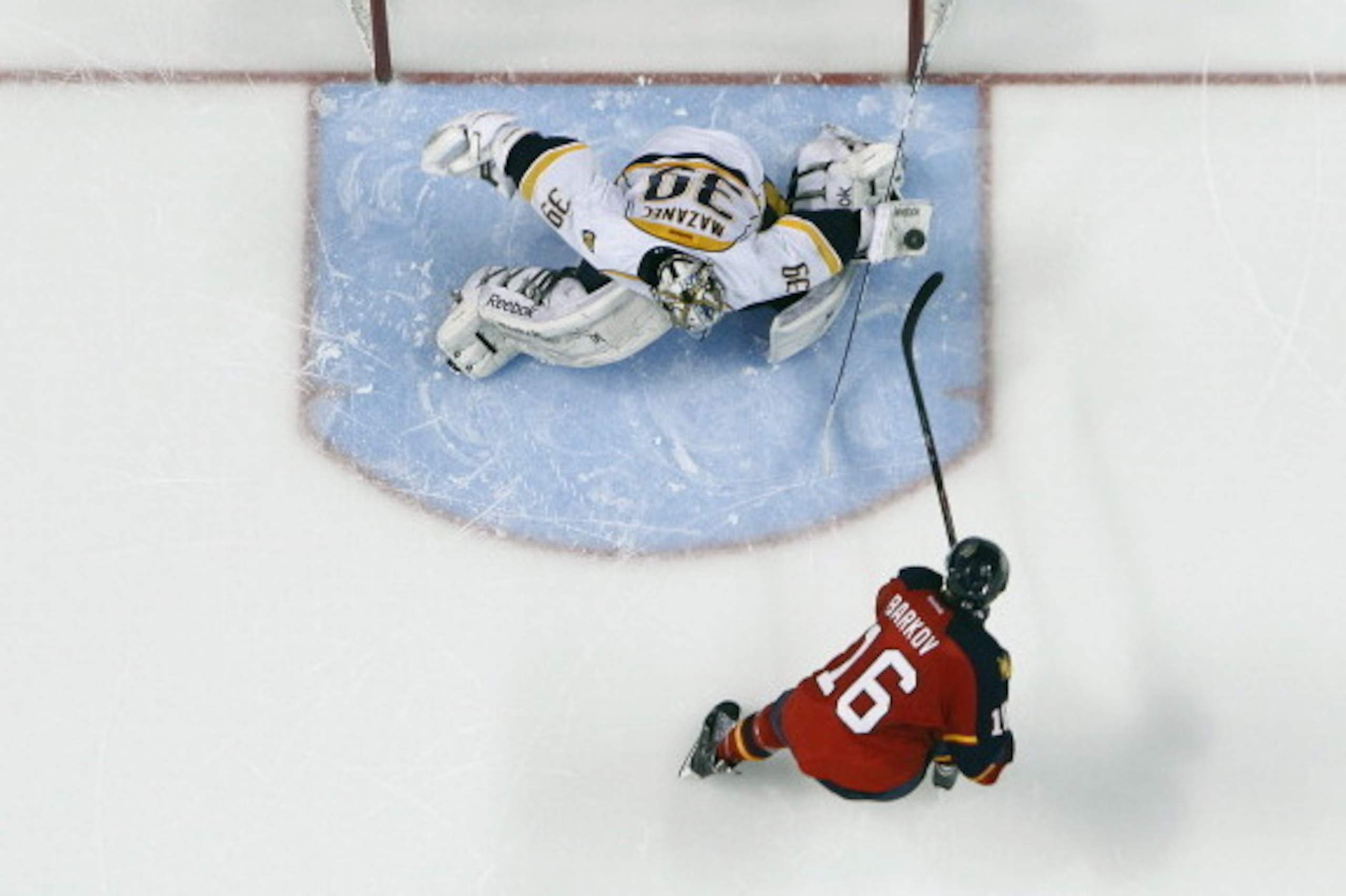
Another problem is the club’s reliance on shootout wins. The Panthers are 7-3 in the skills competition, the best record in the entire league. No other team has won more than six games, and the clubs that have are both at 6-6. Nobody dominates the shootout like the Panthers.
That’s a bit of a problem, because there are no shootouts in the playoffs, and nearly 20 percent of Florida’s wins are attributable to that competition. In fact, if we sort the teams in the East by regulation/overtime wins rather than standings points, the Panthers are tied for a wild-card slot with Detroit, just one win ahead of Philadelphia and New Jersey and two up on Carolina.
When we look at fundamentals, Florida comes up wanting. At five-on-five, the team’s shot metrics are basically identical to Edmonton’s. The team’s power play ranks 23rd in the NHL, and the penalty kill is only a half-point above average; its combined special teams efficiency is below average.
The Panthers have made up for those real problems with three things. Their strong shooting percentage appears to be an aberration. Shootouts go away in the playoffs.

The third item is solid goaltending, which Roberto Luongo legitimately gives them.
Luongo posted a .924 save percentage in 14 games after coming over to Florida at the 2014 trade deadline. He's been a .921 save percentage goalie over the two seasons since and has made a substantive difference to the Panthers' fortunes as a result of his strong play.
Despite his reputation, Luongo has often been a good playoff goaltender, too. He's a career .916 save percentage goaltender over 64 career NHL postseason games and played quite well for Vancouver in three of his four postseason runs, including a trip to Game 7 of the Stanley Cup Final in 2011.
Good goaltending, however, can only cover up for so much, and without the other two ingredients, the Panthers wouldn't be where they are this season. At this point, it’s probably best to regard them as a bubble team that might steal a series or two with goaltending rather than as a legitimate contender.
Statistics courtesy of NHL.com and Stats.HockeyAnalysis.com.
Jonathan Willis covers the NHL for Bleacher Report. Follow him on Twitter for more of his work.
.jpg?w=2560 "Simon Edvisson Landing Spots")


.jpg?w=2560 "KOC Contacted OBJ After Release ☎️")


.jpg?w=2560 "Dak to Stroud: Get Some Wins 💯")