A Bad Break: Scott Quigg Can Come Back Stronger After Defeat to Carl Frampton
There was a pained expression on Scott Quigg’s face in the immediate aftermath to his points loss to Carl Frampton in Manchester, England, on Saturday.
It could have been a look of agony, considering he suffered a broken jaw in Round 4 of the unification clash between Britain’s top two super bantamweights.
Yet Quigg, who had never previously lost in 33 professional bouts, had dealt with the issue—and fought on through the throbbing soreness—for eight whole rounds.
TOP NEWS
Broadcaster sorry for false LeBron rumor

Stephen A. Apologizes After Lane Johnson Comments
Peyton Manning's Son's CFB Offers
The look of hurt was more because, after all his preparations, plans and pre-fight predictions, the Englishman had come up short in the biggest fight of his career to date. In all honesty, he barely turned up.
Quigg was understandably disappointed at the defeat.
The 29-year-old has dedicated his life to boxing, including putting in an unusual request to be expelled from school so he could get on with his chosen career, per Martin Domin for MailOnline. He has rarely been out of the gym since leaving education.
Frampton was the foe he always seemed set to face at some stage, too.
When the contract was finally signed and the date was set for February 27, 2016, Quigg told Matchroom Boxing: "This is the fight I wanted and it was a great feeling when I signed on the dotted line. The day I signed was my Christmas because I’ll be in the gym on December 25."
The head-to-head could have happened much earlier in their careers. But, by waiting, the pair managed to make it the biggest, and most profitable, fight possible.
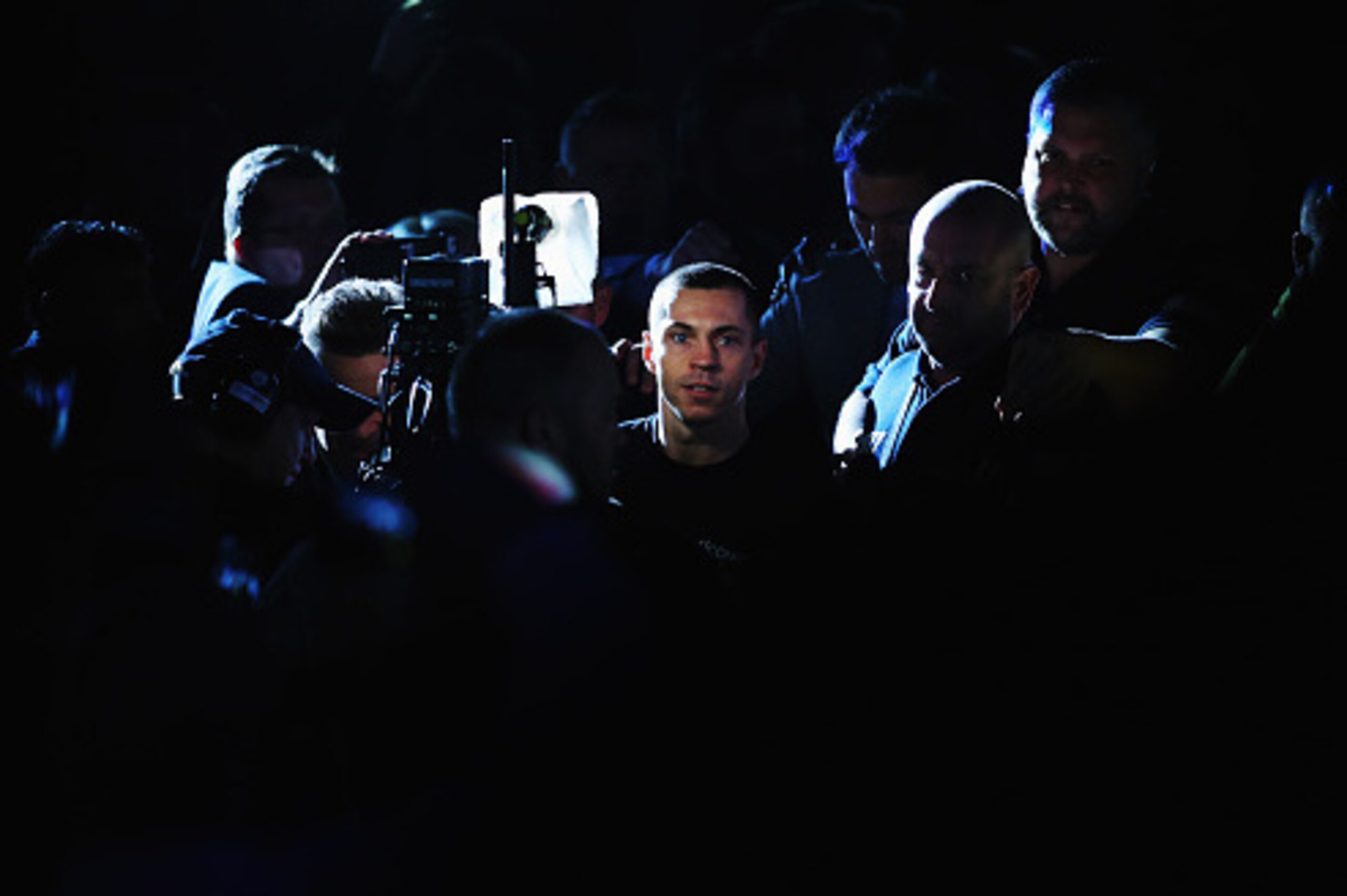
In the buildup, Quigg tried to land some psychological blows. In Sky Sports’ The Gloves Are Off show, he quizzed his rival about a tricky sparring session in Scotland, claiming Frampton had been knocked down.
Sadly, when the bell sounded, Quigg seemed reticent to land any actual blows.
For the first half of the fight, the local boy (he is from Bury, a town in Greater Manchester) looked unwilling to do anything but defend.
Per CompuBox stats (h/t BoxingScene.com), he landed 11 punches over the first 18 minutes. Frampton was hardly fluent—he connected on 21 occasions over the same period of time—but was at least busy.
The jab—a key part of Quigg’s armoury—was successful on a grand total of 12 occasions over the entire duration of the contest. That’s a measly average of one per round—you don’t need to be Archimedes to work that out.
Finally, in Round 11, we got to see the Scott Quigg we expected. Marching forward, he landed 20 punches, all of them power shots, according to CompuBox.
There was one right hand in particular that caught Frampton’s attention in a big way. The Northern Irishman held on as he was twisted around, having taken the initial shot flush on the side of his face.
It was too little, too late, however. Frampton survived Round 12 comfortably, boxing off the back foot as he remained out of range, and went on to earn a split-decision verdict. Surprisingly, one judge (Levi Martinez) scored it 115-113 to the loser.
Quigg’s trainer, Joe Gallagher, wasn't impressed by two officials scoring it 116-112 to Frampton. He told Sky Sports in the aftermath (h/t Isaac Robinson of SkySports.com): "After four rounds, I had it level. I thought Scott was taking most of the shots on the gloves and being patient, making Carl overreach."
Over those four "level" rounds, Quigg hit the target with six punches. They would have to be half-a-dozen crackers to keep any fighter level.
Respected boxing journalist Steve Bunce of the Independent wrote on the Monday after the fight: "Gallagher thought it was close after five rounds, which shows just how blind the most celebrated of boxing people can be. It was not close, it was a tactical massacre."
Maybe Quigg froze on the big occasion—the atmosphere at the Manchester Arena, aided by the presence of so many Frampton supporters, was something he had not experienced before.
Maybe Quigg simply stuck to the instructions given to him by his team and therefore was badly advised by those he trusts in his corner.
Maybe Quigg was bothered by the broken jaw more than we know and only wanted to risk it once he realised there was nothing to lose.
While the former British champion would normally be straight back in the gym, he’s instead resting up following surgery, as confirmed by his promoter, Eddie Hearn, on Twitter.
Prior to the fight, per Boxing News, Quigg had revealed how the desire to avoid defeat motivated him: "The fear of losing, I have said it all along. Nobody wants to get up at this time and get out of bed, the body is not built for that. But for some reason, I can spring out of bed because the fear of failure and fear of losing is what drives me on and that is why I do what I do and I love what I do."
Well, now he knows what it feels like to lose.
Rather than drown in self-pity, Quigg must reflect on what went wrong on the night and, most importantly of all, work out what he needs to do in the future.
A rematch with Frampton could yet happen, but there is no need to be hung up over a second fight with his British foe. Quigg could instead swoop back in and get a shot at the IBF and WBA belts, if the Jackal vacates the titles to move up to featherweight.
Shingo Wake is Frampton’s mandatory challenger for the IBF super bantamweight title.
Hearn, however, believes that is a possible route for Quigg to explore on his return, per James Robson of the Manchester Evening News: "The first thing I will do is speak to the IBF and say if he does not want to fight Shingo Wake, we want to fight him for the IBF title."
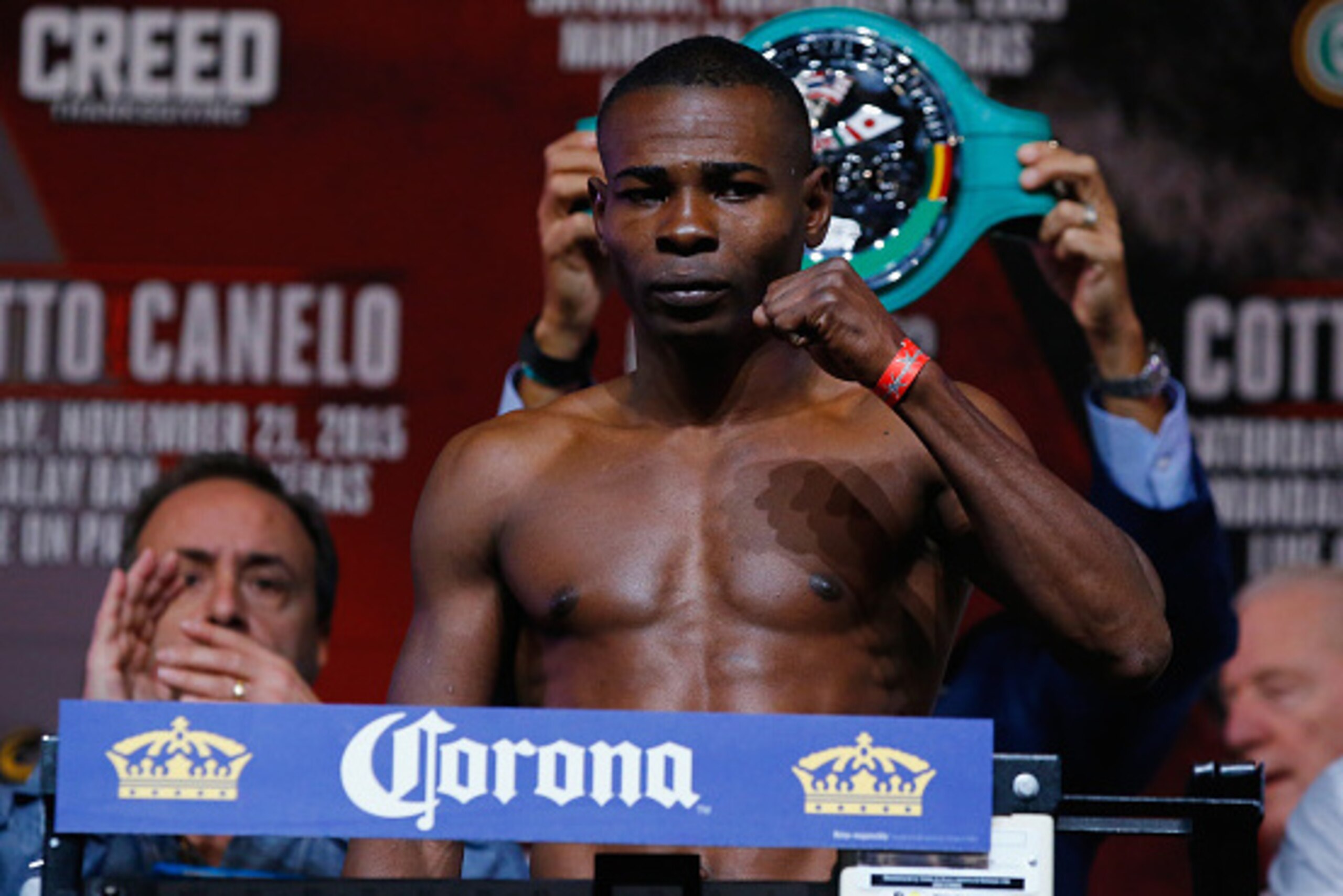
Quigg should have few concerns about facing the Japanese fighter. Wake has a 20-4-2 (12 KOs) record but has never boxed outside of his homeland.
The WBA strap would be a tougher target, simply because Guillermo Rigondeaux is waiting for a chance to win back a belt that was taken away from him by the authorities outside of the ring due to inactivity.
The unbeaten Cuban is a classy operator whose long amateur career has left him with a fine defensive technique and an ability to counter anything that comes his way.
Tread carefully, though, before choosing to go down a path that includes a considerable road block by the name of Rigondeaux. After the Jackal, El Chacal would be an even tougher challenge to take on.
As for the other governing bodies, Hugo Ruiz and Nonito Donaire hold the WBC and WBO straps respectively.
Quigg doesn’t need to drop back to domestic or European level, but he can also ill-afford a second successive defeat. Former WBO lightweight champion Ricky Burns is a good example of a Brit who lost his way after losing his crown and is still now working his way back towards the big fights he craves.
But, at 27 years of age, time is on his side.
He now knows the bitter taste that follows a defeat. Having experienced the big time, having topped the bill on a pay-per-view card in a unification fight, nothing should come as a surprise to him any more.
Once his broken jaw is healed, you can be sure Quigg will work as hard as physically possible to make sure he doesn't have to deal with the disappointment of losing again.
.jpg?w=2560 "Vikings Football")
.jpg?w=2560 "Cowboys Texans Football")
.jpg?w=2560 "5 NFL Players Getting Trade Buzz")