Chelsea vs. Manchester City: Hazard, Pedro and Cesc Tear Down City Defence
Chelsea wiped the floor with a severely under-strength Manchester City side on Sunday to progress to the FA Cup quarter-finals with a 5-1 win. Goals from Diego Costa, Willian, Gary Cahill, Eden Hazard and Bertrand Traore ensured safe passage.
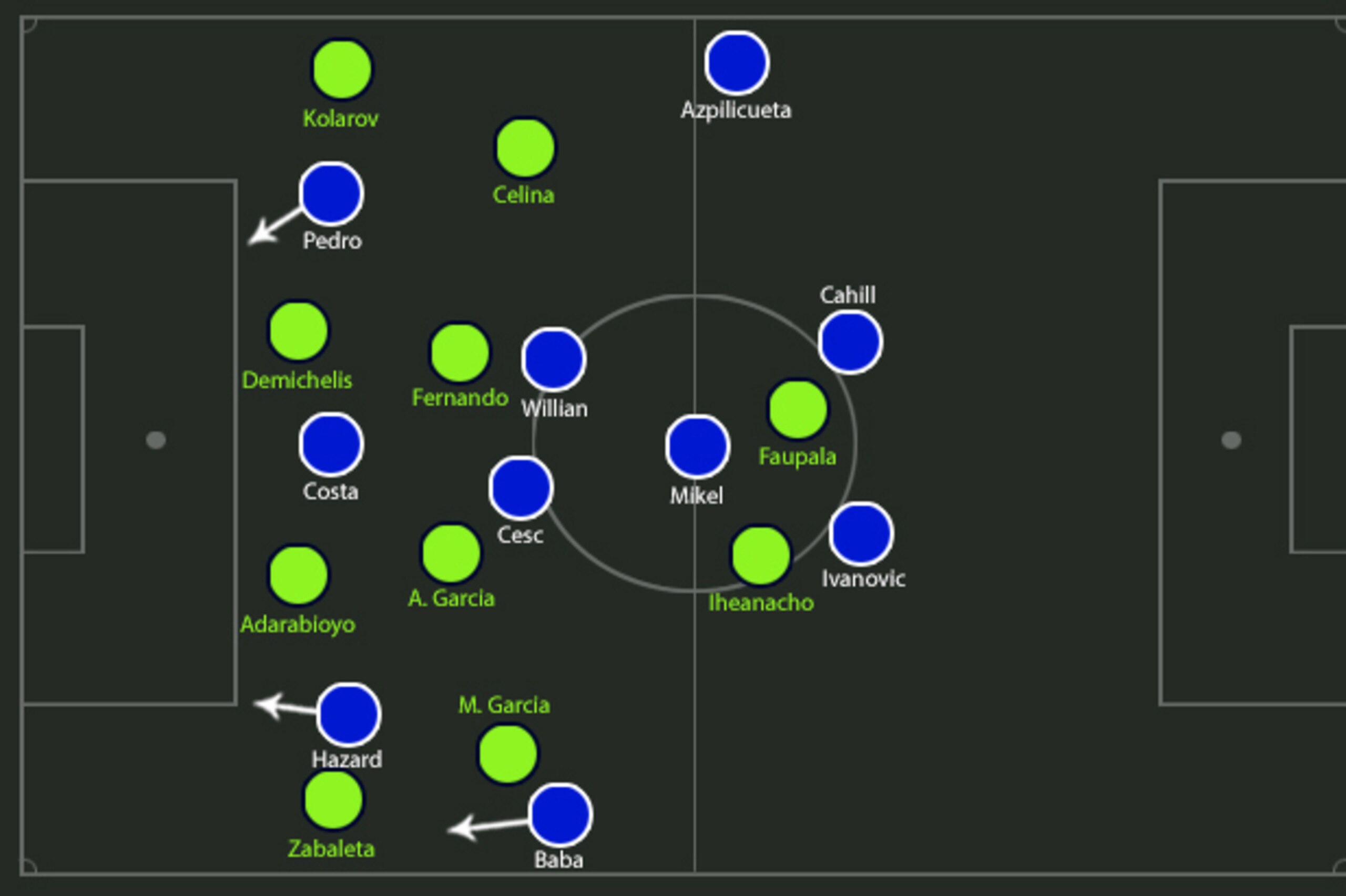
Formations and XIs
TOP NEWS

Billboard Trolls Man City 👀

New NFL contenders starting to emerge after Week 4
.jpg?w=2560 "Cardinals Giants Football")
Love's Body Already 'Tired'
Chelsea went with a full-strength XI bar, perhaps, Oscar. Hazard was given a chance to redeem himself after a poor showing against Paris Saint-Germain, while John Terry’s continued, enforced absence allowed the Blues to play Cesar Azpilicueta on the right again.
Manchester City made a jaw-dropping amount of changes, with six teenagers in the XI and reserve goalkeeper Willy Caballero between the sticks. It was a flat 4-4-2 with Kelechi Iheanacho and David Faupala up top.
Chelsea Expose Full-Back Weaknesses
After a shaky opening six minutes or so, Chelsea found their rhythm and immediately began to push Manchester City’s buttons in defence. Tactically speaking, they worked the space and the man advantages perfectly.
The left emerged as an area of joy despite it being held by veteran Pablo Zabaleta, and Chelsea began pushing Abdul Baba Rahman high up on the flank and allowing Hazard to nip into the space that opened up as a result of his roaming. Overloading on that side gained them plenty of territory and helped them established dominance in possession.
Zabaleta struggled one-on-one, and Hazard took him apart with speed and movement. From there, he and Baba took it in turns to swing crosses in from left to right in order to create goal-scoring chances.
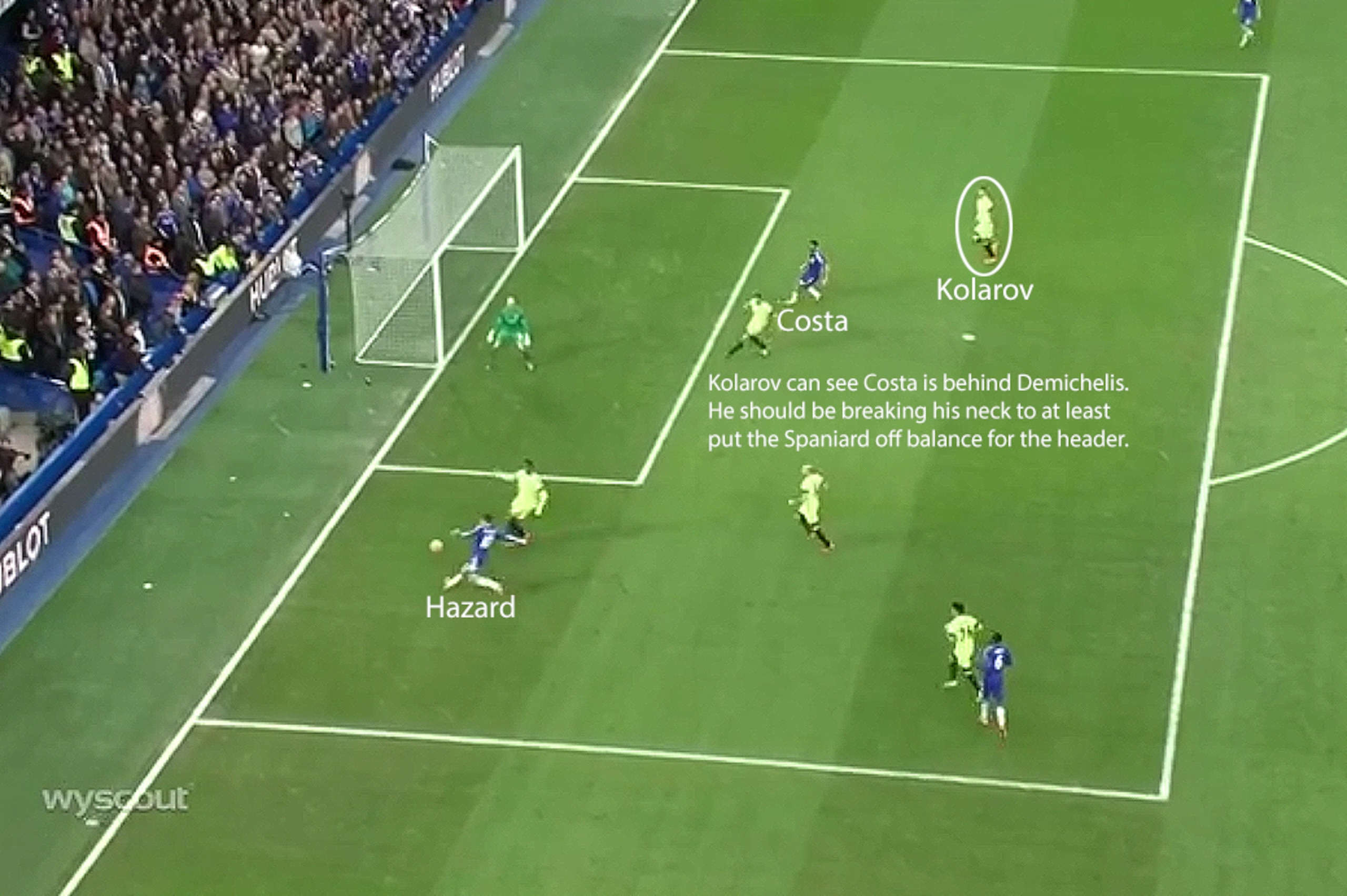
This route to goal took advantage of City’s other defensive weakness: Aleksandar Kolarov’s unwillingness/inability to track and mark runners into the box. Offensively he can be a true weapon, but going the other way he’s a complete liability.
Kolarov stood and watched as Costa, unmarked, headed home in the box to open the scoring, and he let Pedro glide in several times and shoot on goal—first hitting the post, then chesting it past Caballero only to be called offside.
It’s perhaps ironic that against one of the most inexperienced sides City will ever field, it was the two seasoned full-backs—not the rookie centre-back—that were picked on. The centre-back, Tosin Adarabioyo, played well considering that.
Disconnected 4-4-2
City’s flat 4-4-2 was defensive and reactive, looking to reduce space between the lines and utilise a striking combination on the counter-attack. It was a case of sitting in and tackling, then playing direct balls forward to Iheanacho or Faupala.
Iheanacho continually attempted to spin in to the space left by Baba in the early stages, finding room to run, while Faupala—a more physical presence on the day—locked horns with and occupied the centre-backs.
They interacted well with each other when they had the chance, hauling City up the pitch, but the opportunities were too infrequent. The distance between City’s midfield line and the two strikers was massive—we’re talking 20-30 yards at some points—and the disconnect between the two sections of the team meant they were never able to build progressive attacks.
It left City with very little of the ball and very few chances to get out of their own half.
City’s Bemusing Defensive Line
Despite playing deep-set football out of a counter-attacking 4-4-2, City continually conceded space—and therefore chances—in the space behind their defensive line. It’s a problem which has reared its head before with different personnel, and it cost them dearly here.
When defending off the ball, City chose to make the 18-yard line their offside line. When opposing players ran in behind that line, they opted not to track them man for man, trusting instead that the offside flag would be raised.
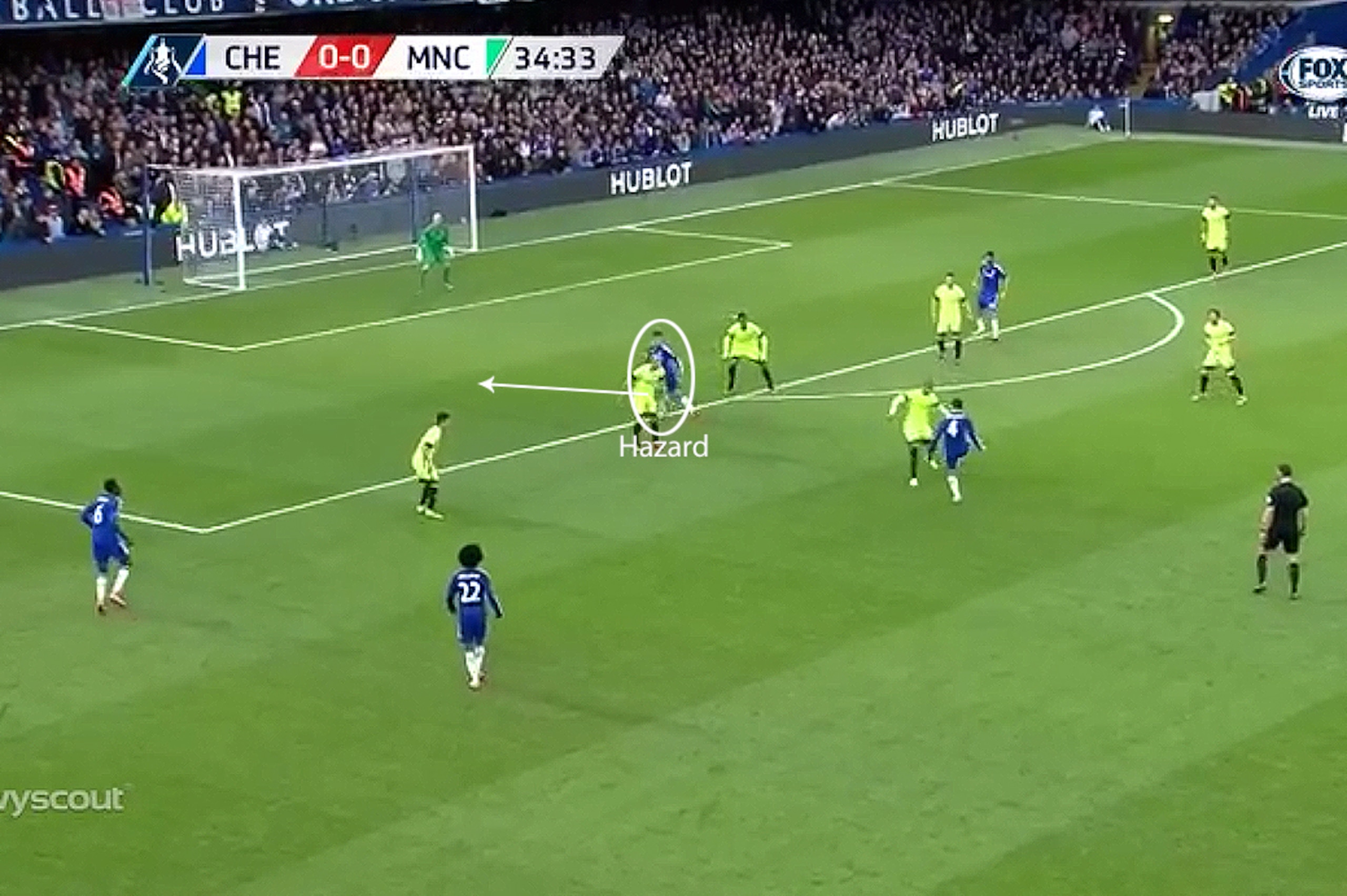
It’s risky; really risky. It invites second strikers and wingers to dip in behind the line to collect dinked passes over the top, which in turn lead to one of the most dangerous types of attack in football: the byline cut-back into the penalty area.
City’s commitment to this offside tactic, in conjunction with a lack of pressure on ball-players like Hazard and Cesc Fabregas, led to numerous chances being conceded. Chelsea worked the corners of the pitch superbly—but only because City allowed them to.
Chelsea Counters
The second half swung into Chelsea’s favour quickly. After three minutes the Blues countered via Willian and Hazard, with the former receiving a return pass on the run and burying it. Again, the defensive line issue contributed: Willian entered the box unmarked as both Martin Demichelis and Adarabioyo held their ground rather than played the man.

A quick-fire second from Gary Cahill—a goal that saw Chelsea use the corners well, cross the ball and the centre-back smash a finish under Caballero—made it 3-1 and effectively iced the game. City were forced to come out more and the Blues just picked them off on the reverse, eventually scoring two more.
Quick Hits
- Willy Caballero had a dreadful game. He did save a penalty, but that will quickly be forgotten among the catalogue of errors he made—three of which contributed to goals scored.
- Baba’s crossing is excellent, and his ability to push forward and use his natural left foot on the left side adds width and dynamism from deep to Chelsea’s game.
- Fabregas pulled all the strings; he was spectacular on the ball and lifted so many great passes into dangerous areas.
- Bertrand Traore came off the bench to win a penalty and score. He looked busy, willing to press and very capable in the box.
- City’s worst performers were the veterans. Caballero, Zabaleta, Demichelis, Kolarov and Fernando all struggled, whereas Iheanacho, Faupala and Adarabioyo impressed.
.jpg?w=2560 "Cardinals Giants Football")
.jpg?w=2560 "Ward Nearly Walks Out of Presser ▶️")

.jpg?w=2560 "OBJ Calls Out Giants 😳")
.jpg?w=2560 "Tyreek Deal May Come Soon")