Why Alvaro Morata Real Madrid Return Talk Is Harmful to Football's Image
The headline was encouraging. "Real Madrid say yes to Morata," proclaimed a buoyant Marca in the Spanish capital, the outlet adding that Madrid "will pay the €32 million that it will cost to bring Alvaro Morata back to the Santiago Bernabeu."
This is the potential deal and the buy-back clause that's been endlessly discussed since the Spaniard left Madrid to join Juventus in the summer of 2014, when he was among those to make room for the arrivals of James Rodriguez and Toni Kroos in another round of heavy spending from Real Madrid.
But the encouragement didn't last long.
TOP NEWS

New NFL contenders starting to emerge after Week 4

Deion Playbook Found at Hotel
.jpg?w=2560 "Cardinals Giants Football")
NFL investigating 2 referees for separate viral exchanges
The details from Marca quickly killed it:
"The intention of the Madrid club is to complete the deal for one of the most promising players in Europe. The 23-year-old has no shortage of suitors for a future sale, if that's what they finally decide. Manchester United and Liverpool appear to be two clubs that would like to buy the player.
Real Madrid believe that they could get somewhere in the region of 50 million euros for him, 18 more than what he will cost them when the transfer window opens up again in June.
"
This is the part that grates.
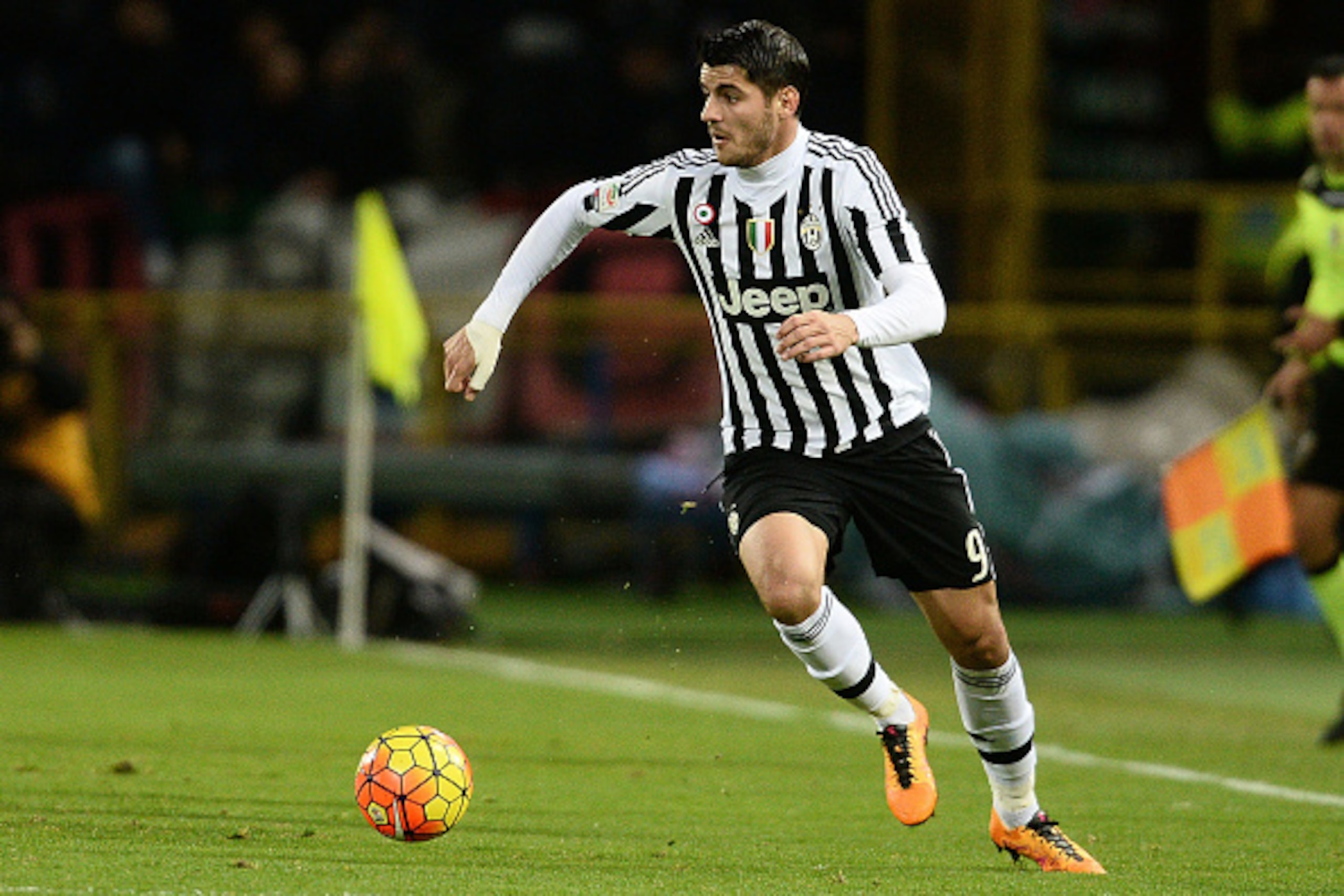
While Madrid's desire to bring Morata back to the Bernabeu is completely understandable—he's just 23, homegrown, on an upward trajectory, carries value and just last season scored crucial goals during Juventus' run to the Champions League final, two of which came against Madrid in the semi-finals—the possibility (and it's important to note it's still only that, a possibility) of exercising a buy-back clause in order to immediately sell again isn't a good look for European football.
At present, the domination witnessed across the continent from a select few has reached unprecedented levels. At Madrid, the collection of talent is staggering.
Ditto at Barcelona.
Ditto at Bayern Munich.
It shouldn't surprise that these three clubs are the last three Champions League winners. Predictably, they're the favourites to lift the trophy again this term. But their eclipsing of all else goes beyond winners' medals.
"Bayern, Barca and Real have occupied 15 of the past 24 [Champions League] semifinal places going back to 2010 (a worrying 62.5 percent)," wrote Miguel Delaney for ESPN FC. "It's a domination that is unprecedented in European Cup history going back to 1955. There has never been such a lack of diversity, but that's because there has never been such a difference in cash."
This dramatically skewed competitive balance is also a concern of UEFA. "We have to think about football in all of Europe—not only in two or three clubs," said former president Michel Platini in an interview with World Soccer Magazine last July.
Specifically, Platini was speaking of a desire to increase homegrown-player quotas across Europe in order to address competitive balance. But the details and regulations surrounding buy-back clauses might also need thought and attention.

Consider the Morata example.
Madrid are well within their rights to insert a buy-back into a deal for a departing player, but it's the increasing power of clubs such as Madrid that makes it easier for them to do so. Rivals need talent, but their negotiating positions are comparatively weak; accepting unfavourable terms from heavyweights becomes a necessary evil.
Then the real blow looms. If Madrid were to buy back Morata from Juventus this summer, they would be weakening a rival by taking a player they don't need. For them, it simply becomes a cash exercise; for Juve, it would be a damaging setback, one carrying the insult that Madrid don't even want the man they begrudgingly parted ways with.
As such, the clause becomes another driver of excess and skewed competitive balance. Already, major clubs are able to stockpile talent through the use of loan deals. Buy-back clauses add to that.
This is nothing new, of course. But in an era in which super clubs are eclipsing all else, the potential for buy-back clauses such as the one for Morata to be activated for nothing more than financial gain isn't a good look for the game and its balance in Europe.
.jpg?w=2560 "Hill Injury Update Football")
.jpg?w=2560 "Titans Giants Football")

.jpg?w=2560 "Tyreek makes another cryptic post amid Chiefs rumors")