Urban Meyer with Cam Newton Is College Football's Greatest 'What If?'
COLUMBUS, Ohio — As the door closes on an otherwise remarkable 2015 season with an ugly loss in Super Bowl 50, Cam Newton finds himself at a pivotal point in his professional career.
Despite his team's 15-1 regular-season record and his nearly unanimous MVP selection, the Carolina Panthers quarterback's historic season will now be remembered just as much for the disappointment endured on football's biggest stage as it will be Newton's 50 touchdowns and nearly 4,600 passing yards.
But compared to where his football future stood seven years ago, the 6'5", 245-pound Atlanta native is playing with house money. Dismissed from his college program for off-field issues, Newton found himself headed to junior college, with no guarantee he'd get another shot at gridiron glory.
TOP NEWS
Ochocinco's Wild NIL Offer to Star WR 💰
8 Overreactions after Week 7 of CFB Season 😬
Mel Kiper's Brutal Arch Take 😬
By now, you know the rest—Newton won a junior college national championship at Blinn College before transferring to Auburn, where he put together arguably the greatest single season in college football history, capturing the 2010 Heisman Trophy and another national title for his resume. From there, he was the first overall pick of the 2011 NFL draft and after five seasons, he found himself one win away from sitting atop the football world.
Newton's storybook career might seem to be at a crossroads as we all become prisoners of the moment, but compared to the uncertainty of seven years ago, this is everything he could have asked for—and more.
Then again, before he was forced to take the JUCO route, this is exactly where Newton was supposed to wind up; the heir apparent to Tim Tebow and Urban Meyer's next great quarterback, the former 4-star signal-caller's original path to football greatness in Gainesville was much more apparent, if not predictable.
But as his issues—including a stolen laptop and allegations of academic fraud—brought an end to his time at Florida after just two short seasons that included no significant playing time for the Gators, Newton's career soon began the winding journey that's landed him where he is today.
In the process, however, it's left us with some of the biggest "what if's?" in college football history—questions and potential outcomes that wouldn't have only affected Newton and Florida, but Meyer, Ohio State and potentially Alabama.
What would have happened had Newton's college career played out as expected with the Gators? We'll never know.
But that can't stop us from exploring some of the sport's most interesting hypotheticals that include what is now football's biggest star.
Best season ever?
Four thousand, three hundred, twenty-seven yards, 50 touchdowns, the Heisman Trophy, a 14-0 record and a BCS national championship.
That's what Newton accomplished in his only full season as a starter at the FBS level, all while playing for a head coach in Gene Chizik who would find himself fired just two years after winning a national title.
His SEC single-season record for total offense would only last a year before the mark was broken by Johnny Manziel, but when you consider what he accomplished individually and with his team, it's fair to consider Newton's lone season at Auburn one of the best in college football history.
And yet, there stands reason to believe his college career could have been even better.

While Chizik's early ouster speaks for itself and questions arise about his successor and Newton's offensive coordinator with the Tigers, Gus Malzahn, the 2010 Heisman Trophy winner was originally set to play for a head coach who is arguably the best in the nation when it comes to developing quarterbacks.
From Josh Harris at Bowling Green to Alex Smith at Utah, Tebow at Florida and Braxton Miller, J.T. Barrett and Cardale Jones at Ohio State, Meyer has a history of getting the most out of his quarterbacks in his spread system, which undoubtedly would have played to the strength's of Newton's dual-threat ability.
"I count Cam Newton because he was with us for a couple of years," Meyer said when asked about products of his offense during an appearance on his radio call-in show in 2014.
But with just 12 attempted passes and 16 rushes in his two seasons of backing up Tebow from 2007-2008, Newton's potential was hardly ever realized under Meyer. It's also worth noting that an ankle injury led to a medical redshirt after just one appearance in his sophomore season and that Tebow's return to Gainesville in 2009 would have meant that, barring injury, Newton likely wouldn't have stepped into the starting lineup until 2010 anyways.
But had that lone season as a starter come under Meyer—who recruited three Top 10 classes from 2008-2010, as opposed to Chizik—it's scary to think what Newton's numbers may have been.
At the very least, they would have likely have been good enough to solidify the Gators' status as national title contenders—which could have created an interesting predicament for his head coach.
No more Meyer for hire?
Meyer has won big everywhere he's been—for most of the years he's been there, the lone blemish on his coaching resume came in 2010, one year after he unexpectedly announced his retirement before quickly rescinding it at the conclusion of the 2009 season.
Meyer would make that retirement—from Gainesville, at least—permanent at the end of 2010 as the Gators' reign atop the college football world came to a crashing halt. After accumulating a 57-10 record in his first five years at Florida, Meyer's 2010 team recorded a 7-5 record in the regular season—which still stands as his worst in his 13 years as a head coach.
While it's popular to look back now and blame the Gators' demise on the alleged erosion of their culture, the reality remains that opposed to the first nine years of his coaching year, in 2010, Meyer simply didn't have a quarterback he could rely on.
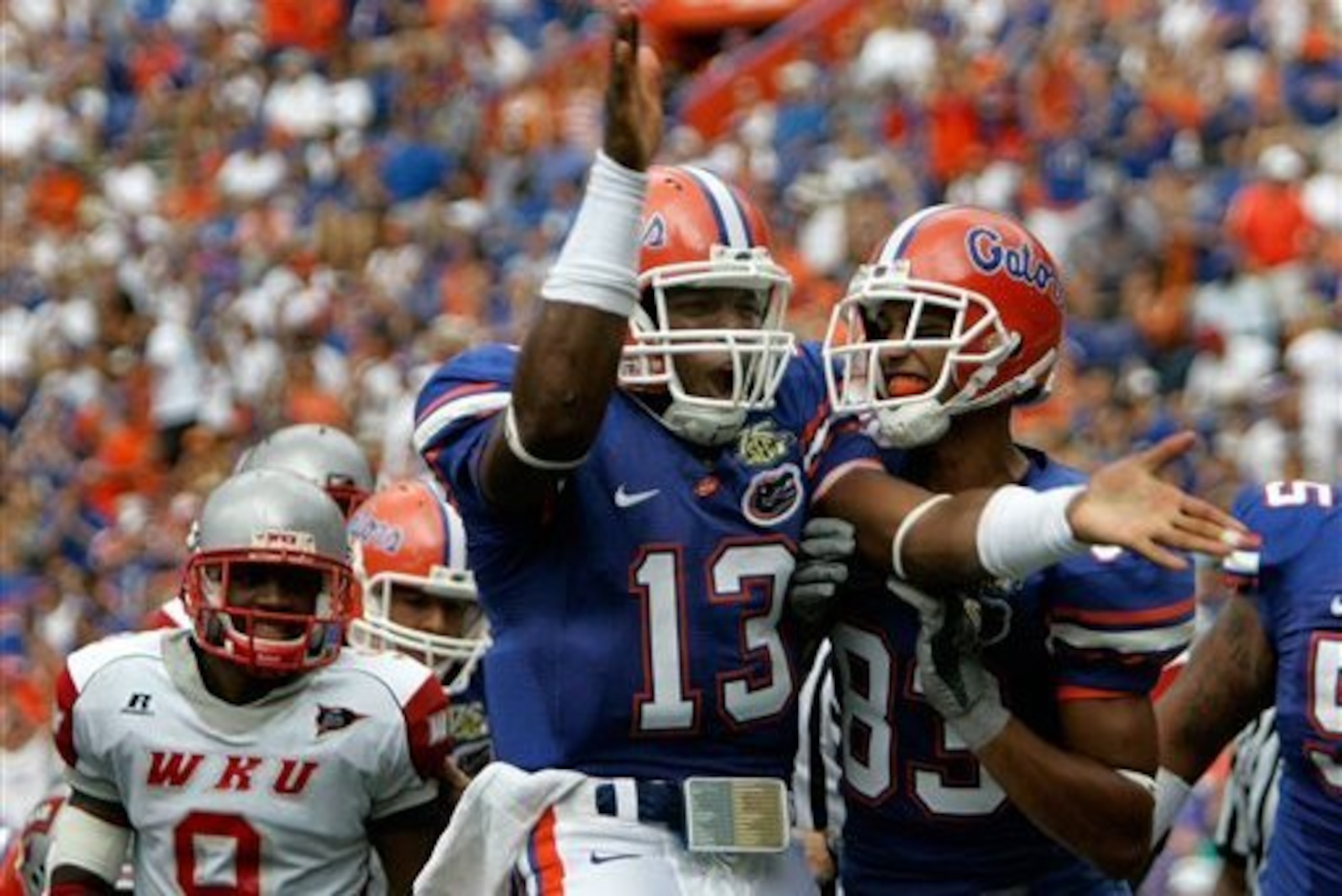
In the same season that Newton made his return to the SEC, Meyer found himself shuffling the ineffective John Brantley and converted skill players Jordan Reed and Trey Burton in and out of the lineup. On the year, Florida's quarterbacks threw 12 total touchdowns and 12 interceptions.
Had Newton still been around, it's a safe assumption that those numbers would have been significantly better—perhaps even good enough to keep the Gators a national title contender as Auburn would have then been without its star quarterback.
What that would have meant for Meyer, who came out of his short-lived retirement to take over at Ohio State, we'll never know, but the now-three-time national champion head coach isn't interested in playing the "what if?" game.
"I’m not going to go there," Meyer told Bill Rabinowitz of the Columbus Dispatch. "I learned six years ago not to live in a world you can’t. It’s 2016. We just had a great recruiting class and Cam is in the Super Bowl. It’s great."
Nevertheless, it's still worth wondering whether Newton could have kept Meyer in Gainesville, and if so, for how long?
Perhaps it would have been long enough to put a dent in—if not stop—what is still college football's premier dynasty.
Tide rolled?
Having won this past season's College Football Playoff championship, Alabama finds itself on a remarkable run that includes four national championships in the past seven seasons. The Crimson Tide don't figure to be slowing down anytime soon, with Nick Saban having just signed the nation's No. 1 recruiting class for the the fourth time in the last five years.
But of the road blocks Alabama has seen in the better part of the past decade, Newton and Meyer have provided the two most viable threats.
In his lone appearance in maybe college football's greatest rivalry, Newton dominated the Iron Bowl, tallying 255 yards and four touchdowns in a game that essentially etched his name in the Heisman Trophy as he handed Alabama its third loss of the 2010 season,
Meyer, meanwhile, knocked off the Crimson Tide in the first-ever College Football Playoff, as his Ohio State team defeated Alabama in a Sugar Bowl semifinal matchup.
Team the two of them up and perhaps the momentum of a potential 2010 Gators run to a national title would have been enough for Florida to reassert itself as college football's alpha dog. In fact, knowing what we know now, maybe Meyer made a mistake not turning to Newton sooner.
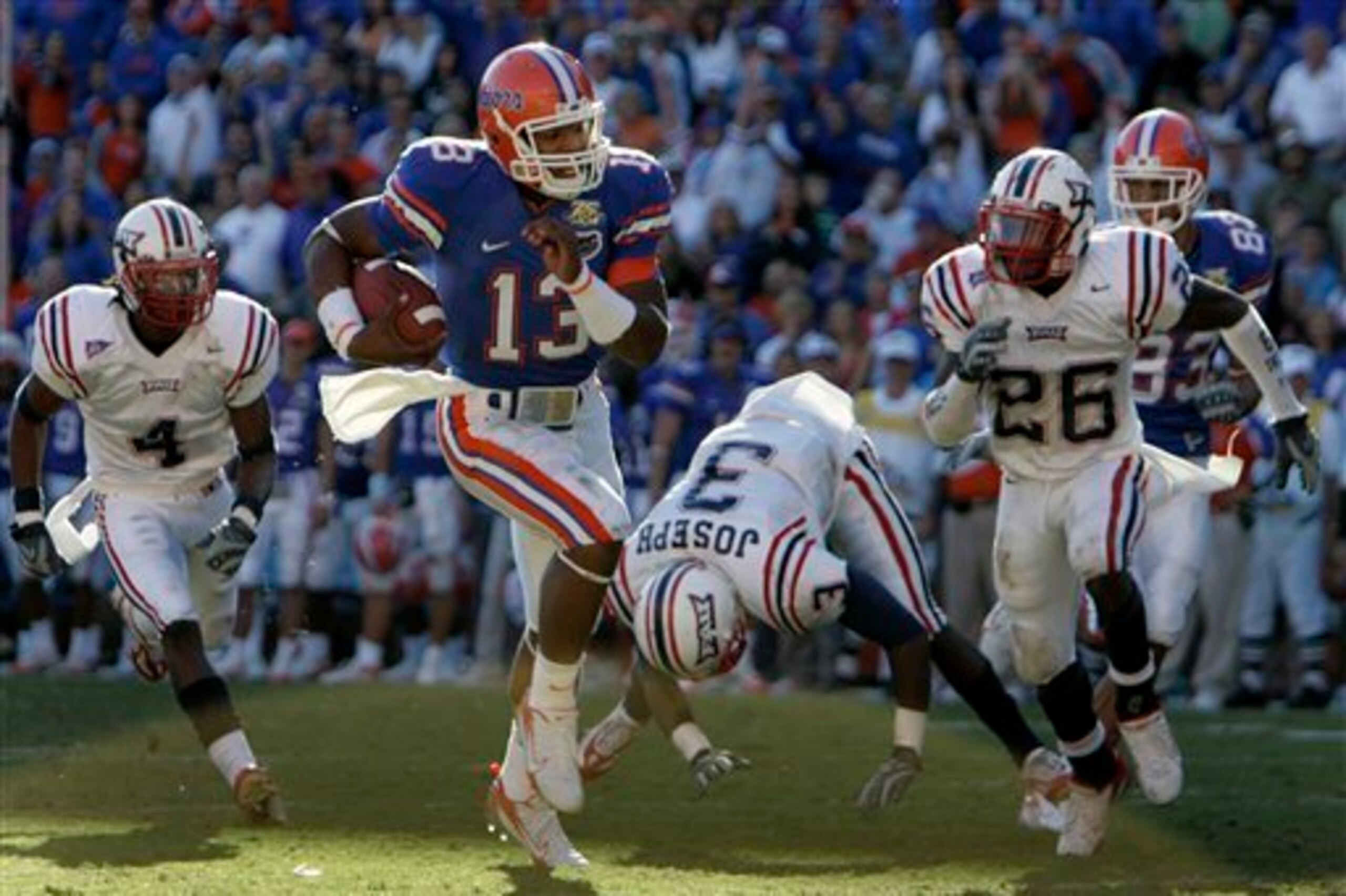
While Tebow's career made him one of college football's greatest all-time quarterbacks, there stands reason to believe that Newton could have done the same with extended time in Meyer's spread system. According to former Florida offensive coordinator Dan Mullen, the now-reigning MVP was good enough as a backup to be a championship-caliber quarterback.
"When I was at Florida [in 2008], I knew Cam Newton was the real deal but Timmy was playing," Mullen told CBSSports.com's Jon Solomon at SEC media days in 2015. "If Timmy had gotten hurt, Cam would have come in and won the championship. And that's the challenge."
It would have been an unprecedented decision to turn to Newton over Tebow, the 2007 Heisman Trophy winner and a two-time national champion. But in an alternate universe, it would have been interesting to see how Florida's budding dynasty would have played out had Tebow turned pro after the 2008 season.
Even then, Newton would have had to stay out of trouble—and stay healthy—in order to take over as the Gators' starter, and even then, there is no guarantee how the situation would have played out.
But as his career once again finds itself under the microscope, those in the college football world can't help but wonder what could have been.
And not just for Newton, but all of the big-name coaches, players and programs that he crossed paths with during his never-uninteresting path to where he finds himself today.
Ben Axelrod is Bleacher Report's Big Ten lead writer. You can follow him on Twitter @BenAxelrod. Unless noted otherwise, all quotes were obtained firsthand. All statistics courtesy of cfbstats.com. Recruiting rankings courtesy of 247Sports.
.jpg?w=2560 "Purdy Becomes Highest-Rated QB EVER 🤩")
.jpg?w=2560 "Grading WWE Raw 🔠")