


The projected 2016 NBA draft class might not offer the same star power as 2015's, but it sure could produce some high-level rebounders.
A few prospects that lack offensive upside may even be able to earn first-round money and NBA roles just for their presence under the boards.
I ranked the top rebounding prospects based on their current production and rebounding percentages (an estimate of the percentage of available rebounds a player grabs while on the floor, per Sports-Reference.com), as well as the strength of their physical tools and instincts from an NBA perspective. The players with greater NBA potential were given the benefit of the doubt in close calls.



5. Brice Johnson (North Carolina, PF, Senior)

Rebounding percentage: 21.1 percent
Rebounds per game: 10.2
Johnson flipped the switch and returned to the North Carolina Tar Heels with bigger bounce and greater energy.
Though always a solid rebounder—Johnson averaged 12.1 boards per 40 minutes as a freshman and 12.6 during each of his next two seasons—he's taken his activity to a different level through 17 games this year.
Johnson already has 27 putbacks, per Hoop-Math.com, and averages 15.2 rebounds per 40 minutes. He isn't the biggest, strongest or longest, but Johnson can really jump, which simply allows him to bring in rebounds at high points above traffic.
I'd rank him higher if 76.9 percent of his boards didn't come at the defensive end. It also took him over three years to reach elite status.
But given the improvement, monster production and unteachable athletic ability, Johnson has to have broken into the 2016 first-round discussion. Even if a post game or jumper never develops, it's not crazy to think teams drafting in the 20-30 range could view him as an energizer.
4. Ivan Rabb (California, PF, Freshman)
Rebounding percentage: 18 percent
Rebounds per game: 8.7
Rabb established himself as a volume rebounder early in high school—he put up big numbers in the EYBL and averaged a combined 18.7 boards per 40 minutes between the 2013 FIBA Americas Championships and the 2014 FIBA World Championships. He also double-doubled in 23 minutes during last April's Jordan Brand Classic and grabbed six rebounds in 15 minutes during the 2015 McDonald's All-American Game.
His reputation has held strong so far at California, where he's pulling in 8.7 rebounds per game at a rate of 13 per 40 minutes.
Rabb has an excellent nose for the ball and a live motor around the basket. His size, improved body and bounce have also translated to 22 putbacks through 17 games, per Hoop-Math.com.
He has some of the best hands you'll see. The ball seemingly sticks to them, even when he's forced to use just one or he's tangled up around the hoop.
Though there are other quality prospects with slightly higher rebounding percentages, most of them are a lot older than 18 years old. Either way, Rabb's blossoming post game and shooting touch should help drive upside and top-10 interest. His athleticism and rebounding ability just speak to his high basement floor.
3. Domantas Sabonis (Gonzaga, PF, Sophomore)
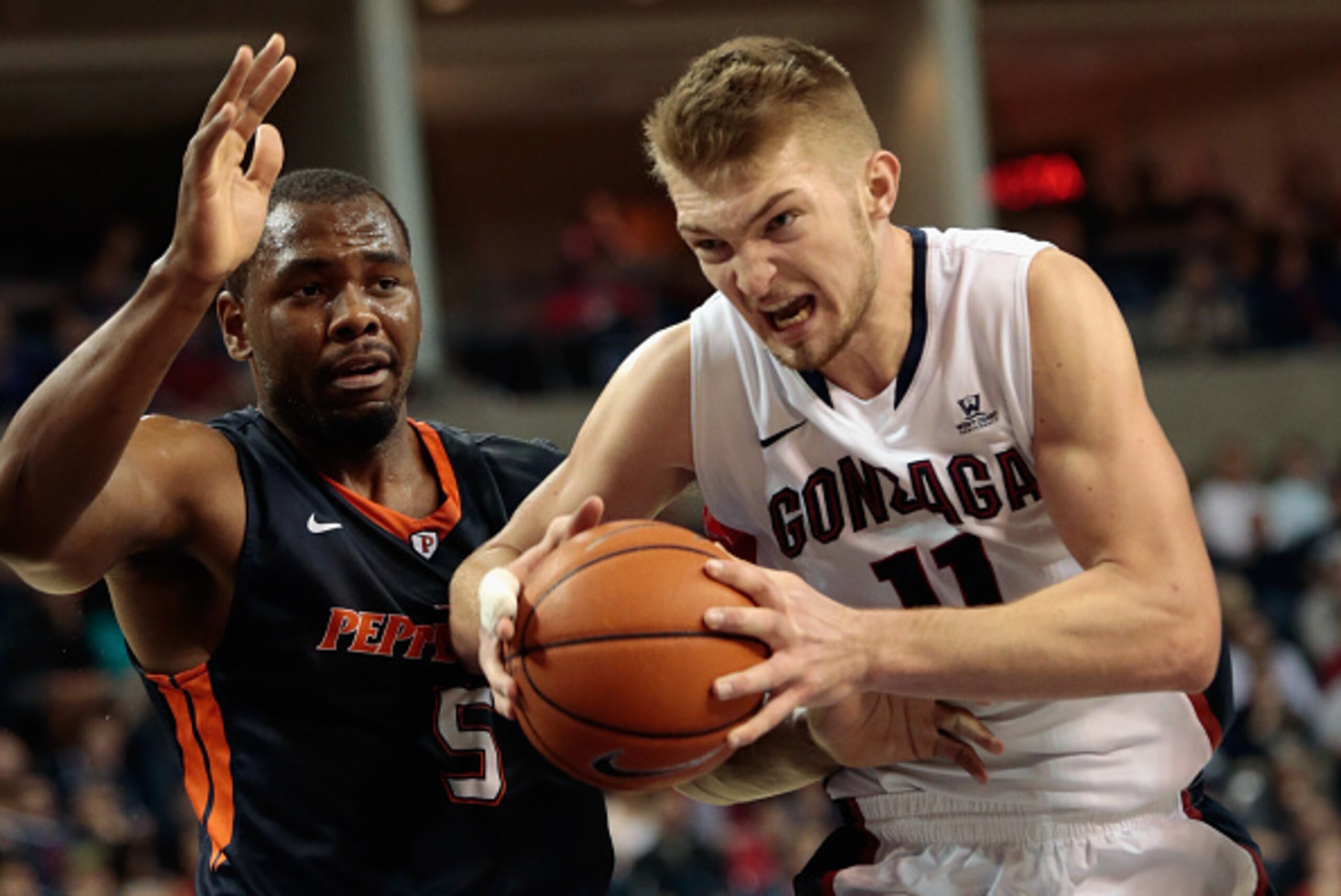
Rebounding percentage: 19.5 percent
Rebounds per game: 11.0
He's averaging 18.9 points per game, but NBA teams interested in Sabonis are likely coveting his rebounding motor more than anything else.
He leans on effort, toughness and persistence over athleticism. Sabonis plays with high energy and intensity under the boards, where he's currently averaging 11 rebounds per game and 14.3 per 40 minutes.
On the defensive glass, he does a nice job of locating his assignment and sealing opponents off before tracking down the board.
He may not need an offensive game or shot-blocking potential to carve out an NBA role. Fundamentally sound with visible instincts and strong 6'11", 240-pound size, Sabonis has rebounding specialist written all over him.
2. Jakob Poeltl (Utah, C, Sophomore)

Rebounding percentage: 19.6 percent
Rebounds per game: 9.4
Poeltl's physical tools and interior presence help create a sense of security tied to his NBA outlook. Worst comes to worst, his 7'0" size, mobility and toughness inside should translate to post defense, rim protection and rebounding.
Averaging 14.1 boards per 40 minutes, Poeltl is an anchor in the middle for Utah. He plays through contact and anticipates misses, particularly on the offensive glass (career 14.5 percent offensive rebounding percentage), although his defensive rebounding percentage has also risen to 25.9 percent from 20 percent this year.
Light on his feet with below-the-rim strength, Poeltl can seal off opponents down low or leap above them to secure loose balls.
There just isn't any reason to think his tremendous rebounding numbers in college shouldn't translate from one level to the next.
1. Ben Simmons (LSU, Freshman, SF/PF)

Rebounding percentage: 20.1 percent
Rebounding per game: 13.1
Simmons' identity still revolves around point-forward skills and passing instincts, but his rebounding activity has become just another selling point.
He's third in the country with 13.1 rebounds per game, having pulled in at least 10 in 12 of 15 games.
And it's not just because he plays 33.9 minutes a night. Simmons' 20.1 percent rebounding percentage and 15.5 boards per 40 minutes are both convincing stats.
At 6'10", power forward size, a strong frame, above-the-rim athleticism, terrific hands and a competitive edge fuel Simmons' rebounding prowess. He's a fighter under the offensive boards (19 putbacks, per Hoop-Math.com) and has a quick second jump.
Meanwhile, his ability to clean the defensive glass (9.5 defensive rebounds per game) leads to easy buckets the other way, considering he can handle the ball and push the break before defenses can set.
You just can't argue against the consistent volume numbers or his physical tools and coordination. Simmons should ultimately be a strong bet to log a triple-double whenever he hits the 10-assist mark.
All advanced stats courtesy of Sports-Reference.com and Hoop-Math.com

.jpg?w=2560 "Raiders Could Start Mendoza")

.jpg?w=2560 "Rodgers Iced Out on Plane 💎")
.jpg?w=2560 "🚨 Week 8 AP Top 25 Poll")
.jpg?w=2560 "Fantasy Waiver Wire Stars 🤩")
.jpg?w=2560 "Packers Safety Slams Refs 🤬")
