

Even just three games into the SEC season, we have still learned quite a bit about the Kentucky Wildcats.
Kentucky is off to a 2-1 start in conference play, moving to 12-3 on the year and continuing a trend of inconsistent performances. At times, this team seems talented enough to beat anyone in the country. Other games feature a squad that doesn't even appear like it should be ranked in the Top 25.
Besides just the wins and losses, a deeper look at the play highlights a few positives and negatives already seen in the first three games in the SEC. Even with plenty of time to correct any problems, it's important to take note of what is and isn't working in the early going.
With that in mind, here is a look at the top takeaways from the team's 2-1 start in conference play.
Guard Play Remains Among Best in Country
1 of 5
One constant throughout the season and into SEC play has been the performances of Tyler Ulis and Jamal Murray.
Isaiah Briscoe certainly has his moments and remains a big part of this team, but the two-man attack of Ulis and Murray could make up the best backcourt in the country.
Murray continues to take a high volume of jump shots each game, but this has turned into a lot of points, with at least 18 in three SEC games. With just five total turnovers in this stretch, the freshman is also improving his decision-making and becoming a more efficient player on the court.
Meanwhile, Ulis provided big scoring efforts with 43 combined points against Ole Miss and LSU before taking a backseat in the blowout win over Alabama, finishing with eight points and eight assists. In three conference games, he is averaging an impressive 17 points and eight assists per game.
There are still questions about Ulis' outside shooting and Murray's shot selection, but they are still playing great basketball over the past few games and have the ability to keep it up.
As long as they are on the floor, Kentucky has a good chance of winning any game.
Rebounding Will Be Big Part of Success/Failure
2 of 5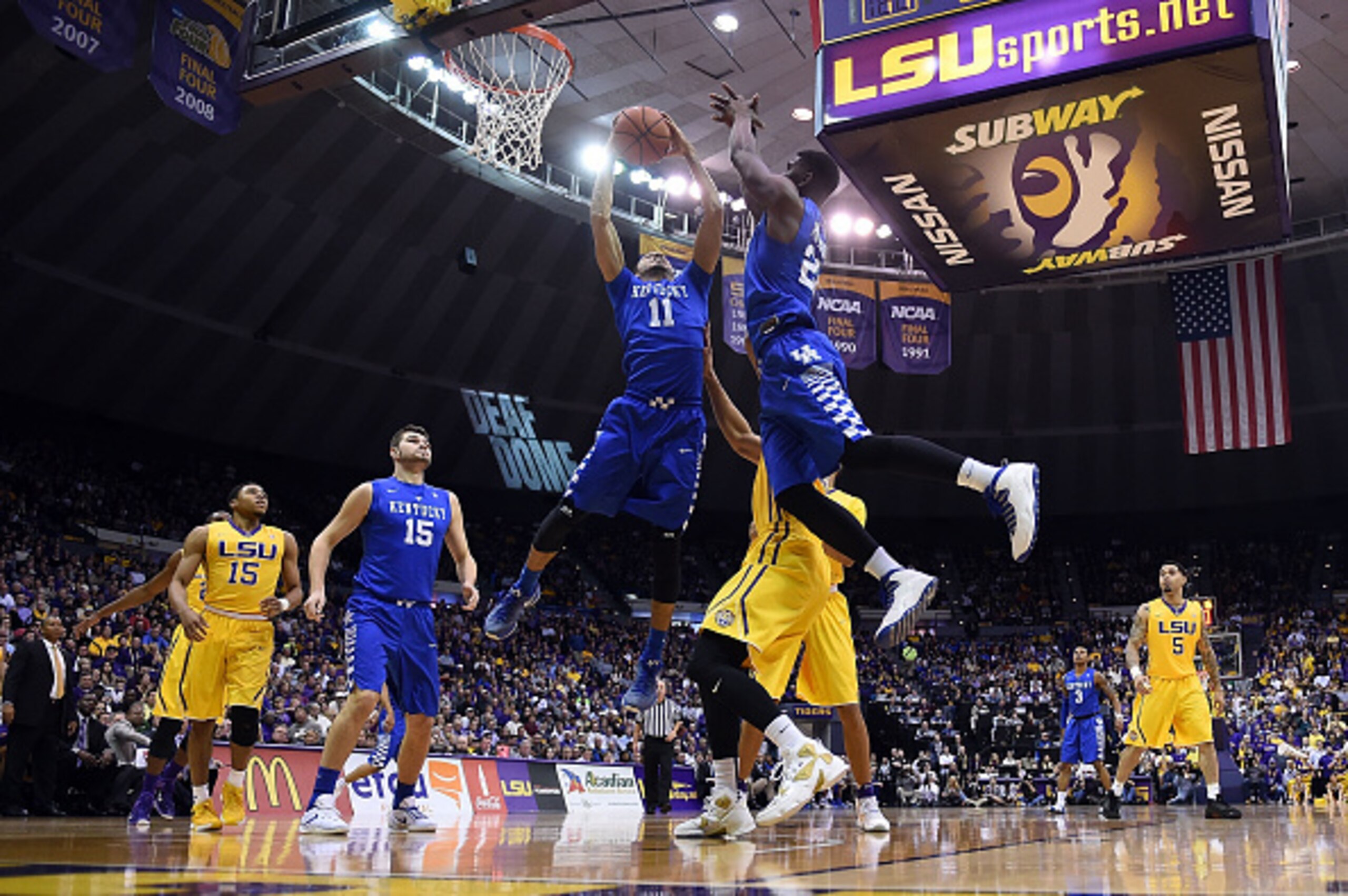
One of Kentucky's biggest strengths this year has been its offensive rebounding. Marcus Lee has been a force on the offensive glass while Alex Poythress and others help the squad rank seventh in the country in offensive rebounding rate at 40.7 percent, according to KenPom.com.
The effort in the three SEC games has been even better at 41.3 percent, thanks to 20 offensive boards against Ole Miss and 14 against Alabama. These efforts were key in dominating inferior opponents, as it turned seemingly every missed shot into an easy putback.
Unfortunately, it was the play on the other side of the court that helped decide the game against LSU. The Tigers finished with 16 offensive rebounds and won the overall rebounding battle 46-32 in an 18-point upset win.
The team's size and athleticism in the post can be a big factor in controlling games, but a poor effort on the glass could also be the key to some bad losses. It will be up to the players which result they want to see.
Free-Throw Shooting Could Hold Team Back
3 of 5
Over the past month, it seems free-throw shooting for Kentucky has gone from below average to bad to a full-blown crisis.
The team is hitting 65 percent of its shots from the charity stripe for the season, which isn't great but is much better than the 56.2 percent in conference play. While this is a small sample size, it is also a major problem for a team that spends so much of its time finishing in the paint, where there is a lot of contact.
Tyler Ulis can usually be relied upon to hit shots, but Isaiah Briscoe (3-of-13 in the last three games) and Marcus Lee (1-of-10) are huge liabilities. The Wildcats have left a lot of points on the line this year, and this will only become a bigger issue against better competition.
This will especially be an issue late in games as Kentucky tries to close out a lead. The squad hasn't had too many single-digit-point games this year, but opposing teams are certain to take advantage of this problem as they try to claw back in the final moments.
If these players can't hit their free throws, it will be difficult to hold any lead.

.jpg?w=2560 "Rams Raiders Football")

Frontcourt Lacks Depth
4 of 5
Marcus Lee and Alex Poythress have been better than expected this season to take over the starting spots in the frontcourt. The duo plays good defense, rebounds well and scores in the post when given the opportunity.
The same cannot be said about Skal Labissiere, who went from top NBA prospect to major question mark in half a season. He is currently averaging 8.1 points and 3.3 rebounds per game and hasn't reached double figures in over a month.
Behind him on the depth chart are Derek Willis and Isaac Humphries, two players who have struggled to even get on the floor this season.
When Lee and Poythress are playing, Kentucky can more than hold its own in the low post. The problems come from when either is injured, needs rest or gets in foul trouble. The last of which was a major issue in the loss to LSU, with Lee fouling out in five minutes and Poythress scoring just four points before fouling out himself.
While the two starters have to do their best to stay on the court, they won't play 40 minutes per game. Kentucky needs some of the reserves—especially Labissiere—to step up and contribute at a higher level.
Road Play Must Improve
5 of 5
Kentucky has played only three true road games this year. They have resulted in a 10-point loss to UCLA, an 18-point loss to LSU and a win over Alabama. The last victory was important, but it was still close for much of the game before Kentucky pulled away late, and the Crimson Tide aren't exactly the toughest competition.
What we have learned is that playing on the road in college basketball is difficult. It is even tougher for a team filled with freshmen and other players with little experience coming into the season.
You would think that after 15 games, every player is comfortable competing at this level, but there is no way to simulate 15,000 angry fans in an opposing arena. It will also only get tougher with road games against Kansas, Vanderbilt and others still on the schedule.
This young team has to figure out a way to play better, smarter and with more intensity on the road or else the Wildcats will see more games like the loss at LSU.
Follow Rob Goldberg on Twitter for year-round sports analysis.


.jpg?w=2560 "Rodgers Iced Out on Plane 💎")
.jpg?w=2560 "🚨 Week 8 AP Top 25 Poll")
.jpg?w=2560 "Packers Safety Slams Refs 🤬")