


So they're there. They've made it. Somehow. This wretched year is over.
"Real Madrid sign off 2015 with victory," ran the headline at the club's official website on Wednesday evening, which, for raw facts, of course, was true. But victory wasn't the whole story here, not even close.
Wednesday was about underlying themes, about a (another) story of division, talent and disorder rolled into one. In a manner that was perhaps fitting, Real Madrid didn't just sign off 2015 with victory, they signed off 2015 with an afternoon that summed up their entire year.
TOP NEWS

Final Men's Ballon d'Or Rankings 📊
Highlights and Viral Moments 🍿

Carrick Replacement Options 📝
When 2015 is reflected upon in the Spanish capital, inevitably it will be the major events that will stick in the mind most—the capitulation at the Vicente Calderon, the chaos at home to Schalke, the sacking of Carlo Ancelotti, the exit of Iker Casillas, the ability of a "fax machine" to ruin a marquee signing, the mauling from Barcelona, "Cadizazo," the club's penchant for pointing fingers at everyone but themselves—but beyond that, perhaps the major story of the year is the one that's lingered all year. That combination of division, talent and disorder. The unshakeable sense that Real Madrid have become a supremely talented mess.
In that regard, Wednesday might have represented something of a peak, too.
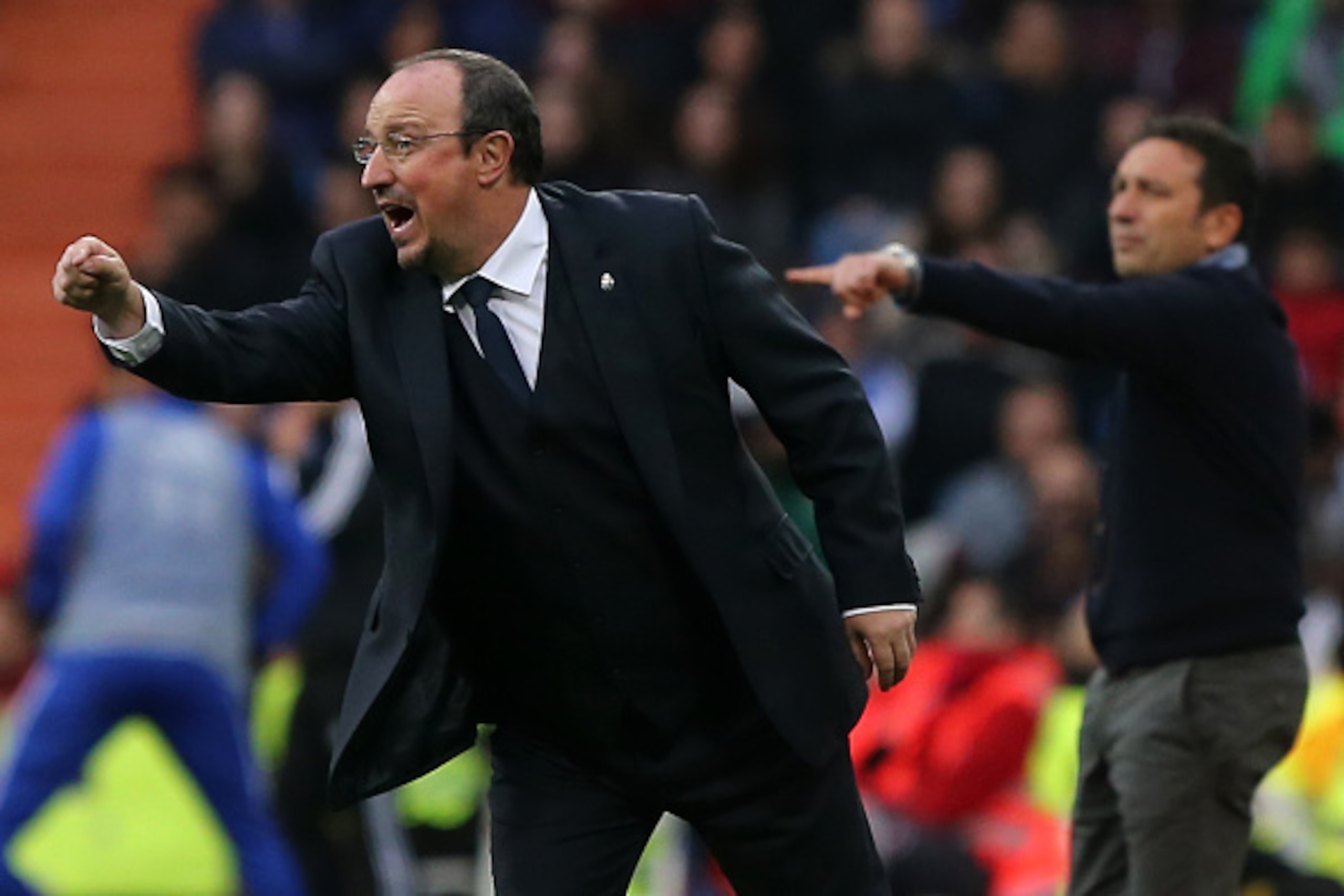
Prior to kick-off against Real Sociedad, the mood at the Bernabeu had been as icy as ever: Whistles were heard as names were announced, and a chorus of them echoed around the stands for Rafa Benitez. Those whistles persisted for an hour, and it wasn't hard to understand why.
After a bright opening five minutes, Madrid were a picture of dysfunction and disengagement against the Basques. Lacking intent, lacking any sense of shape, the hosts allowed the contest to be loose and chaotic, the ball flying from end to end as attacks wandered through a strikingly vacant midfield.
Sound familiar? You bet. "This was how the game got under way; in fact, it's how most games in the Bernabeu start," said a critical AS. "This Madrid side stop and start, without ever really pinning back their rivals, without really winning over the home support, and without offering the kind of continuity that would help make the peace."
In the first half alone, La Real had a strong penalty shout denied; Keylor Navas was forced to fly off his line to deny Imanol Agirretxe; Jonathas waltzed through three Madrid players unchallenged and went just wide with a free header; Bruma and Sergio Canales thrived in the space afforded to them on the left by Danilo; a four-on-three counter-attack for the visitors that should have amounted to more fell apart, almost because they didn't know what to do—almost because they were astonished at how much space they were being afforded.
In the dugout, Benitez was visibly furious. When the teams went to the break, Real Madrid only led thanks to a pair of penalty kicks. Cristiano Ronaldo missed the first, but he put away the second. AS called both of them "dubious." Marca called them "non-existent." Those same adjectives could have been used elsewhere, and after the interval, Madrid got worse.
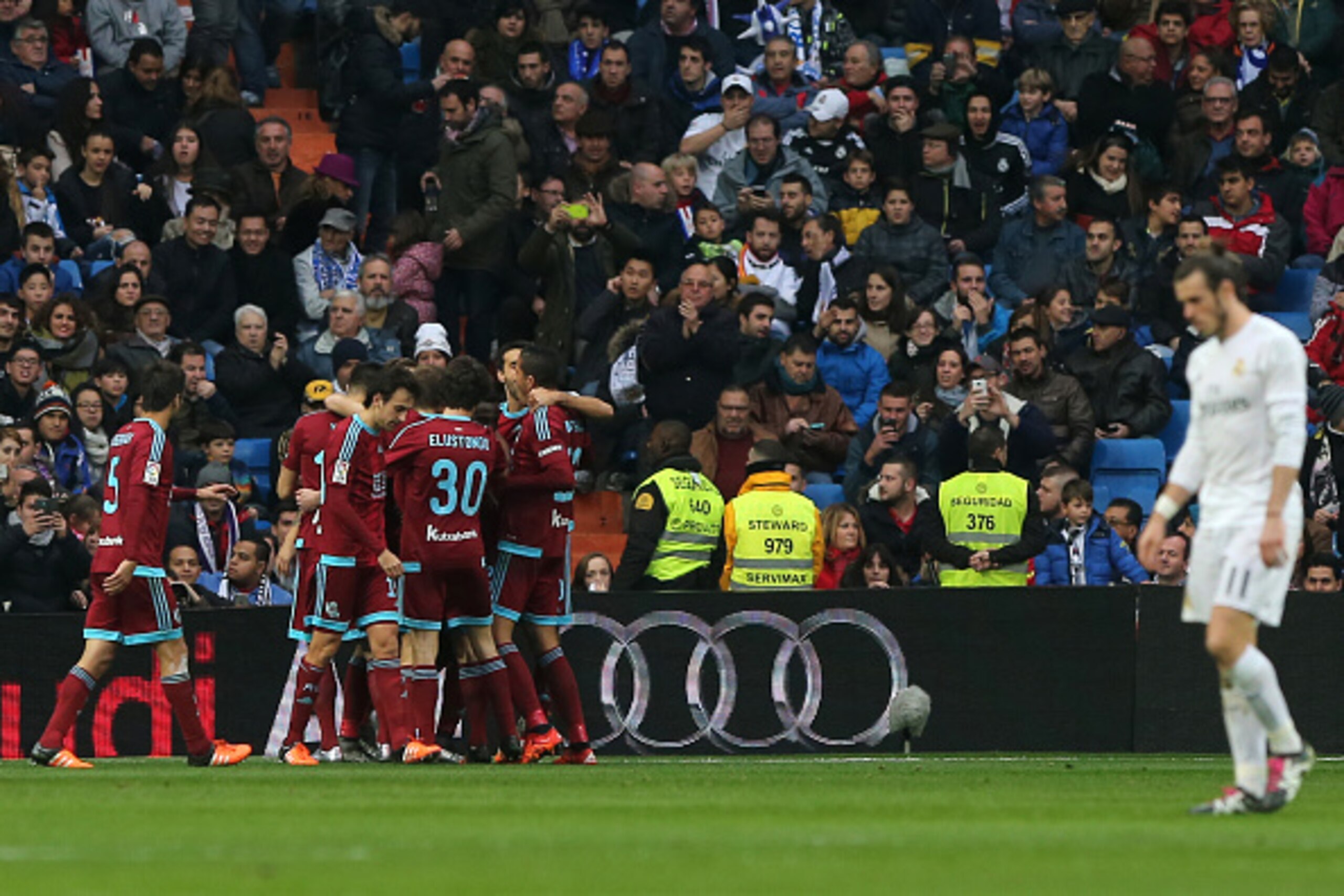
Capitalising on more lax defending, Bruma equalised with a fine strike. Minutes later, he should have scored again. And soon after that, again. Somehow, a team in the bottom half of the table, a team that had seen two of their best players depart with injury in the first half, were dictating terms.
As they did, the Bernabeu grew even icier. Benitez rung the changes, but what settled matters was a familiar quality: raw talent. With a wonderful left-footed volley, Ronaldo restored Madrid's lead; with a sumptuous ball to Lucas Vazquez, Gareth Bale reinforced it.
That was that, but in the bigger picture, nothing had been solved.
At times on Wednesday, Madrid's shape was so messy they bordered on not having one. Theoretically, it was a 4-3-3, but James Rodriguez often played as a fourth forward, and Danilo held the position of a right-winger. At best it was a 4-2-4. At worst it was a 3-2-5, the still frames damning.
How Madrid have reached such a point of dysfunction is difficult to grasp. What feels certain, though, is that this isn't how Benitez wants it. Benitez is a manager who values organisation, discipline and order; he's a manager who seeks to develop functionality in his sides. Talent emerging above chaos isn't him, but all year Madrid have turned almost purely to the sum of their talent to win, in the process ignoring balance, togetherness and a collective mentality.
Either the instructions aren't getting through, or they're simply being ignored. And that's frustrating, because this side could be so much more.
When they click, they look brilliant; when they don't, they're disastrous. It's why Madrid's calendar year is full of extraordinary scorelines—10-2, 9-1, 8-0 and 7-3 in their favour; 0-4, 0-4 and 3-4 against them.
It's why division consistently exists at the Bernabeu: The sheer talent on the pitch proves enough most of the time, but the absence of something more, something else, acts as a handbrake.
Madrid have been that way all year. It was appropriate they finished it that way.



.jpg?w=2560 "Raiders Could Start Mendoza")
.jpg?w=2560 "Rodgers Iced Out on Plane 💎")


.jpg?w=2560 "🚨 Week 8 AP Top 25 Poll")

