

Gaudino and Kurt Nearing Exit: How Bayern Munich Can Solve Their Academy Problem
Bayern Munich are one of the few big modern clubs with a reputation for developing young talent. Their starting lineup in the 2012 Champions League final included four players from Bavaria, and one more who had joined the club as a teenager.
At the time, many Bayern fans took pride in their side’s ability to develop young players, and club administrators often scoffed at ultra-rich clubs like Chelsea, Manchester City and Real Madrid simply using spending power to rope in all the best players they could. Yet over the last few years, Bayern have become less a homegrown success story and more a mega-rich, international side.


.jpg?w=2560)
In truth, the last real success story in Munich was David Alaba, who had signed from Rapid Vienna as a 16-year-old and gone on loan to Hoffenheim for half a year before becoming a permanent starter in the Bayern team in the fall of 2011.
In the four years since, Bayern have seen young talent come and go, with few results.
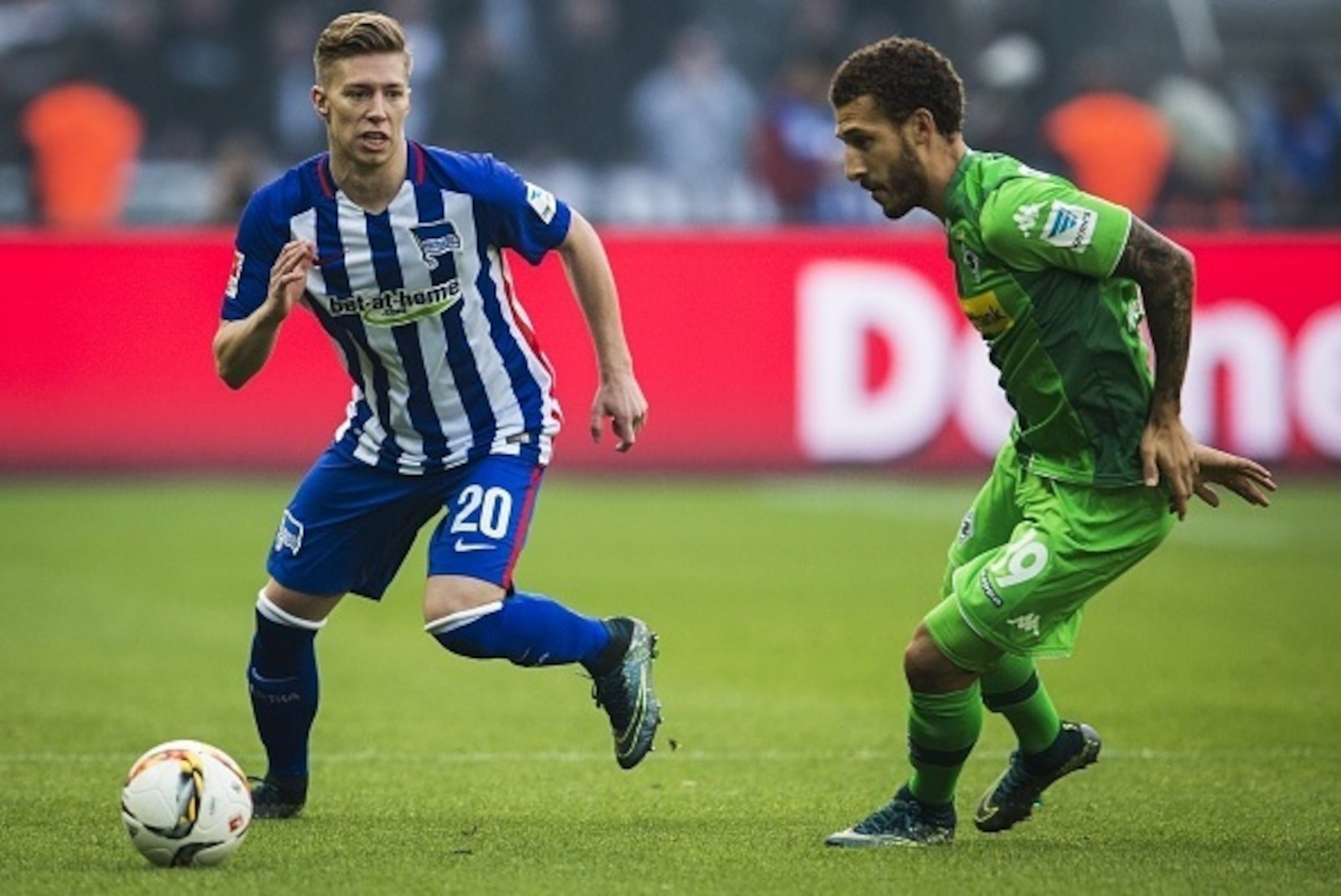
Mitchell Weiser was signed in 2012 and promised to be a bright talent at right-back, but he rarely had a chance to play and joined Hertha BSC this summer. Now despite stagnating for three years, he’s a key player in the side that has shocked all en route to a third-placed standing at the midseason point of the Bundesliga season.
Sinan Kurt was the next promising young signing, joining from Borussia Monchengladbach in 2014. He hasn’t even started regularly for the reserves and, according to German source Spox, citing Kicker, could well be on the move this January.
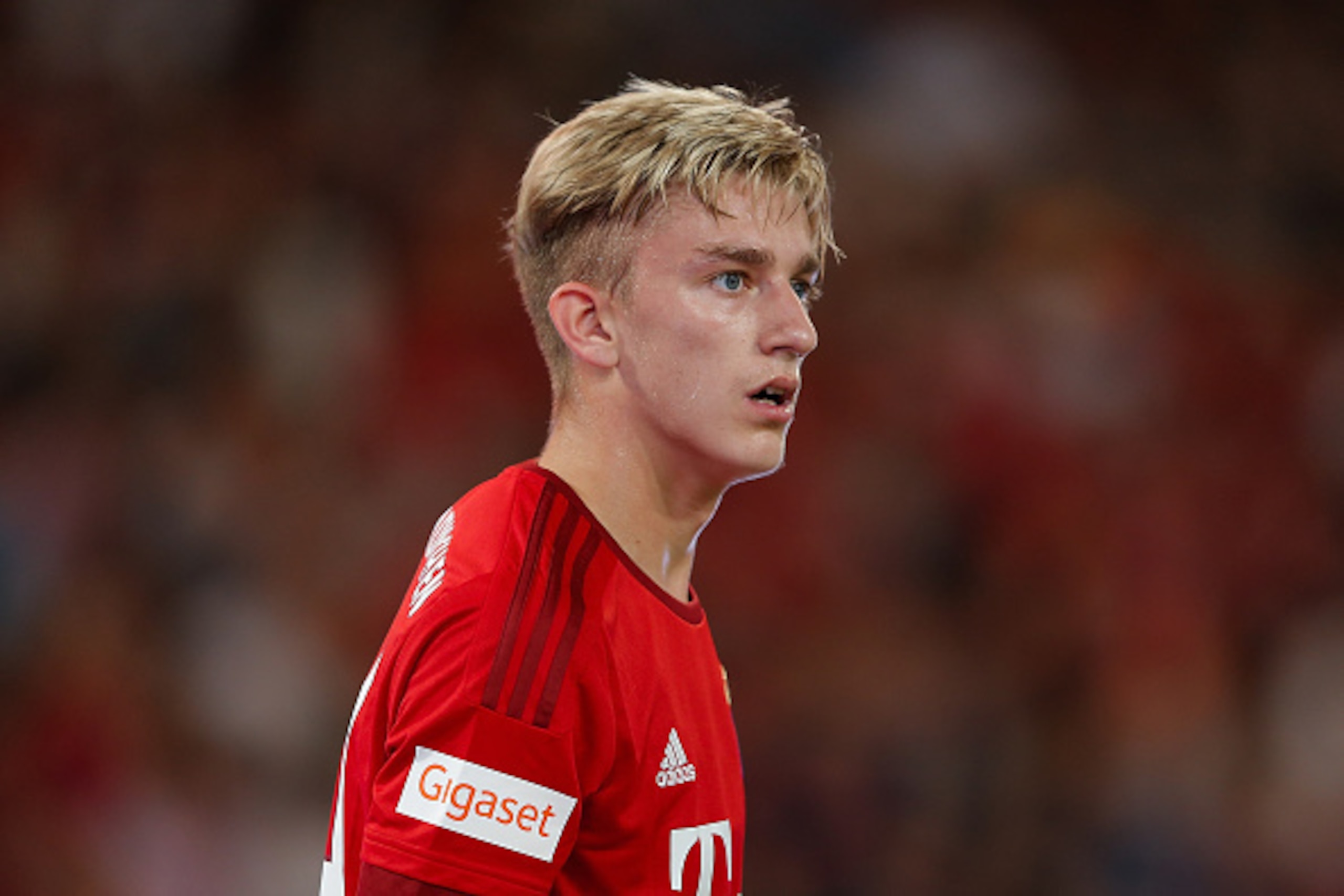
That same report claims that Gianluca Gaudino is also seeking a move, the 19-year-old having grown frustrated with his situation as a perpetual reserve. He was given some playing time at senior level last fall, but Bayern signed 20-year-old Joshua Kimmich as a direct rival in the same position and Gaudino has been frozen out ever since.
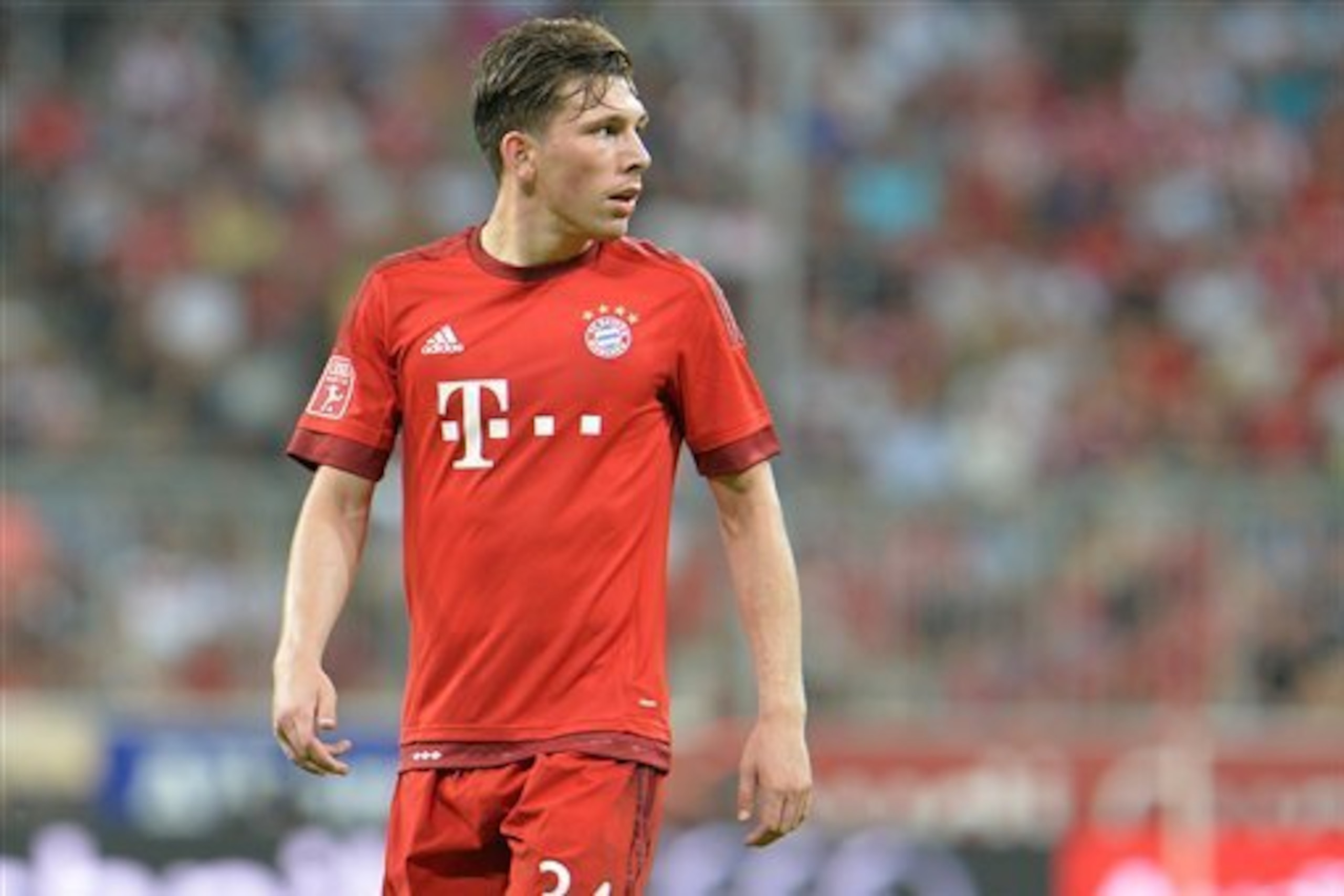
Meanwhile, Pierre Hojbjerg spent the second half of last season on loan at Augsburg but was unable to convince enough to be kept in the Bayern squad in 2015-16. He was later loaned to Schalke, a rather foolhardy decision from the Allianz Arena bosses given that he had direct competition in the form of Leon Goretzka, who is also 20 years of age. Hojbjerg has hardly played as a result.
The stories of Kurt, Gaudino and Hojbjerg aren't due to a lack of talent, but a lack of opportunity. There are many pathways to stardom.
Some, like Kingsley Coman, are fortunate enough to have an opportunity they can seize from a very young age. But consider Marco Reus, who never truly became a big star until the age of 23.
In general, players need opportunity. As Pep Guardiola said in August, per Goal: "Young players have to play. It is not good if they just training with the senior team."
Much like Barcelona, Bayern’s reputation as a youth-promoting club has outlived its reality. The fact of the matter is that a young teenage talent can only break into the first team if there is an opening: Either a squad has a weakness in a given position, or a trusted star becomes too old to contribute at a high level or sustains a long-term injury.
Over the last few years, a few clubs have emerged as ultra-rich, drawing in superstars with cash and prestige. Bayern are among them. The problem for their young players is, it means an almost insurmountable barrier keeping them out of the lineup.
If Philipp Lahm is your starting right-back and Rafinha his deputy, what chance does Weiser have? If Hojbjerg can’t get a game and Kimmich is drafted in, how can Gaudino expect to play? What message does it send him when, not long after showing some promise in a few run-outs, the club buys a player of the same position, a year older than he?
This isn't to say Bayern are wrong to sign established, star players. They have extremely high standards at this point and can’t afford to drop points just because an inexperienced teenager gave away possession and cost his side a goal. Real Madrid realized this many years ago and have effectively ignored their academy ever since.
Many Bayern fans have scoffed at this policy, but are beginning to understand it. Yet it would be a mistake to assume that the Bundesliga champions cannot develop their own youth to the level they need in order to play for a team so big. There are a few things, some more attainable than others, that must be done.
The first is that the Bayern reserves must earn promotion to the 3. Liga.
Geography has, in many ways, helped the Bavarians in their history: Munich is historically quite wealthy, and there is little competition in the region for talented players—Holger Badstuber, Bastian Schweinsteiger and Thomas Muller would never be considered locals at, for example, Schalke, if they’d been brought up as far from Gelsenkirchen as they were from Munich.
But on the flip side, Bayern’s youth teams play against very poor local opposition and the reserve side (which, by contrast, has been deemed useless and dissolved at Bayer Leverkusen) is a key stepping stone for teenagers with aspirations of playing at the Allianz Arena.
Unfortunately, Bayern’s reserves have underwhelmed. They lost a promotion playoff to Viktoria Koln in 2013-14 and have since fallen in standing: At the halfway mark, they’re sixth in the Regionalliga Bayern table, eight points behind Wacker Burghausen with a game in hand. If Gaudino and Kurt leave, it may essentially amount to throwing in the towel for the current campaign.
If Bayern can eventually get their reserves promoted to the 3. Liga, the next step is to petition the German FA to change its rules to allow reserve teams to compete professionally. This would open the door to the reserves being able to earn promotion to the 2. Bundesliga, a level at which young players could truly develop.
The results would be difficult to obtain. And a rule change would meet stiff opposition from purists who—with good reason—would declare it a downfall of German footballing culture. But just as luring young, impressionable talents with cash and dreams is something that can hurt the rest of German football while helping Bayern, the Bavarians’ interests can also be at odds with those of the rest of the nation’s footballing powers in this instance. Bayern can claim to only have responsibility for themselves.
The next step for Bayern is to effectively take over another club—not entirely different from what Chelsea have done with Vitesse. For the purpose of lessening a potential public-relations nightmare, it could be framed as an “adoption” of a financially insolvent 2. or 3. Liga side. Bayern have allowed 1860 Munich to play at the Allianz Arena for years; they could, behind closed doors, decide to bring rent to unattainable levels to try to force compliance.
In such a case, Bayern could massively increase their capacity to loan, offering players on a short-term basis to their beneficiary while potentially subsidizing wages. Such a club would not be subjected to the limitations of a reserve team and could eventually be promoted to the 1. Bundesliga, where its players could truly develop.
If this looks like monopolization, consider the fact that Volkswagen owns not only Wolfsburg, but a nine-percent stake in Bayern via its subsidiary, Audi. It also owns shares of Ingolstadt and sponsors several clubs and the DFB-Pokal. Big business is just a reality in Germany, and that doesn't look likely to change anytime soon.
A tertiary option would be for Bayern to pursue a change of the structuring of the leagues in which its reserve and youth teams play.
If the leagues were changed from regional to national level, it would help solve the problem of Bayern having little nearby competition. Rather than playing against the Karlsruhe and Stuttgart Kickers, Bayern’s under-17 side would face off against Dortmund, Schalke and Wolfsburg. The Wolves face a somewhat similar situation to Bayern in having little competition, and might embrace a change in structure.
The only downside is that teenagers still studying in school would have to travel over longer distances. But then again, that didn't stop UEFA's Youth League from sending kids from Benfica in Portugal and Astana of Kazakhstan over 6,000 kilometres to play against one another.
All the aforementioned proposals have their downsides, be they for German footballing culture or the players involved. And they would be met with resistance, in some form or another. But if Bayern want to have an effective, consistent academy development program, it will take some radical changes and may come at a cost.
The other option is to go the Real route and simply give up on the academy, meeting the Bundesliga's bare minimum requirements to obtain licensure. The choices are open to the board, but the status quo ought not to continue: action in one way or another is needed.




.jpg?w=2560 "Viral Rams Coach Vid 🖕")

