

Tottenham's Best All-British Premier League XI vs. Best Overseas XI
Most of Tottenham's Premier League history has been less glorious than the decades that preceded it, but they have still enjoyed the presence of some superb players.
The club has a rich tradition of employing some of the most talented players that Britain has to offer and that has continued in this era, while the addition of television money has enabled them to acquire some immensely gifted foreign talent.
Some of the players on this list are likely to spark debate among the fans, and only a handful could really be called certainties.
Before we begin, there are a few rules for our Great British and World teams.
The players must have played the bulk of their Tottenham careers during the Premier League period (1992-present) and must have played more than one full season for the club (so Jurgen Klinsmann qualifies, just).
All players selected will be magically imbued with their best Tottenham form and full fitness.
Finally, there has been an attempt to construct something of a functional lineup, so some players may miss out due to this consideration.
Goalkeeper
1 of 9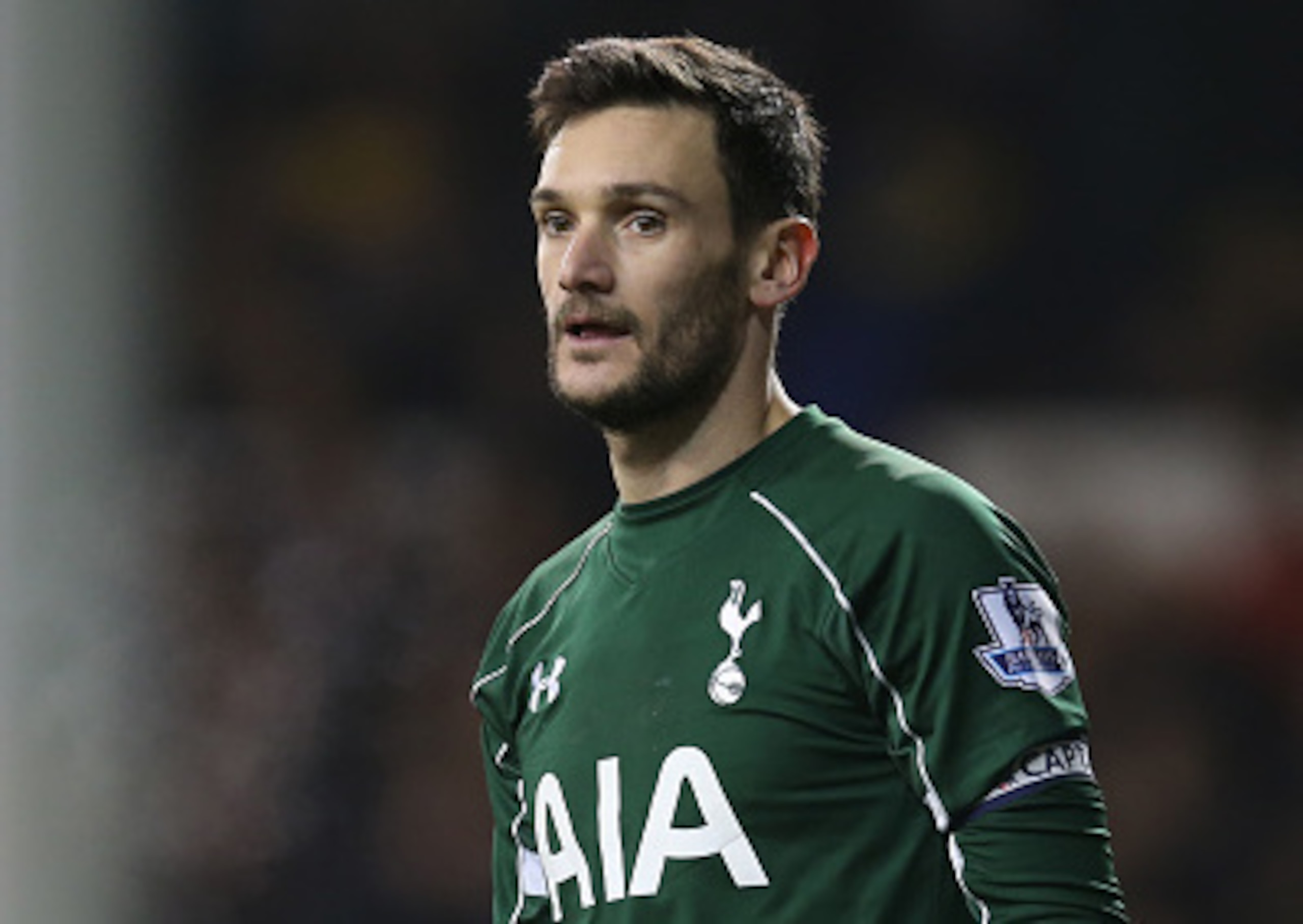
There is only one choice for the British XI's goalkeeper—Paul Robinson, England's No. 1.
The first-choice goalkeeper at White Hart Lane for four years, Robinson was among the Premier League's finest custodians.
Whenever he has returned to Tottenham while playing for Blackburn, he has been warmly welcomed. Robbo easily takes his place in this team.
For the World team, there are two obvious options.
Heurelho Gomes' astonishing performance in the vital 2-1 win over Arsenal in 2010 could almost win him the World XI spot, but his obvious limitations invalidate him.
Brad Freidel's reliability provided a welcome contrast but, in reality, this is a contest between Erik Thorstvedt and Hugo Lloris.
The big Norwegian had his greatest triumph before the Premier League began—winning the FA Cup in 1991—but he was also a vital part of the early years of this era.
Thorstvedt eventually made 218 appearances for Spurs but could have made many more if not for the back injury that forced him into early retirement in 1996.
Lloris, the current captain of both Spurs and France, is probably the finest goalkeeper that the club has seen since Pat Jennings.
He is among the world's finest players in his position and his brilliance wins points for Tottenham at a prodigious rate.
Thorstvedt would probably be the emotional choice for many fans, but Lloris is the right man for the job.
Left-Back
2 of 9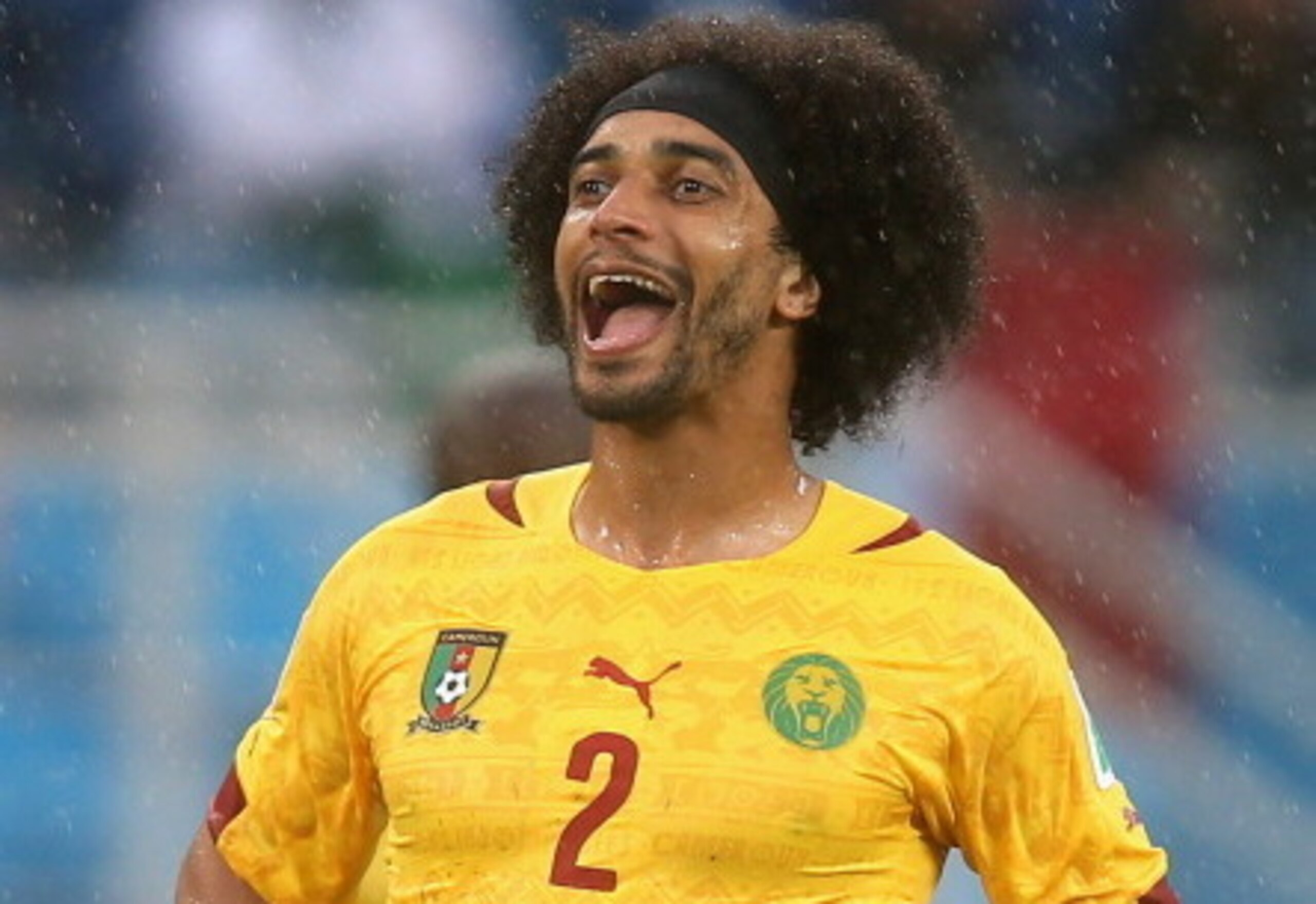
Left-back has been something of a problem for Tottenham in the Premier League era.
A number of hard-working but less-than-excellent players have had their opportunities in that role.
South Korean international Lee-Young Pyo was popular among fans and made the position his own for the better part of three seasons, but the World XI spot has to go to Benoit Assou-Ekotto.
Assou-Ekotto, affectionately known as Benny to the fans, left the club in ignominy on a free transfer but was a valuable member of the best Spurs team in decades under Harry Redknapp.
The Cameroon international made exactly 200 Tottenham appearances, including 11 in the club's only Champions League campaign to date and was first-choice left-back for four seasons. His longevity and importance to Spurs' great leap into relevance in recent years makes him the man for this team.
Capable of the occasionally brilliant long-distance shot, Assou-Ekotto was more reliable as an overlapping full-back that helped support the likes of Luka Modric and Gareth Bale on Spurs' left flank.
The British XI has few strong options at left-back.
Kyle Naughton, Justin Edinburgh, Clive Wilson and Danny Rose are the only British players to have occupied the position for any length of time.
Naughton and Wilson are out, so there is a selection battle between Spurs' longest-serving Premier League full-back and the incumbent.
Edinburgh's long service wins him the place over Rose. The man from Basildon made more Premier League appearances for Spurs than all but 10 other players.
He also picked up two cup winners' medals after playing in both the 1991 FA Cup and 1999 League Cup finals.
Right-Back
3 of 9
The Premier League era has seen Tottenham's right-back position occupied by both club stalwarts as well as a cavalcade of forgettable performers.
For the British XI, two options stand above all others. Stephen Carr and Kyle Walker are both excellent options for this lineup.
Carr, who made 277 appearances for the club, was remarkably twice named in the Professional Footballers' Association Team of the Year—despite being part of some of the worst Tottenham teams in recent memory.
In 2002-03, he was the only player from outside the league's top six teams to earn that honour with Spurs having finished a lamentable 10th.
Walker has also been a long-term servant of the club but in a period of relative success.
He was out on loan when Spurs made their Champions League bow but has since been an ever-present. Injuries have cost him almost an entire year, but he is currently an important part of Mauricio Pochettino's first team.
The England international is also returning to the excellent form that won him Team of the Year and Young Player of the Year nods in 2011-12.
The British XI would be well served with either with Walker's physical attributes and Carr's mental strength representing different qualities.
With Justin Edinburgh on the other flank, the British team needs some pace and aggression, so Walker is the man.
The World XI really only has Vedran Corluka and Pascal Chimbonda to choose between and the decision is an easy one.
Chimbonda gave some fine performances in his time at Tottenham but was directly replaced by the reliable Corluka.
The big Croatian was one of the slowest footballers seen, but his intelligence more than made up for that flaw.
His combination with Aaron Lennon made Spurs' right flank a deadly weapon, and he helped Spurs to reach—and perform well—in the Champions League.
He gets the spot opposite Assou-Ekotto just as he did for several years in reality.

.jpg?w=2560)
Centre-Backs
4 of 9
The British XI could select the likes of club stalwart Michael Dawson or League Cup final man of the match Jonathan Woodgate, but that would be to ignore a far superior player.
He will obviously never be welcome in a Tottenham shirt again, but Sol Campbell was one of the club's best players. He is selected for ability alone, his controversial move to Arsenal obviously not withstanding.
The Luke Skywalker to Campbell's Darth Vader, Ledley King, is selected alongside him.
King is beloved of Tottenham fans for his brilliance, his self-sacrifice and the fact that he is not Campbell.
The British XI may have just become impossible for many Spurs fans to support, but they'll have an excellent defence.
The World XI faces a similarly simple decision.
Spurs' current defence of Jan Vertonghen and Toby Alderweireld is arguably the finest that they've deployed in the Premier League era.
Younes Kaboul was, at his best, as good as either, but the Belgians win this spot for their proven excellence as a pairing.
Left Wing
5 of 9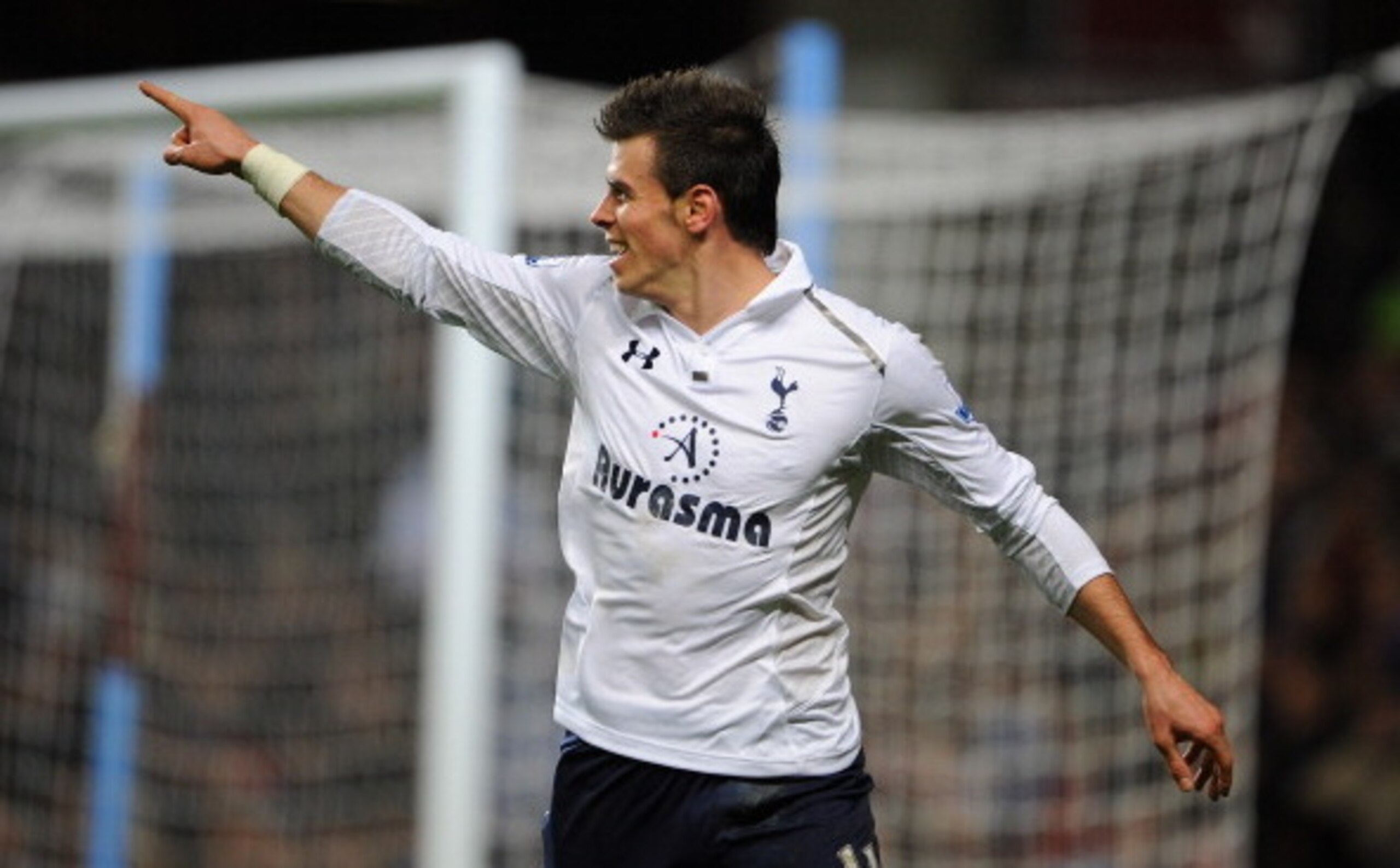
For decades, Tottenham's greatest winger was Cliff Jones.
A key member of the 1960-61 Double-winning team, Jones was a free-scoring star over a decade of excellence at White Hart Lane.
Not until the emergence of Gareth Bale in 2009-10 did it seem possible that any player would match Jones' exploits.
While Bale sadly moved on to Real Madrid before he could do so, there is no doubting his place in the pantheon of Spurs greats.
His 2013-14 season was a collection of some of the finest individual performances in Premier League history. He wrenched his team to victory time and again before earning his world-record move to Spain.
Bale is a certain selection in the British XI.
The man whose middle name is literally Desire, David Ginola gets the World XI spot.
The former Newcastle man was brilliance personified when Spurs were anything but. He made 124 appearances for the club and helped them to their 1999 League Cup triumph.
So good was he that Ginola was named PFA Players' Player of the Year and Football Writers' Association Footballer of the Year in the year that Manchester United won an unprecedented League, FA Cup and European Cup treble.
He is also immensely popular at White Hart Lane for his swagger and his avowed love of Spurs as a media pundit.
Right Wing
6 of 9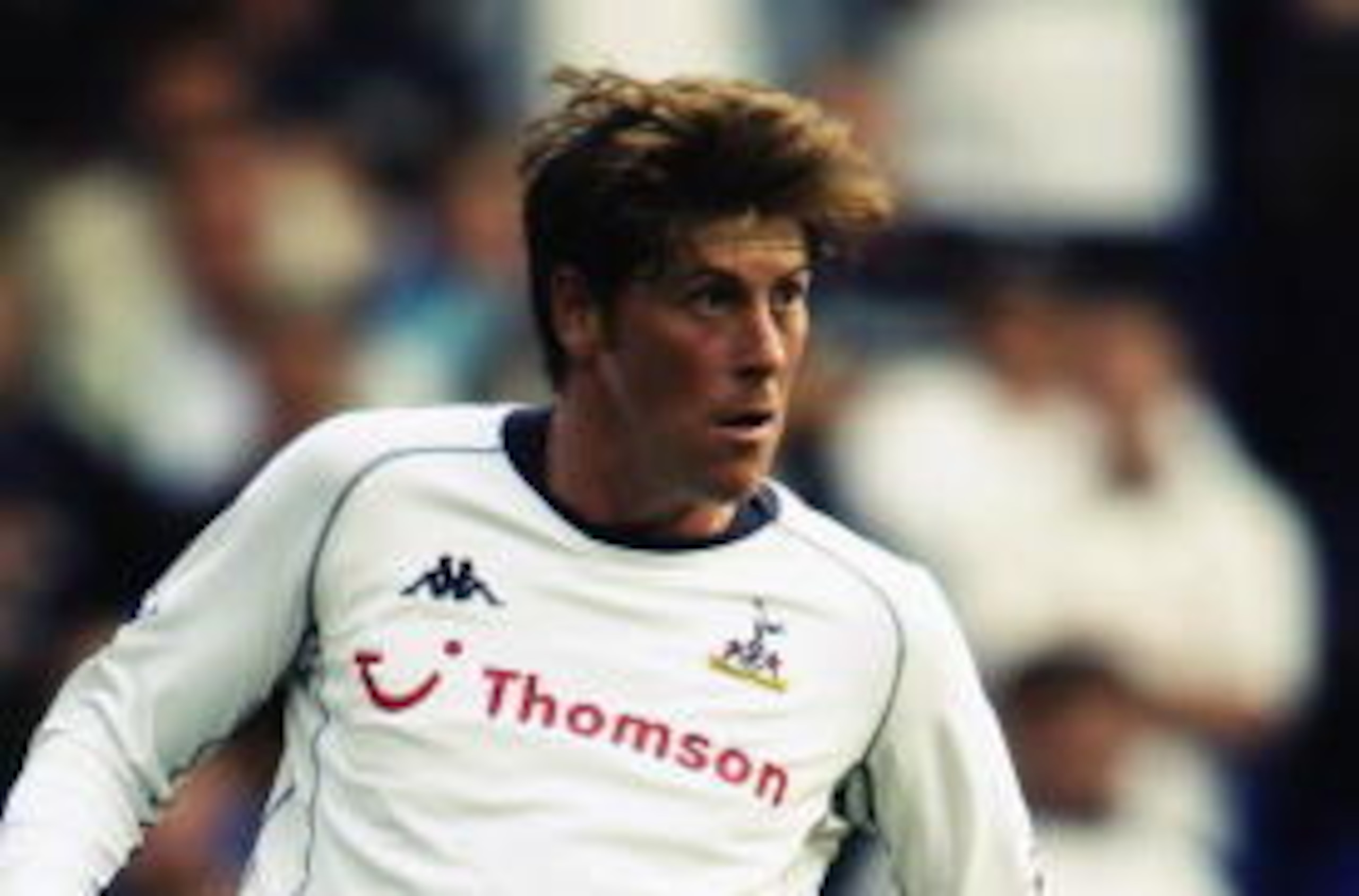
On the right-flank, the British XI again faces a selection dilemma.
Two of the four players to have made the most Premier League appearances for Tottenham have been British right wingers.
Aaron Lennon, now having moved on to Everton, finished his Spurs career after 266 league appearances after almost a decade at the club. That is good enough for fourth on the club's Premier League appearances list but not sufficient to displace Darren Anderton.
With 299 games, the former Portsmouth man owns top spot for Tottenham.
Lennon produced 49 assists in his time at Spurs, more than any other player in this era and nearly triple the 18 that Anderton racked up.
Anderton hit 34 goals, while Lennon scored 26.
Lennon played at least 20 times for nine consecutive seasons. Contrary to his "sicknote" reputation, Anderton managed the same feat in nine of his 12 seasons at White Hart Lane.
While Lennon was playing at arguably the same level in his final season as in his first, Anderton grew into his talents and became a leader at the club.
He was not nearly as reliant on his physical gifts and brought more to the team because of it.
While Lennon's unrelenting pace and ability to skip past a challenge always made him a favourite, his frustrating inability to learn to cross a ball hurts him in this comparison.
Anderton takes the spot in the British XI.
The World XI could only dream of such a dilemma. Spurs have had relatively few foreign right-wingers of any real quality in the Premier League era.
With that in mind, the World XI will borrow from Harry Redknapp's coaching manual and select Rafael van der Vaart on the right flank.
Van der Vaart played little more than two seasons for Tottenham but has been rightly credited with helping the club take a huge step forward in that time. He scored 24 goals but his winning mentality was key to his contribution.
Spurs' 3-2 victory at the Emirates Stadium in 2010 was one of their finest comeback victories in the Premier League and Van der Vaart was a huge part of it.
He won and converted the the crucial penalty to make it 2-2 before providing the free-kick from which Younes Kaboul scored the winning goal.
His time at Tottenham was short, but there is no room to debate his presence in our World XI.
Central Midfield
7 of 9
Luka Modric is the finest player to have represented Tottenham in the Premier League era.
His consistent brilliance was ignored for much of his time at the club, with attention paid to other members of that star-studded team.
Ultimately, the attentions of Chelsea and his eventual move to Real Madrid, per the Daily Star, underline his exceptional quality.
That the Croatia international is only credited with 18 assists in his 127 games serves to reinforce the weakness of statistics in such a vacuum.
Modric is the first name on the World XI's team sheet.
Alongside Modric must be the fitfully brilliant Sandro. At his best, the Brazilian was the archetypal defensive midfielder.
Boundless energy, aggression and an eye for long-distance shooting; Sandro had it all. Injuries unwound his Spurs career, but they are not a factor in this exercise.
The World XI gets peak Sandro.
The British XI has a myriad of options in central midfield.
Tom Huddlestone made 144 appearances for the club and was, at his best, a remarkably well-rounded midfielder.
Jermaine Jenas, who joined and left Spurs in the same years as Huddlestone, made even more (155).
He reserved his best performances for north London derby matches and was an England regular at a time when the Three Lions were rich with midfield options.
Scott Parker's brilliance in two seasons before his body finally gave in to the ravages of time makes him worthy of consideration.
Michael Carrick also played just two years in north London before the riches of Manchester United prised him away, but he played a starring role as Spurs nearly clinched Champions League football in 2005-06.
Any two of these four would serve the British XI well but Parker and Jenas—specialist defensive and attacking midfielders respectively while capable of contributing in all areas—provide the best balance of qualities.
At their best, Parker and Jenas were sensational players for Spurs, and they will fit nicely alongside Bale and Anderton.
Attack
8 of 9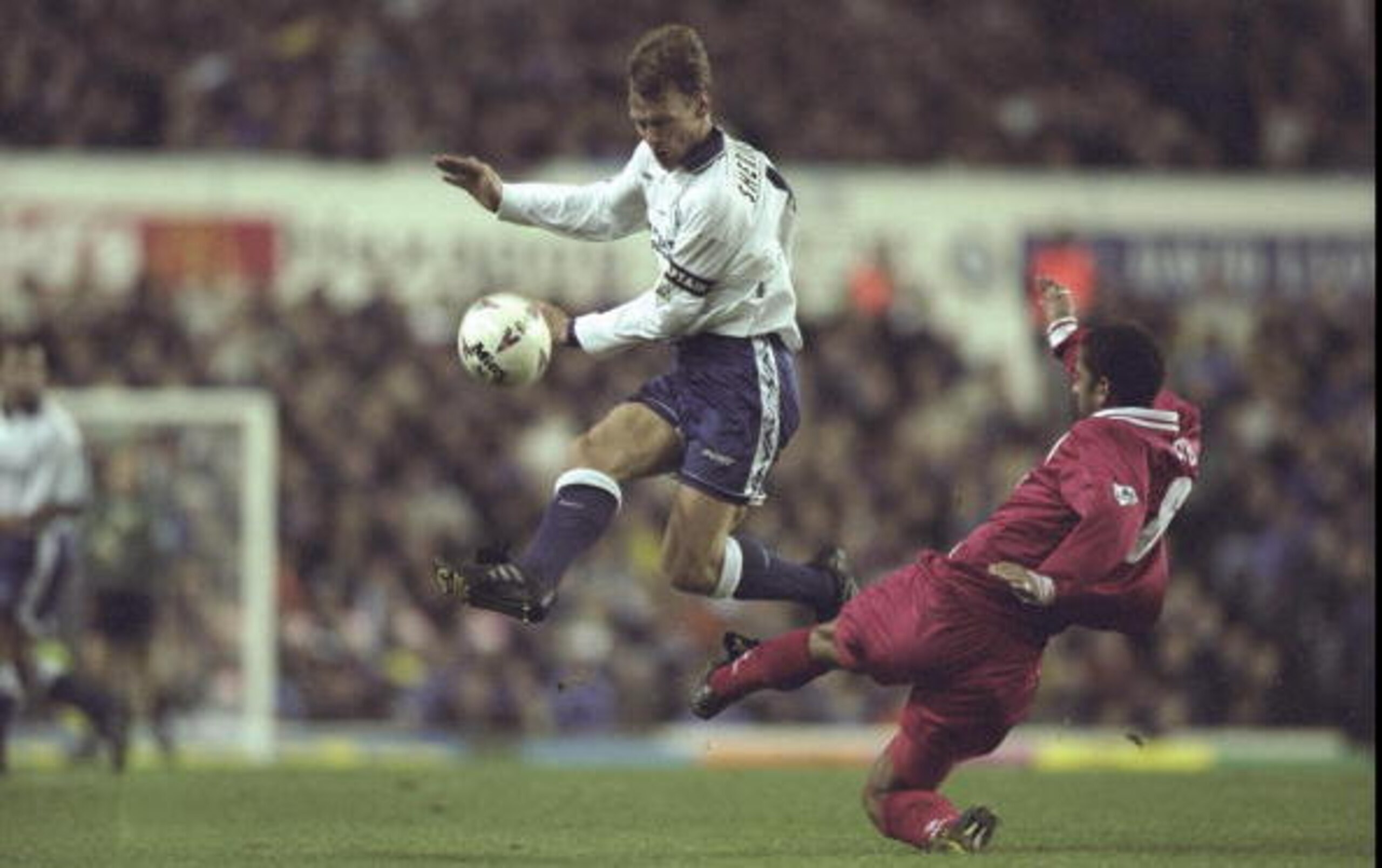
The British XI's most difficult selection decision comes up front.
Teddy Sheringham, Les Ferdinand, Jermain Defoe, Robbie Keane, Chris Armstrong and Harry Kane all have the quality to be considered in this side.
Sheringham, Keane and Defoe each scored more than 90 goals for Spurs, and their sustained productivity must be recognised. Each left the club only to later return and add to their scoring records.
With Keane and Defoe having played together often without ever really forming a great partnership, only one should be selected, but the Republic of Ireland international's collapse in form after returning from his Liverpool spell costs him his place in this team.
Instead, it is the boundless energy and aggression of Defoe with the intelligence and clever movement of Sheringham.
Perhaps they are not the box-office names of their World XI opposition, but this duo is certain to be a threat to any defence.
The World XI has similarly varied options but none so prolific.
In the Premier League era, Spurs have tended to acquire brilliant strikers but only on a relatively short-term basis.
Their two highest-scoring foreign strikers in this period have been Steffen Iversen and Emmanuel Adebayor.
Iverson was an honest trier in a series of poor sides, while Adebayor's ability never quite matched up to his attitude.
The Togo international enjoyed an excellent 2011–2012 season, scoring 17 times in the league while on loan from Manchester City.
In his subsequent three seasons at Spurs, Adebayor managed just one more goal, scoring 18 times in 59 appearances.
One certain selection in this team has to be Jurgen Klinsmann.
The brilliant German shone over two spells at White Hart Lane, scoring 30 goals in 59 appearances for the club.
His nine goals on loan from Sampdoria in 1997–1998 are widely credited with saving the club from a ruinous relegation, while his first season earned him the Football Writers' Association Footballer of the Year award in a great "nearly" year for Spurs.
Dimitar Berbatov would make an excellent partner for Klinsmann. While only spending two seasons at Tottenham, the Bulgaria international earned cult status.
His departure for Manchester United left a bitter taste for many fans but now, many years removed, he should be rightly credited as one of the finest strikers Spurs have seen in the Premier League years.
Synonymous with the word languid, Berbatov never seemed to be working especially hard. In contrast to Adebayor, though, the former Bayer Leverkusen man simply didn't need to.
At his best, the Bulgarian just toyed with the opposition.
Klinsmann and Berbatov then, are the final selections in the World XI.
Final Lineups
9 of 9
British XI
Goalkeeper: Paul Robinson
Defence: Kyle Walker, Ledley King, Sol Campbell, Justin Edinburgh
Midfield: Gareth Bale, Scott Parker, Jermaine Jenas, Darren Anderton
Attack: Teddy Sheringham, Jermain Defoe
World XI
Goalkeeper: Hugo Lloris
Defence: Vedran Corluka, Jan Vertonghen, Toby Alderweireld, Benoit Assout-Ekotto
Midfield: David Ginola, Luka Modric, Sandro, Rafael Van der Vaart
Attack: Jurgen Klinsmann, Dimitar Berbatov


.jpg?w=2560 "Viral Rams Coach Vid 🖕")

