

Will 'Project Pep' Be Complete by the Time Guardiola Leaves Bayern Munich?
Even before his first day on the job, the bar for Pep Guardiola at Bayern Munich was set sky-high. True, his official job title was that of coach, but to leave it at that would be misleading.
Guardiola was a superstar, a visionary, an artist. Words that seem to follow him around are the concept of a "Pep team" and the so-called "Pep effect," even if neither is particularly well-defined.
The Spaniard was recruited not simply to coach Bayern Munich, but to transform the treble-winning team—to impose his philosophy and build something that would last long after his departure.

.jpg?w=2560)
That's why Bayern paid the trainer a whopping $24 million (£17.6 million) wage, per Forbes, several times more than any other previous trainer had ever earned at the Allianz Arena and well more than any coach ever has been paid even to this day.
For his part, Guardiola has embraced his celebrity status. He's wowed fans and pundits with daring decisions and remarkable recoveries. Sometimes he'd use bizarre and ineffective tactics for half a match only to make the foreseeably correct tweaks and garner praise for his tactical nous. Recently he made the audacious decision to start five forwards; another time he put Jerome Boateng in midfield.
When journalists and stats agencies wondered if he'd dare change his starting lineup for a 100th game on the bounce, he finally used the same XI for a second consecutive game—what a tease! But it's further evidence that he loves the spotlight and isn't really to be considered in the same category as any other coach.
Now we know Guardiola is set to leave Bayern at season's end. Assuming he runs out his contract, he will have spent three years at the Allianz Arena, more than many coaches do at any given club. But at this point, the question has to be raised: Will "Project Pep" be completed by the time Guardiola leaves? Will Bayern have got their money's worth?
Much has changed in Munich over the last three years. By nearly all accounts, Bayern players claim to have benefited from his tutelage. Even Toni Kroos, under no pressure to say anything positive about the coach of a club for which he no longer plays, recently labeled Guardiola, per Die Zeit (h/t ESPN's Stephan Uersfeld), "the best coach I've ever had in terms of his idea of football, the plan of how to play an opponent, and how to present solutions to his own team."
Watching Bayern in training and on the pitch, one can see where some players—particularly David Alaba and Jerome Boateng—have hugely benefited from Guardiola's mentorship. Even those who haven't, like Mario Gotze, rarely have anything other than praise; it's a shortcoming of the players if they can't get on board with the trainer.
But Guardiola has also been a deeply divisive figure at Bayern. Mario Mandzukic chided the trainer for showing him a lack of respect, claiming to Sportske Novosti (h/t ESPN's Uersfeld) the trainer simply cut him off and later benched him out of spite to avoid him becoming the Bundesliga's top scorer shortly before his departure.
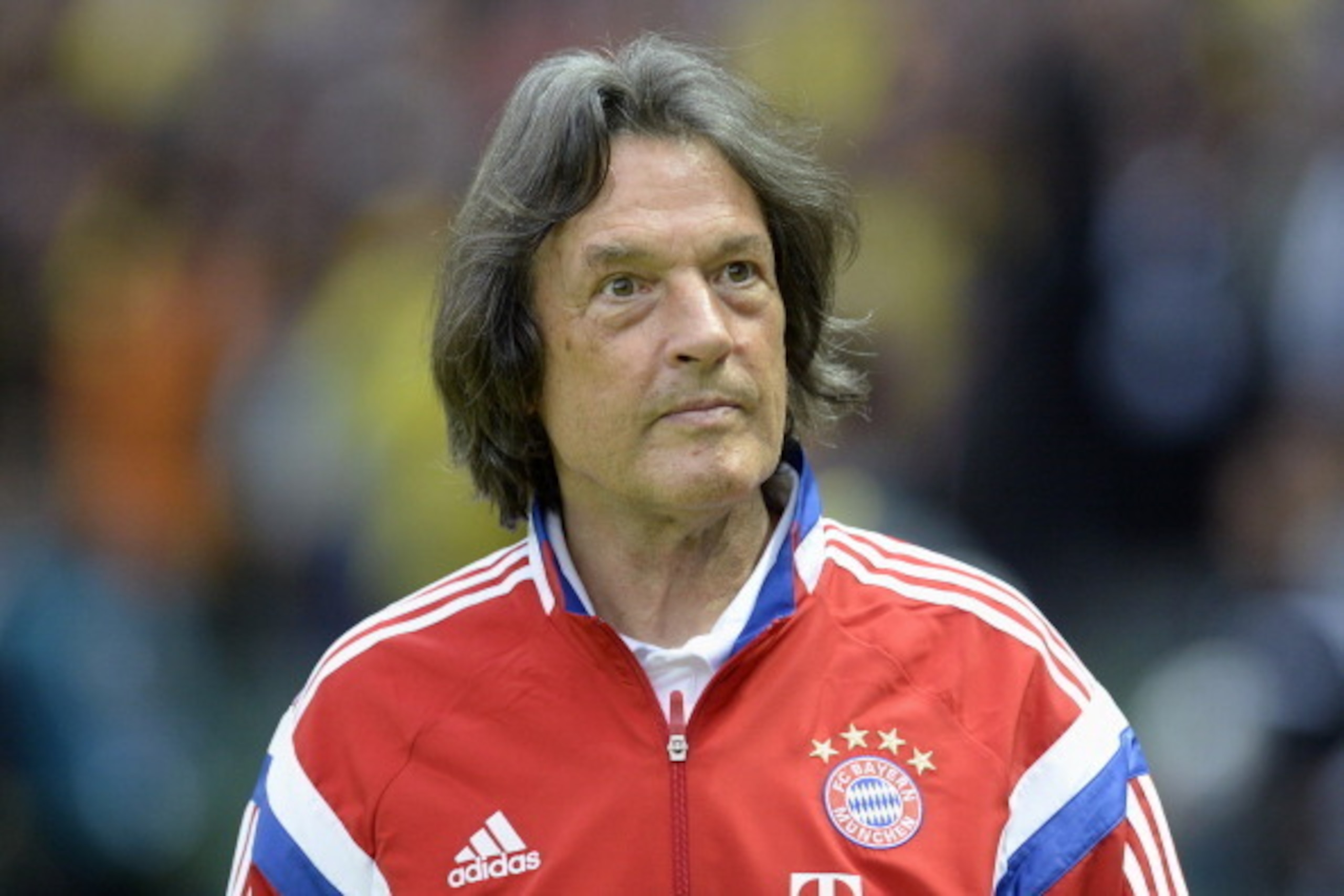
In a recent column in the Guardian, Raphael Honigstein cited the resignation of Hans-Wilhelm Muller-Wohlfahrt, as well as a recent falling out between Guardiola and the legendary club doctor's successor, Volker Braun, as examples of the disunity the former Barcelona man has brought to Bayern. In his article, Honigstein cited several examples of Guardiola showing acute sensitivity to any form of criticism or commentary.
All these divisions serve to undermine the concept of galvanizing a Guardiola-inspired vision of the future at Bayern Munich.
At the same time, the trainer has certainly imposed a new, multicultural identity at the club. The team that won the 2013 UEFA Champions League final contained eight Germany internationals, while four out of five of its youngest and brightest talents were native German speakers.
There are now just four current Germany internationals in the team, although that number is slightly deflated due to Holger Badstuber's recurring injuries and the international retirement of Philipp Lahm.
Still, Bayern's most significant transfers since Guardiola's arrival have included only one German (Gotze), while Arturo Vidal, Douglas Costa, Mehdi Benatia, Xabi Alonso, Robert Lewandowski and Thiago Alcantara all represent foreigners the Bavarians have been willing to invest heavily in.
Bayern's team at present is very multicultural, and the idea of Carlo Ancelotti (another non-German) coming as coach has hardly caused an eyebrow to raise.
There is more to discuss of squad-building at Bayern than nationality, however. When Guardiola leaves, Bayern will still be in the midst of their long-term squad building. Franck Ribery has already been replaced in effect by Douglas Costa, and Bastian Schweinsteiger was sold over the summer with Vidal apparently his successor. But there are other big concerns within the squad: Lahm is now 32 years of age and Arjen Robben will turn 32 next month.
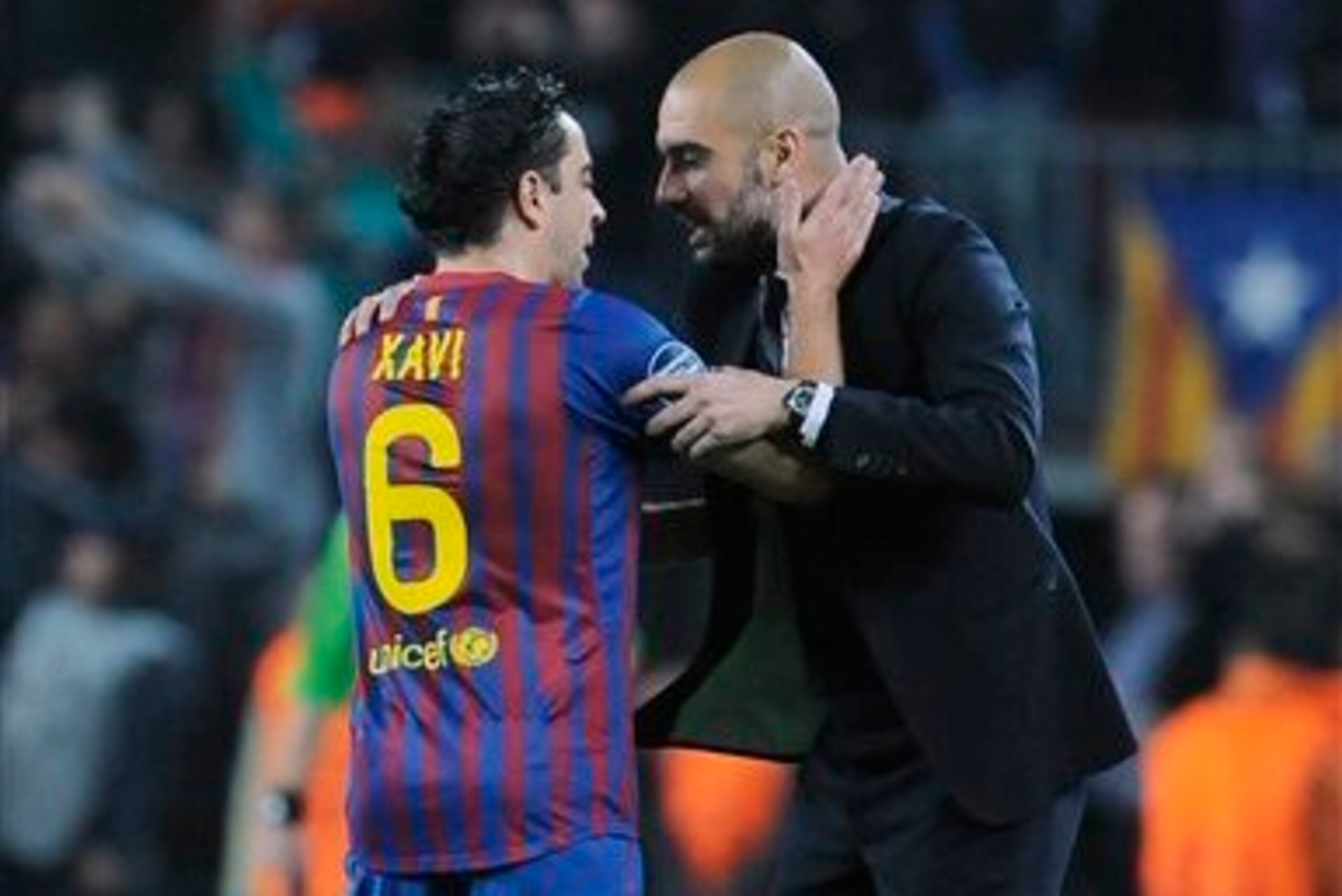
As seen in the case of Ribery, natural decline can happen quite suddenly. Even if it doesn't, it will be tricky to tell exactly how and when to start phasing them out. Both are essentially irreplaceable like-for-like, and Guardiola leaving Bayern now is reminiscent of him departing from Barcelona in 2012 as Xavi and Carles Puyol were starting to lose the edge that had helped lift their club from great to Europe's best.
In terms of squad-building, there are some question marks at Bayern aside from Lahm and Robben. How long will Xabi Alonso be relied upon as a regular starter, what happens when he's found to be too far in decline to start? When and will Joshua Kimmich, Pierre Hojbjerg and Kingsley Coman be ready for the big stage? How long will Vidal's fitness last, and will he be able to deliver as he was expected to upon his blockbuster signing?
Many of the aforementioned issues are reasonably manageable, especially for a trainer who has worked with the team towards a specific goal over a span of years. That won't happen, though, as Guardiola is on his way out the door at season's end.
On a personal level, the trainer is saving himself from potentially reputation-damaging problems. As it stands, the 44-year-old is set to leave Ancelotti and Bayern with some tricky obstacles to overcome: The squad's long-term, and even mid-term, future is still far from decided.
As is the state of the Bayern academy. Known for his ability to work with young players, Guardiola was meant to have a top-to-bottom effect on Bayern Munich, including on the club's lower ranks.
However, Bayern's reserves still haven't secured promotion to the 3. Liga. The under-19s have finished sixth, fifth and are currently fourth in the south/southwest region, one in which Stuttgart and Hoffenheim are the only other "big" contenders. And the under-17s have also finished sixth and fifth in the last two seasons. Only two Bayern players represented Germany's U18-21 teams during their most recent call-ups, and one (Kimmich, a recent summer signing) wasn't even developed in Munich.
With that having been said, there is reason to believe in the Bayern academy. The under-17s currently hold a narrow lead in their region, and six Bayern players were called up to the U15-17 Germany national teams.
It takes time for academy players to develop and for a philosophy to really take hold, so perhaps the rewards of Guardiola's tenure will be reaped a few years down the road. However, given that the trainer will only have been around for three years when he leaves, it's uncertain as to whether he'll have a long-term effect.
Finally, there is the issue of playing style. Guardiola has persistently changed the way his Bayern play, initially instigating radical reform to the treble-winning side he inherited before moving back towards the club's roots.
In his first year, Guardiola implemented what many described as "tiki-taka," a system criticized by many as possession for the sake of possession. He was found out in the Champions League, a debacle he later labeled, per Marti Perarnau's Pep Confidential, (h/t Goal), "the biggest f--k up of [his] life as a coach."

The next season, Guardiola was in transition, still struggling to find the right combination. He tried a few "false" nines before settling on Lewandowski as his striker. He played sometimes with a narrow, three-man defense and other times with more width. And all the while, the squad was ravaged by injuries. Although they won the Bundesliga, they had the worst head-to-head record among top-six finishers, and that was their only title of the season.
In 2015-16, Guardiola finally seems to have settled on a system that suits him and also brings the best out of his players. It's more like that of his predecessor, Jupp Heynckes, in that it uses more width and emphasizes quickness in transitioning into attack. But at its heart, it is Guardiola's system: We now see Boateng playing inch-perfect passes half the length of the pitch, for example.
Critically, the way Bayern play now is something a Guardiola successor could tangibly pick up on without having to dismantle the whole thing. As we saw in the Spaniard himself eviscerating Heynckes' tactical model, that can come with some headaches and teething problems. And for any trainer to build upon something as radical as Guardiola had tried in his earlier days at Bayern would be an enormous ask. Ancelotti will have his work cut out, but the task is more doable now than it was in the not-so-distant past.
Is Guardiola's tactical system complete and ready to contend for a treble? Things are looking good in the Bundesliga, while many top opponents are already out of the DFB-Pokal, but the latter as well as the Champions League are tricky competitions. We'll soon see whether Guardiola has achieved tactical mastery or whether he'll be leaving Ancelotti with a bit more work to do.
This isn't to suggest the mistake of saying Guardiola can only succeed with victory in the Champions League, but his last half-year in Munich could play a defining role in how his tenure is remembered in the eyes of many.
In reality, the Champions League is a bit distracting from the big picture of Guardiola's tenure in Munich, with the "Pep effect" something that supposedly is so much more than just a way to win games.
Guardiola has definitely brought his celebrity status to Munich and basked in it. He's improved many individuals he's coached. And he's played a big part in changing the club's identity to one that is very international.
He also may have helped reform the club's perception of its youth academy and also improved the quality of Bayern's young players, although the jury is absolutely out on that issue and will be for several years.
At the same time, Guardiola has created disharmony behind the scenes among the medical staff and some players, and he has spent some of the best years of key players' careers searching for the right tactics without finding an exact optimum. And when he goes, he'll avoid having to face the potential pitfalls of squad building after irreplaceable stars decline and/or retire.
There are legitimate concerns as to just how long his strong points will stick with the current staff, as well as how well the players of today will be able to pass on their knowledge to recruits next summer and beyond, as well as to the youth academy.
"Project Pep" was meant to last longer than three years, and the Bayern big-wigs will have been disappointed not to have kept him around for a bit longer.
With two more years or even one, Guardiola might have been able to have his full effect on the team and deliver what the club has so desperately desired over these last few years. His departure, therefore, may seem a bit too early. In any case, we'll find out by season's end just how well the Guardiola project panned out.





.jpg?w=2560 "2 NFL Officials Suspended")

.jpg?w=2560 "Viral Rams Coach Vid 🖕")