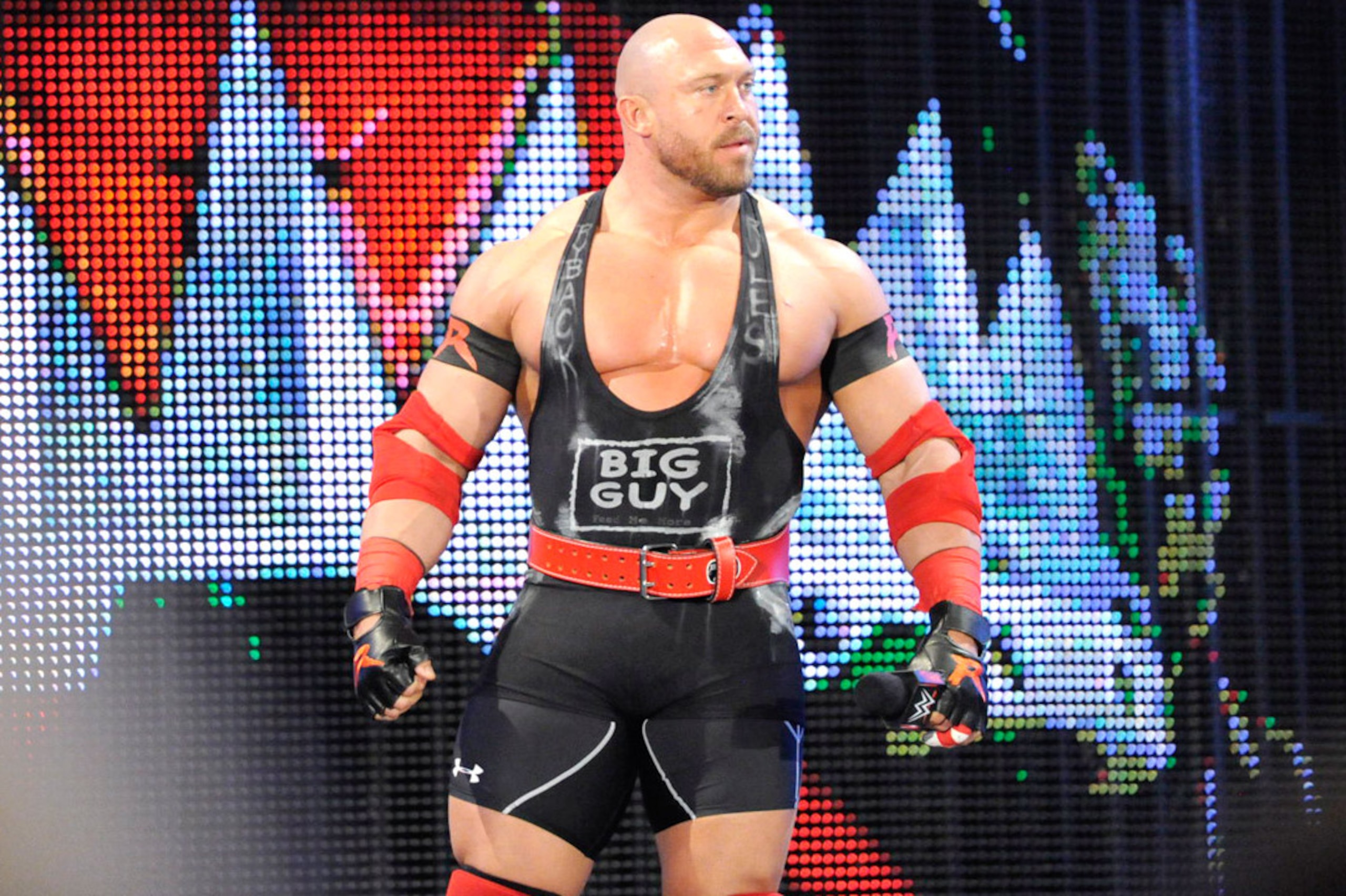

Ryback Is the Modern-Day Version of Hercules Hernandez
Looking back at footage of Hercules Hernandez lifting his opponents above his head, shoulders bulging, his chest thick like a tree trunk, it's hard to fathom that he's not related to Ryback.
Slip an oversized chain onto Ryback's head and let his hair grow out, and the two imposing brutes would look like mirror images of each other. Hernandez (better known simply as Hercules) relied on brute strength, a chiseled look and a conventional promo style, just as The Big Guy does today.
Both share a similar career arc, too. WWE presented them as mighty for a short while but eventually relegated both to the midcard.
TOP NEWS
Jeff Hardy Injured, Stephanie Vaquer Return Update and WWE Backstage Rumors on Eric Young
Predictions for Road to WWE Survivor Series WarGames 🔮
BS Meter on Biggest Wrestling Rumors 🌡️
John Powell wrote of Hercules for Slam! Sports, "Although Hernandez never achieved main event status there, the muscle-bound powerhouse was a solid mainstay of the promotion, making his presence felt in WrestleManias 2-7."
That promises to be a similar byline for Ryback's WWE run. He, like Hercules, has struggled to be much more than a robust man filling out the roster.
Powerhouses Built Like Superheroes
During Hercules' WWE run in the mid '80s-early '90s, immense muscular men were the norm. In an era before steroid testing, the promotion was filled with wrestlers with veiny, monster arms that looked like the work of comic book artists.
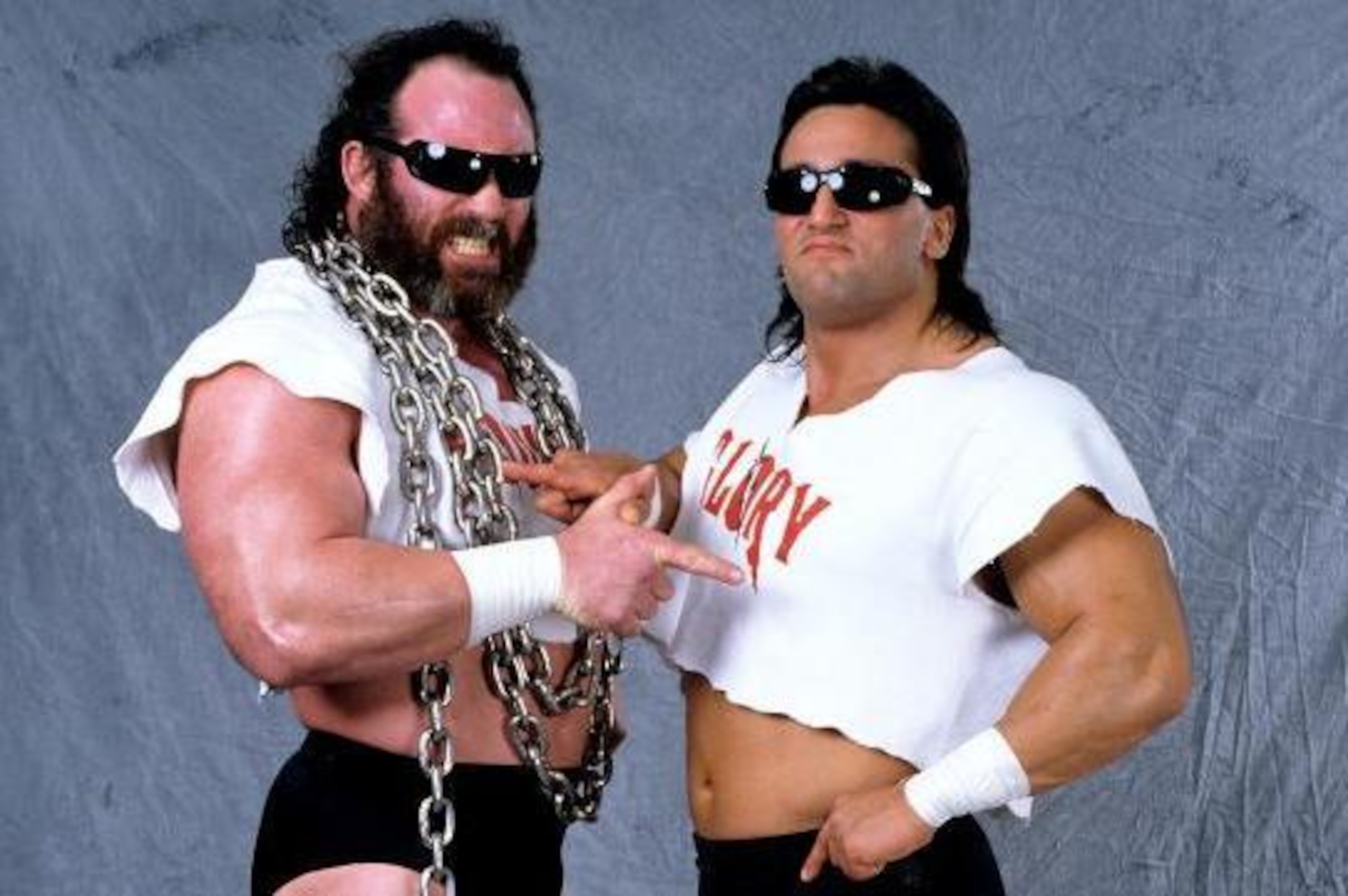
Hercules, though, stood out even in that field. The former bodybuilder forced fans to take notice as the arena lights gleamed off his He-Man-esque frame.
Ryback looks like a product of that era. While WWE has moved to showcase a bigger variety of body types, he would have fit right in alongside Hercules, The Barbarian and The Ultimate Warrior.
In the ring, The Big Guy dishes out an arsenal of high-impact moves. He bashes his opponents with clothesline, body slams and thundering suplexes.
His repertoire is akin to what Hercules once employed. The latter was never considered a great worker but was a powerhouse who bowled people over.
For the most part, that's what Ryback is all about. However, the former intercontinental champion is a better overall athlete than Hercules was. You wouldn't have seen the chain-wearing bruiser leaping from the top rope.
Parallel Promo Style
Ryback is clearly a student of Hercules' era. When he grabs hold of a mic, he seems to be emulating the standard angry-beast delivery that was so prevalent at that point.
The Big Guy has a gruff, booming voice. And early on, he had just one gear for his vocal performances—intense.
He sounds eerily similar to Hercules. They share a similar rhythm and deep, husky voice. Hercules was never known to be a great talker, so WWE rarely gave him mic time. When it did, he did his job but didn't leave any lasting impressions.
Like Ryback has often been, he was loud and forceful but far from refined.
To The Big Guy's credit, though, he has managed to evolve past what Hercules was doing. He has shown more flashes of personality and has dipped into a surprising sense of humor. Ryback hasn't been able to consistently deliver when it comes to either of those elements, however.
And so there's a good chance he will be remembered as being in Hercules' class as a serviceable but certainly not special mic worker.
A Brief Spike, Then Midcard Limbo
Just a year after his WWE debut, Hercules clashed with the company's top star for the world championship. He looked to match up with Hulk Hogan, a titan taking on a titan.
Facing Hogan assured one's name on the marquee, but it was a spot that was constantly shifting. A succession of heels rose to the main event level to tackle The Hulkster, only to hit a brick wall and tumble down.
Hercules followed that exact script.
He challenged Hogan a handful of times in 1986 on Superstars, Wrestling Challenge and Saturday Night's Main Event.
After that, it was off to the midcard. He didn't have many high-profile feuds. WWE never made him a priority.
Yes, he competed at six WrestleManias in a row, but it was often as a stepping stone for someone else. The Ultimate Warrior batted him around at WrestleMania VI, Earthquake squashed him two years later and at WrestleMania VII, he and Paul Roma lost to Legion of Doom in less than a minute.
That pairing with Roma, dubbed "Power and Glory," provided a brief uptick for Hercules. He gained a touch of momentum as part of the thriving tag team division, but eventually that fizzled out as well.
Ryback knows that story well.
He too shot quickly up to the top of the card, challenging CM Punk for the WWE title and then later trying to take it out of John Cena's hands. He didn't stick around at that level, though.
After falling to Cena as Hercules had done to Hogan, the midcard awaited The Big Guy.
He had a short burst of success with Curtis Axel in his corner. Like Power and Glory, RybAxel quickly became a low-level team. The two squads both challenged for but never won the tag titles.
Both times, the members became lost after the dissolution of their teams.
Ryback did manage to nab the Intercontinental Championship, something Hercules never did. But time and again, WWE has relegated him to the role of launchpad for the likes of Kevin Owens, Bray Wyatt or Rusev.
He keeps teasing a rise to a higher tier, and keeps WWE hoping that he will morph into a marquee star. That may well happen if he catches fire, but for now, he stands to be described just as Powell did Hercules: "a solid mainstay."

.jpg?w=2560 "Raiders Could Start Mendoza")


.jpg?w=2560 "Rodgers Iced Out on Plane 💎")

.jpg?w=2560 "Big Trade to Shake Up East 💡")