

Diego Costa's Tactical Revival Gives Chelsea Hope Ahead of Leicester Clash
As Chelsea prepare for their trip to the King Power Stadium to lock horns with Leicester City, they have every right to feel positive and optimistic about securing a result. The Premier League form book hardly sings in their favour, but the Blues’ win over FC Porto midweek was a performance worth talking about for all the right reasons.
Manager Jose Mourinho was typically cryptic in his post-match assessment of his side’s 2-0 defeat of the Portuguese giants on Wednesday night—securing progress to the UEFA Champions League knockout stages in semi-comfortable fashion—but ignore the facade: He was pleased, and rightly so.


It all came together in the most necessary of circumstances; speculation that Mourinho would be removed from his position should the Blues lose to Porto was rife, per ESPNFC, but his team finally clicked, and Ivan Marcano’s unfortunate own goal early in the first half set the tone for a much-improved performance.
An immediate response to the ridiculous loss to AFC Bournemouth last weekend was key, and beating manager Julen Lopetegui’s men—regardless of the rather confusing XI the Spaniard fielded—is an impressive result. There haven’t been too many of those at the Bridge recently.

This was probably their best performance of the season, all things considered. They looked like Chelsea again—but not because the opposition imploded (a la Arsenal) or because the team they were playing were both dreadfully out of form and entirely inferior in terms of squad comparison (a la Norwich City and Aston Villa).
FC Porto are a very strong side with some excellent players, so to put in a performance like that—confident, commanding, silky and effective—is encouraging. From front to back they impressed, be it Kurt Zouma’s sporadic intervention from defence, Ramires and Nemanja Matic’s excellent pairing in midfield or Willian’s continued brilliance from the right.
The primary reason for such a display, though, was Diego Costa’s decision to pick up where he left off in 2014-15. The Spaniard looked rejuvenated—perhaps due to the choice treatment received by the hand of Mourinho over the last few weeks—and his performance created a knock-on effect, greasing the gears throughout the rest of the team.
Over the last three months, Costa stopped doing all the things that made him one of the most feared, clinical strikers on the planet. Vertical runs that split the centre-backs, aggressive dribbling and the nose to sniff out proper No. 9 opportunities in the box quickly made him a key tactical component of the Blues’ dominant XI.
It impacted him personally, hitting him right where it hurts the most: the goal tally section; he has just four in 16 Premier League and Champions League starts, per WhoScored.com. But it’s impacted the team even more heavily, destroying their rhythm and causing those around him to struggle.
The core mechanics of Costa’s game are pretty simply: He makes vertical runs that either split the centre-backs, causing them to backpedal, or hits the channel between the centre-back and full-back, skewing the formation to one side. The run does two things. First, it provides a long pass option for the man on the ball, and second, it creates a pocket of space between the opponent’s midfield and defensive lines, as the defenders are forced to drop to track his movement.
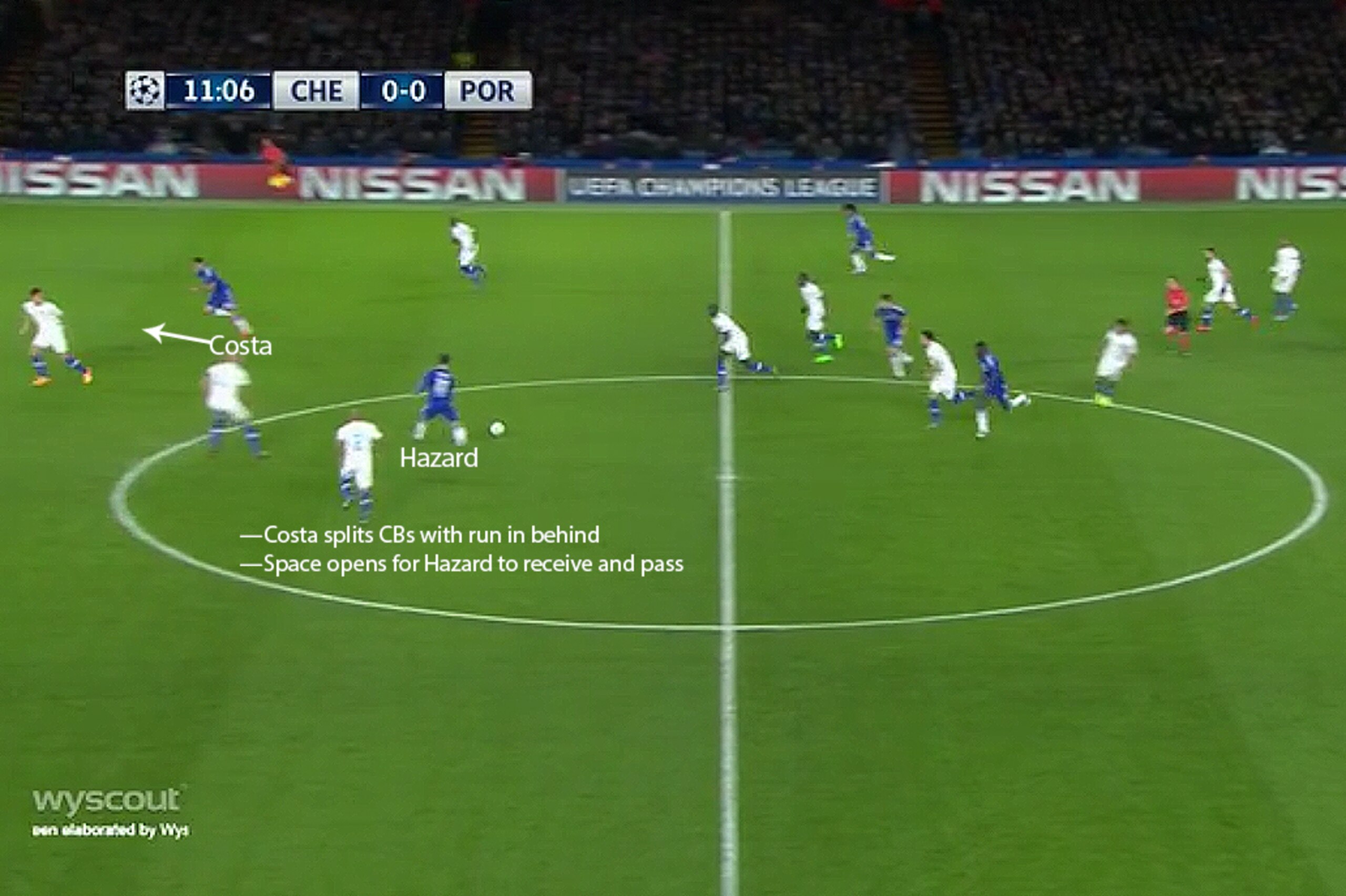
Without that run, Cesc Fabregas and Oscar’s passing options have been extremely limited, Nemanja Matic has had no room to slalom forward into, and Eden Hazard has had no space to play in. That area between the lines is a place Chelsea position three players in order to exploit, but if the gap is too slim, it simply becomes a mass of bodies.
The AFC Bournemouth game epitomised it. Hazard played the role of a false-nine to its specification, but that role is a bad fit for this team. Chelsea were clearly lacking a No. 9 presence in the box throughout the first half, and when Costa came on at the break, he improved matters. The hosts should have won that game.
Then, right from the off on Wednesday night, Costa looked intent on stretching the pitch vertically again. One of his opening runs caused the opening goal, as he latched onto an [Oscar] through ball and forced goalkeeper Iker Casillas into a good one-on-one save, resulting in a rogue bounce and own goal.
The Costa of old may have gobbled that chance up himself—and Mourinho echoed this sentiment in his press conference, stating “last season he would score [that]”—but the most promising part is the willingness to make that run. Chelsea’s passers have been present all season, but if they’ve got no one to play in on goal, the ball has to go elsewhere (backward).
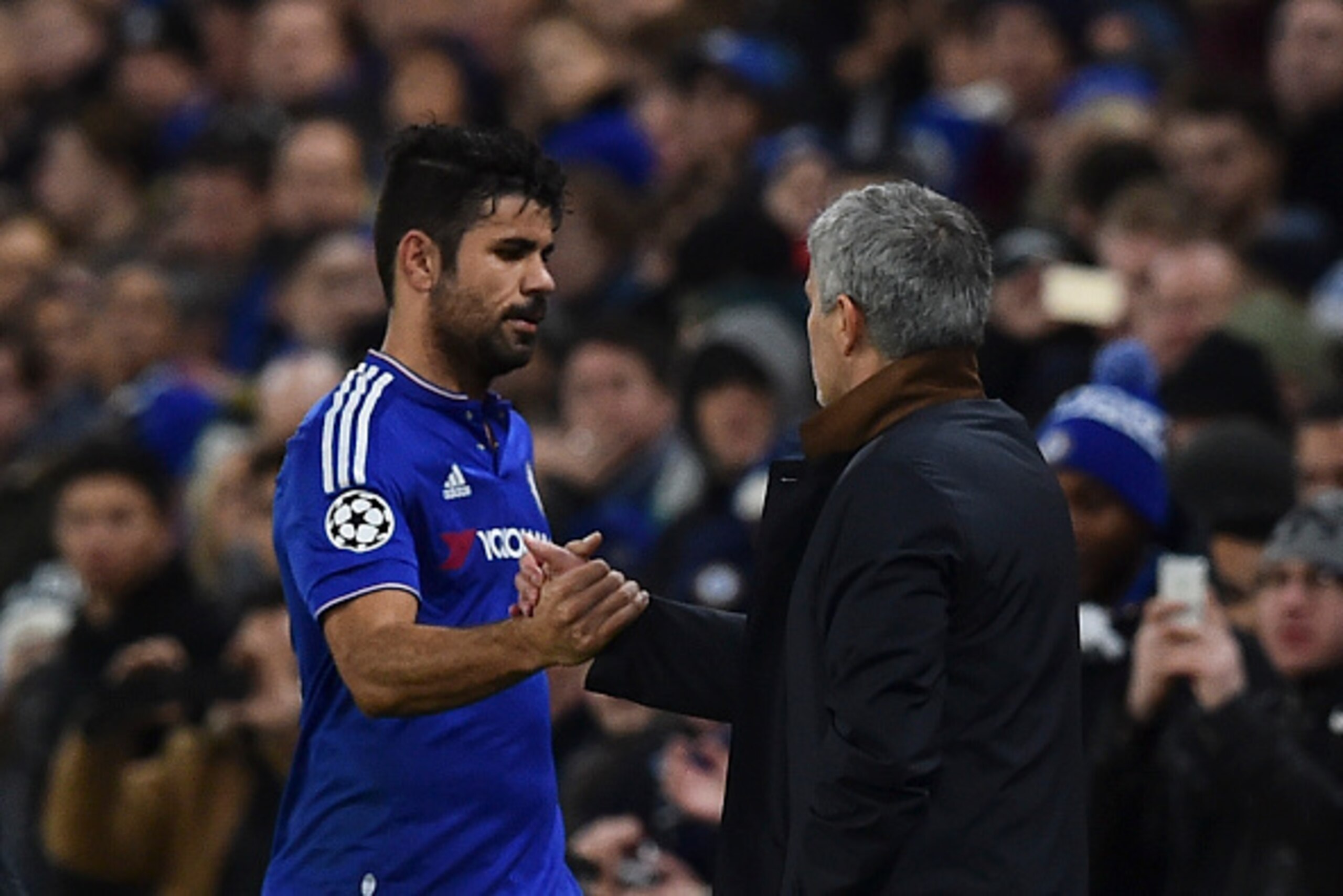
Now Costa is fulfilling the same tactical role as last season; the role that transformed the Blues from title challenger to convincing winners. This fact gives hope to Chelsea ahead of an examination at the King Power Stadium on Monday.
Should Ramires continue in holding midfield, giving Matic the freedom to push forward and beat men, opening up the pitch even further, and Costa continue to stress the defence, the pendulum swings the other way. Leicester, a side fuelled by confidence, may finally see their distinctly average back line exposed.
The knock-on effect Costa’s tactical tole has on this Chelsea team is astounding, and if he can be harnessed the right way, the Blues can upset the form book on Monday.






.jpg?w=2560 "Grading WWE Raw 🔠")
.jpg?w=2560 "Viral Rams Coach Vid 🖕")