


First it was ridiculous, and since it has grown embarrassing. As it has, you've wanted to grab them and shake them, perhaps smack some sense into them—maybe a bit of humility, too.
But they just won't stop. Ever.
"Of course, we still think we are right," said Real Madrid manager Rafa Benitez this week, reaffirming his club's stance that Madrid are somehow the innocent victims in the Copa del Rey debacle that Marca called "Cadizazo," when the club fielded the ineligible Denis Cheryshev in the first leg of their cup tie with Cadiz.

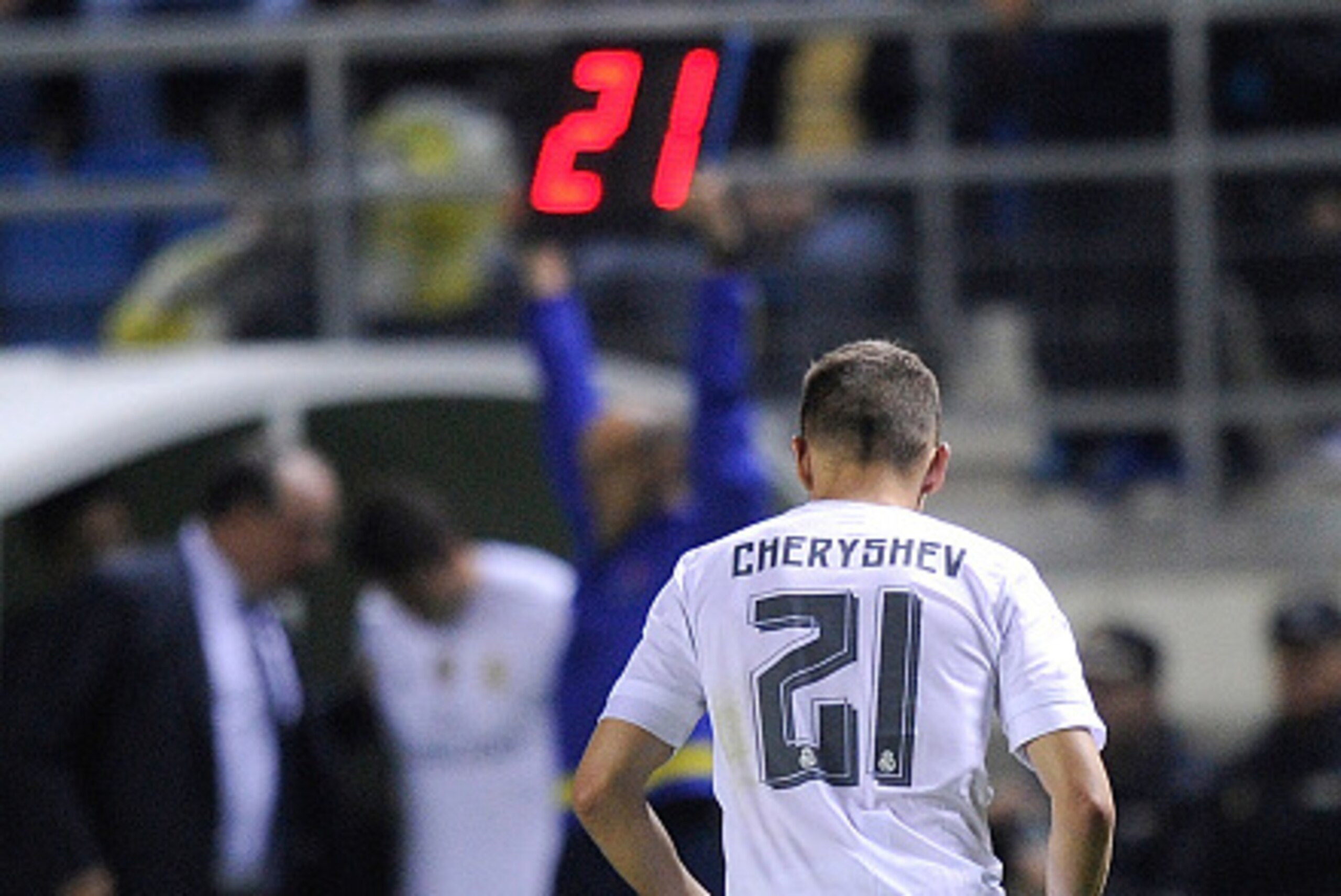
That night, Cheryshev had played and scored despite carrying a one-game suspension. Real Madrid didn't know hadn't bothered to check, those in the stands finding out before the club did as the occasion became an exercise in comedy. "Benitez, check your Twitter," the Cadiz fans chanted.
For one side, it was hilarious; from the other, it was laughable. Damning, too. Yet still Madrid play the it's-someone-else's-fault card.
Admittedly, Benitez doesn't have a lot of choice in what he says in this respect; he's simply regurgitating the words of club director Emilio Butragueno and president Florentino Perez. In the immediate aftermath of the game in Cadiz, Butragueno had said "this is not about looking for someone to take the blame," only to then explain who else there might be to take the blame.
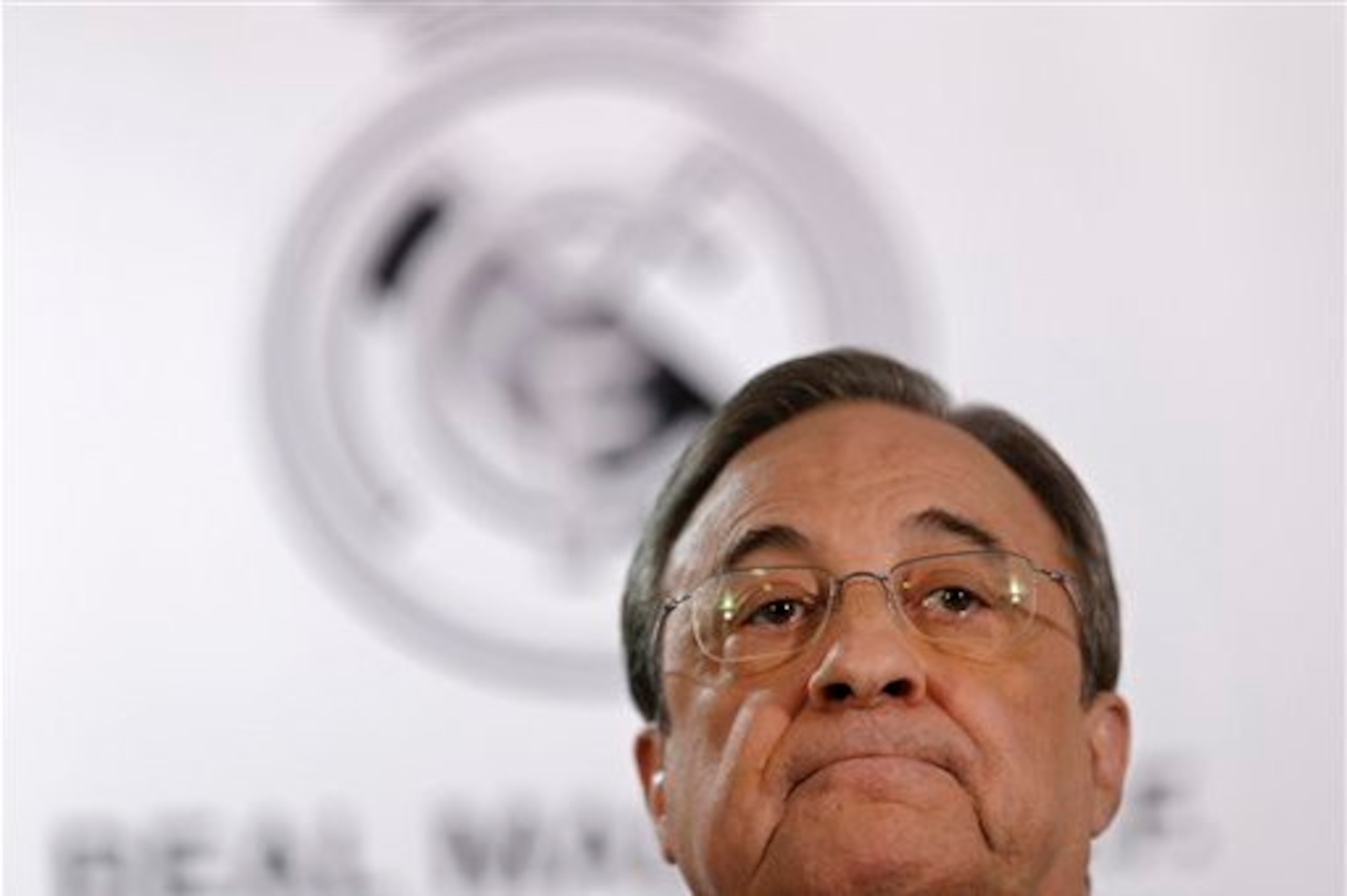
The following day, Perez then held a press conference in which he basically said: We didn't know, so it doesn't count.
Really?
From Madrid, the biggest crime in all of this is not the act itself but the response to it. Though fielding Cheryshev was a mistake, it wasn't malicious in any way nor an attempt to gain a competitive advantage; it was an honest blunder.
But instead of simply admitting that and then exploring their options, Madrid took the stance that's becoming increasingly frequent, pointing fingers at everyone else rather than taking an inward glance—something this club just refuses to do.
Only a couple of weeks earlier, following the club's thrashing in the Clasico against Barcelona, Perez blamed the media, the fans and former manager Carlo Ancelotti; when the club couldn't organise itself in time to sign David De Gea, Perez blamed Manchester United; when the team fell in a hole late last season, Perez blamed an external "agenda" against the club.
It's why you want to grab them and shake them. Can they not see how ridiculous all of this is? How ludicrous they sound?
Do they not care how all of this looks?
Somewhere along the line, Real Madrid as an institution has moved on to a different plane of existence. Detached from the reality the rest of the game exists in, the club has become so consumed by its own sense of self-importance that it's grown incapable of reflection and critical self-analysis.
There's a problem? Blame someone else.
There's a player we don't need? Sign him.
There's a coach we do need? Sack him.
We need a sporting director? No, we don't.
They can kick us out of the cup? No, they can't.
Unity and stability leads to success? Pfffft.
Inescapably, this is the essence of Real Madrid right now, the image that the club has built for itself. "Real have grown so accustomed to their reputation as something of a circus in recent years that you sense an element of the club almost revels in it," wrote ESPN FC's Rory Smith recently. "They are the world's most expensively assembled soap opera."
Too right; "Cadizazo" is just the latest episode. Something has to change.
At an organisational level, of course, little will. Not immediately, anyway.
At the top, Perez continues to ignore the idea that a sporting director with an understanding of squad construction would be of any benefit, while the president's own position couldn't be safer. In 2012, Perez and the club's board revised the conditions for those seeking to run for the presidency—20 uninterrupted years of club membership are now required, while a candidate must also be capable of bringing with them 15 percent of the club's annual budget—making him almost untouchable.
Thus, change is going to have to occur elsewhere; it's up to others to take Real Madrid's identity away from this commercial, drama-filled, self-perpetuating, off-field circus and back on to the pitch. And who better to do that than the guys who populate the pitch.
During that catastrophic recent evening at the Bernabeu against Barcelona, Real Madrid's players were a picture of internal tension. While the Catalans exhibited a collective mentality, the hosts did almost nothing as a group. They certainly didn't press together. Or chase together. Or tackle. Or defend. Or play in any way. The only thing they did in unison was shoot angry gestures.
"I think we weren't on the pitch," said Luka Modric afterward, via Sid Lowe of the Guardian. "We have to be a team; when we're a team we are very good but when, like today, we are not it is difficult."
The thing is, though, that this is perhaps the easiest thing for Real Madrid to change. Even if the club's problematic structure remains, the team itself can drive the push to recapture a purely football-based definition. And encouragingly, there have been small pieces of evidence in the aftermath of the Clasico that suggest that process has been started.
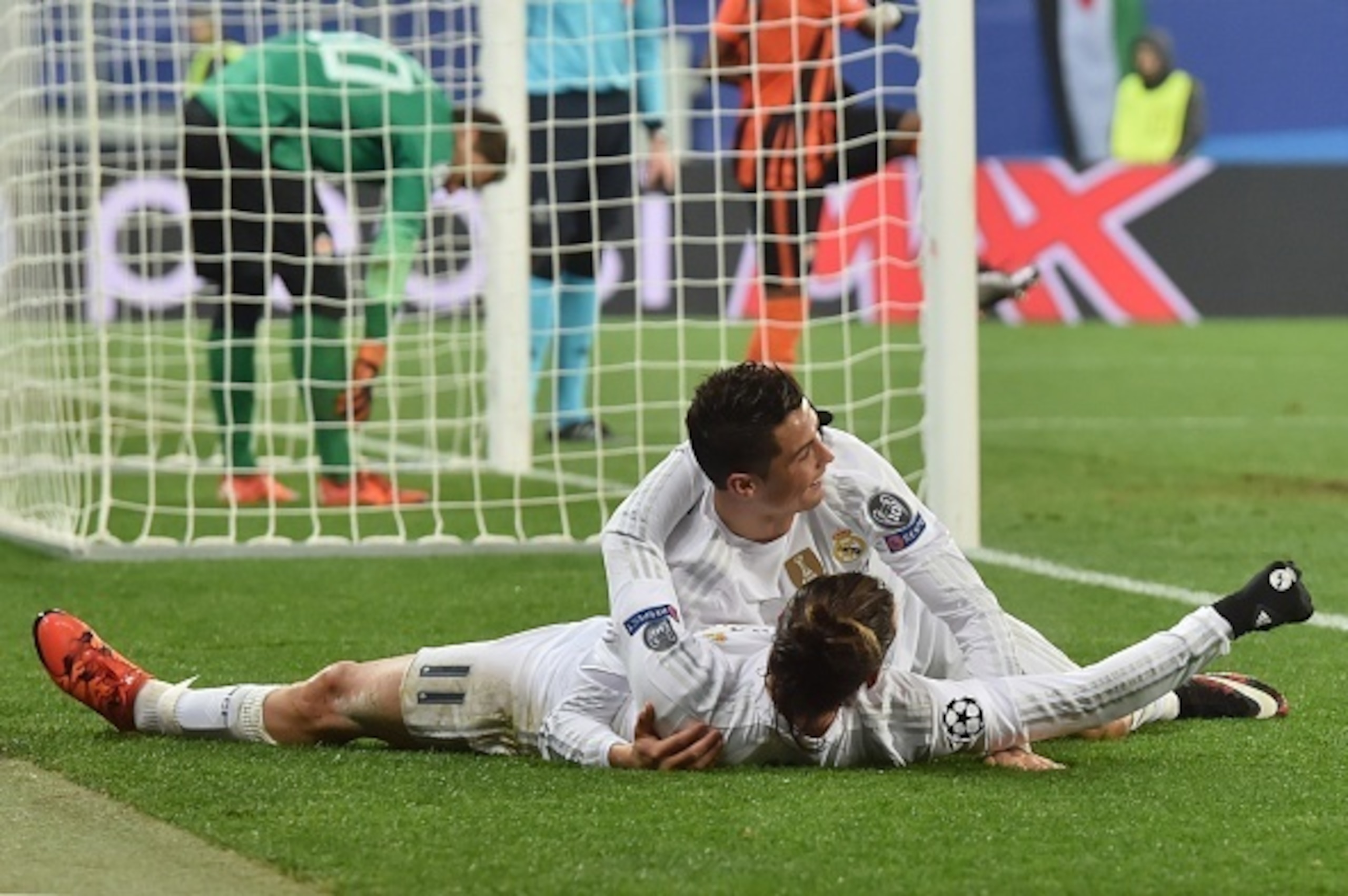
When Real Madrid went to Ukraine to face Shakhtar Donetsk, you felt that the derailment might continue, but it didn't. Instead, there was a visible difference in team dynamics, as though disaster had forced a togetherness upon them.
Of course, it was in the sudden sense of harmony between Cristiano Ronaldo and Gareth Bale where it was most evident, but it also went beyond that: When mistakes were made, they were met with encouragement rather than derision; when things didn't come off, there was immediate action rather than anguished faces; when success was struck, celebration was a collective activity rather than an individual one.
It was as if the hammering from Barcelona (which had come after the collapse against Sevilla) had pushed them toward an abyss that they suddenly needed to fight. The descent to rock bottom had forced re-evaluation, highlighting their flaws and simultaneously presenting a certain unity as the ticket out.
They had no choice; it was the only way.
What's followed have been four more wins, taking their post-Clasico streak to five and suggesting that, even though the corner hasn't yet been turned, at least it's being approached. Tuesday's mauling of Malmo took them significantly closer to that corner, too.
While putting a staggering eight goals past the Swedes, Benitez's players found something new. Something else. Carrying a relentless edge, an appetite, Madrid finally looked like a team in every sense of the word, their work ethic and commitment to one another far more notable than the scoreline.
Afterward, Benitez spoke of things such as "fight" and "attitude," doing so with satisfaction. "We are on the right track," he said of his side.
He might have only been talking about performance, but he could just have easily been talking about image.



.jpg?w=2560 "Raiders Could Start Mendoza")

.jpg?w=2560 "Rodgers Iced Out on Plane 💎")


.jpg?w=2560 "🚨 Week 8 AP Top 25 Poll")