

Will Renault Be Competitive in Their Return as an F1 Constructor?
Renault announced their return as a Formula One constructor last week with a press release touting their (somewhat optimistic) total of 12 constructors' championships.
It is true that Renault-powered cars have won 12 titles, but in the French company's 18 seasons as an F1 constructor—building their own chassis—they won a grand total of two constructors' championships. Renault's time as a constructor is split into two stints, from 1977 to 1985 and from 2002 to 2010, and their titles came in 2005 and 2006, with Fernando Alonso and Giancarlo Fisichella behind the wheel.
Renault's 10 other championships came as an engine supplier for Williams, Red Bull and Benetton (the Enstone-based team Renault bought in 2002, which then became Lotus and now Renault again).
TOP NEWS

J-Dub Suffers Gruesome Injury

Contenders starting to separate themselves after Week 7

Geno Explains Wilson Exchange
While it is certainly positive for the sport that a huge car manufacturer like Renault has decided to remain in F1, buying the Lotus team, that decision will not immediately make the team competitive.
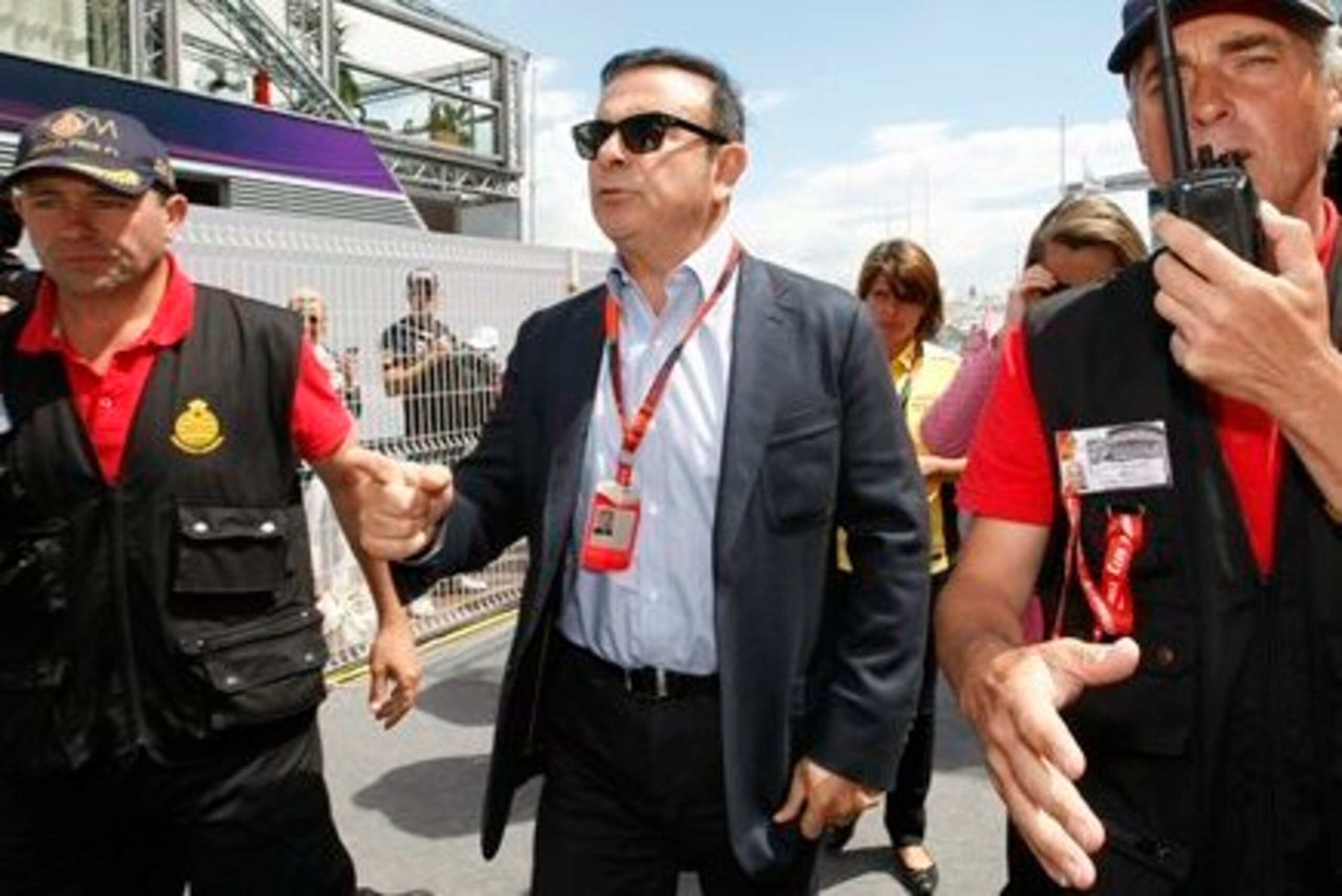
In the press release, Renault CEO Carlos Ghosn said, "Renault had two options: to come back at 100 percent or leave. After a detailed study, I have decided that Renault will be in Formula 1, starting 2016. The final details supplied by F1’s main stakeholders gave us the confidence to accept this new challenge. Our ambition is to win—even if it will take some time."
So at least the expectations are reasonable—and they need to be.

Yes, Renault have a long history in F1, but that history is meaningless when it comes to their current performance. Engine development, once Renault's strength, has become a liability. In particular, Renault have struggled with the shift from normally aspirated V8 engines to hybrid V6 power units over the last two years.
With relatively stable regulations for 2016 and the engine token system limiting how much development can be done on the team's engine, it will be difficult for Renault to make a big leap in performance for next year.
Perhaps the best illustration of how far behind Mercedes the French team remains comes from Lotus, the team Renault just bought. Lotus-Renault scored just 10 points in 2014, the first year of the V6 engines, and finished eighth in the constructors' championship (down from 315 points and fourth place in 2013).
This year, after switching to Mercedes power units, Lotus rebounded (somewhat) to a sixth-place finish with 78 points and one podium, for Romain Grosjean in Belgium.
Aside from the complications of modifying the chassis every year to go from Renault engines to Mercedes and now back to Renault, the French engine is significantly underpowered compared to the Mercedes and Ferrari power units. In September, the BBC's Andrew Benson wrote that Mercedes' power output is about 890 to 900 bhp, while Renault's is 830 to 840 bhp.
Even Red Bull, widely considered to have one of the best chassis in F1, slipped from four straight championships to second in the constructors' standings in 2014 and to fourth this year. This decline led to a very public falling out with Renault, as the Red Bull leadership continually criticised their engine supplier.

All this is to say that Renault's return as a constructor is not a panacea for all the problems that have plagued the Enstone team and the French company's engine program, based in Viry-Chatillon.
However, Renault will bring one thing that has been in short supply at Lotus: cash.
Lotus, owned by Genii Capital, have been tiptoeing on the edge of bankruptcy all season. At several races, the team was locked out of their garage or hospitality suite over payment disputes with the promoters. In fact, as Sky Sports' Pete Gill noted, Lotus "were only able to stave off a winding-up petition in the High Court two months ago when Renault signed a letter of intent to repurchase the team."
That will now change.
The Renault group booked €41 billion in 2014, with profits of nearly €2 billion, per the company's financial statements. According to F1 journalist Joe Saward, the company is planning to invest approximately $1 billion over the next 10 years in their F1 program. That should keep the lights on in the team's garage.
There is also a clear benefit to designing a chassis and engine in tandem, as Mercedes and Ferrari have demonstrated. Of course, you need a competitive engine, but becoming a full constructor will eventually benefit Renault.
Ghosn told French newspaper Le Figaro (h/t Planet F1), "I think, given how motivated our teams are, it will take three years to be competitive."
That seems reasonable. The law of diminishing returns means the pace of development at Mercedes and Ferrari will slow and significant regulation changes for 2017 will give Renault an opportunity to make gains.
Clearly, the team is not ready to win next season. If anything, Renault will take a step back from their 2015 results. But the storm clouds over Enstone and Viry-Chatillon are clearing.
Follow me on Twitter for updates when I publish new articles and for other (mostly) F1-related news and banter:
.jpg?w=2560 "Rams Raiders Football")
.jpg?w=2560 "Steelers Saints Football")

.jpg?w=2560 "🚨 Week 8 AP Top 25 Poll")

