

We're only a month into the NBA season, but we've already started to notice some errors in the rookie scouting reports from college and overseas.
It's become pretty clear that skinny doesn't mean not ready, and skilled or athletic doesn't automatically translate to a smoother transition.
For the most part, Philadelphia 76ers big man Jahlil Okafor has been as advertised—a polished, ready-to-score post player who struggles on defense. The same goes for Sacramento Kings center Willie Cauley-Stein, who's flashed rim protection, finishing ability and limited offensive skills—exactly what we saw at Kentucky. We knew one-and-done prospects like Trey Lyles, Devin Booker and Kelly Oubre Jr. would need time to develop.
The following rookies are doing things most said they wouldn't—and struggling in areas where they were expected to excel.
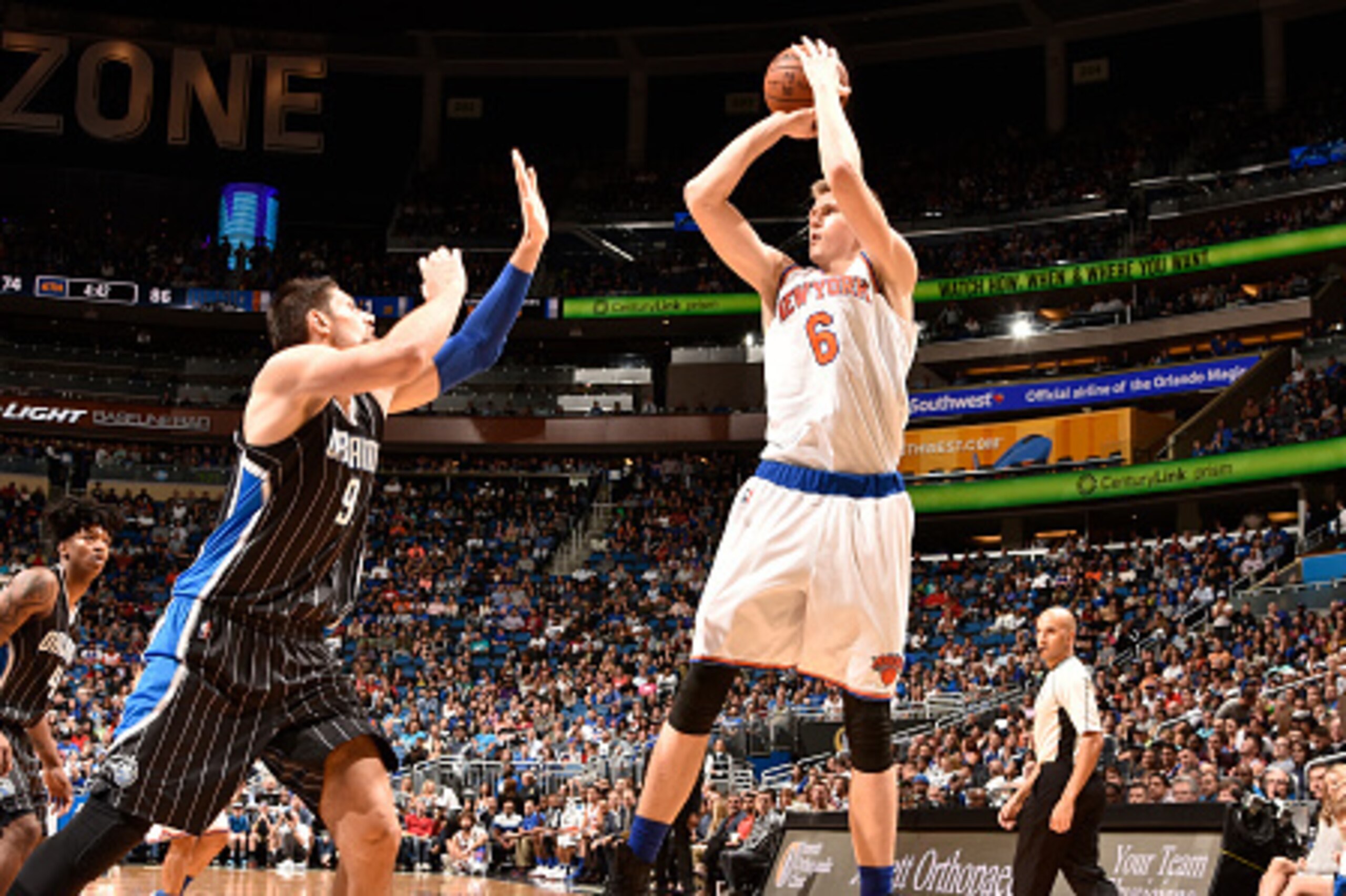
Kristaps Porzingis (New York Knicks, PF/C)
1 of 5
The original Kristaps Porzingis scouting report pegged him as a long-term project—too skinny right now for the interior and too raw to consistently put up points.
Last year overseas, Porzingis registered a 13.6 percent rebounding percentage—a below-average number for a big that suggested he'd never dominate the boards.
With the Knicks, his 17.6 percent rebounding percentage and 9.1 boards per game both currently rank top 20 in the NBA. Porzingis already has seven double-doubles after picking up just one with Sevilla a year ago.
He's been super active and aggressive going for loose balls around the basket, using his size, 7'6" wingspan and bounce to grab them at their highest point above traffic.
Porzingis also looks much more polished around the perimeter than anyone could have hoped. He's already 23-of-57 in the mid-range (40.1 percent) and has 15 threes in 16 games. Porzingis is even shooting 40.5 percent when guarded "very tight" (0-2 feet, according to NBA.com) and 39.1 percent after one dribble, showing he can put the ball on the floor and score.
We've seen him separate and convert a handful of tough shots in the post, where he's 9-of-24, but for a 7'3" big man, it's been his ability to knock down jumpers off screens, pick-and-pops and pull-ups that's been so impressive.
For rookies playing at least 20 minutes a game, Porzingis' 18.97 player efficiency rating ranks second among rookies behind Karl-Anthony Towns, per ESPN.com.
Forget about Porzingis "the project"—we're already talking about a two-way weapon right now and one of the key driving forces behind the Knicks' intriguing start.
D'Angelo Russell (Los Angeles Lakers, PG)
2 of 5
D'Angelo Russell hasn't experienced the same early success that most highly drafted point guards have as of late.
Despite flashing advanced skills and basketball IQ as a freshman with the Ohio State Buckeyes, he's struggled to convert them into efficient NBA play or consistent production.
The Los Angeles Lakers coaching staff should absorb some of the blame—Russell's playing time has fluctuated, which hasn't made it easy for him to establish any rhythm or confidence. He's also seen his usage rate fall from a heavy 30.2 percent in college to a light 20.3 percent with the Lakers.
Either way, he's shooting just 32.1 percent from three (on four attempts per game) after converting 41.1 percent of his triples at Ohio State, where he also made 44 percent of his shots off the dribble, per DraftExpress' Jonathan Givony, a number that's fallen to 36.6 percent early in the pros.
Meanwhile, he hasn't been as active or effective creating for others, with his assist percentage down to 19.4 percent from 30.1 percent a season ago.
To Russell's credit, he's had to adjust to a different role. But we also might be seeing his limited burst and explosiveness affect his ability to separate, both into jumpers and drives. He's taken just 15 free throws in 14 games and is shooting 31.3 percent when guarded "very tight," (0-2 feet, according to NBA.com).
It's too early to say we overestimated the height of Russell's ceiling, but it doesn't look like his journey toward reaching it will go as smoothly as we'd thought.
Stanley Johnson (Detroit Pistons, SF)
3 of 5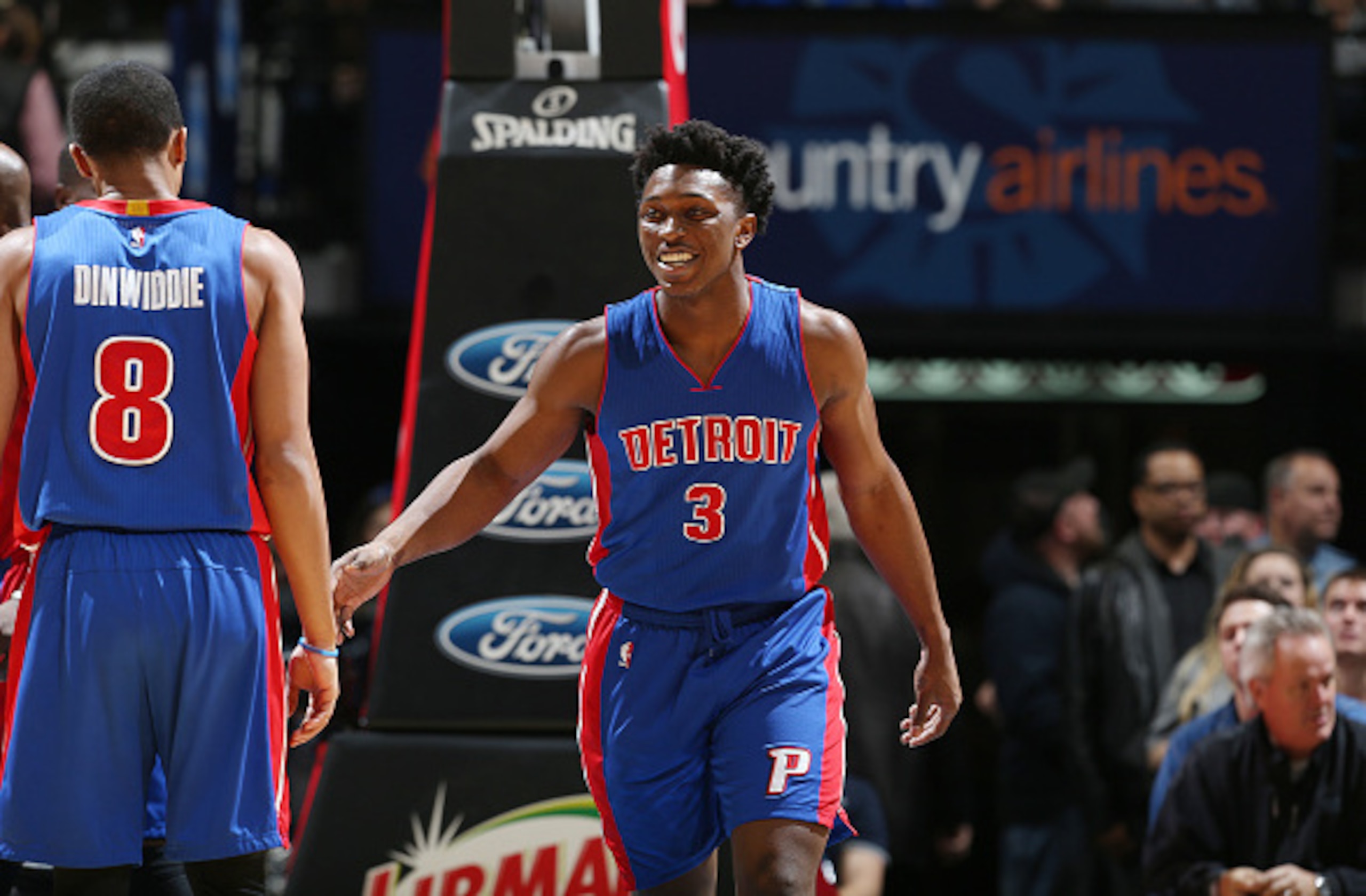
Stanley Johnson has actually struggled in areas where he'd previously excelled and held his own in aspects of the game that gave him problems at Arizona.
On the down side, Johnson, who was proficient in college as an in-between scorer off pull-ups and floaters (44.4 percent on two-point jumpers last year, per Hoop-Math.com.), is shooting just 5-of-20 in the mid-range this season. He's only converted 28.6 percent of his pull-ups after making a tremendous 49 percent of them in the half court as a freshman, per DraftExpress' Jonathan Givony.
The good news: The trouble he had a finisher in college hasn't carried over. And you had to naturally worry it would, given the improved rim protection in the pros.
But Johnson is shooting 59.6 percent in the restricted area this season—a solid number for a rookie.
Unfortunately, it looks like it could take a bit longer for his jumper to become a reliable weapon. He's missed 32 of his first 40 three-point attempts despite flashing an encouraging shooting stroke last year (37.1 percent, 43 threes, 38 games) and during summer league (41.7 percent from three).
It's not to say Johnson won't become a threat from behind the arc. Rather, it won't happen in year No. 1.



Emmanuel Mudiay (Denver Nuggets, PG)
4 of 5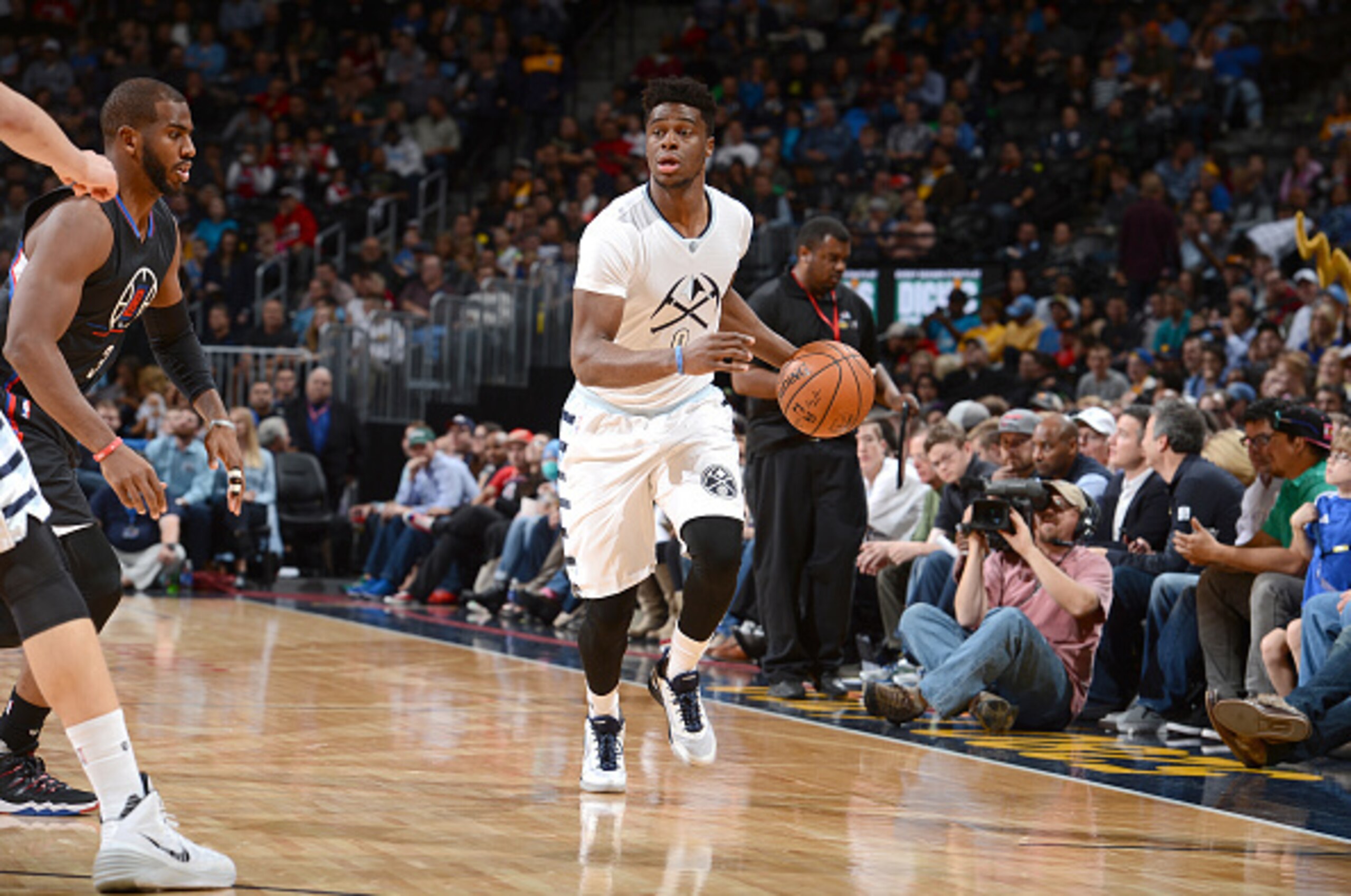
Much of Emmanuel Mudiay's scouting report has appeared accurate, particularly the areas that cover his long-range shooting issues (27.8 percent from three), playmaking prowess (6.3 assists per game) and turnover problems (4.2 per game).
But given his physical tools and athleticism for the position, it was reasonable to think he'd fare better as a scorer and finisher.
At 6'5" with burst and hops, Mudiay has always shined around the rim. Instead, he's shooting a scary 41.4 percent within five feet—a way-below average number. It's almost as if he's looking to avoid contact (3.3 free-throw attempts per game), which is resulting in difficult off-balance attempts.
Mudiay has been just as ineffective in the mid-range (17-of-66, 25.8 percent), and though nobody expected him to emulate Dwyane Wade, he may have more work to do here than initially thought.
Overall, he's averaging 15 points per 36 minutes, down from the 20.6 he put up in China.
It's also worth noting that Mudiay has struggled to convert pick-and-rolls (.55 points per play) into buckets, an area he'd seemed both comfortable and dangerous in, both overseas and at the high school level.
Karl-Anthony Towns (Minnesota Timberwolves, PF/C)
5 of 5
Karl-Anthony Towns wasn't pegged by many as a Rookie of the Year candidate, but after a month, I'd argue he's the favorite.
Though he didn't flash the polish as Jahlil Okafor in college, Towns' current 51.7 percent field-goal clip and rookie-leading 21.06 PER highlight greater overall efficiency.
Towns, whose back-to-the-basket game was fairly basic in college, is scoring .84 points per play in the post. Okafor is scoring .83 points per play in the post, although he also leads the league in possessions there.
Maybe the most impressive aspect of Towns' game—one we'd thought would take longer to come around—has been his shooting. He just didn't have the green light to take many jumpers at Kentucky. It was only natural to think Towns would be limited to interior work as a rookie and then gradually expand his offensive repertoire out toward the perimeter over the years.
However, Towns has already made 35 jump shots and hit 45.9 percent of his 61 attempts in the mid-range.
He has also done a better job of defending without fouling—he's averaging three fouls in 28.3 minutes after averaging 2.9 fouls in just 21.1 minutes as a freshman.
Based on his early-season success and the comfort he's flashed away from the hoop—with his back to the basket and on defense—the height of Towns' ceiling may actually be higher than we projected.
College and Europe stats courtesy of Sports-Reference.com and RealGM.com. NBA stats courtesy of NBA.com.

.jpg?w=2560 "Raiders Could Start Mendoza")

.jpg?w=2560 "Rodgers Iced Out on Plane 💎")
.jpg?w=2560 "🚨 Week 8 AP Top 25 Poll")
.jpg?w=2560 "Packers Safety Slams Refs 🤬")

.jpg?w=2560 "Fantasy Waiver Wire Stars 🤩")