

Dwyane Wade: 'We Know Our Identity' in Heat's Post-LeBron Era
MIAMI — The Miami Heat have three NBA championship banners hanging from the American Airlines Arena rafters, each a potential blueprint to guide their next title run.
But none of them can help the current squad, since there's no longer a top-shelf superstar leading the charge like there was in 2006 (prime Dwyane Wade) or 2012-13 (LeBron James).
"We're not a team where four guys or three guys are just asked to carry the load," Luol Deng told Bleacher Report. "We've got different guys that can score the ball. So it's going to be different guys on different nights."
TOP NEWS

LeBron's Special Helicopter Deal

MJ Makes Record-Setting Donation 🙌

Shams: KAT, Hart Could Be Trade Names
"Different" could be a buzzword by season's end in South Beach, given all of the changes this organization has undergone in personnel and philosophy since James exited in 2014.
Offensive Quantity Over Elite Quality

The Heat have numerous offensive sources but no longer the ultra-reliable ones from yesteryear.
Wade currently paces the Heat at 18.6 points per game, a mark that ranks just 23rd across the league. The Heat have had one 30-point performance all season (Chris Bosh with exactly 30), while the entire NBA has produced 73. Miami doesn't have any of the league's 70 double-digit assist efforts.
Some of that is by design. With aging veterans to keep fresh for the stretch run and a handful of young prospects to develop, the Heat have fashioned themselves in a way that prioritizes the collective over the separate pieces.
"It's great to have veteran guys, because you're able to have that kind of leadership and things you need," Wade said. "But the bodies are a little different than having young guys on the team. We're going to need everybody."
Heat coach Erik Spoelstra often has preached the importance of "sharing the game," a phrase regularly echoed by his players during postgame interviews.
The basic philosophy is easy to follow: utilize the many weapons this roster has. Granted, that's probably a goal for any team, but it holds extra importance in Miami.
The Heat have limited spacing (two regulars shoot above 33 percent from three), guards who attack best on the drive (Wade and Goran Dragic) and a center who rarely stays outside the paint (Hassan Whiteside). That's a lot of interior congestion, particularly if opposing defenses can cheat off any non-threats the Heat deploy.
But, again, a lot of this is tied to necessity. Miami needs all of the point producers it can get, because its best ones are either battling Father Time or still advancing their skill sets.
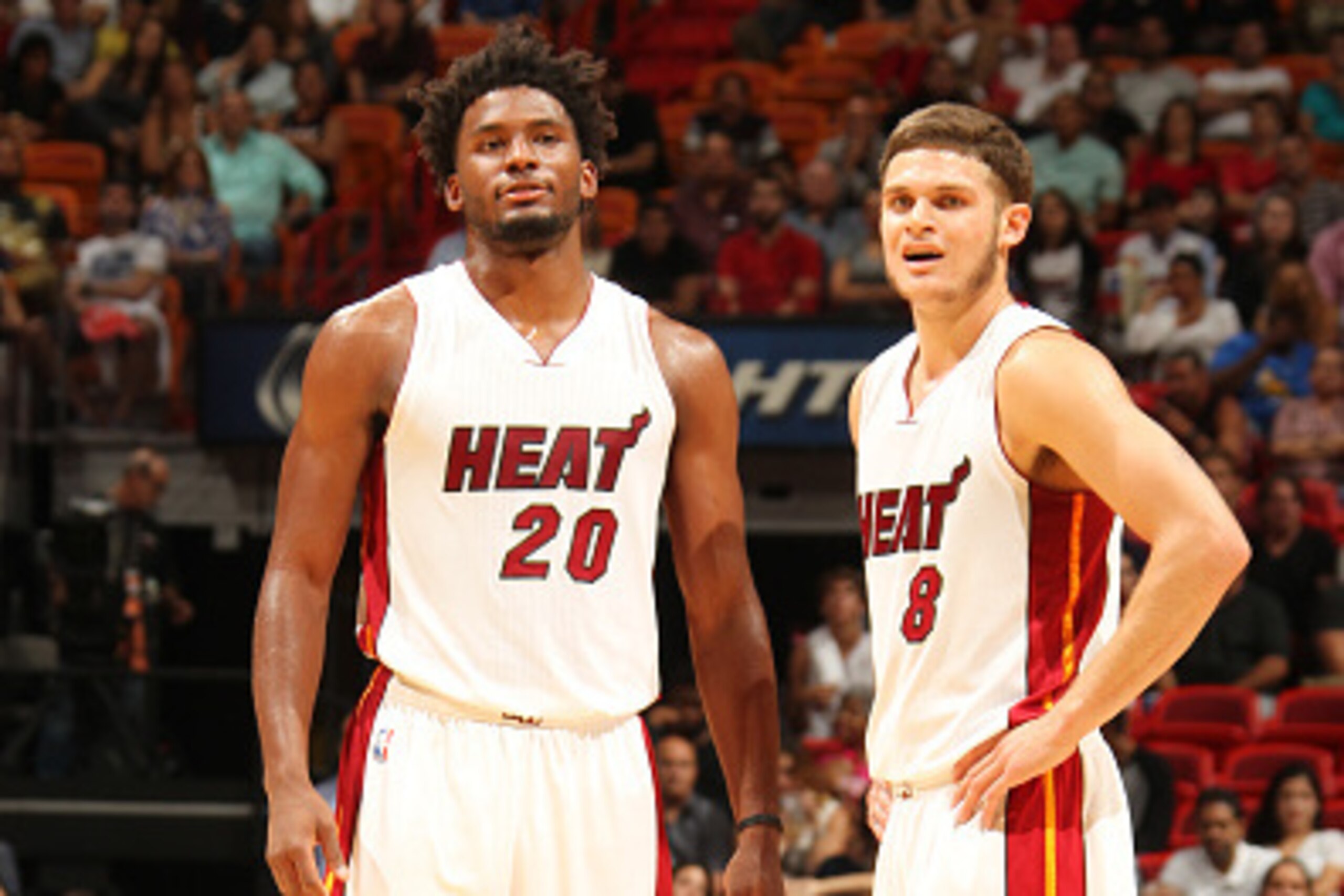
"From one night to the next, anybody could be leading scorer on this team," Wade said.
Unpredictability can be a significant strength, but it's not there yet. The Heat often look less like they're sharing the scoring load and more like they're scrambling for offense. They've topped triple digits in only four of their 12 games, and they rank near the bottom in average points (97.7 per game, 24th) and assists (19.3, 24th).
Miami's offense could need a full season (or longer) to create its identity.
There's little apparent on-court chemistry between Wade and Goran Dragic in the backcourt. When one attacks, the other often waits and watches the action. They could function as a lethal drive-and-kick combo, but they have to convert those kick-out chances for that to happen. Wade is shooting just 36.2 percent outside of 10 feet, which is more than six points higher than Dragic (29.5).
Up front, both Bosh and Whiteside shoot better when the other is off the floor. Consistency eludes potential second-team sparks Gerald Green and Josh McRoberts.
Solving those issues could ultimately determine how high this group's ceiling extends. But in terms of an identity, Miami's thoughts start on the opposite end of the floor.
Defense Key to Possible Dominance

"We're a defensive organization," Spoelstra said. "The more we commit to imposing our identity defensively, the better basketball team we'll be."
So far, so good in that endeavor.
| Offensive Rating | 101.8 | 13th |
| Defensive Rating | 94.8 | Second |
| Net Rating | Plus-6.9 | T-Third |
| Assist Percentage | 52.8 | T-25th |
| Rebound Percentage | 50.9 | T-10th |
| True Shooting Percentage | 53.6 | T-12th |
| Pace | 96.95 | 25th |
The Heat have a Defensive Player of the Year candidate manning the middle in Whiteside.
His current average of 4.8 blocks per game is the highest seen in the NBA since 1985-86. He's holding opponents 5.9 percentage points below their field-goal average, and he has corralled the seventh-most defensive rebounds.
"He is going out to dominate every game," Wade said of Whiteside. "He wants to be the best big man on the floor every night."
But this defense is bigger than its 7-foot centerpiece.
There's also a potent blend of veteran savvy and youthful enthusiasm out on the perimeter. Deng has been frustrating No. 1 scorers for years, and rookie Justise Winslow is already taking and acing defensive tests of all sizes.
"We keep saying we want to go far and play on the big stage," Bosh said. "In order to do that, you have to have a top-five defense."
This defense is where it needs to be now; though, it hasn't exactly faced a slew of offensive machines. Once the competition stiffens, questions will be answered about the effectiveness of the starting backcourt, the readiness of the prospects and the overall impact of Whiteside (for all of his individual brilliance, the Heat have defended better without him).
Solving the Puzzle
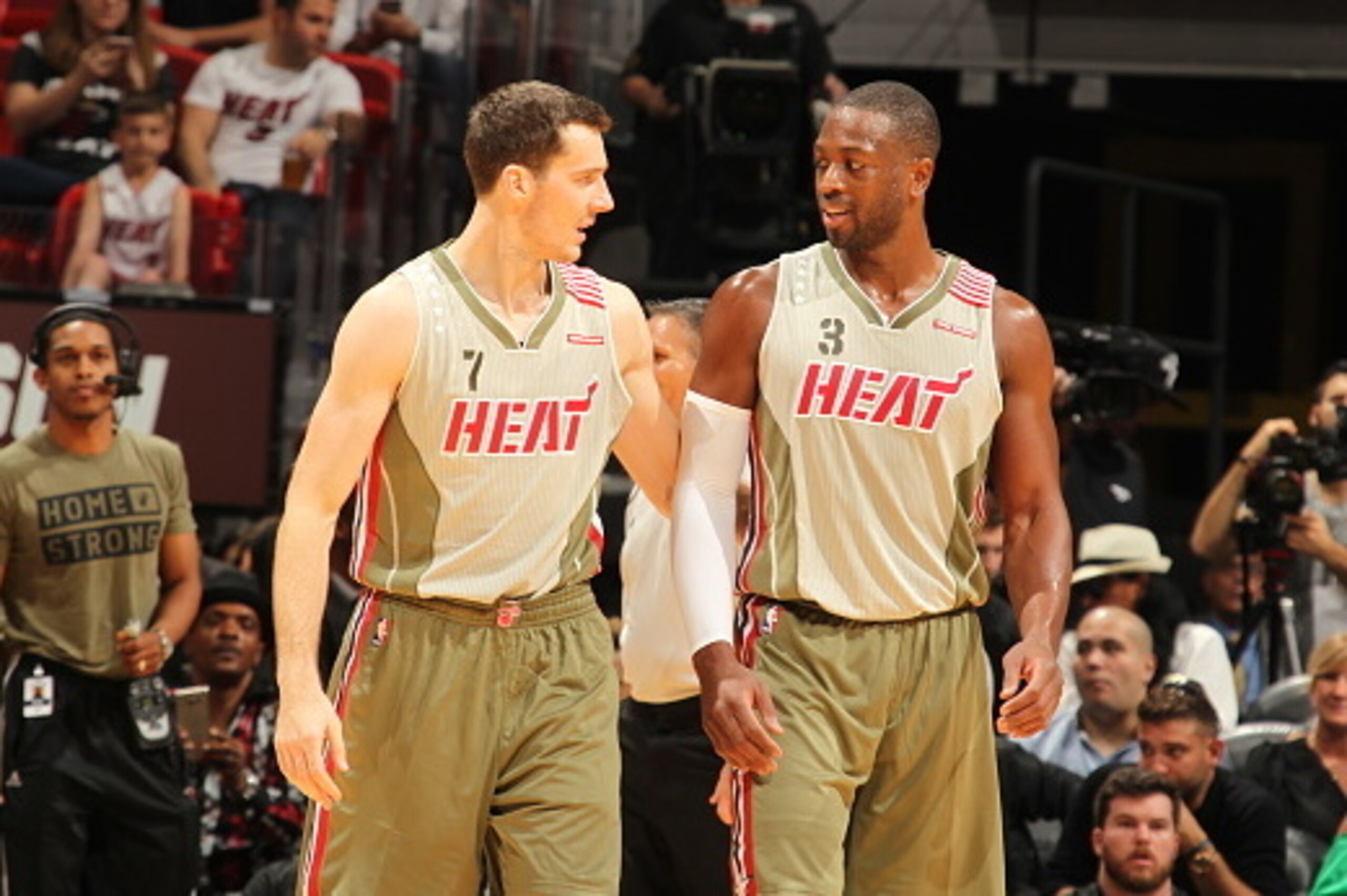
There's still so much to figure out.
The vaunted starting five have only played 138 minutes together. Winslow and sophomore Tyler Johnson have already forced their way into prominent roles, ranking second and third, respectively, in fourth-quarter playing time. The free-agent hauls of this summer (Green, Amar'e Stoudemire) and last (McRoberts) are still finding their footing.
Nearly everything is a work in progress—except figuring out what they want to be.
The Heat have nailed their self-assessments. They understand the value of depth, because their roster is older than most and lacking an in-his-prime transcendent talent. They know their offensive production could come and go, so they're banking on reliability with their defensive effort.
"I think we know what our identity is," Wade said. "It's just about getting there on a consistent basis every night."
Problems that were once solved by getting LeBron (or even a younger Wade) the basketball now require a more complex, creative solution. Miami has several options to examine, and perhaps that's what will define this era of Heat hoops: balance to replace the scoring duties formerly held by superstars and dogged defense to cover for any lost offensive production.
All quotes obtained firsthand. Unless otherwise noted, statistics used courtesy of Basketball-Reference.com and NBA.com and current through games played Nov. 22.

.jpg?w=2560 "Grading WWE Raw 🔠")

.jpg?w=2560 "Bijan's INSANE 1st Half 🤩")
.jpg?w=2560 "Viral Rams Coach Vid 🖕")
.jpg?w=2560 "Injury-stricken Seahawks signing veteran RB")

.jpg?w=2560 "2 NFL Officials Suspended")